
Pellet Heat for Plant City's Occasional Cold Nights.
With such a light winter heating need and winter lows averaging 50°F, Plant City doesn't need a furnace-replacement stove. But for the handful of genuinely cold nights each winter, a pellet stove or insert still has a place—and I can connect you with a local dealer who'll tell you straight whether it makes sense for your home.
Every Project Starts From One of These Five Situations
A cold-climate appliance in a climate that mostly isn't.
Plant City sits in climate zone 2A at 124 feet of elevation, with an average winter low around 50°F and a very light winter heating need—for comparison, a place like Duluth, Minnesota faces a winter heating load roughly twenty times heavier. That gap matters. Pellet stoves are engineered as serious heating appliances, capable of running for days on a hopper of fuel, and most of that capability goes unused in a Hillsborough County winter. That's why pellet is not the default fuel choice here the way it is in the upper Midwest or mountain West.
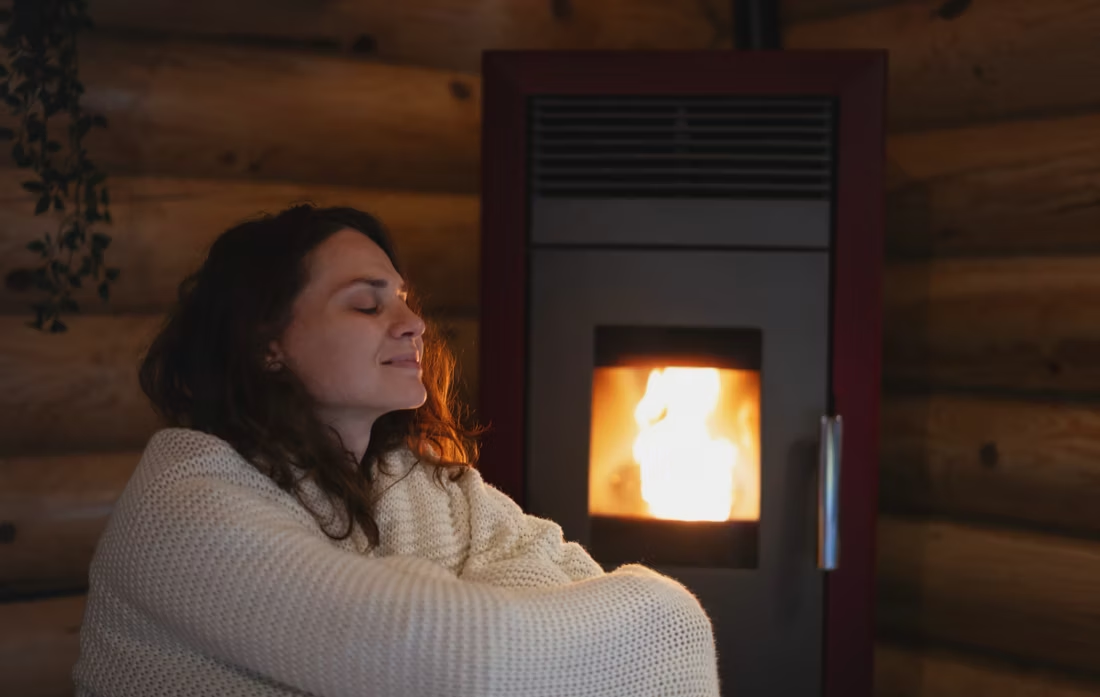
That said, homeowners in Plant City still install pellet stoves and inserts—usually for a Florida room or converted garage that gets genuinely chilly on the rare January cold snap, for the clean, low-maintenance ambiance of a real flame without stacking cordwood, or for a guest suite or in-law addition that needs a little supplemental heat a few weeks a year. Regional pellet brands like Lignetics, Hamer Pellet Fuel, and Greenway Renewable Energy are available through Central Florida hearth dealers, so fuel supply isn't the obstacle—it's simply matching the right size unit to a much lighter heating load than most pellet-stove buyers have.
Three steps. No salesperson until you're ready.
Tell us about your project
Your zip code, your situation, and the fuel you're leaning toward—or let the answers point you to one.
See what's actually available
The brands dealers within 100 miles genuinely carry—real options, never a catalog mirage.
Get your dealer & Project Guide
A trusted local dealer, plus the free Project Guide & Parts List that names every component of the job.
Frequently Asked Questions
How much does a pellet stove installation cost in Plant City?
Pellet stove and insert installations typically run in the $3,000 to $6,500 range nationally, and Plant City installs tend to land on the lower end of that because most homes here don't have an existing masonry chimney to work around—pellet stoves vent through a simple 3- or 4-inch PL pipe run through a wall or roof, which is far less involved than sizing a full Class A chimney system. A trusted local dealer will give you a firm number after seeing the room and the venting path, since a straight through-wall vent costs meaningfully less than routing pipe through an attic and roof.
Does a pellet stove even make sense in a climate like Plant City's?
For most homes, honestly, no—not as a primary heat source. With such a light winter heating need year to year, the math that justifies a pellet stove in a cold-winter state (lower fuel cost than electric heat, long unattended burn times) mostly doesn't apply here. Where it does make sense: a Florida room, converted garage, or workshop that gets uncomfortably cold a few weeks a year, a second home or rental where guests like real ambiance, or a household that specifically wants a low-smoke, low-hassle alternative to a wood-burning fireplace. If you're chasing whole-home heat, your money is usually better spent elsewhere—a local dealer will tell you this too, not just try to sell you a stove.
What size pellet stove do I need for a Plant City home?
Smaller than you'd think. Most Plant City installs are sized for a single room or addition—500 to 1,000 square feet—rather than whole-house heating, since the coldest nights rarely stay below freezing for long. A small to mid-size pellet insert or stove rated for 1,000 to 1,500 square feet is oversized for nearly every application here and will end up running on its lowest setting most of the time it's used, which is fine but worth knowing before you pay for capacity you won't need.
Will a pellet stove work during a power outage?
Not without a backup power source, and this matters more in Plant City than it would in a colder state, because the reason you'd lose power here is usually a hurricane, not a blizzard. Pellet stoves rely on an electric auger to feed fuel and a blower to distribute heat—no power, no fire. If backup heat during storm-season outages is part of your reasoning for wanting a stove, a battery backup unit or small generator is a real requirement, not an optional accessory. Homeowners with Tampa Electric or Duke Energy Florida service who want fuel-independent backup heat sometimes look at gas or propane units instead, which can run on battery ignition alone.
What pellet brands are available near Plant City?
Lignetics, Hamer Pellet Fuel, and Greenway Renewable Energy all distribute into the Central Florida market and are commonly stocked by hearth dealers serving Hillsborough County. Pellets typically run $250 to $350 per ton nationally; because Plant City's heating season is so short, most homeowners here burn only a few bags to a couple of tons per year rather than the 2-3 tons a cold-climate household might go through, which keeps annual fuel cost modest regardless of price per ton.
Pellet stove vs. a gas or propane fireplace—which fits Plant City better?
For most Plant City homes wanting occasional ambiance and light supplemental heat, gas or propane often wins on convenience—no fuel bags to store, no auger or hopper to maintain, and instant on-off operation. Pellet still has a real edge if you specifically want the look and radiant feel of a live flame with visible fuel, don't want to run a gas line or propane tank, or are heating a detached space like a workshop where running gas service isn't practical. It comes down to what you're solving for—ambiance and simplicity point toward gas, while wanting a self-contained, easily relocated appliance points toward pellet.
Do I need a permit to install a pellet stove in Plant City?
Most jurisdictions require a permit for a new fuel-burning appliance and its venting, and that's true here too—check with the City of Plant City's building division if you're inside city limits, or Hillsborough County's permitting office for unincorporated areas. In practice, most hearth dealers pull the permit as part of the installation and handle the inspection, so this is rarely something the homeowner has to manage directly.
How much maintenance does a pellet stove need in a Florida climate?
Less than a wood stove, but it's not zero-maintenance. The burn pot and ash pan need emptying every few days of use, the hopper and auger benefit from a periodic vacuum, and the vent pipe should get an annual inspection even though it's a small-diameter PL vent rather than a full chimney. Because Plant City's burn season is short, many owners find their stove needs only a light cleaning at the start and end of the season rather than the ongoing upkeep a cold-climate household would do throughout a five-month winter.
Pellet stove vs. wood stove—which makes more sense in Plant City?
Wood is the more traditional option in this part of Florida, where oak, pine, and even mahogany are locally available, but wood stoves also require a full chimney system, more clearance, and more hands-on tending—a lot of infrastructure for a fuel you might burn a handful of evenings a year. Pellet stoves trade some of that authentic-fire feel for simpler venting, no wood stacking or splitting, and more consistent, adjustable heat output. Given how little actual heating Plant City winters demand, most homeowners here choose based on which experience they want rather than which is more efficient—both are overbuilt for the local climate in different ways.
Why is a fireplace insert so efficient?
An insert does two things: it seals the chimney completely, so you stop losing air you already paid to heat, and it radiates warmth into the room through the firebox and glass. Most add a heat-exchange fan that pulls cool room air underneath, wraps it around the hot firebox, and pushes it back out warm. Your home is more efficient before you've even lit the first fire.
What do I measure to size a fireplace insert?
Four numbers tell you what fits: the front width, the front height, the back width, and the overall depth of your existing fireplace opening. Grab a tape measure, jot those down, and snap a photo of the wall—those two things do more to move your project forward than anything else you can do today.
Can a fireplace actually lower my heating bill?
Yes—by creating a comfort zone. A furnace heats every square foot of the house just to warm the one room you're in; a gas fireplace on low burns roughly a sixth of the gas a typical furnace does. Set the furnace around 55–60 degrees as a baseline, then heat the rooms your family actually uses. Families who heat this way commonly save $20–$60 a month.
Does a fireplace add value to my home?
On average, a fireplace adds back to the home about the same amount you spent installing it. Add the monthly savings from heating the rooms you actually use instead of the whole house—often hundreds of dollars a year—and the value case is strong before you even count what a fire does for how your family uses the room.
Nearby Dealers
Hearth shops serving Plant City and the surrounding area.
Pellet Brands Stocked Around Plant City
Manufacturers will point you to the nearest stocking dealer.
Find your pellet stove in Plant City.
Tell me about your space—even if it's just one chilly room a few weeks a year—and I'll match you with a trusted local dealer and send over a free Project Guide & Parts List: the right pellet stove or insert, the vent kit it needs, and a dealer who installs it correctly the first time.
Find Your Fireplace →