
Keep Your Family Warm and Safe—No Matter What
With winter lows averaging 54°F and just 373 heating degree days a year, Pinellas County almost never needs supplemental heat. Some homeowners still want a genuine wood fire for ambiance, tradition, or a second home up north—here's what's realistic, and who can help.
Every Project Starts From One of These Five Situations
A Gulf Coast climate that rarely calls for wood heat.
Pinellas County sits on a narrow peninsula between Tampa Bay and the Gulf of Mexico, covering St. Petersburg, Clearwater, Largo, Dunedin, Tarpon Springs, Pinellas Park, and a string of barrier-island communities. It's classified Climate Zone 2A, with an average winter low around 54°F and only about 373 heating degree days per year. For comparison, a cold-climate city like Duluth, Minnesota logs over 9,000 heating degree days a year—Pinellas County isn't in the same conversation when it comes to needing wood heat to survive winter. There's no cutting-permit season here, no national forest land to source firewood from, and no winter air quality advisories tied to wood smoke, because almost nobody is burning wood to stay warm.
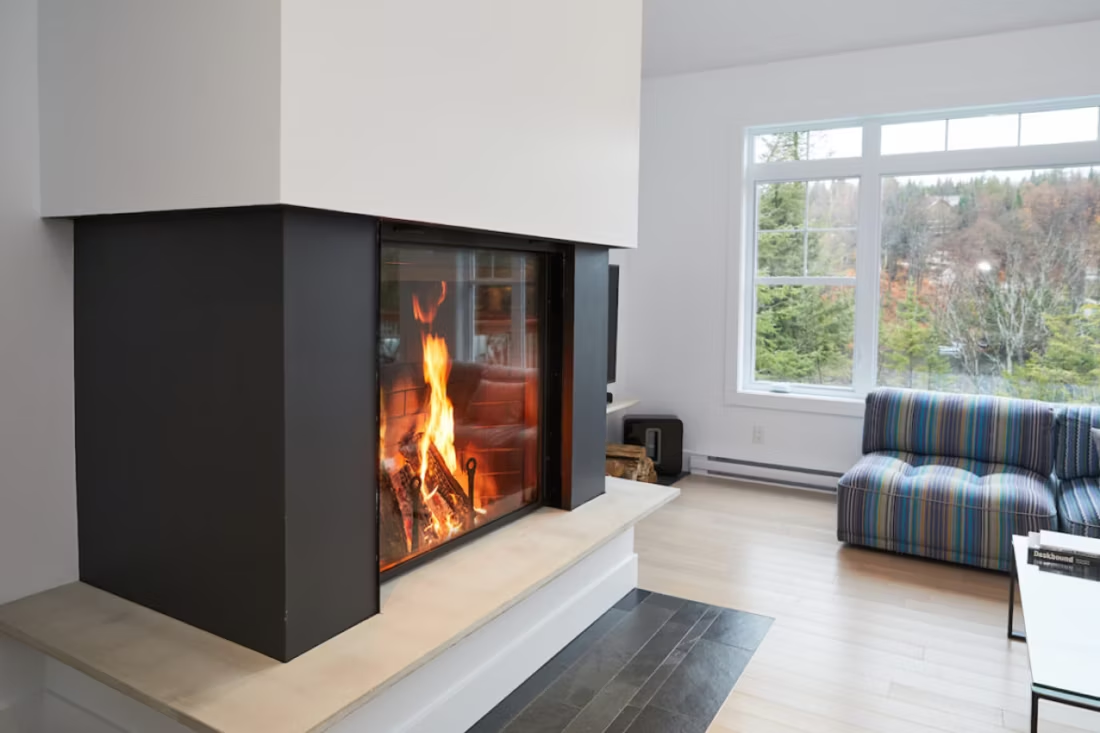
That said, a wood-burning fireplace or stove still shows up in Pinellas County homes—usually for reasons other than heat. Older homes in neighborhoods like Old Northeast in St. Petersburg or historic Dunedin sometimes have a masonry fireplace original to the house, and owners want to keep it functional rather than seal it up. Some residents split time between Pinellas County and a colder-climate property and want the experience of a real fire on the rare cold front that drops overnight temps into the 30s. Local firewood—mostly oak, pine, and occasionally mahogany from tree removal and trimming services rather than any managed forest—is available but isn't a household commodity here the way it is farther north. If you're set on wood, a local hearth dealer can tell you honestly whether it makes sense for your specific house, or steer you toward a gas or electric option that fits Pinellas County living better.
Three steps. No salesperson until you're ready.
Tell us about your project
Your zip code, your situation, and the fuel you're leaning toward—or let the answers point you to one.
See what's actually available
The brands dealers within 100 miles genuinely carry—real options, never a catalog mirage.
Get your dealer & Project Guide
A trusted local dealer, plus the free Project Guide & Parts List that names every component of the job.
Frequently Asked Questions
How much does a wood-burning fireplace or stove installation cost in Pinellas County?
When a wood-burning insert or stove installation does happen in Pinellas County, it typically runs $3,500 to $7,500 depending on the unit and whether a chimney or Class A chimney pipe needs to be built from scratch—most homes here were never built with masonry flues designed for regular wood-burning use, so venting work is often the bigger cost driver than the appliance itself. Because demand is low, expect fewer dealers stocking wood units locally compared to gas or electric, and possibly a longer lead time on parts.
Is a wood stove even practical in Pinellas County's climate?
Practically speaking, no—not as a primary or even meaningful supplemental heat source. With winter lows averaging 54°F and only 373 heating degree days a year, a wood stove in a Pinellas County home would sit unused nearly the entire year and only get lit a handful of nights when a cold front pushes through. Humidity is also a factor: Gulf Coast moisture accelerates creosote buildup in flues that don't get regular use, so an occasionally-used wood appliance actually needs more frequent inspection, not less. Most homeowners here who still want wood go in with eyes open—it's for ambiance and the handful of genuinely cold nights, not for heating the house.
Can I still get a wood-burning fireplace installed in my Pinellas County home?
Yes, it's not off the table—you'll just have fewer local dealers to choose from than someone shopping for gas or electric. A trusted local hearth dealer can walk your property, confirm your existing chimney (if you have one) is sound for wood use, and handle permitting through Pinellas County Building Services or your city's building department. New construction of a masonry chimney purely for occasional wood use is a bigger project and cost than most homeowners expect, so many people in St. Petersburg, Clearwater, and surrounding cities land on a factory-built zero-clearance wood fireplace instead, which is simpler to vent and install.
What wood species are available locally if I do install a wood-burning unit?
Oak, pine, and mahogany are the species most commonly available around Pinellas County, generally sourced from tree removal and landscaping services rather than any managed woodland—there's no national forest land in the county and no cutting-permit program to speak of. Oak is the preferred firewood among the small number of local wood-burners for its longer, cleaner burn; pine is more commonly available but burns faster and needs to be well-seasoned to avoid excess creosote in the county's humid air.
Do I need a permit for a wood-burning fireplace or insert in Pinellas County?
Yes—any new wood-burning appliance installation, or significant modification to an existing masonry fireplace, requires a building permit through Pinellas County Building Services or the applicable city building department (St. Petersburg, Clearwater, Largo, and other incorporated cities each handle their own permitting within city limits). A licensed installer will typically pull this permit as part of the job. If you live in a condo, HOA community, or one of the county's barrier-island developments, check your association rules separately—many restrict or prohibit wood-burning appliances regardless of what the county allows.
Are there restrictions on burning wood in Pinellas County?
There are no county-level air quality advisories or seasonal burn bans tied to wood smoke in Pinellas County—unlike inversion-prone western basins, the Gulf Coast air pattern here doesn't trap wood smoke the same way. The bigger restrictions homeowners actually run into are local: condo and HOA rules, especially in the county's many multi-family and barrier-island communities, frequently prohibit open burning or wood-burning appliances outright. Check your governing documents before planning any wood installation.
What's the difference between a decorative wood fireplace and a heat-rated wood stove?
A decorative or traditional masonry wood fireplace is built for ambiance—it loses most of its heat up the flue and isn't rated to warm a room, which is fine for the handful of cool nights Pinellas County sees. A heat-rated, EPA-certified wood stove or insert is a sealed, efficient appliance designed to actually produce and hold usable heat. For most homes in this county, the decorative route makes more sense given how rarely a fire would even be lit—a heat-rated stove is overbuilt for a climate that almost never needs it, though it's still an option if you want the option of real heat output on the occasional cold snap.
Wood vs. gas vs. electric—which fireplace actually fits a Pinellas County home?
For the overwhelming majority of homes in Pinellas County, gas or electric is the more practical choice. Natural gas and propane fireplaces give you instant, adjustable heat with no ash, no firewood storage, and no chimney maintenance—a sensible fit for a climate where you might use it a dozen nights a year. Electric fireplaces go a step further: no venting, no gas line, and install costs that are a fraction of a wood or gas project, which suits condos, barrier-island homes, and rentals where a real chimney isn't practical anyway. Wood remains an option mainly for owners who specifically want the smell, sound, and ritual of a real fire, or who have an existing masonry fireplace they'd rather restore than remove.
Where can I buy or have firewood delivered in Pinellas County?
Because wood heat isn't a mainstream need here, firewood in Pinellas County tends to come from smaller, seasonal sellers, landscaping and tree-removal companies clearing oak and pine, and general retailers rather than dedicated firewood yards. Availability and pricing vary more than in wood-heating regions, so it's worth asking your hearth dealer for a supplier recommendation when you have your unit installed—many keep a list of reliable local sources for the handful of customers who actually burn wood regularly.
Why is my open fireplace making my house colder?
Open fireplaces suck—literally. As the fire burns, it consumes air your furnace already paid to heat and pulls it out through the chimney, so the house is actually colder after the fire goes out than before you lit it. An insert fixes this: it seals the chimney, puts fixed glass across the front, and turns that hole in your house into a real heat source.
Why won't my new wood stove get going like my old one?
New wood stoves are 70%+ efficient, so far less heat goes up the flue—which also means less draft to get a fire established. The rule: build a genuinely hot fire for about 45 minutes before you choke it down. Skip that and you get smoke in the room, creosote in the chimney, and a fire that never takes off. Most performance complaints trace straight back to this.
Can a fireplace actually lower my heating bill?
Yes—by creating a comfort zone. A furnace heats every square foot of the house just to warm the one room you're in; a gas fireplace on low burns roughly a sixth of the gas a typical furnace does. Set the furnace around 55–60 degrees as a baseline, then heat the rooms your family actually uses. Families who heat this way commonly save $20–$60 a month.
Can I install a fireplace myself?
If you're putting a fire in your house on purpose, it's best to work with an expert. Unless you're genuinely experienced in framing, gas line, vent pipe, and the national code on clearances to combustibles, have a professional do it—and ideally the same company that sells you the fireplace, so warranty, service, and liability all live under one roof.
Stove and Fireplace Dealers in Pinellas County
Urban Concepts Modern Hearth & Outdoor
Urban Concepts Modern Patio And Fireplace
Find your wood fireplace option in Pinellas County.
Tell us about your home and what you're after—real wood ambiance, a fireplace restoration, or a more practical gas or electric alternative—and we'll match you with a trusted local dealer and send over a free Project Guide & Parts List for your project.
Find Your Fireplace →