
Gas fireplace warmth, built Gulf Coast style.
Pensacola winters rarely demand serious heat, but a gas fireplace still earns its keep—for ambiance, for the occasional cold snap, and for backup light and warmth when hurricane season knocks the power out. Find the right unit and connect with a trusted local dealer.
Every Project Starts From One of These Five Situations
Built for ambiance first, backup heat second.
Pensacola sits in climate zone 2A at just 32 feet of elevation, with an average winter low around 44°F and only a short, mild heating season each year—a fraction of what a place like Duluth, MN or Burlington, VT sees. Central heat pumps handle nearly all of the season here, which is exactly why wood and pellet stoves are essentially absent from the local market. But gas fireplaces are a different story: they show up in a lot of Pensacola living rooms, not as a survival necessity, but as a design feature and a genuine comfort upgrade for the handful of nights each winter when an arctic outbreak pushes temperatures into the 20s.
There's also a very Gulf Coast reason gas fireplaces are popular here: hurricane season. A direct-vent gas fireplace with an IPI or millivolt pilot system can keep running on battery backup (or, in the case of Valor units, self-generate power through the pilot's thermocouple) when Escambia County loses grid power for days after a storm. In older East Hill and North Hill homes with existing masonry fireboxes, the most common project is a vented gas log set or insert dressed up to look like oak or pine cordwood—the fuel of choice locally before central heat took over—without any of the ash, smoke, or chimney maintenance.
Three steps. No salesperson until you're ready.
Tell us about your project
Your zip code, your situation, and the fuel you're leaning toward—or let the answers point you to one.
See what's actually available
The brands dealers within 100 miles genuinely carry—real options, never a catalog mirage.
Get your dealer & Project Guide
A trusted local dealer, plus the free Project Guide & Parts List that names every component of the job.
Frequently Asked Questions
How much does a gas fireplace installation cost in Pensacola?
Most Pensacola gas fireplace projects run somewhere between $3,500 and $9,000. A vented gas log set or insert dropped into an existing masonry firebox—common in older East Hill and North Hill homes—sits at the lower end, especially if a gas line is already nearby. A new direct-vent fireplace built into a wall for a remodel or new construction, with fresh gas line run and venting through an exterior wall, lands in the middle to upper end. Homes that need a propane tank installed because they're outside natural gas service add to the cost. A local dealer will give you a firm number after seeing your space.
Can I convert my existing wood-burning fireplace to gas?
Yes, and it's one of the more common requests from Pensacola homeowners with older masonry fireplaces, particularly in historic neighborhoods near downtown. A vented gas log set or insert uses your existing chimney (typically with a liner) and gives you real flame without hauling or storing wood—which was never a major local tradition to begin with, given how mild Pensacola winters are. Costs usually land between $2,500 and $7,000 depending on whether you go with a simple log set or a sealed, high-efficiency insert.
Should I plan on natural gas or propane for my fireplace?
It depends on where in Escambia County you're located. Neighborhoods closer to the urban core around zip codes 32501-32504 are more likely to have natural gas service already run to the street, while homes further out—including parts of 32522, 32524, and 32526—often rely on propane, either from an existing tank or a new one set by a local propane supplier. Either fuel works in nearly every gas fireplace on the market; your dealer just configures the correct orifice and regulator for whichever you have.
Will a gas fireplace keep working if the power goes out during a hurricane?
Most modern gas fireplaces are built for exactly this. Units with intermittent pilot ignition (IPI) include a battery backup that kicks in the moment grid power drops, so the fireplace lights and runs normally—just remember to keep the batteries fresh. Valor fireplaces go a step further: their pilot assembly generates its own electricity through a thermocouple, so there's no battery to remember at all. For a Gulf Coast city where post-storm outages can stretch several days, that kind of self-sufficiency is a real selling point, and it's worth asking about specifically when comparing units.
Gas fireplace, insert, log set, or stove—what's the difference?
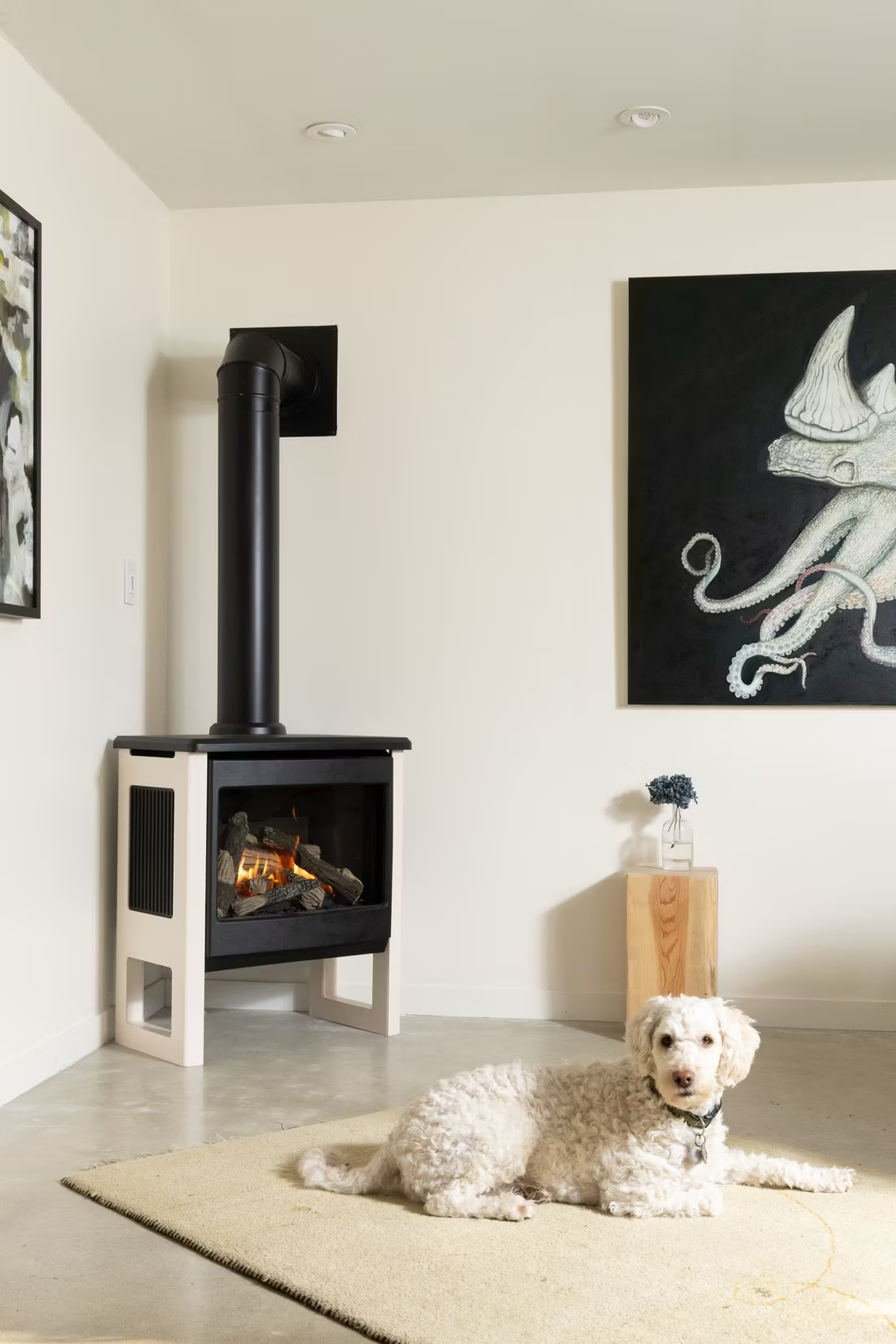
A gas fireplace is a fully built-in unit framed into a wall, typical for new construction or a full remodel. A gas insert slides into an existing masonry firebox and seals it for higher efficiency. A vented gas log set is the simplest option—realistic ceramic logs dropped into an existing fireplace, often the fastest and least invasive upgrade for Pensacola's older homes with unused wood fireboxes. A gas stove is a freestanding cabinet unit, less common here than in colder climates but occasionally used in sunrooms or additions. Most Pensacola homeowners converting an existing fireplace land on a log set or insert.
Do I need a permit to install a gas fireplace in Pensacola?
Yes. Whether your property falls under the City of Pensacola Building Inspections Division or Escambia County Building Inspections, new gas fireplace installations require both a building permit and a gas line permit, and the gas line work has to be done by a licensed gas fitter. Reputable local dealers coordinate all of this as part of the installation, so you're not left managing separate trades and inspections yourself.
Vented vs. vent-free gas fireplaces—which makes sense for a Pensacola home?
Vented (direct-vent) units draw combustion air from outside and exhaust it back outside, keeping combustion byproducts out of the house entirely—the safer, more universally recommended choice. Vent-free units burn directly into the room and are legal in Florida, but they come with strict room-size and oxygen-sensor requirements, and Pensacola's high year-round humidity can make the added moisture from vent-free combustion feel worse indoors than it would in a drier climate. For that reason, most local dealers steer homeowners toward direct-vent models unless there's a specific reason venting isn't possible.
How often does a gas fireplace need to be serviced here?
Plan on an annual inspection, ideally before the cooler months hit in November or December. A technician checks the burner, pilot assembly, gas connections, and venting, and cleans the glass and interior. Pensacola's coastal salt air is worth mentioning specifically—it can accelerate corrosion on exterior vent caps and metal components faster than it would inland, so a yearly look is cheap insurance. Expect to pay roughly $125 to $225 for a standard service call from a local hearth technician.
Why don't more Pensacola homes have wood-burning fireplaces?
With only a short, mild heating season each year and winter lows averaging 44°F, Pensacola simply doesn't have the sustained cold that makes wood heat practical the way it is in places like Bozeman, MT or Duluth, MN. Wood-burning stoves and inserts are essentially absent from the local hearth market, and pellet stoves are rare for the same reason. A small number of homeowners still keep an open wood-burning fireplace going with local oak or pine for the occasional cold snap or holiday ambiance, but gas has become the practical default for anyone who wants real flame without committing to a fuel source the climate barely calls for.
Can I put a TV above my fireplace?
Yes—with an asterisk. Fireplaces are hot and TVs don't like heat. Either put a mantel between them to deflect rising warmth, or choose a fireplace with heat-management technology that creates a cool zone on the wall above—the wall stays around 125 degrees, barely warm, while the room still gets full heat. If you like clean lines and don't want a mantel, heat management is the answer.
Why is my open fireplace making my house colder?
Open fireplaces suck—literally. As the fire burns, it consumes air your furnace already paid to heat and pulls it out through the chimney, so the house is actually colder after the fire goes out than before you lit it. An insert fixes this: it seals the chimney, puts fixed glass across the front, and turns that hole in your house into a real heat source.
What is an in-home preview and do I need one?
It's a visit where a hearth professional measures your space, confirms the model you picked actually works in your home, and walks the specs—framing, gas line, venting, finish work—before anything is ordered. Some details you just can't know until you see the house. Never make a down payment without one; it's the single most-skipped step that burns buyers.
Can I install a fireplace myself?
If you're putting a fire in your house on purpose, it's best to work with an expert. Unless you're genuinely experienced in framing, gas line, vent pipe, and the national code on clearances to combustibles, have a professional do it—and ideally the same company that sells you the fireplace, so warranty, service, and liability all live under one roof.
Nearby Dealers
Hearth shops serving Pensacola and the surrounding area.
Find your gas fireplace in Pensacola.
Tell us a bit about your home and we'll put together a free Project Guide & Parts List—the right unit, the vent kit, and a trusted local Pensacola dealer to install it.
Find Your Fireplace →