
Keep Your Family Warm and Safe—No Matter What
With winter lows averaging 59°F, Pembroke Park doesn't need wood heat to survive the season. But for ambiance, an occasional cool snap, or a second home up north, it can still make sense. We'll help you sort out what's realistic and connect you with a local dealer.
Every Project Starts From One of These Five Situations
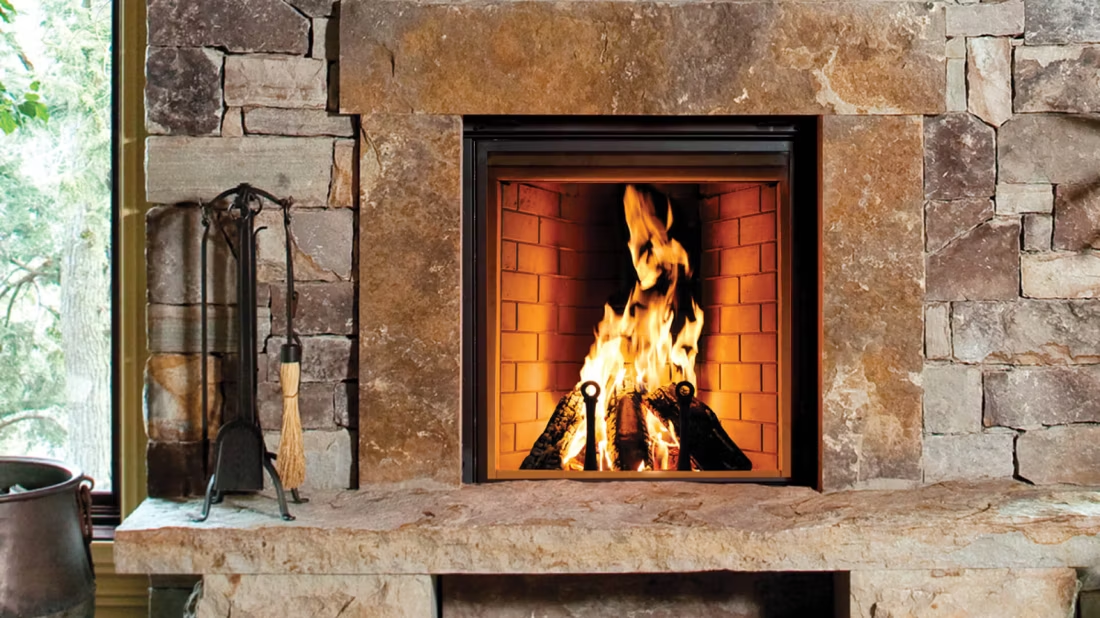
A fireplace built for ambiance, not survival.
Pembroke Park sits at 10 feet of elevation in Broward County, in climate zone 1A—the warmest, most humid zone in the continental U.S. The city has one of the mildest winters in the country, with a heating season so short it barely registers. Compare that to a place like Duluth, Minnesota, where winters are long, harsh, and demand heat for months on end, and the gap is obvious: there simply isn't a heating season here in the way a wood stove is designed to solve. Winter lows average 59°F, and a hard freeze is a rare enough event that it makes local news.
That's why wood-burning fireplaces and stoves are genuinely uncommon in Pembroke Park. The handful of installs we do see fall into a few categories: homeowners who want the look and crackle of a real wood fire for a handful of chilly January evenings, transplants who grew up with wood heat and miss it, and residents with a second home in a colder climate who are shopping for that property instead. If wood heat is what you're after for year-round performance, gas or electric units—both standard here and served by Florida Power & Light—are almost always the more practical local choice. But if a real wood fire is what you want, it's still achievable with the right venting and a contractor who's done it before.
Three steps. No salesperson until you're ready.
Tell us about your project
Your zip code, your situation, and the fuel you're leaning toward—or let the answers point you to one.
See what's actually available
The brands dealers within 100 miles genuinely carry—real options, never a catalog mirage.
Get your dealer & Project Guide
A trusted local dealer, plus the free Project Guide & Parts List that names every component of the job.
Frequently Asked Questions
How much does it cost to install a wood-burning fireplace in Pembroke Park?
Because wood installs are uncommon here, pricing tends to run on the higher end of national ranges—expect $6,000 to $12,000+ for a freestanding stove or zero-clearance fireplace once you factor in Class A chimney pipe running through a roof that was never designed for one. South Florida homes rarely have existing masonry chimneys, so most projects are new-construction venting rather than a simple insert into an existing hearth. Get a firm quote from a local installer rather than relying on a national average—the framing and roof penetration work varies a lot by home type in this area.
Does a wood stove even make sense in a climate like Pembroke Park's?
For heat, not really. With winters this mild and a winter low averaging 59°F, a wood stove will sit unused for the vast majority of the calendar—this isn't a Buffalo, NY or Bismarck, ND situation where a stove earns its keep every winter night. Where it does make sense is ambiance: an evening fire during a cold front, a design feature in a great room, or a nod to a homeowner's roots somewhere colder. If you want that experience but don't want a rarely-used appliance taking up space, a lot of local homeowners land on a gas fireplace with a realistic log set instead—instant on, no wood storage, and it still delivers the visual.
Who actually installs wood stoves in Pembroke Park?
It's a small slice of the market. We typically see it from homeowners building a custom home who want a statement fireplace regardless of climate, people with ties to colder states who want the authentic experience, and residents who are really shopping for a second property up north but started their search here. If that's you, a local dealer can still help—but expect the conversation to include a candid discussion about usage and whether wood, gas, or electric best fits what you're actually trying to accomplish in this climate.
Do I need a permit to install a wood-burning fireplace in Pembroke Park?
Yes. Any new wood-burning appliance or chimney penetration requires a building permit through Broward County Building Code Services (or the applicable municipal building department, depending on your exact address within Pembroke Park's zip codes). Because these installs are infrequent locally, it's worth confirming your contractor has actually pulled a wood-appliance permit in the county before—not every general contractor has, and the roof and wall penetration details matter for inspection sign-off in a hurricane-code jurisdiction like Broward.
Where would I source firewood in Pembroke Park?
There's no cutting-permit culture here the way there is out west—Broward County isn't surrounded by national forest land, so firewood is a delivered or purchased product rather than something you self-cut. Oak is the most common seasoned firewood available regionally, with pine sometimes sold for kindling. Mahogany trims and scraps occasionally show up from local tree services but aren't a primary firewood source. If you install a wood-burning unit here, budget for delivered cordwood rather than assuming you can source it locally the way you might in a forested state.
Wood vs. gas—which actually makes sense for my home in Pembroke Park?
For this climate, gas is the more practical answer for most homeowners. Natural gas and propane fireplaces light instantly, need no fuel storage, and don't sit unused for eleven months of the year the way a wood stove does in a climate with such a short, mild winter. Wood wins only if the experience itself—the smell, the crackle, the ritual—is the actual goal, independent of heat output. A number of local dealers we work with will walk you through both options honestly rather than pushing whichever unit they happen to stock, which matters most in a market where wood isn't the obvious default.
Can I add a wood fireplace to a home that doesn't have a chimney?
Yes, but it's a bigger project than converting an existing masonry fireplace, which most South Florida homes don't have to begin with. A zero-clearance wood-burning fireplace or freestanding stove requires new Class A chimney pipe run through the roof, proper flashing for Florida's hurricane-rated roofing systems, and county inspection at the roof penetration. This is one of the reasons wood installs run higher here than in regions where an existing chimney just needs an insert—you're building the entire venting path from scratch.
What's a realistic alternative if I want fireplace ambiance without an unused wood stove?
Electric fireplaces are a common local answer. With Florida Power & Light billing residential customers around 13.7 cents per kWh, an electric insert or mantel unit costs very little to run for the occasional evening ambiance most Pembroke Park homeowners actually want, and there's no venting, chimney, or permit headache. Gas fireplaces are the other common choice—real flame, instant on, and appropriately scaled to a climate where heat output matters far less than atmosphere. Both are considered standard, well-supported options in this market, unlike wood.
I'm really shopping for a vacation home in a colder state—can Find My Fireplace still help?
Yes. If your primary interest in wood heat is a cabin, second home, or property outside South Florida, tell us the location and we'll match you with a trusted local dealer near that property instead—sizing, permitting, and species availability are all specific to where the stove will actually burn, not where you live in the winter. For your Pembroke Park home itself, we're happy to also walk through gas or electric options that fit this climate more directly.
Why is my open fireplace making my house colder?
Open fireplaces suck—literally. As the fire burns, it consumes air your furnace already paid to heat and pulls it out through the chimney, so the house is actually colder after the fire goes out than before you lit it. An insert fixes this: it seals the chimney, puts fixed glass across the front, and turns that hole in your house into a real heat source.
What's the difference between an insert and a zero-clearance fireplace?
An insert is a fireplace that slides into a pre-existing wood-burning fireplace—if you don't have one, there's nothing to insert it into. A zero-clearance fireplace is built into a framed wall, which makes it the answer for remodels and new construction. Simple test: existing masonry fireplace means insert; blank or framed wall means zero-clearance.
Can I install a fireplace myself?
If you're putting a fire in your house on purpose, it's best to work with an expert. Unless you're genuinely experienced in framing, gas line, vent pipe, and the national code on clearances to combustibles, have a professional do it—and ideally the same company that sells you the fireplace, so warranty, service, and liability all live under one roof.
What is an in-home preview and do I need one?
It's a visit where a hearth professional measures your space, confirms the model you picked actually works in your home, and walks the specs—framing, gas line, venting, finish work—before anything is ordered. Some details you just can't know until you see the house. Never make a down payment without one; it's the single most-skipped step that burns buyers.
Nearby Dealers
Hearth shops serving Pembroke Park and the surrounding area. Every listing shows whether it is a WhyFire partner, a dealer we have verified as authorized for the brands we recommend, or a local business carrying hearth products. No manufacturer pays for placement. How we verify dealers →
Lifestyle Barn LLC
The Kitchenworks
Impel America Appliance
Home Gas
Brandel Masonry
One Space Solution LLC
A&S Reclaimed Wood
Get your free Project Guide & Parts List for wood heat in Pembroke Park.
Tell us about your home—and whether this is for Pembroke Park or a property elsewhere—and we'll match you with a trusted local dealer plus a free Project Guide & Parts List with the exact vent kit and equipment your project needs.
Find Your Fireplace →