
Warmth on demand—even when the power's out.
Palm Harbor winters rarely call for real heat, but a gas fireplace still earns its keep—as a design centerpiece and as backup warmth when Gulf storms knock out the grid. Find the right unit and connect with a trusted local dealer.
Every Project Starts From One of These Five Situations
A fireplace built for comfort, not survival.
Palm Harbor sits along Tampa Bay's Gulf coast in climate zone 2A, at just 72 feet of elevation, with average winter lows around 51°F and a heating season so short it barely registers—a fraction of what a place like Duluth, MN logs before Thanksgiving even starts. Nobody here is sizing a fireplace to survive a January cold snap. What Palm Harbor homeowners actually want is a gas fireplace or log set that dresses up a family room or lanai, takes the chill off the rare 40-degree evening, and—increasingly—keeps running when a tropical system rolls through and the power goes out for a few days.
Piped natural gas infrastructure is limited across unincorporated Pinellas County, so most gas fireplace installations in Palm Harbor run on propane, with a small tank set discreetly along the side or back of the house. Duke Energy Florida handles electric service here, but propane is the standard fuel for gas fireplaces, inserts, and log sets. The upside is that propane units deliver the same instant on-off operation, the same realistic flame picture, and—with the right ignition system—the same ability to keep running through a hurricane-season outage without any grid power at all.
Three steps. No salesperson until you're ready.
Tell us about your project
Your zip code, your situation, and the fuel you're leaning toward—or let the answers point you to one.
See what's actually available
The brands dealers within 100 miles genuinely carry—real options, never a catalog mirage.
Get your dealer & Project Guide
A trusted local dealer, plus the free Project Guide & Parts List that names every component of the job.
Frequently Asked Questions
How much does a gas fireplace installation cost in Palm Harbor?
Most propane fireplace and insert installations in Palm Harbor run $3,500 to $8,500, depending on the unit, whether a new propane tank and line are needed, and whether it's going into an existing masonry opening or a new framed wall. A direct-vent propane insert dropped into an existing fireplace with a tank already on the property sits toward the lower end. New construction or a built-in unit requiring fresh gas line runs and a new propane tank setup pushes toward the higher end. Local installers coordinate the propane supplier, the gas line work, and the venting together, and can give you a firm number after seeing the space.
Is natural gas available in Palm Harbor, or is it all propane?
Piped natural gas service is patchy at best across unincorporated Pinellas County, and most Palm Harbor neighborhoods don't have it. As a result, the overwhelming majority of gas fireplaces installed here run on propane, supplied by a local propane company that sets and services a tank on your property. Duke Energy Florida provides electric service to the area but isn't a gas utility. If you're not sure whether natural gas reaches your specific street, a local hearth dealer can check before quoting your project—but plan on propane unless you already know otherwise.
Will a gas fireplace still work if the power goes out during a storm?
Yes, and for Palm Harbor homeowners this is often the deciding factor. Units with IPI (intermittent pilot ignition) run on a small battery backup that kicks in automatically the moment Duke Energy Florida's grid drops, so the fireplace lights and operates just like normal off battery power. Valor takes it a step further—their gas fireplaces generate their own electricity through the pilot's thermocouple, so there's no battery to remember to replace at all. After a named storm knocks out power for days, a propane fireplace that doesn't depend on the grid can be the only reliable heat and light source in the house. Ask about the ignition system specifically when comparing units.
What's the difference between a gas fireplace, gas insert, and gas stove for a home like mine?
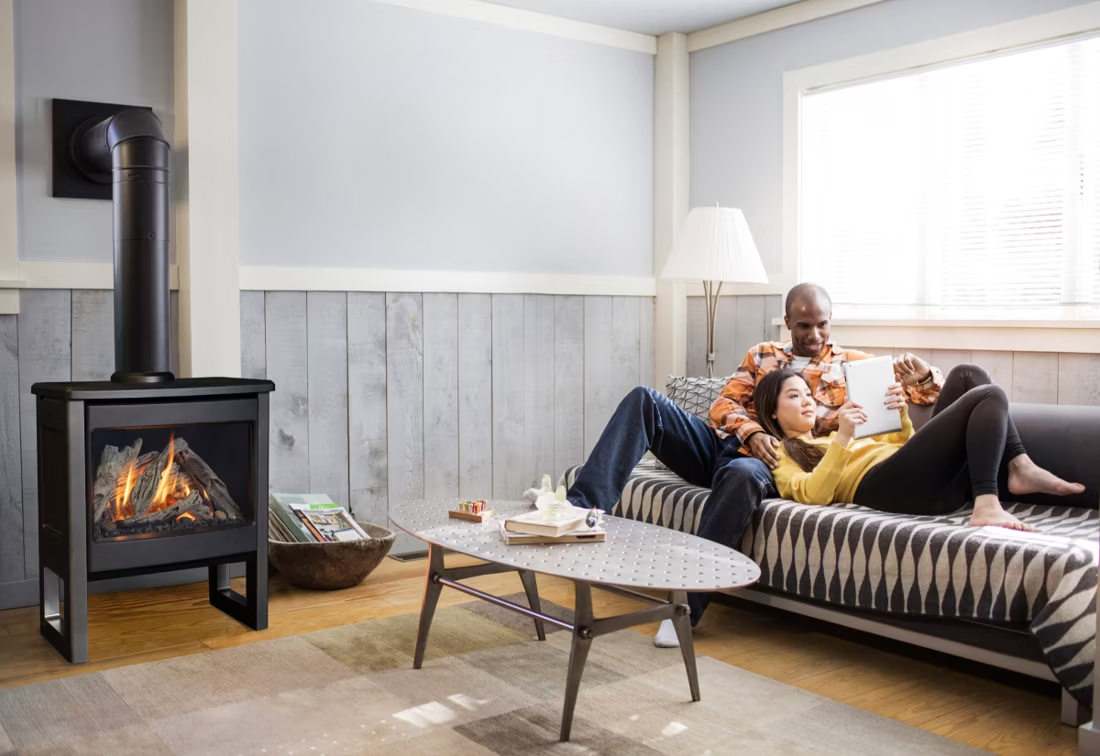
A gas fireplace is a fully built-in unit installed into a framed wall—the common choice for new construction, additions, or a lanai remodel. A gas insert is sized to drop into an existing masonry fireplace opening, sealing it up and dramatically improving both looks and efficiency without demolition. A gas stove is a freestanding cabinet-style unit, popular in Florida rooms or smaller spaces where a full fireplace wall isn't practical. Palm Harbor's mix of 1970s-80s ranch homes with existing masonry fireboxes and newer construction means all three show up regularly—a local dealer can tell you quickly which fits your opening.
Do I need a permit to install a gas fireplace in Palm Harbor?
Yes. Palm Harbor is unincorporated, so permitting runs through Pinellas County Building Services rather than a city hall. A new gas fireplace or insert typically needs both a building permit and a gas/propane line permit, and the line work has to be done by a licensed gas contractor. Most hearth retailers handle the permitting and inspection scheduling as part of the installation, which is one of the real advantages of using a certified local dealer instead of a handyman install.
Are vent-free gas fireplaces allowed in Palm Harbor?
Florida permits vent-free (ventless) gas fireplaces, and they show up fairly often in Palm Harbor condos and homes where running a vent through an exterior wall isn't practical. Vent-free units burn fuel directly into the room and must meet strict room-size and oxygen-depletion-sensor requirements. Vented direct-vent fireplaces remain the more common recommendation from local dealers, since Florida's humidity means added moisture from a vent-free unit is worth avoiding in most living spaces—but for a lanai enclosure or a room where venting isn't an option, vent-free is a legitimate choice worth discussing with your installer.
How often does a gas fireplace need to be serviced in Palm Harbor's climate?
An annual inspection is recommended even in a mild climate like Palm Harbor's, mainly because coastal humidity and salt air can accelerate corrosion on burner components and venting hardware faster than it would inland. A technician checks the burner, pilot assembly, gas connections, and glass seal, and services the propane regulator if applicable. Most local gas appliance service providers charge $150-$250 for this annual visit—cheap insurance against a mid-winter (or mid-hurricane-season) failure.
Does anyone in Palm Harbor actually install wood-burning fireplaces?
Rarely, and for good reason—with average winter lows around 51°F and barely any real heating season to speak of, Palm Harbor simply doesn't have the sustained cold that makes wood heat practical. A small number of homeowners still install a wood-burning fireplace for the look of a real fire using local oak or mahogany, or because they split time with a colder-climate property. But for anyone weighing the decision, gas is the far more common and far more practical choice here—no chimney sweeping, no wood storage in a humid climate, and instant operation on the few nights you'd actually want it.
Gas fireplace or electric fireplace—which makes more sense in Palm Harbor?
Electric fireplaces are simple: no propane tank, no gas line, no permit for the unit itself, and installation often runs $500 to $1,500 since it's essentially plugging into an outlet and mounting a unit. Running one on Duke Energy Florida's residential rate of about 16.6 cents per kWh costs pennies per hour of use. A gas fireplace costs more upfront and requires propane service, but delivers real, room-warming heat and keeps working through a power outage—a meaningful edge during hurricane season. For a condo or a purely decorative accent wall, electric often wins. For a primary living space where you want genuine backup heat, gas is usually the better call.
What's the difference between an insert and a zero-clearance fireplace?
An insert is a fireplace that slides into a pre-existing wood-burning fireplace—if you don't have one, there's nothing to insert it into. A zero-clearance fireplace is built into a framed wall, which makes it the answer for remodels and new construction. Simple test: existing masonry fireplace means insert; blank or framed wall means zero-clearance.
Why is a fireplace insert so efficient?
An insert does two things: it seals the chimney completely, so you stop losing air you already paid to heat, and it radiates warmth into the room through the firebox and glass. Most add a heat-exchange fan that pulls cool room air underneath, wraps it around the hot firebox, and pushes it back out warm. Your home is more efficient before you've even lit the first fire.
Can I install a fireplace myself?
If you're putting a fire in your house on purpose, it's best to work with an expert. Unless you're genuinely experienced in framing, gas line, vent pipe, and the national code on clearances to combustibles, have a professional do it—and ideally the same company that sells you the fireplace, so warranty, service, and liability all live under one roof.
How much should I budget for a fireplace?
For an average home—covering the fireplace, the vent pipe, and basic installation—a budget between $3,900 and $5,500 gives you a lot of options across wood, gas, and pellet. By the time you add finish work, gas line, and electrical, the average complete installation lands between $5,000 and $12,000 all-in. In a remodel or new build, a good rule is to put about 2.5% of the total project cost toward the fireplace.
Nearby Dealers
Hearth shops serving Palm Harbor and the surrounding area.
Urban Concepts Modern Hearth & Outdoor
Urban Concepts Modern Patio And Fireplace
Find your gas fireplace in Palm Harbor.
Tell us a bit about your home and we'll put together your free Project Guide & Parts List—the exact parts, including the vent kit, for your Palm Harbor gas fireplace project—and match you with a trusted local dealer.
Find Your Fireplace →