
Keep Your Family Warm and Safe—No Matter What
Pace winters are mild, but hurricane season isn't. Find the right wood stove or insert for ambiance, cool snaps, and outages—and connect with a trusted local dealer.
Every Project Starts From One of These Five Situations
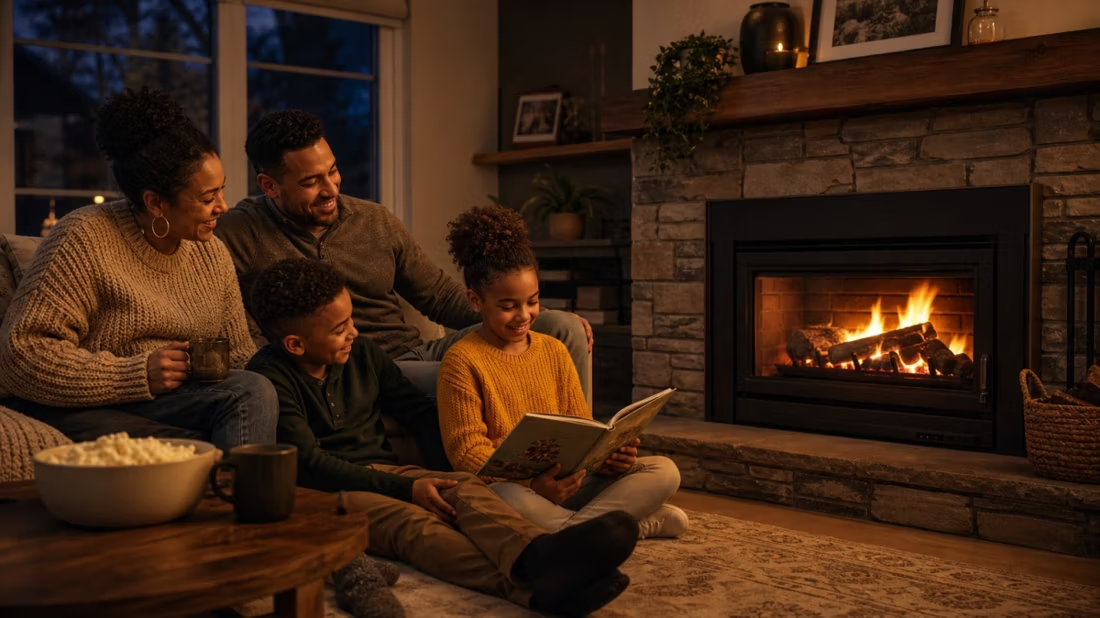
Ambiance most nights, real heat when it matters.
Pace sits in climate zone 2A on the Florida Panhandle, where winter lows average 42°F and the heating season is short and mild—a fraction of what a place like Duluth, MN racks up in a single hard winter. That means wood heat here isn't about survival; it's about the handful of genuinely cold nights each January, the look and feel of a real fire, and the backup warmth that matters when Gulf storms take out the grid.
Santa Rosa County sees its share of tropical systems, and Florida Power & Light customers in the Pace area know that a hurricane can mean days without electricity. A wood stove or fireplace insert keeps burning with no power at all, which is a real selling point locally even though most Pace homes run central HVAC the rest of the year. Locally available firewood runs mostly oak and pine, with some mahogany in the mix—oak in particular needs a full season or more to dry properly given the Gulf Coast's humidity, so sourcing and stacking wood ahead of time matters more here than in drier climates.
Three steps. No salesperson until you're ready.
Tell us about your project
Your zip code, your situation, and the fuel you're leaning toward—or let the answers point you to one.
See what's actually available
The brands dealers within 100 miles genuinely carry—real options, never a catalog mirage.
Get your dealer & Project Guide
A trusted local dealer, plus the free Project Guide & Parts List that names every component of the job.
Frequently Asked Questions
How much does a wood stove installation cost in Pace?
A freestanding wood stove installation in Pace typically runs $3,500 to $7,500, depending on the unit and whether you're building a new hearth pad and chimney chase or working with an existing masonry fireplace. Because most Pace homes were built without a wood-burning chimney already in place, a fair number of installs require running Class A pipe through an exterior wall or roof, which pushes cost toward the higher end. Converting an existing masonry fireplace with a wood insert is usually cheaper since the chimney structure is already there—often $4,000 to $6,500 once a stainless liner is added.
What size wood stove do I need for a Pace home?
Most Pace homes don't need a stove sized for whole-house heating the way a home in International Falls, MN would. A small to medium stove—rated for 800 to 1,500 square feet—is plenty for supplemental heat in a main living area or den, since you're bridging a handful of cold nights rather than a five-month heating season. Going bigger than that usually means smoldering, low-temperature fires that build up creosote fast in our humid climate. A local dealer can size the room correctly during an in-home visit rather than guessing off square footage alone.
Where can I find a certified wood stove installer near Pace?
Look for installers with NFI (National Fireplace Institute) certification, which confirms training specific to wood-burning appliances and clearances. In the Pace and greater Pensacola area, most certified installers work through the hearth retailers that also sell the stove, which keeps warranty coverage and code compliance under one roof. Given how much moisture the Gulf Coast throws at a chimney system, it's worth confirming your installer is also comfortable with proper flashing and chimney cap details—a bad seal here causes water damage faster than it would in a drier climate.
Wood stove or wood insert—which fits my Pace home better?
If your home already has a masonry, wood-burning fireplace—common in older Pace and Milton-area construction—a wood insert is usually the better upgrade. It uses the chimney you already have, adds a stainless liner for a sealed, efficient burn, and turns a drafty, inefficient fireplace into a real heat source. If you're starting from scratch, a freestanding stove gives more flexibility on placement and doesn't require an existing masonry structure at all, though it does mean new venting from the ground up.
Do I need a permit to install a wood stove in Pace?
Yes—new wood-burning installations in unincorporated Santa Rosa County go through the Santa Rosa County Building Department, which reviews clearances, venting, and hearth protection against current code. The good news is Pace has no air quality non-attainment designation and no winter inversion issues like you'll find in some Western cities, so there are no seasonal burn curtailment periods to worry about. Most local dealers pull the permit as part of the installation, so you typically don't have to navigate it yourself.
What's the best wood stove for a mild climate like Pace's?
You don't need a catalytic stove built for 20-hour burns at sub-zero temperatures here—that's overkill for a climate with a 42°F average winter low. Mid-size non-catalytic stoves from brands like Pacific Energy or Vermont Castings are well matched to Pace's occasional cold snaps and give a clean, hot burn without needing to be babied through long overnight loads. The bigger consideration for a lot of Pace buyers is reliable operation with zero electricity, since that's what makes a wood stove genuinely useful after a hurricane knocks out power for days.
How often should my chimney be inspected in Pace's climate?
An annual inspection before burning season is a good baseline, but Pace's humidity adds a wrinkle a drier climate wouldn't: masonry and chimney caps take more moisture damage here than in the arid West, so it's worth having your inspector check flashing, mortar joints, and the cap specifically, not just creosote buildup. Because most Pace stoves only see moderate winter use rather than daily all-season burning, creosote accumulation is usually lighter than in colder markets—but skipping inspections is still the top cause of chimney fires, so it's not a step to shortcut.
Where can I get good firewood in the Pace area?
Oak and pine are the most common species sold locally by tree services and firewood suppliers around Santa Rosa County, with some mahogany available seasonally. Oak burns hot and long once properly seasoned, but Gulf Coast humidity means it needs closer to 12 months of covered, stacked drying rather than the 6 months that might work in a drier state—burning green or under-seasoned oak is the single biggest cause of smoky, inefficient fires in this climate. Pine seasons faster and works well for shoulder-season fires, though it burns quicker and leaves more resin buildup if used constantly.
Wood stove vs. pellet stove—which makes more sense in Pace?
Wood stoves run on cordwood, work with zero electricity, and pair naturally with the oak and pine already common in Santa Rosa County—a real advantage during hurricane-season outages when the grid is down for days. Pellet stoves, using bagged pellets from regional suppliers like Lignetics or Hamer Pellet Fuel, are more convenient day-to-day and burn cleaner, but they need electricity to run the auger and blower, so they go dark exactly when a wood stove would keep running. For most Pace homeowners weighing storm resilience against daily convenience, that outage question is usually the deciding factor.
Why is my open fireplace making my house colder?
Open fireplaces suck—literally. As the fire burns, it consumes air your furnace already paid to heat and pulls it out through the chimney, so the house is actually colder after the fire goes out than before you lit it. An insert fixes this: it seals the chimney, puts fixed glass across the front, and turns that hole in your house into a real heat source.
Why is a fireplace insert so efficient?
An insert does two things: it seals the chimney completely, so you stop losing air you already paid to heat, and it radiates warmth into the room through the firebox and glass. Most add a heat-exchange fan that pulls cool room air underneath, wraps it around the hot firebox, and pushes it back out warm. Your home is more efficient before you've even lit the first fire.
How much should I budget for a fireplace?
For an average home—covering the fireplace, the vent pipe, and basic installation—a budget between $3,900 and $5,500 gives you a lot of options across wood, gas, and pellet. By the time you add finish work, gas line, and electrical, the average complete installation lands between $5,000 and $12,000 all-in. In a remodel or new build, a good rule is to put about 2.5% of the total project cost toward the fireplace.
Can a fireplace actually lower my heating bill?
Yes—by creating a comfort zone. A furnace heats every square foot of the house just to warm the one room you're in; a gas fireplace on low burns roughly a sixth of the gas a typical furnace does. Set the furnace around 55–60 degrees as a baseline, then heat the rooms your family actually uses. Families who heat this way commonly save $20–$60 a month.
Nearby Dealers
Hearth shops serving Pace and the surrounding area.
Find your wood fireplace in Pace.
Tell us a bit about your home and we'll match you with a trusted local dealer and a free Project Guide & Parts List—sized, vented, and ready for your Pace wood stove or insert project.
Find Your Fireplace →