
Keep Your Family Warm and Safe—No Matter What
With such a short, mild heating season and winter lows averaging 50°F, Oviedo doesn't need wood heat the way Duluth or Fargo does. But for hurricane season backup heat, cabin ambiance, or a second home up north, a properly installed wood stove is still possible here—matched through a trusted local dealer.
Every Project Starts From One of These Five Situations
Central Florida's mild winters make wood heat optional.
Oviedo sits in Seminole County at just 46 feet of elevation, squarely in ASHRAE climate zone 2A—one of the mildest heating climates in the continental U.S. The area has a very short, mild heating season, and the average winter low hovers around 50°F. Compare that to a place like Duluth, Minnesota, which has a long, brutal heating season lasting most of the year, and it's clear why wood stoves never became a fixture of Central Florida homes. Most Oviedo houses are built and insulated to keep heat out, not in.
That said, wood-burning fireplaces and stoves aren't nonexistent here. A small number of Oviedo homeowners install them for hurricane season backup heat and cooking when Florida Power & Light or Duke Energy service goes down after a storm, for the ambiance of a real fire on the occasional 30-degree January night, or because they're outfitting a second home or hunting camp further north where oak, mahogany, and pine firewood is available locally. If that's your situation, the same code and clearance rules apply here as anywhere else—they're just applied less often.
Three steps. No salesperson until you're ready.
Tell us about your project
Your zip code, your situation, and the fuel you're leaning toward—or let the answers point you to one.
See what's actually available
The brands dealers within 100 miles genuinely carry—real options, never a catalog mirage.
Get your dealer & Project Guide
A trusted local dealer, plus the free Project Guide & Parts List that names every component of the job.
Frequently Asked Questions
Does anyone actually install wood stoves in Oviedo, FL?
Not many, and that's expected—Oviedo's climate zone (2A) and its short, mild heating season put it among the mildest heating climates in Florida. Most local hearth dealers sell far more gas log sets and electric fireplaces than wood stoves. Still, a handful of installs happen each year, usually for hurricane backup heat, camp-style properties, or homeowners who grew up with wood heat somewhere colder and want the ambiance. If that's you, a certified installer can absolutely do the work—it's just a less common request than it would be in Bozeman or Burlington.
What does a wood stove installation cost in Oviedo?
Because wood stoves are uncommon here, there isn't the deep local pricing history you'd find for gas fireplaces or electric units in this market. Nationally, a freestanding wood stove with Class A chimney venting typically runs $4,500 to $9,000 installed, and that range holds up reasonably well for Central Florida too—materials and permitting costs aren't dramatically different than elsewhere. Expect the installer to factor in a new masonry or manufactured chase, since most Oviedo homes weren't built with an existing wood-rated chimney.
What wood species are available locally if I do install a stove?
Oak, mahogany, and pine are the most common species around Seminole County, and all three will burn in a wood stove. Oak is the better long-burn, high-heat choice once properly seasoned—plan on 6 to 12 months of drying time, since Central Florida's humidity slows seasoning compared to drier climates. Pine burns hot and fast and is fine for occasional shoulder-season fires, but it builds creosote faster, so more frequent chimney cleaning matters if you burn much of it. Mahogany shows up mostly as storm-cleanup debris rather than a dedicated firewood source.
Do I need a permit to install a wood stove in Oviedo?
Yes—a building permit is required for any new wood-burning appliance and chimney installation, whether that's through the City of Oviedo or Seminole County depending on your address. The stove itself needs to meet EPA 2020 NSPS emissions standards, same as anywhere in the country. Since these installs are infrequent locally, it's worth choosing an installer who has actually pulled a wood-stove permit before rather than one who mostly handles gas or electric units.
Is a wood stove worth it for hurricane backup heat?
It's an unusual reason to want a wood stove, but a legitimate one. Oviedo sits in territory served by Florida Power & Light and Duke Energy, and either utility can see multi-day outages after a major hurricane. A wood stove provides heat and stovetop cooking capability with zero dependence on the grid, which matters more here than most people assume—even in a climate where you rarely need heat for warmth alone. If backup capability is your main driver, make sure the installer sizes the stove for occasional use rather than for a constant heating load.
Should I get a wood stove or a gas fireplace instead?
For most Oviedo homes, gas is the more practical choice—it's rated standard for this climate for a reason: no wood storage, no ash, and instant on/off operation that suits a house needing supplemental heat only a handful of nights a year. Wood makes sense mainly if you specifically want off-grid backup heat, the ritual of a real fire, or you're equipping a second property somewhere colder. A local dealer can walk you through both and shouldn't push you toward wood if it isn't the right fit for your home.
Are there air quality or burn-ban restrictions on wood burning in Oviedo?
No—Seminole County has no listed air quality non-attainment issues or winter inversion concerns, unlike drier Western climates where wood smoke advisories during cold snaps are common. Wood burning here isn't restricted by air quality rules; the limiting factor is simply that most homes rarely need the heat in the first place.
Can I convert an existing fireplace to burn wood if my home already has one?
Some older Oviedo homes, particularly near the historic downtown, do have masonry fireplaces built decades ago that were originally designed to burn wood. If yours is one of them, a chimney inspection is the right first step—many have sat unused long enough that the flue liner needs to be checked before anything is lit. If your fireplace is a decorative gas or electric unit instead, converting it to true wood-burning usually means adding a proper flue system, which is a bigger project than most homeowners expect.
Where can I find a dealer who actually installs wood stoves near Oviedo?
Because wood systems are a small slice of the local market, not every hearth dealer in the greater Orlando area stocks or installs them regularly. That's exactly the gap Find My Fireplace exists to close—we match you with a trusted local dealer who genuinely handles wood installations, rather than one who'll steer you to gas because that's what they know best. Tell us about your project and we'll send a free Project Guide & Parts List with the right equipment and a dealer recommendation.
Why is a fireplace insert so efficient?
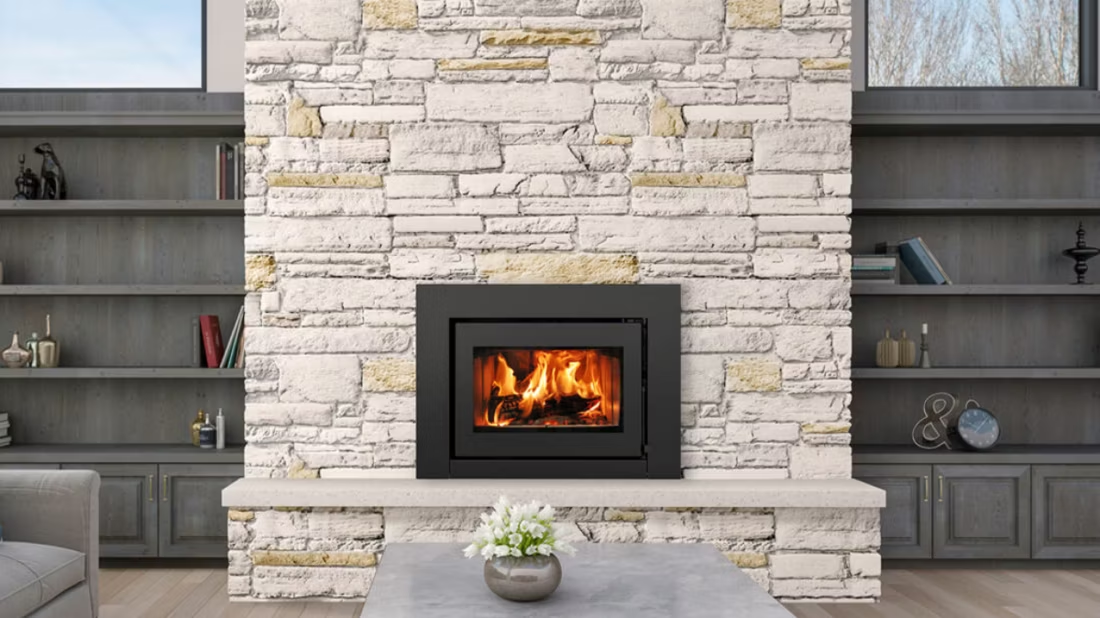
An insert does two things: it seals the chimney completely, so you stop losing air you already paid to heat, and it radiates warmth into the room through the firebox and glass. Most add a heat-exchange fan that pulls cool room air underneath, wraps it around the hot firebox, and pushes it back out warm. Your home is more efficient before you've even lit the first fire.
Why is my open fireplace making my house colder?
Open fireplaces suck—literally. As the fire burns, it consumes air your furnace already paid to heat and pulls it out through the chimney, so the house is actually colder after the fire goes out than before you lit it. An insert fixes this: it seals the chimney, puts fixed glass across the front, and turns that hole in your house into a real heat source.
How much should I budget for a fireplace?
For an average home—covering the fireplace, the vent pipe, and basic installation—a budget between $3,900 and $5,500 gives you a lot of options across wood, gas, and pellet. By the time you add finish work, gas line, and electrical, the average complete installation lands between $5,000 and $12,000 all-in. In a remodel or new build, a good rule is to put about 2.5% of the total project cost toward the fireplace.
Does a fireplace add value to my home?
On average, a fireplace adds back to the home about the same amount you spent installing it. Add the monthly savings from heating the rooms you actually use instead of the whole house—often hundreds of dollars a year—and the value case is strong before you even count what a fire does for how your family uses the room.
Nearby Dealers
Hearth shops serving Oviedo and the surrounding area.
Find your wood fireplace in Oviedo.
Tell us about your project—hurricane backup heat, a second home up north, or just the ambiance of a real fire—and we'll match you with a trusted local dealer and send a free Project Guide & Parts List with the exact equipment for your install.
Find Your Fireplace →