
Pellet stoves are rare in Oakleaf Plantation, and that's fine by the climate.
With just 944 heating degree days a year and winter lows averaging 47°F, most Oakleaf Plantation homes don't need a dedicated wood-pellet heat source. If you still want one—for ambiance, backup, or a second home up north—I'll match you with a trusted local dealer who can tell you honestly what fits.
Every Project Starts From One of These Five Situations
A climate that rarely calls for extra heat.
Oakleaf Plantation sits in Clay County just southwest of Jacksonville, at 64 feet of elevation in climate zone 2A. The numbers explain a lot: 944 heating degree days a year and a winter low averaging 47°F put this community closer to a place that occasionally needs a jacket than one that needs a supplemental heat source. Compare that to Duluth, Minnesota, which racks up nearly 10,000 heating degree days most winters, and the gap in real heating demand becomes obvious. Most Oakleaf Plantation winters bring only a handful of nights anywhere near freezing.
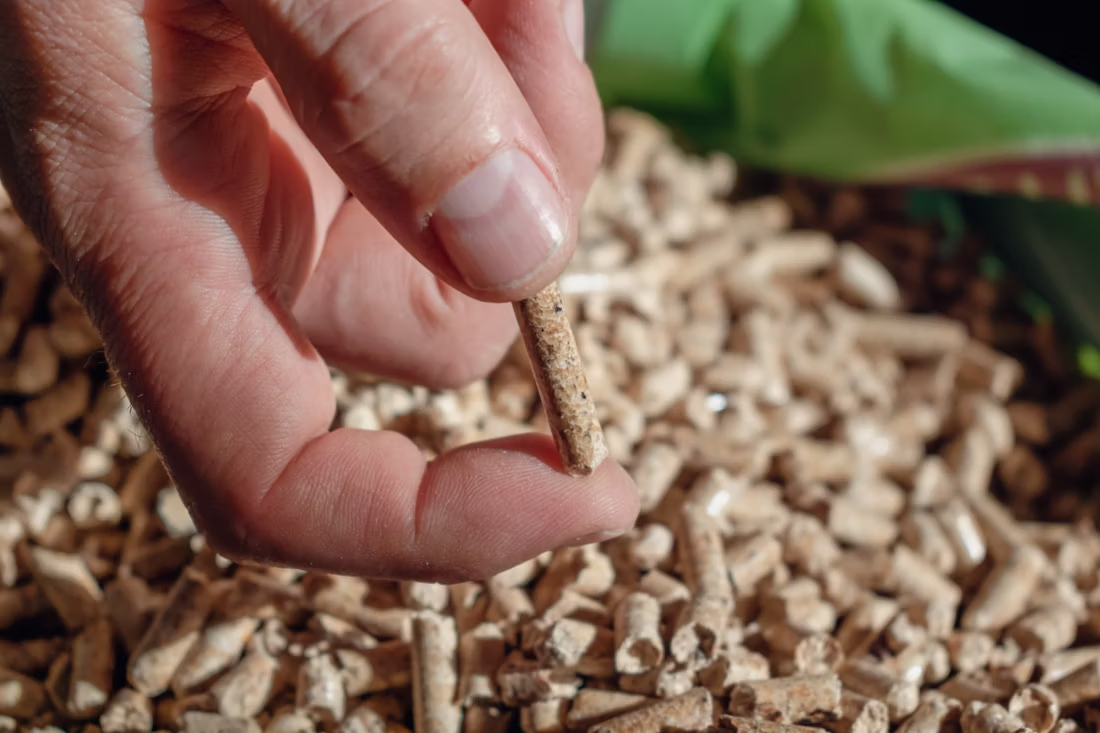
That's why pellet stoves aren't part of the standard hearth conversation in this part of Clay County the way gas fireplaces or electric units are. When pellet heat does come up locally, it's usually for a homeowner who wants the visual of a real flame on the occasional cool front, someone with a second property in a colder state who's comparing notes, or a household that simply likes the idea of a hopper-fed backup. If that's you, regional brands like Lignetics, Hamer Pellet Fuel, and Greenway Renewable Energy are the ones a local dealer would actually be able to source and keep stocked.
Three steps. No salesperson until you're ready.
Tell us about your project
Your zip code, your situation, and the fuel you're leaning toward—or let the answers point you to one.
See what's actually available
The brands dealers within 100 miles genuinely carry—real options, never a catalog mirage.
Get your dealer & Project Guide
A trusted local dealer, plus the free Project Guide & Parts List that names every component of the job.
Frequently Asked Questions
Does a pellet stove even make sense in Oakleaf Plantation's climate?
For most homes, no—not as a primary or even meaningful supplemental heat source. At 944 heating degree days and a winter low averaging 47°F, Oakleaf Plantation sees only a handful of nights near or below freezing most years, nothing like the sustained cold that makes a hopper-fed stove earn its keep in places such as Duluth, Minnesota. A pellet stove here functions more as an occasional-use, ambiance-driven appliance than a workhorse heater, and most local dealers will tell you that directly rather than oversell the BTU output you'd actually use.
What does it cost to install a pellet stove if I still want one here?
Nationally, a pellet stove insert or freestanding unit typically runs $3,000 to $6,000 installed, including venting. In Oakleaf Plantation specifically, expect the number to land toward the higher end of whatever a dealer quotes, simply because pellet units aren't something local hearth shops stock in volume—Clay County demand runs toward gas and electric fireplaces instead, so a pellet install here is more often a special order than an off-the-shelf job. Ask any dealer you're considering how often they've actually installed a pellet unit in the past year; it's a fair question given how niche the fuel is locally.
Where can I actually buy wood pellets near Oakleaf Plantation?
You won't find pellet fuel at every hardware store the way you might in a colder region, but Lignetics, Hamer Pellet Fuel, and Greenway Renewable Energy are the regional brands most likely to show up through farm-supply retailers and larger home-improvement stores in the greater Jacksonville area. Because turnover is slower here than in northern markets, it's worth calling ahead in fall to confirm stock rather than assuming a full pallet is sitting on the shelf when the first cool front of the season rolls through.
Do I need a permit to install a pellet stove in Oakleaf Plantation?
Yes—any new solid-fuel appliance, pellet stoves included, needs a building permit through the Clay County Building Division, since Oakleaf Plantation is unincorporated Clay County rather than its own municipality. The review covers hearth clearances and venting through the wall or roof. Given how rarely pellet stoves get installed in this area compared to gas or electric units, it's worth confirming with your installer that they're familiar with the specific inspection points for a pellet appliance rather than assuming it's routine paperwork for them.
Why don't more Oakleaf Plantation homes use pellet stoves?
Mostly climate math. With only 944 heating degree days a year and winter lows averaging 47°F, there simply isn't enough sustained cold to justify feeding a hopper and storing bags of fuel through the winter. Local homeowners who want a fireplace for warmth or ambiance overwhelmingly choose a gas unit that lights instantly on the rare chilly evening, or an electric fireplace that adds visual warmth without any fuel logistics at all—both fit a short, mild heating season far better than a fuel designed for daily reload cycles.
Pellet vs. electric fireplace—which makes more sense in Oakleaf Plantation?
For most homes here, electric wins on practicality. Oakleaf Plantation is served by Florida Power & Light and JEA, with residential rates around 12.4 to 13.7 cents per kWh, and an electric fireplace or insert plugs in with no venting, no fuel storage, and no permit hassle for a purely supplemental or decorative unit. A pellet stove requires a hopper, periodic feeding, ash cleanup, and a fuel supply that's genuinely harder to source locally—reasonable tradeoffs in a cold climate, but hard to justify for a community that sees freezing temperatures on only a handful of nights a year.
I split time between Oakleaf Plantation and a colder state—does that change the pellet stove math?
It can, but usually the pellet stove belongs at the colder property, not here. If you own a cabin or second home somewhere with real winters—the kind of place with thousands of heating degree days rather than Oakleaf Plantation's 944—that's where a pellet stove's overnight burn times and fuel economics actually pay off. For the Clay County home, a gas or electric fireplace almost always makes more sense as the primary hearth feature, since it's designed around occasional use rather than a long heating season.
What size pellet stove would I need if I installed one anyway?
Given how mild Oakleaf Plantation's winters run, you'd want the smallest end of the sizing range—a unit rated for supplemental or single-room heat rather than anything sized for a whole-house heating load. Most dealers would size it closer to an ambiance appliance than a furnace replacement, since you'd likely run it only on the occasional cold front rather than daily through a real heating season. It's worth being upfront with your installer that you're after occasional-use warmth so they don't size for a demand this climate won't generate.
Are there HOA or air quality restrictions on pellet stoves in Oakleaf Plantation?
Oakleaf Plantation is a large, deed-restricted master-planned community, and like most HOAs in similar Clay County developments, it typically has architectural review requirements for anything that changes a home's exterior venting, including a pellet stove's wall or roof penetration. There's no regional air quality non-attainment issue to worry about—Clay County doesn't carry the wildfire-smoke or inversion concerns some western markets do—but you'll still want to check your HOA's architectural guidelines before an installer shows up, since exterior vent placement is the detail most likely to need sign-off.
How often does a pellet stove need cleaning?
A clean pellet stove is a happy pellet stove. Plan on cleaning the burn pot about once a week when you're burning regularly—ash and clinkers gum up the air holes just like a pellet barbecue. Most pellet stove problems trace back to skipped cleaning that nobody explained up front. Some designs make it easy with a trapdoor burn pot: pull a lever and the gunk drops into the ash pan.
What's the difference between an insert and a zero-clearance fireplace?
An insert is a fireplace that slides into a pre-existing wood-burning fireplace—if you don't have one, there's nothing to insert it into. A zero-clearance fireplace is built into a framed wall, which makes it the answer for remodels and new construction. Simple test: existing masonry fireplace means insert; blank or framed wall means zero-clearance.
How much should I budget for a fireplace?
For an average home—covering the fireplace, the vent pipe, and basic installation—a budget between $3,900 and $5,500 gives you a lot of options across wood, gas, and pellet. By the time you add finish work, gas line, and electrical, the average complete installation lands between $5,000 and $12,000 all-in. In a remodel or new build, a good rule is to put about 2.5% of the total project cost toward the fireplace.
What is an in-home preview and do I need one?
It's a visit where a hearth professional measures your space, confirms the model you picked actually works in your home, and walks the specs—framing, gas line, venting, finish work—before anything is ordered. Some details you just can't know until you see the house. Never make a down payment without one; it's the single most-skipped step that burns buyers.
Nearby Dealers
Hearth shops serving Oakleaf Plantation and the surrounding area.
Pellet Brands Stocked Around Oakleaf Plantation
Manufacturers will point you to the nearest stocking dealer.
Let's map out your pellet stove project in Oakleaf Plantation, however small.
Whether you're set on a pellet stove or just weighing it against gas and electric options that suit Clay County's mild winters better, tell me about your home and I'll match you with a trusted local dealer and send a free Project Guide & Parts List—sized honestly for how often you'll actually use it.
Find Your Fireplace →