
A gas fireplace built for North Miami Beach living.
Real flame for cool-front evenings, pool decks, and waterfront condos along the Intracoastal—sized and vented right for your building, not a generic catalog pick.
Every Project Starts From One of These Five Situations
Ambiance first, heat second in North Miami Beach.
North Miami Beach sits at 8 feet of elevation in climate zone 1A, where the heating season barely registers—the winter low averages 59°F, and a hard freeze is essentially unheard of. Nobody here is installing a gas fireplace to survive a Bozeman-style winter. What draws homeowners in zip codes 33162, 33160, and 33280 toward gas is different: a linear direct-vent fireplace as a design centerpiece in a waterfront condo living room, a fire feature built into a lanai or pool deck for the handful of genuinely cool nights each January and February, or a builder-grade upgrade that adds resale value to a South Florida spec home.
Fuel supply is the practical wrinkle. Coastal towers and barrier-island buildings around the Oleta River and Intracoastal don't always have natural gas service run to the unit, so a meaningful share of local gas fireplace and fire pit installs run on propane instead—either a small buried tank for a single-family lot or a shared house tank feeding multiple units in a condo association. Florida Power & Light serves the area for electric service (residential rates run around 13.7 cents/kWh), which matters mainly for comparison: electric fireplaces are the other standard option here, and some homeowners weigh the two side by side before picking gas for the real flame.
Three steps. No salesperson until you're ready.
Tell us about your project
Your zip code, your situation, and the fuel you're leaning toward—or let the answers point you to one.
See what's actually available
The brands dealers within 100 miles genuinely carry—real options, never a catalog mirage.
Get your dealer & Project Guide
A trusted local dealer, plus the free Project Guide & Parts List that names every component of the job.
Frequently Asked Questions
How much does a gas fireplace installation cost in North Miami Beach?
There's no single number because the projects vary a lot in this market. A linear direct-vent fireplace built into an interior wall of a single-family home is a different scope than an outdoor gas fire feature set into a pool deck or lanai, and both are different again from a high-rise condo unit where the installer has to work with the building's gas riser and get sign-off from the condo association before touching anything. Propane tank installs add a line item that natural-gas-connected homes skip. A local dealer will walk your specific unit, wall type, and building situation and give you a firm number—that's part of what the free Project Guide & Parts List covers once you're matched.
Should I use natural gas or propane for my fireplace?
It depends on what's already run to your property. Homes and buildings with existing natural gas appliances can usually tie a fireplace into that line. But a lot of North Miami Beach's coastal and barrier-island housing stock—especially condo towers along 33160 and 33162—either doesn't have natural gas service or has limited capacity, which pushes homeowners toward propane. Propane also tends to be the default for standalone outdoor fire features on a lanai or pool deck where running a gas line back to the house isn't practical. Your local installer will tell you which is realistic for your address before you pick a unit.
Do I need a permit to install a gas fireplace in North Miami Beach?
Yes. Gas fireplace installations require a building permit and a separate gas permit, typically pulled through the City of North Miami Beach Building Department for properties inside city limits, or Miami-Dade County for unincorporated areas nearby. If you live in a condo, expect an additional layer: most associations require board or engineering approval before any gas line work happens inside a tower, since it affects shared risers and structural penetrations. A certified local installer who's done condo work in the area will know how to navigate both the municipal permit and the HOA process at the same time.
Does a gas fireplace actually make sense if North Miami Beach barely needs heat?
Honestly, heat isn't the reason most people here install one. With only a handful of truly chilly days a year and winter lows that rarely dip below the 50s, a gas fireplace in North Miami Beach is closer to a design and lifestyle feature than a heating appliance—used on the occasional cool-front evening in January, as a focal point in a condo remodel, or as an outdoor fire feature by the pool. That's a legitimate and common reason to install one here; it's just a different use case than a gas fireplace in a place like Duluth, MN, where it's genuinely load-bearing heat.
Will my gas fireplace still work if the power goes out during a storm?
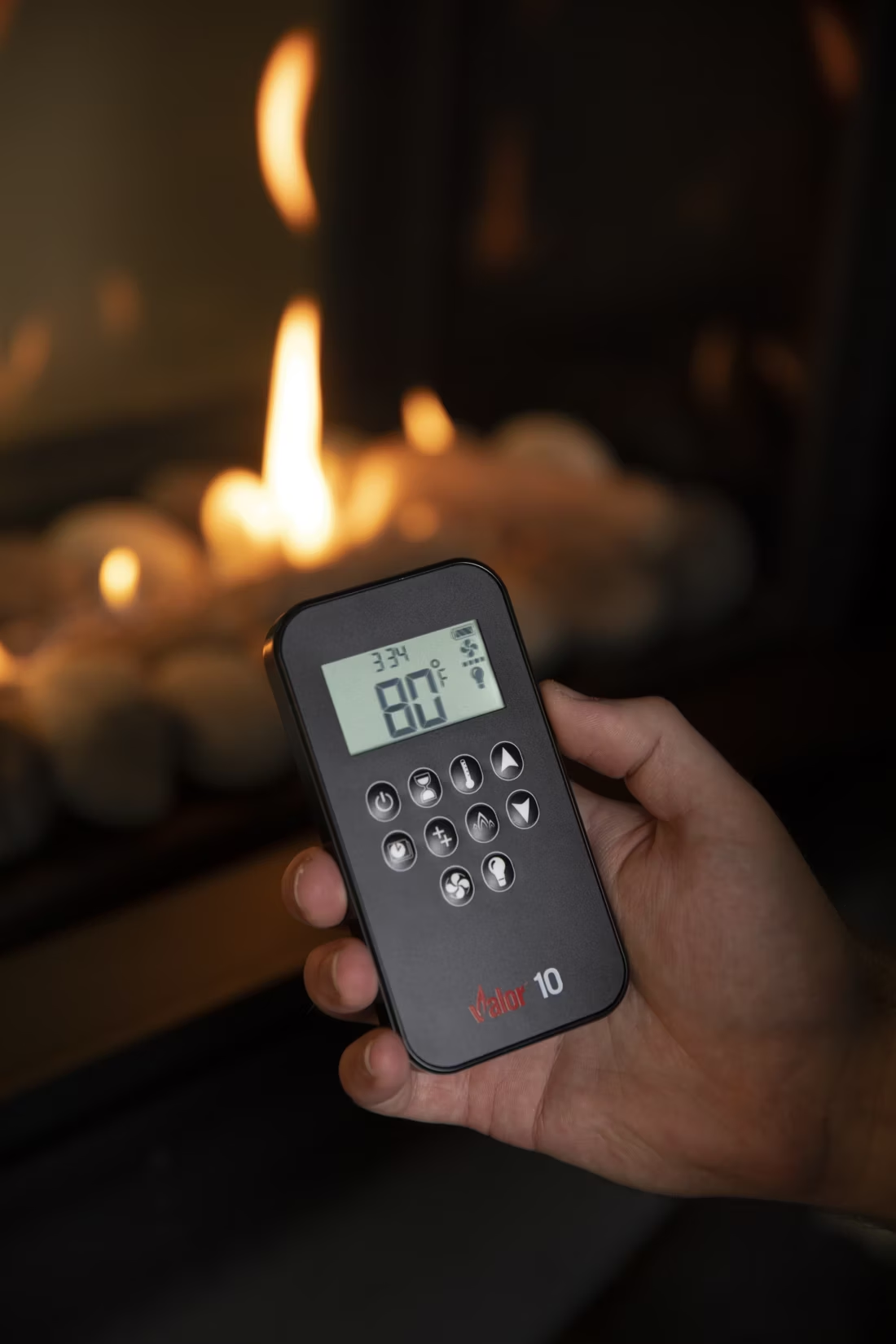
This one matters more in South Florida than the ambiance angle suggests, given hurricane season. Most direct-vent gas fireplaces with intermittent pilot ignition (IPI) run on AA batteries as backup, so they'll still light and operate when FPL service drops—as long as the batteries are fresh, which is easy to forget until a storm actually knocks out power. Valor units take it further: their pilot generates its own electricity through the thermocouple, so there's no battery to maintain at all. If backup heat and light during outages matters to you, ask your local dealer about the ignition system specifically—it's a real differentiator, not a minor spec.
Can I get an outdoor gas fireplace or fire pit for my lanai or pool deck?
Yes, and it's one of the more popular gas installs in this climate. Outdoor linear fire features, fire pits, and fire tables are common on North Miami Beach lanais, pool decks, and waterfront patios where the goal is ambiance and entertaining rather than warmth. These typically run on propane (either a portable tank or a buried line) since running natural gas outside isn't always practical, and they need to be sited with attention to wind exposure and salt air. A local hearth or outdoor living dealer can size the unit to your deck and handle the gas connection and any permitting.
Fireplace, insert, or stove—what's actually available for South Florida homes?
Most North Miami Beach installs are built-in direct-vent gas fireplaces rather than inserts, simply because a lot of the local housing stock—newer single-family homes and condo towers—doesn't have an existing wood-burning masonry fireplace to convert. Where an older home does have an existing fireplace, a gas insert is a straightforward retrofit. Freestanding gas stoves are less common here than in colder markets, since the freestanding wood-stove aesthetic they mimic isn't part of the local building tradition. A local dealer will tell you which format actually fits your wall and venting situation.
How often does a gas fireplace need to be serviced in North Miami Beach?
An annual inspection is the standard recommendation for any gas appliance, and it matters a bit more here because of the coastal air. Salt exposure near the Intracoastal and barrier-island properties can accelerate corrosion on burner components, venting, and outdoor units in particular, so a yearly check of the burner, pilot assembly, and any exterior venting is worth keeping on schedule even though the unit isn't running through a long heating season the way it would up north. A gas service technician can handle this alongside a general inspection of the connections and glass.
Gas vs. electric fireplace—which fits a North Miami Beach home better?
Both are considered standard options here, and the choice usually comes down to what you're after. Gas gives you a real flame, a stronger design statement, and—with battery-backup ignition—a source of light and low heat during a power outage, which is worth something during hurricane season. Electric fireplaces skip the gas line and permit process entirely, run on standard household power through Florida Power & Light (residential rates run around 13.7 cents/kWh), and are simpler to install in a condo where gas line work triggers association approval. For a quick remodel or a rental property, electric is often the path of least resistance; for a primary residence where the fireplace is a focal point, real flame usually wins out.
Is my gas fireplace wasting gas?
If it was installed more than 15 years ago, probably. Older gas fireplaces keep a standing pilot light burning all the time, and that little flame can cost a couple hundred dollars a year. Newer models use pilot-on-demand ignition—the pilot lights only when you use the fireplace and goes out when you turn it off.
Why is a fireplace insert so efficient?
An insert does two things: it seals the chimney completely, so you stop losing air you already paid to heat, and it radiates warmth into the room through the firebox and glass. Most add a heat-exchange fan that pulls cool room air underneath, wraps it around the hot firebox, and pushes it back out warm. Your home is more efficient before you've even lit the first fire.
Can I install a fireplace myself?
If you're putting a fire in your house on purpose, it's best to work with an expert. Unless you're genuinely experienced in framing, gas line, vent pipe, and the national code on clearances to combustibles, have a professional do it—and ideally the same company that sells you the fireplace, so warranty, service, and liability all live under one roof.
How much should I budget for a fireplace?
For an average home—covering the fireplace, the vent pipe, and basic installation—a budget between $3,900 and $5,500 gives you a lot of options across wood, gas, and pellet. By the time you add finish work, gas line, and electrical, the average complete installation lands between $5,000 and $12,000 all-in. In a remodel or new build, a good rule is to put about 2.5% of the total project cost toward the fireplace.
Nearby Dealers
Hearth shops serving North Miami Beach and the surrounding area.
Find your gas fireplace in North Miami Beach.
Tell us about your home, condo, or outdoor space and we'll match you with a trusted local dealer—plus a free Project Guide & Parts List covering the exact unit, venting, and parts your North Miami Beach project needs.
Find Your Fireplace →