
Is a pellet stove right for Nassau County?
With winter lows averaging 45°F and only about 1,066 heating degree days a year, Nassau County rarely needs serious supplemental heat. If a pellet stove still fits your plans—a second home up north, a raised Amelia Island cottage that gets chilly on winter nights, or just the look and warmth of a real hearth—we'll connect you with a local dealer who can tell you straight whether it's worth it.
Every Project Starts From One of These Five Situations
A mild coastal climate, a narrow niche for pellet heat.
Nassau County sits in Florida's northeast corner along the Atlantic—Fernandina Beach, Amelia Island, Yulee, Callahan, and Hilliard—in climate zone 2A, one of the hottest, most humid zones in the country. Heating degree days here run about 1,066 a year, a fraction of what a place like Duluth, MN or Fargo, ND racks up in a single hard winter. Winter lows average 45°F, and while an occasional arctic outbreak can push a January night into the 20s, sustained cold is the exception, not the rule. There's no local air quality advisory pressure either—none reported for the county—so the usual reasons a pellet stove wins out elsewhere (efficient, low-particulate heat in a cold, smoke-sensitive region) simply don't carry the same weight in Nassau County.
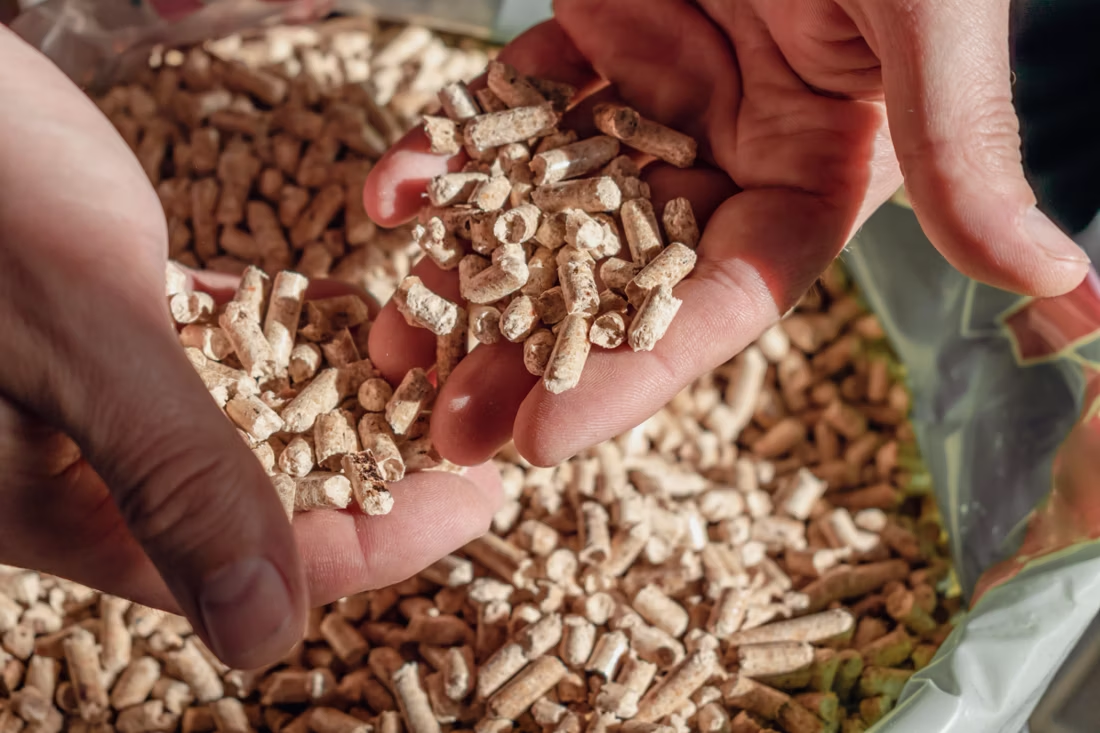
That's why pellet fuel relevance here reads as not-applicable rather than standard. Pellet stoves depend on an electric auger and blower to run, which is a real drawback during hurricane season power outages—exactly the moment homeowners want backup heat, and exactly when a pellet stove goes dark. Storage is another factor: Florida's humidity is hard on bagged pellets, which absorb moisture and swell or crumble if kept in anything less than a sealed, dry space. Regional suppliers like Lignetics, Hamer Pellet Fuel, and Greenway Renewable Energy do serve the broader Southeast, but they're stocking for customers in colder parts of Georgia and the Carolinas more than for Nassau County living rooms. None of this means a pellet stove is off the table—it means it's a deliberate, ambiance-and-occasional-use purchase here rather than a primary heating decision, and that's worth being upfront about before you spend money on one.
Three steps. No salesperson until you're ready.
Tell us about your project
Your zip code, your situation, and the fuel you're leaning toward—or let the answers point you to one.
See what's actually available
The brands dealers within 100 miles genuinely carry—real options, never a catalog mirage.
Get your dealer & Project Guide
A trusted local dealer, plus the free Project Guide & Parts List that names every component of the job.
Frequently Asked Questions
Does a pellet stove actually make sense in Nassau County?
For most Nassau County homes, no—not as a primary or even meaningful supplemental heat source. With about 1,066 heating degree days a year and winter lows averaging 45°F, the demand simply isn't there the way it is in a place like Bozeman, MT or Burlington, VT. Where it does make sense: homeowners who want the visual and radiant warmth of a real flame on the rare cold, damp nights common on Amelia Island and along the St. Marys River, owners of camps or second homes further north or in the mountains, and people who simply like the ritual of it. If that's you, a local dealer can walk you through whether it's worth the investment for your specific home.
How much does it cost to install a pellet stove in Nassau County?
Because pellet stoves are an uncommon request here, there isn't a well-established local price benchmark the way there is for gas or electric fireplace work. Nationally, a pellet stove install (unit, venting, hearth pad, and labor) typically runs somewhere in the $3,000–$6,500 range, though your actual number depends heavily on venting complexity and whether an installer has to travel to reach your address. Because so few Nassau County dealers stock pellet units regularly, expect a bit more lead time on parts and get a firm, in-home quote before committing—don't rely on a generic online estimate.
Will a pellet stove work during a hurricane-season power outage?
No, and this is one of the biggest strikes against pellet heat in Nassau County specifically. A pellet stove's auger and blower both run on household electricity, so when a storm knocks out power—the exact scenario Nassau County homeowners plan around every hurricane season—the stove goes cold along with everything else. A battery backup or small generator can keep one running, but if backup heat during outages is your goal, a wood stove or a propane-fired unit is generally a more dependable choice in this climate.
Where can I buy pellet fuel in Nassau County?
Local stock is thin. Regional brands like Lignetics, Hamer Pellet Fuel, and Greenway Renewable Energy distribute through the Southeast, but most of their volume moves toward customers in Georgia and the Carolinas who actually need pellet heat through a real winter. If you install a pellet stove here, plan to order pellets ahead of the season—through a hardware store, farm supply outlet, or your dealer—rather than expecting shelves stocked with pellet bags the way they would be in a colder market.
Pellet stove vs. gas fireplace—which fits Nassau County better?
For nearly all Nassau County homes, gas comes out ahead. Gas fireplaces and inserts are considered standard here, work instantly at the flip of a switch, don't need fuel storage, and (with the right ignition system) can run during a power outage on battery backup. Pellet stoves require a fuel supply chain that isn't well established locally, depend on electricity to operate, and are built for climates with real sustained cold—which Nassau County, at 1,066 heating degree days, mostly doesn't have. If what you want is occasional visible flame and real heat without fuss, gas is almost always the more practical answer here.
Do I need a permit to install a pellet stove in Nassau County?
Yes—any new fuel-burning appliance, including a pellet stove, typically requires a building permit and inspection through the applicable local jurisdiction in Nassau County, along with adherence to current EPA emissions standards for the unit itself. Because these installs are infrequent locally, ask your installer directly how they've handled permitting for pellet appliances in the past—a dealer with actual pellet-stove experience in the county, even if limited, is worth more here than one who only installs gas or electric.
How do I store pellet fuel in Florida's humidity?
This is one of the practical hurdles that makes pellet heat a harder sell in Nassau County. Wood pellets are compressed sawdust with no binder—they absorb ambient moisture quickly, and in a coastal 2A climate with high year-round humidity, bags stored in a garage or shed can swell, clump, or crumble within weeks if not sealed tightly. If you go with a pellet stove here, plan on airtight storage containers, a dehumidified space, and buying in smaller quantities more often rather than stockpiling a season's worth like you would in a drier, colder climate.
Is a pellet stove a better fit for a cabin or second home somewhere colder?
Often, yes. If you own a getaway property in the North Georgia mountains, western North Carolina, or somewhere with real winter, a pellet stove makes a lot more sense there than at your primary Nassau County residence. Some homeowners in Fernandina Beach and Yulee end up making that exact call—skipping the pellet stove here in favor of a gas or electric fireplace for local ambiance, and saving the pellet investment for the property that actually gets cold. A local dealer can help you think through which location the investment belongs in.
Pellet stove vs. electric fireplace—which makes more sense for occasional Nassau County use?
For most homeowners here, an electric fireplace is the more sensible choice. Electric units cost far less to install (commonly a few hundred to just over a thousand dollars versus several thousand for a pellet system), need no fuel storage, produce zero emissions or ash, and can be run for the ambiance of a flame effect even when heat isn't needed—which is most of the year in a 2A climate with a 45°F average winter low. Pellet stoves make sense when you want genuine wood-style heat output and don't mind managing fuel and an auger system; for everyone else, especially in a mild climate like Nassau County's, electric is simpler and cheaper to own.
What's the difference between an insert and a zero-clearance fireplace?
An insert is a fireplace that slides into a pre-existing wood-burning fireplace—if you don't have one, there's nothing to insert it into. A zero-clearance fireplace is built into a framed wall, which makes it the answer for remodels and new construction. Simple test: existing masonry fireplace means insert; blank or framed wall means zero-clearance.
How often does a pellet stove need cleaning?
A clean pellet stove is a happy pellet stove. Plan on cleaning the burn pot about once a week when you're burning regularly—ash and clinkers gum up the air holes just like a pellet barbecue. Most pellet stove problems trace back to skipped cleaning that nobody explained up front. Some designs make it easy with a trapdoor burn pot: pull a lever and the gunk drops into the ash pan.
How much should I budget for a fireplace?
For an average home—covering the fireplace, the vent pipe, and basic installation—a budget between $3,900 and $5,500 gives you a lot of options across wood, gas, and pellet. By the time you add finish work, gas line, and electrical, the average complete installation lands between $5,000 and $12,000 all-in. In a remodel or new build, a good rule is to put about 2.5% of the total project cost toward the fireplace.
Can a fireplace actually lower my heating bill?
Yes—by creating a comfort zone. A furnace heats every square foot of the house just to warm the one room you're in; a gas fireplace on low burns roughly a sixth of the gas a typical furnace does. Set the furnace around 55–60 degrees as a baseline, then heat the rooms your family actually uses. Families who heat this way commonly save $20–$60 a month.
Stove and Fireplace Dealers in Nassau County
Pellet Brands Stocked Around Nassau County
Manufacturers will point you to the nearest stocking dealer.
See if a pellet stove fits your Nassau County home.
Tell us about your home and how you'd use it, and we'll give you an honest read on whether a pellet stove makes sense in Nassau County's mild climate—or point you toward a better-suited option. If pellet is the right call, we'll match you with a trusted local dealer and put together a free Project Guide & Parts List with the exact parts, including the vent kit, for your project.
Find Your Fireplace →