
Keep Your Family Warm and Safe—No Matter What
With one of the shortest, mildest heating seasons in the country and winter lows averaging 61°F, Miami doesn't need wood heat the way a northern city does. But for homeowners who want the real thing—the smell, the crackle, the masonry hearth in a Coral Gables living room—it's still buildable, and we'll connect you with a local dealer who can do it right.
Every Project Starts From One of These Five Situations
Miami's climate doesn't call for wood heat—but some homes want the fire anyway.
Miami sits at sea level in climate zone 1A, with an average winter low of 61°F and one of the shortest, mildest heating seasons in the country—compare that to a place like Duluth, MN, which faces a heating load many times greater over the same stretch. There is essentially no functional need for a wood-burning heat source here, and that shows in the market: most Miami homes run central AC and heat pumps year-round, and wood stoves are not something you'll find at a typical hardware store or home show.
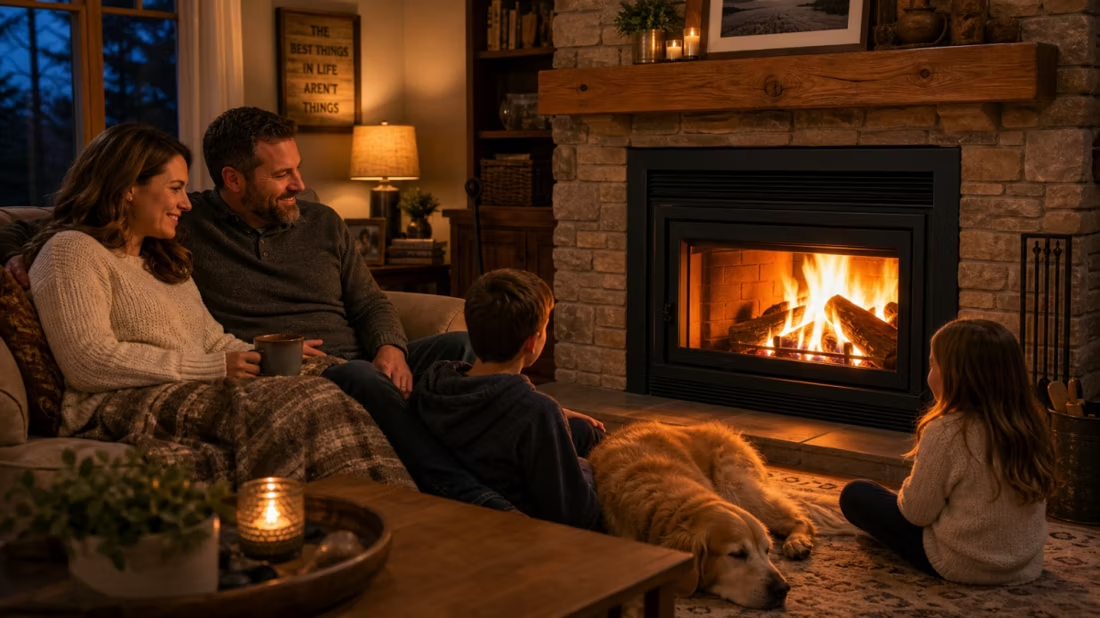
That said, wood-burning fireplaces do get installed in Miami—mostly for the ambiance and architectural character rather than the BTUs. Historic homes in Coral Gables and Coconut Grove were often built with masonry fireplaces as a design feature, and some homeowners restoring or building estate properties want a real wood fire for the handful of nights each winter when a cold front pushes temperatures into the 40s. Any new masonry chimney has to satisfy Florida Building Code hurricane wind-load requirements, and the stove itself must meet EPA 2020 NSPS standards—permits run through the City of Miami Building Department or Miami-Dade County Building Department depending on where you live.
Three steps. No salesperson until you're ready.
Tell us about your project
Your zip code, your situation, and the fuel you're leaning toward—or let the answers point you to one.
See what's actually available
The brands dealers within 100 miles genuinely carry—real options, never a catalog mirage.
Get your dealer & Project Guide
A trusted local dealer, plus the free Project Guide & Parts List that names every component of the job.
Frequently Asked Questions
Does a wood fireplace actually make sense in Miami?
For heat, not really—Miami has one of the shortest, mildest heating seasons in the country, and most homes never need supplemental heat at all. Where wood fireplaces do get installed here, it's almost always for ambiance, architectural character, or resale value in higher-end Coral Gables, Coconut Grove, or Pinecrest homes, rather than for warmth. If you want radiant heat for the occasional cold snap, a gas or electric unit will serve you far better day to day—a wood fireplace in Miami is a lifestyle choice, not a heating solution.
How much does a wood fireplace installation cost in Miami?
A wood-burning fireplace installation in Miami typically runs $5,000 to $10,000—on the higher end of what you'd see nationally, largely because new masonry chimneys here need engineering to meet Florida Building Code's hurricane wind-load requirements. That engineering and the reinforced construction add cost compared to a similar build in a non-coastal climate. Retrofitting an existing masonry fireplace with a wood insert, where the chimney structure already exists, tends to land toward the lower end of that range.
Do I need a permit to install a wood-burning fireplace in Miami?
Yes. Depending on your address, permitting runs through either the City of Miami Building Department or the Miami-Dade County Building Department, and both require compliance with the Florida Building Code's hurricane wind-load provisions for any new chimney or masonry structure. The stove or fireplace insert itself must also meet EPA 2020 NSPS emissions standards, even though Miami has no air quality non-attainment issues—that's a federal manufacturing standard, not a local air-quality rule. A local installer familiar with both codes will handle the permitting as part of the job.
What wood species are actually available for burning in Miami?
Local supply skews toward oak, mahogany, and pine—oak and mahogany often come from South Florida tree removal and pruning operations rather than dedicated firewood lots, since Miami-Dade doesn't have the commercial firewood industry you'd find near a national forest. Homeowners who burn regularly often end up sourcing seasoned oak from suppliers in north Florida or Georgia and having it delivered, since local hardwood volume is limited and humidity makes proper seasoning slower here than in a drier climate.
Since Miami has no air quality restrictions, can I burn wood freely?
Miami has no non-attainment status and no winter inversion issues, so there are no local burn bans or curtailment periods like you'd see in a smoke-prone basin. That said, any newly installed stove still has to meet EPA 2020 NSPS certification under the building code, and many Miami condo and HOA communities separately prohibit wood-burning appliances regardless of air quality—check your HOA documents before planning an installation, especially in high-rise or gated communities.
Wood vs. gas fireplace—which makes more sense in Miami?
Gas is the far more practical choice for most Miami homes. Natural gas service from TECO Peoples Gas or Florida City Gas is available across much of the metro, a gas fireplace installation typically runs $4,000 to $9,000, and it gives you instant on-off heat for the rare cool evening without any wood storage, ash, or chimney maintenance. Wood is chosen here almost exclusively for the authentic look and feel of a real fire in a formal living room—if you want a fireplace that gets used often, gas wins on convenience every time.
Are wood-burning fireplaces common in Miami condos or high-rises?
No—you'll almost never see one. High-rise buildings along Brickell, Edgewater, or South Beach aren't built with chimney infrastructure, and retrofitting a masonry flue through multiple stories of a hurricane-rated structure isn't practical or usually permitted. Wood fireplaces in Miami are essentially limited to single-family homes, particularly older or custom-built properties in neighborhoods like Coral Gables, Coconut Grove, and Pinecrest where a chimney can be engineered into the structure.
What about the wood fireplaces already in older Miami homes?
Many pre-1960s homes in Coral Gables and Coconut Grove were built with decorative masonry fireplaces, often more architectural than functional. If you're restoring one, a local installer can inspect the existing chimney and flue for structural soundness and hurricane-code compliance, and often convert it to a certified wood insert or gas insert without rebuilding the masonry shell—which is usually far cheaper than a new chimney build.
Wood vs. electric fireplace—which is the better fit for Miami?
For most Miami homeowners who just want fire ambiance without smoke, permits, or masonry work, electric is the easier answer—installation runs just $400 to $1,200, there's no chimney or venting required, and it runs on standard household power from Florida Power & Light at roughly 13.7 cents per kWh. Wood is the choice for homeowners who specifically want a real, wood-burning fire and are willing to take on the masonry build and hurricane-code engineering to get it. Both are far less common here than gas, but they serve very different goals.
Why is my open fireplace making my house colder?
Open fireplaces suck—literally. As the fire burns, it consumes air your furnace already paid to heat and pulls it out through the chimney, so the house is actually colder after the fire goes out than before you lit it. An insert fixes this: it seals the chimney, puts fixed glass across the front, and turns that hole in your house into a real heat source.
Why is a fireplace insert so efficient?
An insert does two things: it seals the chimney completely, so you stop losing air you already paid to heat, and it radiates warmth into the room through the firebox and glass. Most add a heat-exchange fan that pulls cool room air underneath, wraps it around the hot firebox, and pushes it back out warm. Your home is more efficient before you've even lit the first fire.
Can I install a fireplace myself?
If you're putting a fire in your house on purpose, it's best to work with an expert. Unless you're genuinely experienced in framing, gas line, vent pipe, and the national code on clearances to combustibles, have a professional do it—and ideally the same company that sells you the fireplace, so warranty, service, and liability all live under one roof.
Can a fireplace actually lower my heating bill?
Yes—by creating a comfort zone. A furnace heats every square foot of the house just to warm the one room you're in; a gas fireplace on low burns roughly a sixth of the gas a typical furnace does. Set the furnace around 55–60 degrees as a baseline, then heat the rooms your family actually uses. Families who heat this way commonly save $20–$60 a month.
Nearby Dealers
Hearth shops serving Miami and the surrounding area. Every listing shows whether it is a WhyFire partner, a dealer we have verified as authorized for the brands we recommend, or a local business carrying hearth products. No manufacturer pays for placement. How we verify dealers →
Home Gas
Impel America Appliance
Lifestyle Barn LLC
One Space Solution LLC
The Kitchenworks
See what a wood fireplace could look like in Miami.
Tell us about your home and we'll match you with a trusted local dealer who understands Miami-Dade's hurricane wind-load and building code requirements—plus a free Project Guide & Parts List with the exact parts, vent kit, and dealer recommendation for your project.
Find Your Fireplace →