
An Ambiance-First Gas Fireplace for a City That Rarely Needs Heat.
Miami doesn't need a furnace, but a well-placed gas fireplace still does real work—anchoring a living room, warming a rare January cold snap, and adding the kind of design statement that shows up in condo listings. Find the right unit and get matched with a trusted local dealer.
Every Project Starts From One of These Five Situations
Here, a fireplace is a design decision, not a survival tool.
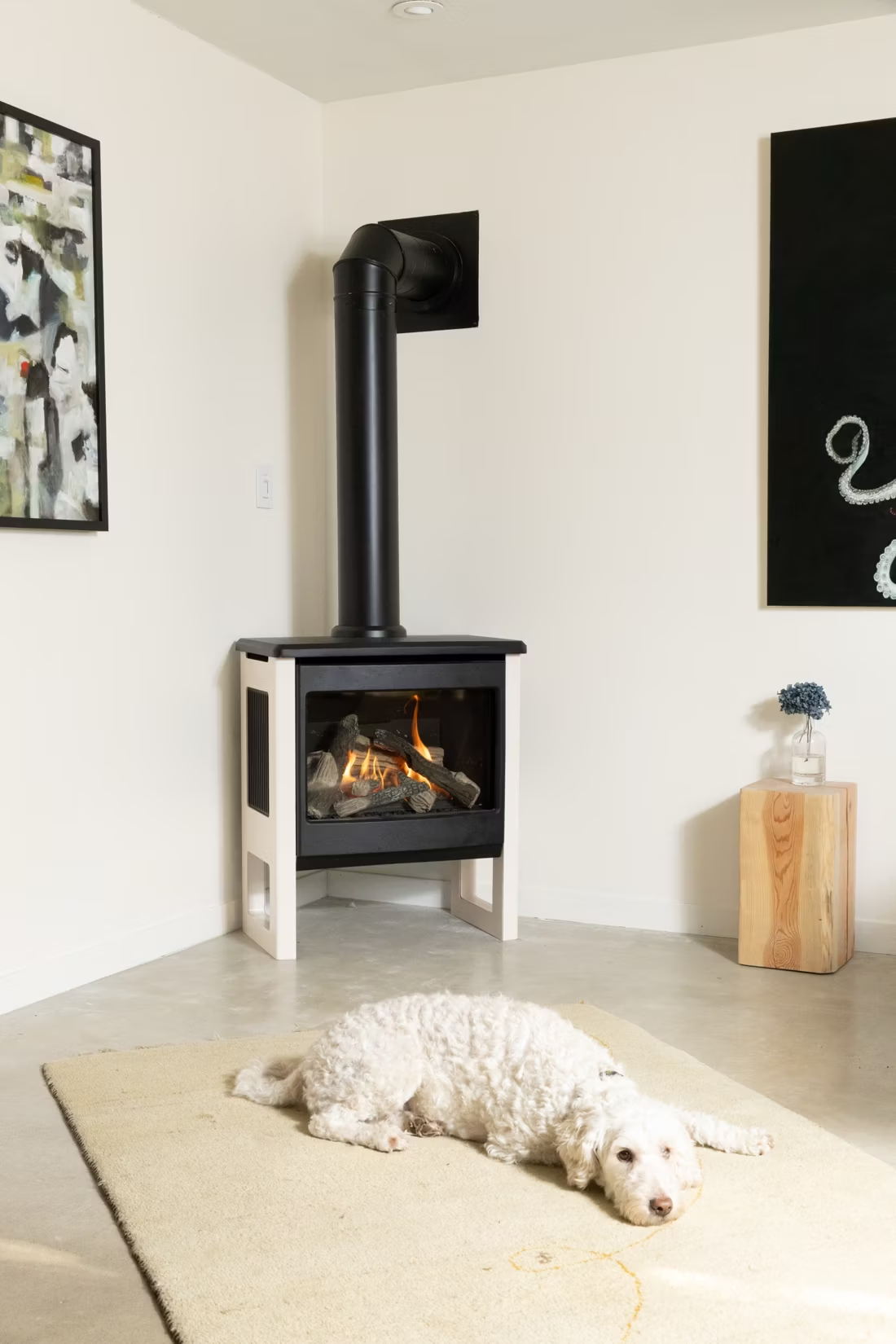
Miami sits in climate zone 1A with a winter mild enough that homes barely need any heating at all, and an average winter low near 61°F—a fraction of what a place like Duluth, MN sees in a single week. Nobody in Coconut Grove or Coral Gables is heating a home with a fireplace as primary defense against the cold. What gas fireplaces do here is different: they anchor a great room in a waterfront estate, add a linear flame wall behind a Brickell high-rise bar, or give a living space real presence on the handful of nights each winter when temperatures actually dip into the 40s.
Natural gas service covers most of the city through TECO Peoples Gas, with Florida City Gas serving parts of Miami-Dade County outside the core service area—so most homes already plumbed for a gas range or water heater can add a fireplace without a major infrastructure lift. Installation falls under the City of Miami Building Department or Miami-Dade County Building Department depending on address, and every install has to satisfy Florida Building Code hurricane wind-load requirements, which affects how exterior vent terminations are secured and flashed. Typical installed cost runs $4,000 to $9,000, with condo and high-rise installs often landing on the higher end due to HOA coordination and longer vent runs.
Three steps. No salesperson until you're ready.
Tell us about your project
Your zip code, your situation, and the fuel you're leaning toward—or let the answers point you to one.
See what's actually available
The brands dealers within 100 miles genuinely carry—real options, never a catalog mirage.
Get your dealer & Project Guide
A trusted local dealer, plus the free Project Guide & Parts List that names every component of the job.
Frequently Asked Questions
How much does a gas fireplace installation cost in Miami?
Most Miami installations fall between $4,000 and $9,000. A direct-vent gas insert going into an existing masonry fireplace in a Coral Gables or Coconut Grove single-family home, with gas already run to the house, sits toward the lower end. A new linear gas fireplace built into a great-room wall—common in newer waterfront construction—with fresh gas line work and custom framing runs higher. Condo and high-rise installations in buildings like those in Brickell or on Miami Beach often cost more once HOA-required contractors, elevator scheduling, and longer exterior vent runs through hurricane-rated wall assemblies are factored in. Local dealers will give you a firm number after seeing the unit's location.
Does a gas fireplace even make sense in Miami's climate?
Honestly, heat isn't the main reason to install one here. With a winter so mild that homes barely need any heating at all and winter lows averaging 61°F, a gas fireplace in Miami is doing far less thermal work than the same unit would in a place like Fargo, ND. What it does deliver is ambiance and design impact—a linear flame feature behind a bar, a focal point in an open-concept great room, or genuine (if occasional) warmth during the cold snaps that push temperatures into the 40s a few nights each January. Homeowners who install gas fireplaces in Miami are almost always doing it for the look and the occasional-use comfort, not as a heating strategy, and that's a perfectly legitimate reason.
Do I need natural gas, or should I use propane?
Most of the City of Miami has natural gas service through TECO Peoples Gas, and Florida City Gas covers additional pockets of Miami-Dade County. If your home already has a gas range, tankless water heater, or gas dryer, you likely already have a line a hearth dealer can tap for a fireplace. In areas without natural gas infrastructure—some outlying parts of the county—propane is the standard workaround, typically with a buried or above-ground tank. Nearly every gas fireplace model on the market can be configured for either fuel; your installer sets the correct orifice and regulator for whichever you have.
What permits does Miami require for a gas fireplace?
You'll need a building permit and gas permit through either the City of Miami Building Department or the Miami-Dade County Building Department, depending on your address, and the installation must comply with the Florida Building Code—including hurricane wind-load requirements that govern how the exterior vent termination is anchored and sealed against wind-driven rain. This is one area where using a licensed local hearth contractor matters more than in milder-climate markets: they know how to detail the vent penetration so it passes both mechanical and structural inspection, not just gas code.
Should I get a vented or vent-free gas fireplace in a humid climate like Miami's?
Vent-free units are legal in Florida, but Miami's humidity is a real argument against them. Vent-free fireplaces release combustion byproducts, including water vapor, directly into the room, and in a climate that's already fighting moisture and mold most of the year, adding more indoor humidity is rarely a good trade. Direct-vent units, by contrast, draw combustion air from outside and exhaust everything—including that moisture—straight back outdoors through a sealed vent. For Miami homes, especially anything near the water, a direct-vent gas fireplace is the more sensible choice, and it's what most local dealers install by default.
Will a gas fireplace work if the power goes out during a hurricane?
Most modern gas fireplaces with IPI (intermittent pilot ignition) run on a battery backup that kicks in automatically when the grid drops, so the fireplace still lights on demand during a Florida Power & Light outage. Given Miami's hurricane season, that's a meaningful feature—just remember to keep fresh batteries in the unit, since it's easy to forget until a storm actually knocks out power for days. Valor fireplaces take a different approach: their pilot assembly generates its own electricity through the thermocouple, so there's no battery to maintain at all. Ask your local dealer which ignition system a given model uses before you commit.
Is installing a gas fireplace different in a Miami condo than in a house?
Yes, meaningfully. Single-family homes in areas like Coral Gables or Pinecrest give an installer more freedom to route a direct-vent termination through an exterior wall. Condo and high-rise installations—common in Brickell and on Miami Beach—usually require HOA or building management approval, coordination around elevator and loading-dock access for equipment, and sometimes restrictions on penetrating the building's hurricane-rated exterior envelope. Some buildings only permit specific vent configurations or prohibit exterior wall penetrations altogether, in which case a vented gas fireplace using an existing chase or approved venting path may be the only option. A local dealer familiar with Miami high-rises will know which buildings have handled this before.
What style of gas fireplace fits Miami's architecture?
Linear, see-through, and minimalist frameless designs are the most popular styles in Miami right now, matching the open-concept, indoor-outdoor architecture common in newer waterfront and high-rise construction. A long linear gas fireplace set into a great-room wall or paired with a wet bar reads more like a design feature than a traditional hearth. Traditional masonry-look fireplaces still show up in older Coral Gables and Coconut Grove Mediterranean Revival homes, usually as gas inserts into an existing opening. Local dealers carry both, and can walk you through which fits your home's existing architecture.
Gas vs. electric fireplace—which makes more sense for a Miami home?
Given how little actual heating Miami needs, electric fireplaces are a legitimate lower-cost alternative worth considering. Electric units run $400 to $1,200 installed—no gas line, no venting, no permit hassle—and run on standard household current from Florida Power & Light at the area's typical residential rate. They won't deliver the same flame realism or radiant heat as a gas unit, and they add to your electric bill rather than tapping a gas line you may already have. Gas fireplaces cost more upfront but deliver a more convincing flame and genuine warmth on the occasional cool night. For a condo accent wall or rental property, electric often wins on simplicity; for a primary residence where the fireplace is a design centerpiece, gas is usually worth the extra cost.
What's the difference between an insert and a zero-clearance fireplace?
An insert is a fireplace that slides into a pre-existing wood-burning fireplace—if you don't have one, there's nothing to insert it into. A zero-clearance fireplace is built into a framed wall, which makes it the answer for remodels and new construction. Simple test: existing masonry fireplace means insert; blank or framed wall means zero-clearance.
Why is a fireplace insert so efficient?
An insert does two things: it seals the chimney completely, so you stop losing air you already paid to heat, and it radiates warmth into the room through the firebox and glass. Most add a heat-exchange fan that pulls cool room air underneath, wraps it around the hot firebox, and pushes it back out warm. Your home is more efficient before you've even lit the first fire.
How much should I budget for a fireplace?
For an average home—covering the fireplace, the vent pipe, and basic installation—a budget between $3,900 and $5,500 gives you a lot of options across wood, gas, and pellet. By the time you add finish work, gas line, and electrical, the average complete installation lands between $5,000 and $12,000 all-in. In a remodel or new build, a good rule is to put about 2.5% of the total project cost toward the fireplace.
Can a fireplace actually lower my heating bill?
Yes—by creating a comfort zone. A furnace heats every square foot of the house just to warm the one room you're in; a gas fireplace on low burns roughly a sixth of the gas a typical furnace does. Set the furnace around 55–60 degrees as a baseline, then heat the rooms your family actually uses. Families who heat this way commonly save $20–$60 a month.
Nearby Dealers
Hearth shops serving Miami and the surrounding area. Every listing shows whether it is a WhyFire partner, a dealer we have verified as authorized for the brands we recommend, or a local business carrying hearth products. No manufacturer pays for placement. How we verify dealers →
Home Gas
Impel America Appliance
Lifestyle Barn LLC
One Space Solution LLC
The Kitchenworks
Natural Gas Service in Miami
Confirm service at your address before planning a gas fireplace—a quick call settles it.
Teco Peoples Gas
Florida City Gas
Propane Delivery Near Miami
No natural gas service at your address? Most gas fireplaces run on propane with a conversion kit—these suppliers deliver locally.
Find your gas fireplace in Miami.
Tell us about your space—condo, waterfront estate, or Coral Gables classic—and we'll match you with a trusted local Miami dealer and send over a free Project Guide & Parts List covering the right unit, hurricane-code venting, and what the install actually involves.
Find Your Fireplace →