
Keep Your Family Warm and Safe—No Matter What
With such a light, short winter heating season and winter lows averaging 50°F, Meadow Woods doesn't need wood heat to survive winter. Some homeowners still want the real thing—here's how to do it right.
Every Project Starts From One of These Five Situations
Wood heat isn't a necessity here—it's an indulgence.
Meadow Woods sits in Orange County at just 82 feet of elevation, in USDA climate zone 2A—hot and humid, with winter lows that average around 50°F. The area has an especially light, short winter heating season, a fraction of what a cold-climate city like Duluth, MN sees in a single tough month. In practical terms, this means a wood stove or fireplace will never be the thing standing between your family and a cold house. That's simply not the climate Meadow Woods lives in.
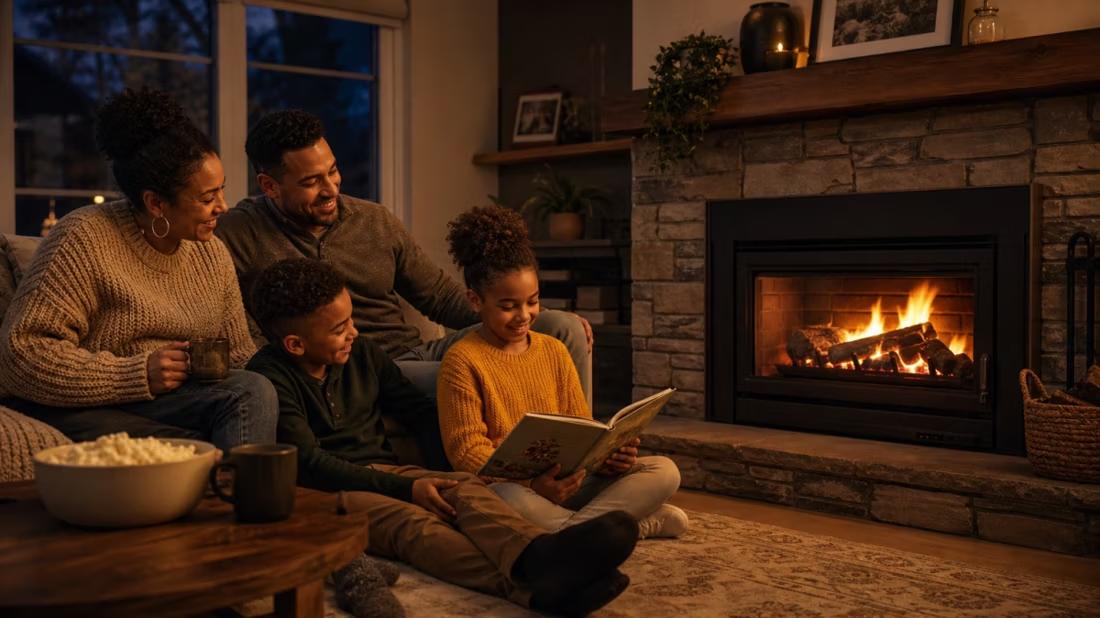
That said, a genuine wood-burning fireplace still shows up here and there—in custom homes built with a masonry hearth as an architectural feature, in properties owned by transplants from colder states who miss the ritual of a real fire, or in households that just want the ambiance on the handful of nights each winter when temperatures dip into the 30s and 40s. It's a smaller, more deliberate category of buyer than you'd find in a place with real winters, and the retrofit work (most homes in planned communities like Meadow Woods were never built with a chimney) tends to be more involved than a simple stove swap.
Three steps. No salesperson until you're ready.
Tell us about your project
Your zip code, your situation, and the fuel you're leaning toward—or let the answers point you to one.
See what's actually available
The brands dealers within 100 miles genuinely carry—real options, never a catalog mirage.
Get your dealer & Project Guide
A trusted local dealer, plus the free Project Guide & Parts List that names every component of the job.
Frequently Asked Questions
Does a wood-burning fireplace actually make sense in Meadow Woods?
For heating purposes, no—with such a light, short winter heating season and winter lows averaging 50°F, wood isn't solving a real heat-loss problem the way it does in a place like Bozeman, MT or Burlington, VT. Where it does make sense is ambiance and occasional use: entertaining on a cool December evening, matching the architecture of an older custom home, or homeowners who grew up with a wood fire and want one regardless of the thermostat. If you're weighing wood purely as a heat source, a gas or electric fireplace will get you more practical use for less money in this climate.
How much does it cost to add a wood-burning fireplace in Meadow Woods?
Because most homes in this part of Orange County—including the majority of Meadow Woods' newer construction—were built without a chimney, a full retrofit is a bigger project than in cold-climate markets: expect $8,000 to $15,000 once you factor in a masonry or prefabricated chimney chase, roof penetration, and a code-compliant hearth. If your home already has a builder-grade wood-burning fireplace (common in some 1980s and 1990s Orange County construction), upgrading it with a certified insert typically runs closer to $3,500 to $6,000.
Do I need a permit, and will my HOA allow a wood fireplace?
Any structural chimney work requires a permit through the Orange County Building Division, and the stove or insert itself needs to meet current EPA emissions standards regardless of how rarely it will burn. Just as important locally: Meadow Woods is a master-planned community with active HOA architectural review, and exterior additions like a chimney chase typically require approval before permitting even starts. Check your HOA's architectural guidelines first—it can save weeks of back-and-forth with your contractor.
What firewood species should I actually burn?
Oak is the standard choice locally and the easiest to source seasoned and split. Pine is common too, useful for quick-starting a fire, though it burns faster and leaves more resin buildup than oak. Mahogany is common in the area as a landscaping and shade tree, not as firewood—it's typically too valuable as lumber and isn't sold or cut for burning, so don't count on it as a fuel source even though you'll see it around Meadow Woods yards.
Does Central Florida humidity cause problems for wood-burning stoves?
Yes, mostly around storage rather than the stove itself. Firewood left uncovered in Meadow Woods' humidity will mold and can attract termites within weeks—a serious concern in a region where subterranean termites are already a standing pest issue for homeowners. Store any firewood off the ground, under cover, and away from the house foundation, and only bring in what you'll burn within a few days. The stove and chimney system itself holds up fine; it's the woodpile that needs the attention here.
Would gas or electric make more sense than wood for my home?
For most Meadow Woods homeowners, yes. Given the mild winters, a vent-free or direct-vent gas fireplace or a simple plug-in electric unit delivers the ambiance most people actually want without the chimney retrofit, firewood storage, or creosote maintenance. Electric fireplaces run on standard household current—Duke Energy Florida and Reedy Creek Improvement District, depending on your exact address, bill residential power around $0.166/kWh, making an electric unit inexpensive to operate for the occasional cool evening. Wood remains the right call only if the real-fire experience itself is the goal.
Wood stove or a gas log set in an existing fireplace—which is simpler?
If your home already has a masonry wood-burning fireplace, a vented gas log set is by far the simpler and less expensive path—no wood storage, no ash cleanup, no chimney sweeping, and it lights with a switch. A true wood stove insert is the better choice if you specifically want to burn real wood, want backup heat that doesn't depend on electricity, or want the higher heat output for the rare Central Florida cold snap. Most homeowners here who already have a working masonry fireplace choose the gas log route for convenience.
How often does a wood-burning fireplace need to be inspected in a climate like this?
Even with light, occasional use, an annual inspection is still the right call—the CSIA recommends yearly service for any wood-burning appliance regardless of how many fires it sees each winter. In Meadow Woods' humid climate, the bigger risk isn't heavy creosote from constant burning, it's moisture intrusion and pest activity in a chimney that sits unused most of the year. A local chimney sweep can check for both during the same visit.
Where can I buy firewood in Meadow Woods since there's no national forest nearby?
Unlike cold-climate markets with Forest Service cutting permits, Central Florida firewood is almost entirely a retail purchase—grocery stores, hardware stores, and seasonal roadside stands around the Orlando-Kissimmee area sell bundled oak and pine by the rack, typically $6 to $9 per bundle. If you're planning to use a wood fireplace more than a handful of times a season, ordering a partial or full cord from a regional firewood supplier for delivery is more economical, usually $250 to $350 delivered.
Why is my open fireplace making my house colder?
Open fireplaces suck—literally. As the fire burns, it consumes air your furnace already paid to heat and pulls it out through the chimney, so the house is actually colder after the fire goes out than before you lit it. An insert fixes this: it seals the chimney, puts fixed glass across the front, and turns that hole in your house into a real heat source.
What's the difference between an insert and a zero-clearance fireplace?
An insert is a fireplace that slides into a pre-existing wood-burning fireplace—if you don't have one, there's nothing to insert it into. A zero-clearance fireplace is built into a framed wall, which makes it the answer for remodels and new construction. Simple test: existing masonry fireplace means insert; blank or framed wall means zero-clearance.
How much should I budget for a fireplace?
For an average home—covering the fireplace, the vent pipe, and basic installation—a budget between $3,900 and $5,500 gives you a lot of options across wood, gas, and pellet. By the time you add finish work, gas line, and electrical, the average complete installation lands between $5,000 and $12,000 all-in. In a remodel or new build, a good rule is to put about 2.5% of the total project cost toward the fireplace.
What is an in-home preview and do I need one?
It's a visit where a hearth professional measures your space, confirms the model you picked actually works in your home, and walks the specs—framing, gas line, venting, finish work—before anything is ordered. Some details you just can't know until you see the house. Never make a down payment without one; it's the single most-skipped step that burns buyers.
Nearby Dealers
Hearth shops serving Meadow Woods and the surrounding area.
Find your wood fireplace in Meadow Woods.
Tell us about your home and how you'd actually use it, and we'll match you with a local dealer who can size the project correctly and hand you a free Project Guide & Parts List—including the vent kit your home will need.
Find Your Fireplace →