
Keep Your Family Warm and Safe—No Matter What
With winter lows averaging 60°F, nobody in Lighthouse Point is heating a home with cordwood. But if you want the look and feel of a real wood fire on your waterfront patio or great room, we'll connect you with a local dealer who can tell you honestly what's realistic here.
Every Project Starts From One of These Five Situations
Why wood is rare here, and where it still fits.
Lighthouse Point sits at 6 feet of elevation on the Intracoastal in Broward County, in climate zone 1A, with a heating season so short it barely exists. Compare that to a place like Duluth, MN, which has a long, brutal winter that stretches for months—the entire concept of "heating season" barely applies here. Nobody in Lighthouse Point needs a wood stove to survive January. That's just the honest starting point.
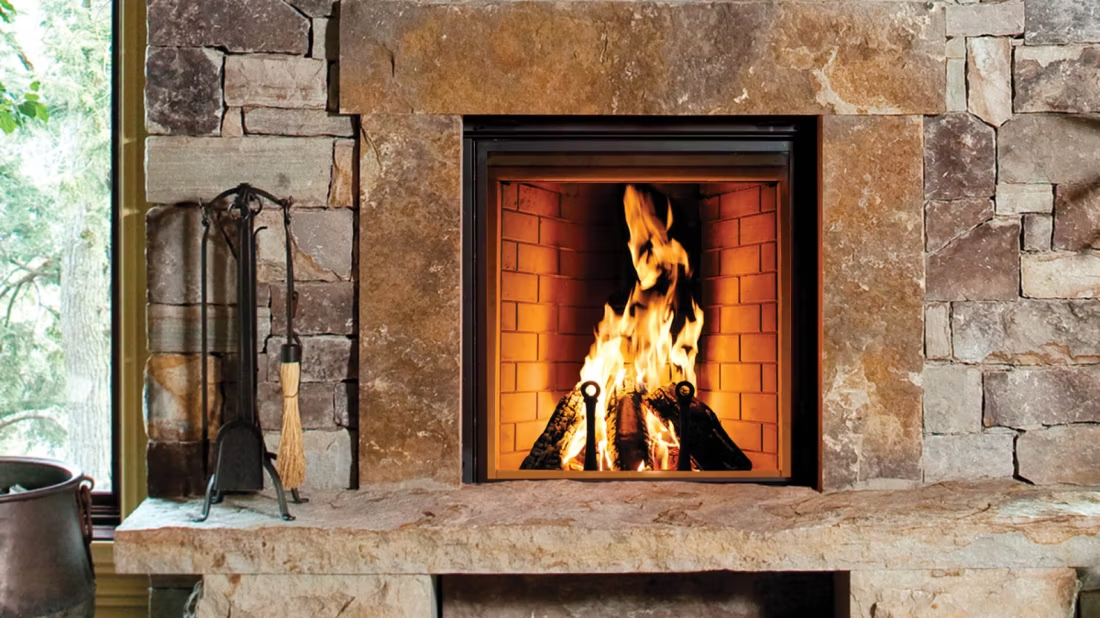
That said, a handful of homeowners here do install wood-burning fireplaces—usually a factory-built masonry or zero-clearance unit as a design centerpiece in a waterfront great room, or as the anchor of an outdoor entertaining space. Broward County's High-Velocity Hurricane Zone (HVHZ) building code adds real complexity to any roof penetration, including a chimney, so this is a project where hiring a contractor who's actually done HVHZ-compliant hearth work matters more than it would somewhere with a longer wood-heat tradition. I've seen homeowners here get burned by installers used to inland, non-HVHZ jurisdictions—that's exactly the kind of mismatch we try to prevent.
Three steps. No salesperson until you're ready.
Tell us about your project
Your zip code, your situation, and the fuel you're leaning toward—or let the answers point you to one.
See what's actually available
The brands dealers within 100 miles genuinely carry—real options, never a catalog mirage.
Get your dealer & Project Guide
A trusted local dealer, plus the free Project Guide & Parts List that names every component of the job.
Frequently Asked Questions
Does it actually make sense to install a wood-burning fireplace in Lighthouse Point?
For heat, no—with a 60°F average winter low, you'll almost never need supplemental warmth. Wood-burning fireplaces here are installed for ambiance: a design feature in a formal living room, a gathering point on a screened lanai, or a focal point in a waterfront home built to impress. If your goal is genuine heating performance, a gas or electric fireplace will serve you far better in this climate. If your goal is the crackle, smell, and visual of a real wood fire on the occasional cool evening, it can still be the right call—you just want to go in knowing that's the use case.
How much does a wood fireplace installation cost in Lighthouse Point?
Because so few installers in Broward County regularly work with wood-burning appliances, quotes vary more here than in a wood-heat market. A factory-built zero-clearance wood fireplace with straightforward venting typically runs $4,000 to $7,500 installed. A full masonry fireplace and chimney—especially one that has to satisfy Broward's HVHZ roof-penetration requirements—can run $8,000 to $15,000 or more. Get at least two quotes from installers who can point to prior HVHZ-permitted hearth work; a contractor unfamiliar with those wind-load and flashing requirements is a red flag.
What permits do I need for a wood fireplace here?
You'll need a building permit through the City of Lighthouse Point Building Department, and any chimney or roof penetration has to meet Broward County's High-Velocity Hurricane Zone code—this covers wind-uplift resistance, flashing details, and product approval numbers for the chimney chase or cap. This is a meaningfully different (and stricter) review than what a contractor in a non-coastal, non-HVHZ market is used to, so confirm your installer pulls HVHZ-rated components specifically, not standard inland hardware.
Where do I get firewood in Lighthouse Point?
There's no public-land cutting-permit culture here the way there is out West—South Florida doesn't have national forest land nearby for self-cut cordwood. Instead, firewood is typically bought by the bundle or small load from garden centers, grocery stores, or local tree services. Oak and mahogany are common locally, often as byproduct from storm cleanup and tree trimming after hurricane season, along with pine. If you burn only occasionally for ambiance, a few bundles a season may be all you need—store it up off the ground and covered, since South Florida humidity will mold uncovered firewood fast.
Are there restrictions on open burning or fire pits in Lighthouse Point?
Lighthouse Point, like most dense residential coastal cities in Broward County, regulates open burning and outdoor fire features—check with the City before installing an outdoor wood-burning fire pit or chiminea, as setback and containment rules typically apply given how close lots sit to neighboring homes and mangrove/waterway buffers. A permitted, code-built masonry or factory outdoor fireplace avoids most of this friction versus an ad hoc fire pit.
Is air quality or smoke a concern for wood burning in Lighthouse Point?
No—Broward County has no wood-smoke non-attainment designation and no winter inversion issue the way inland or high-desert markets do. Given how rarely a wood fireplace here would actually be used, smoke is a non-issue for the neighborhood. The bigger practical concern is the opposite problem: infrequent burns in a humid coastal climate can allow moisture and salt air to accelerate corrosion on chimney caps and dampers, so stainless steel components are worth the upgrade over standard steel.
Should I get a wood fireplace, or would gas or electric make more sense in Lighthouse Point?
For most Lighthouse Point homes, gas or electric is the more practical choice. A gas fireplace gives you instant flame and real ambiance without sourcing or storing firewood in a humid climate, and FPL's residential electric rate (13.71¢/kWh) makes an electric fireplace an easy, low-cost option for supplemental ambiance in a bedroom or den. Wood still wins if the actual crackle-and-smoke experience of a real fire is the point—some homeowners want that specifically and no gas insert replicates it. It comes down to whether you're chasing authenticity or convenience.
Does a wood fireplace help during hurricane-related power outages?
Not for heat—that's simply not a need in Lighthouse Point even without power. But a wood-burning fireplace or outdoor wood-fired feature can provide light, a way to boil water, and basic cooking capability during extended post-storm outages, which is a real consideration in a hurricane-prone barrier-island community. If backup utility is part of your reasoning, factor that into your design (a fireplace with a cooking grate or nearby outdoor wood-fired feature) rather than assuming a standard indoor unit covers it.
How do I maintain a wood fireplace that only gets used a few times a year in this climate?
Counterintuitively, light, infrequent use in a humid coastal climate can produce more creosote buildup per fire than heavy daily use in a dry cold climate, because a cool, damp flue doesn't draft as efficiently. Have the chimney inspected annually regardless of how little you burn, use a quality chimney cap rated for coastal salt exposure, and keep the firebox and damper dry between uses. A local sweep familiar with South Florida's salt-air conditions will know to check for corrosion, not just creosote.
Why is my open fireplace making my house colder?
Open fireplaces suck—literally. As the fire burns, it consumes air your furnace already paid to heat and pulls it out through the chimney, so the house is actually colder after the fire goes out than before you lit it. An insert fixes this: it seals the chimney, puts fixed glass across the front, and turns that hole in your house into a real heat source.
Why won't my new wood stove get going like my old one?
New wood stoves are 70%+ efficient, so far less heat goes up the flue—which also means less draft to get a fire established. The rule: build a genuinely hot fire for about 45 minutes before you choke it down. Skip that and you get smoke in the room, creosote in the chimney, and a fire that never takes off. Most performance complaints trace straight back to this.
What is an in-home preview and do I need one?
It's a visit where a hearth professional measures your space, confirms the model you picked actually works in your home, and walks the specs—framing, gas line, venting, finish work—before anything is ordered. Some details you just can't know until you see the house. Never make a down payment without one; it's the single most-skipped step that burns buyers.
How much should I budget for a fireplace?
For an average home—covering the fireplace, the vent pipe, and basic installation—a budget between $3,900 and $5,500 gives you a lot of options across wood, gas, and pellet. By the time you add finish work, gas line, and electrical, the average complete installation lands between $5,000 and $12,000 all-in. In a remodel or new build, a good rule is to put about 2.5% of the total project cost toward the fireplace.
Nearby Dealers
Hearth shops serving Lighthouse Point and the surrounding area. Every listing shows whether it is a WhyFire partner, a dealer we have verified as authorized for the brands we recommend, or a local business carrying hearth products. No manufacturer pays for placement. How we verify dealers →
A&S Reclaimed Wood
Brandel Masonry
The Kitchenworks
Atlantic Purchasing
Outdoor Kitchen & Grill
Lifestyle Barn LLC
Pro Masonry And Fireplace
See what's actually realistic for a wood fireplace in Lighthouse Point.
Tell us about your home and how you'd use it, and we'll match you with a local dealer who understands HVHZ hearth work—plus a free Project Guide & Parts List with the exact components, including venting, for your project.
Find Your Fireplace →