
Reliable Gas Heat for Liberty County's Mild Winters and Hurricane Season.
Liberty County's winters are short and mild—with a heating season that barely stretches past a few cool months—but a gas fireplace still earns its keep, delivering instant ambiance on cool nights near Bristol and Torreya State Park, and dependable heat when a Panhandle storm knocks out power. Find the right unit and connect with a trusted local dealer.
Every Project Starts From One of These Five Situations
Instant heat for mild winters, real backup during storm season.
Liberty County is one of Florida's least populated counties—around 2,600 residents spread across roughly 836 square miles of land, much of it within the Apalachicola National Forest and the bluffs along the Apalachicola River near Torreya State Park. In climate zone 2A, summers are long and humid and winters are genuinely mild: average winter lows hover near 40°F, and the heating season adds up to only about 1,600 degree days a year, a fraction of what a northern climate like Duluth, MN sees in a single month. But mild doesn't mean zero—overnight temperatures from December through February regularly dip into the 30s, and occasional Arctic outbreaks push into the 20s, cold enough that a gas fireplace does real, appreciated work a handful of nights each winter.
Liberty County has no municipal natural gas utility, so propane is the standard fuel for gas fireplaces, inserts, and stoves here—supplied by regional propane dealers rather than a city gas line. For most homeowners in the county, the appeal isn't heating load; it's the instant, no-fuss flame for a den or living room, paired with real backup value. This stretch of the Florida Panhandle sees its share of tropical systems, and a propane fireplace with battery-backup or self-powering ignition keeps working when the grid doesn't—a meaningful advantage during hurricane season when outages can stretch for days.
Three steps. No salesperson until you're ready.
Tell us about your project
Your zip code, your situation, and the fuel you're leaning toward—or let the answers point you to one.
See what's actually available
The brands dealers within 100 miles genuinely carry—real options, never a catalog mirage.
Get your dealer & Project Guide
A trusted local dealer, plus the free Project Guide & Parts List that names every component of the job.
Frequently Asked Questions
How much does a gas fireplace installation cost in Liberty County?
Since Liberty County runs on propane rather than piped natural gas, most installations include either tapping into an existing propane tank or setting up new service with a regional propane supplier. A propane insert into an existing masonry fireplace typically runs $3,500 to $7,500, while a freestanding propane stove or a new built-in fireplace—including a tank hookup if you don't already have one—can run $4,000 to $8,500. Homes that already have a propane tank for a range or water heater are usually on the lower end since the supply line is already in place.
Do I need natural gas, or should I plan on propane?
Plan on propane. There's no natural gas utility serving Liberty County, so propane is the standard and, practically speaking, the only realistic option for a gas fireplace here. Most local installers work with regional propane suppliers to either connect to an existing tank or arrange a new tank installation as part of the project. Any gas fireplace model you're considering can be configured to run on propane—your installer sets the correct orifice and regulator during install.
Will my gas fireplace still work if the power goes out?
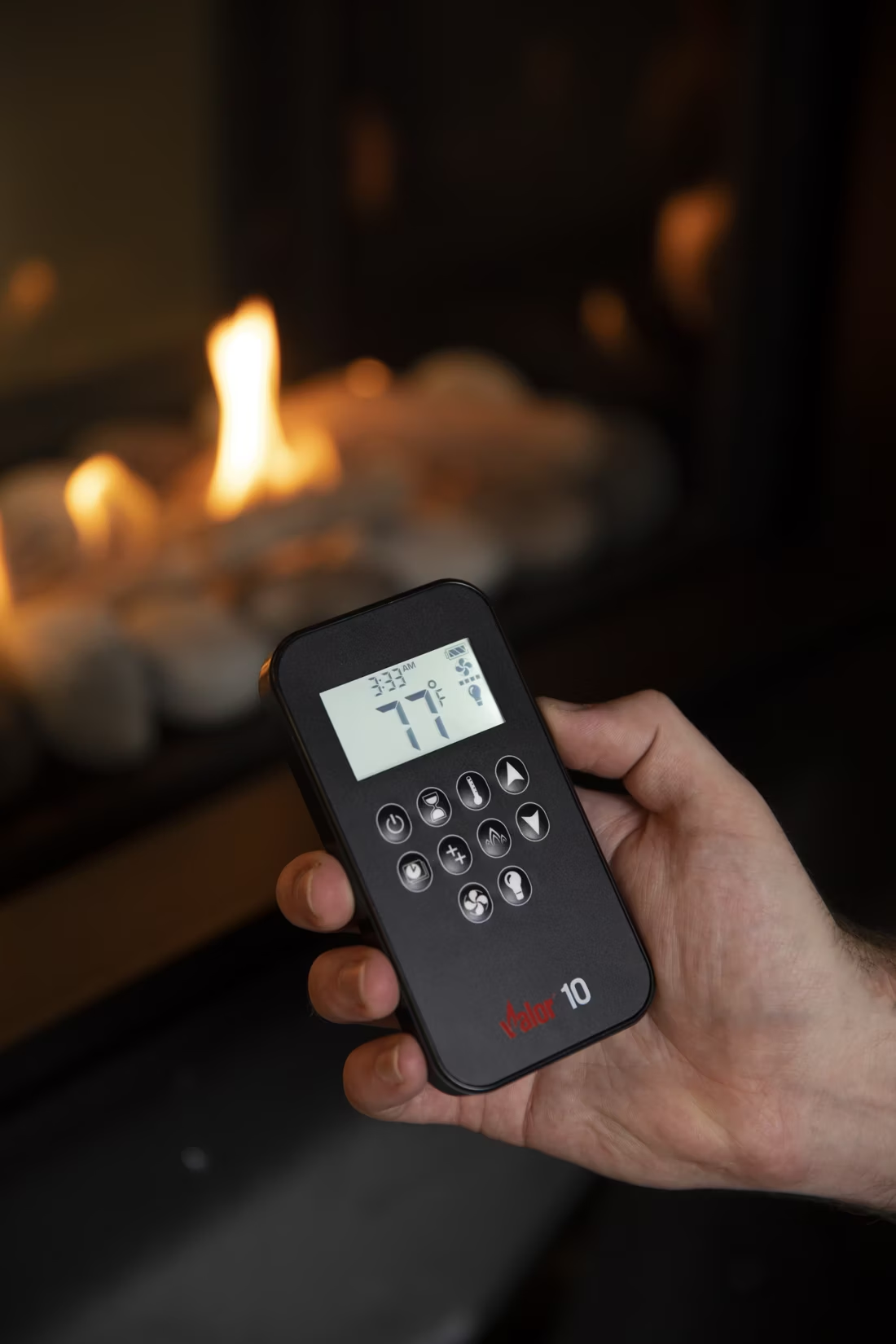
For most homeowners in Liberty County, this is the real reason to choose gas over an electric option. Units with intermittent pilot ignition (IPI) run on a small battery backup that kicks in automatically when the power drops, so the fireplace lights on demand just like normal. Valor fireplaces take a different approach—their pilot generates its own electricity through a thermocouple, so there are no batteries to remember at all. Given how exposed the Panhandle is to tropical storms and multi-day outages, that kind of self-powered backup is worth asking your local dealer about directly.
Do I need a permit to install a gas fireplace in Liberty County?
Yes—new gas fireplace installations require a building permit through the Liberty County Building Department in Bristol, along with sign-off on the propane line work from a licensed gas-fitter. Most established hearth dealers handle this paperwork as part of the installation, coordinating the venting, gas connection, and inspection together so you're not left managing separate trades. Because Liberty is a small, rural county, it's worth confirming your installer is familiar with the local permitting process rather than assuming it works the same as a nearby metro area.
What size gas fireplace do I actually need in a climate this mild?
With a short, mild winter season, most Liberty County homes don't need a fireplace sized to carry the whole heating load—a smaller or mid-size unit focused on a single room (living area or den) is usually plenty, even during the coldest overnight snaps in January and February. Going bigger than that mostly adds cost without adding comfort, since the appliance will spend most of its life running for ambiance rather than serious heat output. A local dealer can walk through your room size and layout and recommend something sized for how you'll actually use it.
Vented or vent-free—which makes more sense here?
Vented (direct-vent) propane fireplaces draw combustion air from outside and exhaust it back outside through sealed venting, which makes them the cleaner, safer, and more universally accepted choice, and they're what most Liberty County installers recommend by default. Vent-free units burn fuel directly into the room and are legal in Florida, but they come with strict room-sizing rules and require an oxygen depletion sensor—and given Liberty County's warm, humid climate, the added moisture a vent-free unit releases into the room is a real downside rather than a minor detail. For most homes here, a direct-vent unit is the more sensible pick.
Where do I find a gas fireplace dealer near me in Liberty County?
Liberty County's small population—around 2,600 residents countywide—means there isn't a large hearth retail presence within the county itself. Most homeowners end up working with dealers based in nearby Tallahassee, Marianna, or the Blountstown area, who regularly install and service propane fireplaces throughout rural Panhandle counties including Liberty. Expect installers to factor a modest travel charge into rural quotes, and confirm ahead of time that a dealer is comfortable coordinating propane tank work as part of the install.
How often does a propane fireplace need to be serviced?
An annual inspection is recommended for any gas appliance, including propane fireplaces and inserts. A technician checks the burner, pilot assembly, venting, and gas connections, and cleans the glass and interior—a much smaller job than chimney sweeping for a wood-burning unit, but still important for safety and warranty compliance. Given Liberty County's short heating season, many homeowners schedule this service in early fall, checking the unit is ready before the first real cold front rolls through.
Gas vs. wood—which makes more sense in Liberty County?
Wood is genuinely available here—oak, mahogany, and pine are all common locally—and a wood stove or fireplace works fine without electricity, which matters during hurricane-season outages. But with such a short, mild winter season, most Liberty County homes don't burn enough to justify the ongoing work of splitting, storing, and tending a wood fire, especially given the county's humid climate, which makes dry, well-seasoned firewood storage more of a chore. Propane gas gives you the instant, low-maintenance flame that fits how most homes here actually use a fireplace—for ambiance most nights, with real backup value on the rare cold snap or storm-driven outage.
Is my gas fireplace wasting gas?
If it was installed more than 15 years ago, probably. Older gas fireplaces keep a standing pilot light burning all the time, and that little flame can cost a couple hundred dollars a year. Newer models use pilot-on-demand ignition—the pilot lights only when you use the fireplace and goes out when you turn it off.
Why is my open fireplace making my house colder?
Open fireplaces suck—literally. As the fire burns, it consumes air your furnace already paid to heat and pulls it out through the chimney, so the house is actually colder after the fire goes out than before you lit it. An insert fixes this: it seals the chimney, puts fixed glass across the front, and turns that hole in your house into a real heat source.
Can I install a fireplace myself?
If you're putting a fire in your house on purpose, it's best to work with an expert. Unless you're genuinely experienced in framing, gas line, vent pipe, and the national code on clearances to combustibles, have a professional do it—and ideally the same company that sells you the fireplace, so warranty, service, and liability all live under one roof.
Does a fireplace add value to my home?
On average, a fireplace adds back to the home about the same amount you spent installing it. Add the monthly savings from heating the rooms you actually use instead of the whole house—often hundreds of dollars a year—and the value case is strong before you even count what a fire does for how your family uses the room.
Find your gas fireplace in Liberty County.
Tell us a bit about your home and we'll put together a free Project Guide & Parts List for your Liberty County gas fireplace project—the right unit, the exact parts including your vent kit, and a trusted local dealer who can install it.
Find Your Fireplace →