
Fireplace Options for Every Home in Liberty County.
Wood, gas, pellet, and electric fireplace resources for Bristol, Telogia, Sumatra, Hosford, and the rural stretches of Florida's smallest county by population. Find the right unit and connect with a trusted local hearth retailer.
Every Project Starts From One of These Five Situations
Mild winters and deep timber country in Liberty County, Florida.
Liberty County is Florida's least populous county—about 2,600 residents spread across roughly 850 square miles, most of it covered by the Apalachicola National Forest and the pine and hardwood stands along the Apalachicola River. Winters are short and mild by national standards: an average low near 40°F and only about 1,600 heating degree days a year, a fraction of what a place like Duluth, Minnesota logs in a single season. But the Panhandle does see real cold snaps—hard freezes in the 20s aren't rare in January—and with oak, pine, and mahogany common in the local woodlots, wood heat has stayed a practical, low-cost option here even where furnace-grade heating demand is low.
What you'll find on this hub: hearth retailers, service technicians, and fuel suppliers serving Bristol (the county seat), Telogia, Sumatra, Hosford, and Estiffanulga. Pick your fuel below to see local dealer coverage, typical installation costs, and the units that make sense for a mild-winter, rural county like this one—whether you're heating a farmhouse near the river or adding ambiance to a cabin at the edge of the national forest.
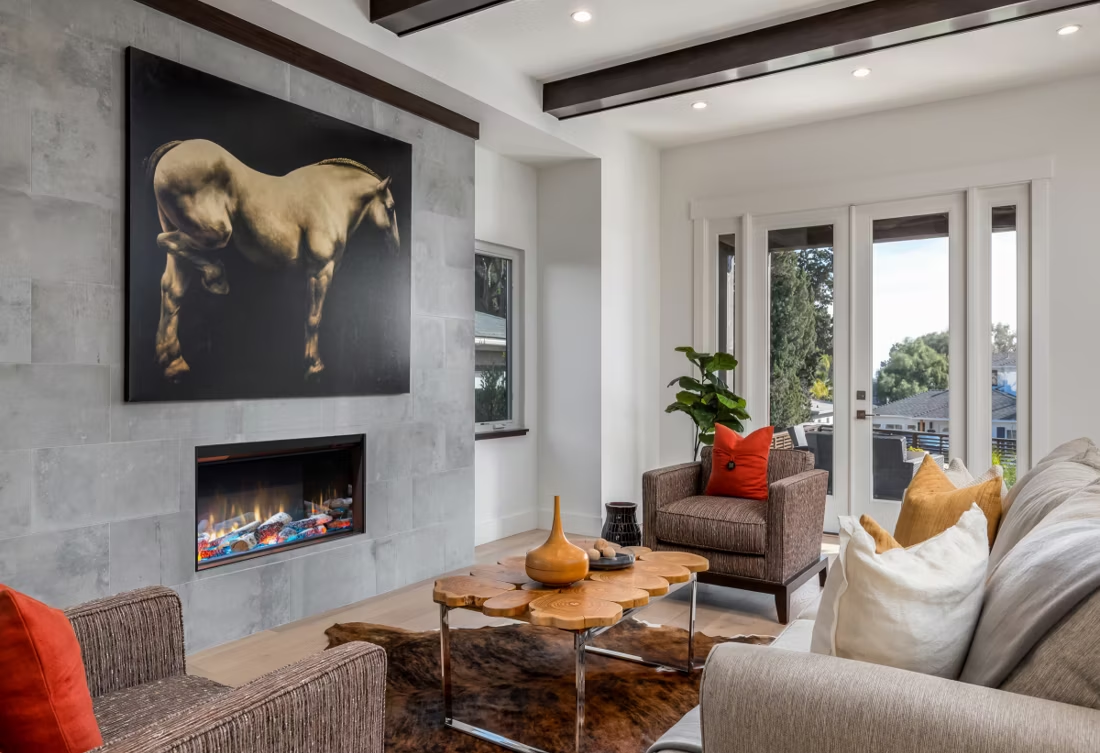
Four fuels. One honest answer for Liberty County.
Three steps. No salesperson until you're ready.
Tell us about your project
Your zip code, your situation, and the fuel you're leaning toward—or let the answers point you to one.
See what's actually available
The brands dealers within 100 miles genuinely carry—real options, never a catalog mirage.
Get your dealer & Project Guide
A trusted local dealer, plus the free Project Guide & Parts List that names every component of the job.
Frequently Asked Questions
Which fuel works best for a home in Liberty County?
Given the mild climate—a 40°F average winter low and only about 1,600 heating degree days a year—no single fuel dominates out of necessity the way it might in a colder region. Wood remains popular for ambiance and for the occasional hard freeze, especially since oak and pine are abundant locally and cheap or free to source from the Apalachicola National Forest's private timber margins. Propane-fired gas units are common where homeowners want instant heat without tending a fire, since there's no natural gas utility in the county. Pellet stoves are a smaller but real category, supplied by regional brands like Lignetics and Hamer Pellet Fuel. Electric fireplaces are a strong fit here specifically because so much of the demand is aesthetic and supplemental rather than whole-home heating—a zero-clearance electric unit can deliver the look of a fire on the coldest week of the year without sizing a system for a Panhandle winter that mostly doesn't need it.
Do I need a permit to install a fireplace in Liberty County?
Yes, in most cases. New wood stoves, wood inserts, gas fireplaces, gas inserts, and pellet stoves require a building permit through the Liberty County Building Department in Bristol. Because there's no natural gas main in the county, gas installations mean a propane line—which typically requires a separate permit and a licensed propane technician for the tank hookup and gas-line work, on top of the standard hearth permit. Florida Building Code wind-load and clearance requirements apply to any built-in unit, including electric fireplaces that involve new framing or a dedicated electrical circuit. Most local retailers and installers handle the permit paperwork as part of the job, so it's worth asking upfront whether that's included in your quote.
Does wood heat actually make sense in such a mild climate?
It does, for the right use case, but it's worth being honest about the role it plays here. With only about 1,600 heating degree days a year—compare that to Bozeman, Montana, which logs closer to 7,000—a wood stove in Liberty County is rarely running as a home's only heat source. What it does well: handle the hard freezes that hit the Panhandle most winters, cut the propane or electric bill during a cold snap, and provide a wood-burning option for homeowners on wooded lots near the Apalachicola National Forest who can source oak and pine cheaply. Most installs here are a single stove or insert in a main living space rather than a whole-house wood heating plan, and that's a perfectly practical setup for this climate.
Can one local retailer handle wood, gas, pellet, and electric in a county this small?
Not always, and that's worth planning around. Liberty County's population of about 2,600 doesn't support a large multi-fuel showroom the way a bigger Panhandle county might. Most homeowners end up working with a dealer based in Tallahassee or Marianna that carries all four fuel types and travels into Bristol, Telogia, or Sumatra for the consultation and install. It's worth confirming a dealer's actual fuel lineup and service radius before assuming they cover what you need—some smaller local installers specialize in just propane or just wood.
Are there air quality restrictions on wood burning in Liberty County?
No—Liberty County has no reported air quality non-attainment issues or wood-burning curtailment programs, unlike inversion-prone basins in the West. That means no seasonal burn bans to plan around. The main practical consideration is still burning seasoned oak or pine rather than green wood, both for heat output and to limit creosote buildup in the chimney, and scheduling an annual chimney sweep given how humid Panhandle summers are between burn seasons.
What's the typical installation cost range across fuel types in Liberty County?
Costs run close to regional Panhandle averages, with propane line work often adding to the gas figure since there's no natural gas utility here. Wood stove or insert installation: roughly $4,000–$8,500 depending on chimney condition and whether new masonry or a chase is needed. Propane fireplace, insert, or stove: roughly $4,500–$10,000, with the higher end reflecting new propane tank setup and line runs for homes without existing service. Pellet stove or insert: roughly $4,000–$7,000 for a typical install. Electric fireplace: $200–$3,000 for the unit itself, plus $300–$1,000 in labor for anything beyond a plug-and-play wall unit. See the county + fuel pages above for cost detail tied to specific local dealers.
How much should I budget for a fireplace?
For an average home—covering the fireplace, the vent pipe, and basic installation—a budget between $3,900 and $5,500 gives you a lot of options across wood, gas, and pellet. By the time you add finish work, gas line, and electrical, the average complete installation lands between $5,000 and $12,000 all-in. In a remodel or new build, a good rule is to put about 2.5% of the total project cost toward the fireplace.
Wood, gas, pellet, or electric—how do I choose?
Match the fuel to your life, not the other way around. Wood: lowest fuel cost and total power-outage independence, but you're hauling and stacking. Gas: press a button, set a thermostat, no maintenance to speak of. Pellet: wood economics with automatic feeding, in exchange for weekly cleaning and a need for electricity. Electric: plugs in anywhere with honest supplemental heat. Nobody regrets the fuel that fits how they actually live.
Can a fireplace actually lower my heating bill?
Yes—by creating a comfort zone. A furnace heats every square foot of the house just to warm the one room you're in; a gas fireplace on low burns roughly a sixth of the gas a typical furnace does. Set the furnace around 55–60 degrees as a baseline, then heat the rooms your family actually uses. Families who heat this way commonly save $20–$60 a month.
What is an in-home preview and do I need one?
It's a visit where a hearth professional measures your space, confirms the model you picked actually works in your home, and walks the specs—framing, gas line, venting, finish work—before anything is ordered. Some details you just can't know until you see the house. Never make a down payment without one; it's the single most-skipped step that burns buyers.
Stove and Fireplace Dealers in Liberty County
Listings include WhyFire partner dealers, dealers we have verified as authorized for the brands we recommend, and established local businesses that carry hearth products. Every listing shows which one it is. The ones marked Preferred run on WhyFire's software, so they can show you real pricing and book your appointment right here. No manufacturer pays for placement. How we verify dealers →
Waldorf Ace Hardware
Hearth And Patio Sales And Service LLC
Capital City Fireplace & Grill
Plantation Propane Inc.
Find your fireplace in Liberty County.
Pick your fuel below and we'll match you with a trusted local dealer and send over a free Project Guide & Parts List—sized correctly for a Liberty County winter, with the exact parts, vent kit, and recommended installer for your home.
Find Your Fireplace →