
A fireplace that fits Lauderhill's warm-weather reality.
With almost no heating season to speak of, Lauderhill homeowners choose electric fireplaces for real flame-effect ambiance and the occasional cool-snap warmth—no chimney, no gas line, no combustion to worry about.
Every Project Starts From One of These Five Situations
Ambiance first, heat second—and that's exactly right here.
Lauderhill sits at just 7 feet of elevation in Broward County's Climate Zone 1A, where the average winter low hovers around 59°F and the city has a heating-demand score of only about 146 a year—for comparison, a place like Duluth, MN sees over 9,000. Wood stoves and pellet stoves simply don't make sense here, and even gas fireplaces are rare, since there's little year-round demand for real combustion heat and no established residential natural gas buildout to lean on. Electric is the fuel that actually fits the climate.
That's not a knock on electric—it's the right tool for the job. Lauderhill is full of condos, co-ops, and 55+ communities around neighborhoods like Inverrary, where HOA rules and shared-wall fire codes make venting a non-starter anyway. An electric fireplace plugs into standard household power (Florida Power & Light serves the area at roughly $0.1371 per kWh), needs no chimney or gas line, and delivers real flame-effect visuals plus supplemental warmth for the handful of nights each winter when it actually dips into the 40s.
Three steps. No salesperson until you're ready.
Tell us about your project
Your zip code, your situation, and the fuel you're leaning toward—or let the answers point you to one.
See what's actually available
The brands dealers within 100 miles genuinely carry—real options, never a catalog mirage.
Get your dealer & Project Guide
A trusted local dealer, plus the free Project Guide & Parts List that names every component of the job.
Frequently Asked Questions
How much does an electric fireplace cost to install in Lauderhill?
Freestanding and tabletop electric units run $150-$800 for the unit itself and typically need nothing more than an existing outlet—no installation cost at all. Wall-mounted or recessed models that require a licensed electrician to add a dedicated circuit generally run $600-$2,500 installed. Custom built-ins with a surround or mantel, common in Lauderhill's larger single-family homes around Inverrary and West Broward, can run $2,500-$5,000 once carpentry and finish work are included. Compare that to a gas or wood system, which would require venting, a chimney, and often propane tank installation to work at all in this climate—electric skips all of that.
Do I need a permit for an electric fireplace in Lauderhill?
Plug-in units that use an existing outlet typically don't require any permit. If your installer needs to add a new dedicated 120V or 240V circuit for a built-in or wall-mounted unit, that electrical work generally requires a permit through the City of Lauderhill Building Department (or Broward County if your property falls in an unincorporated pocket). There's no chimney, gas line, or venting inspection involved, which is a big part of why electric permitting here is faster and simpler than it would be for wood or gas.
Will an electric fireplace actually heat my Lauderhill home?
Not in the way a furnace would, and most homeowners here aren't buying one for that reason. With a heating-demand score of only about 146 a year and winter lows averaging 59°F, Lauderhill just doesn't have sustained cold to heat against. A typical 1,500-watt electric fireplace can take the edge off a single room on the rare night temperatures drop into the 40s, but it's purchased primarily for the flame-effect visual—the supplemental heat is a bonus, not the main draw.
How much does it cost to run an electric fireplace with FPL rates?
Florida Power & Light bills residential customers around $0.1371 per kWh in this area. A 1,500-watt heater running on high draws about 1.5 kWh, so roughly $0.21 per hour of heat. Most electric fireplaces also offer a flame-only mode with the heater switched off, which draws closer to 100 watts—about a penny an hour—so you can run the visual effect for ambiance nightly without meaningfully moving your electric bill. Given how few nights actually call for the heater function here, annual operating cost stays low compared to colder-climate homes running these units all winter.
What's the difference between a wall-mounted electric fireplace and a built-in insert?
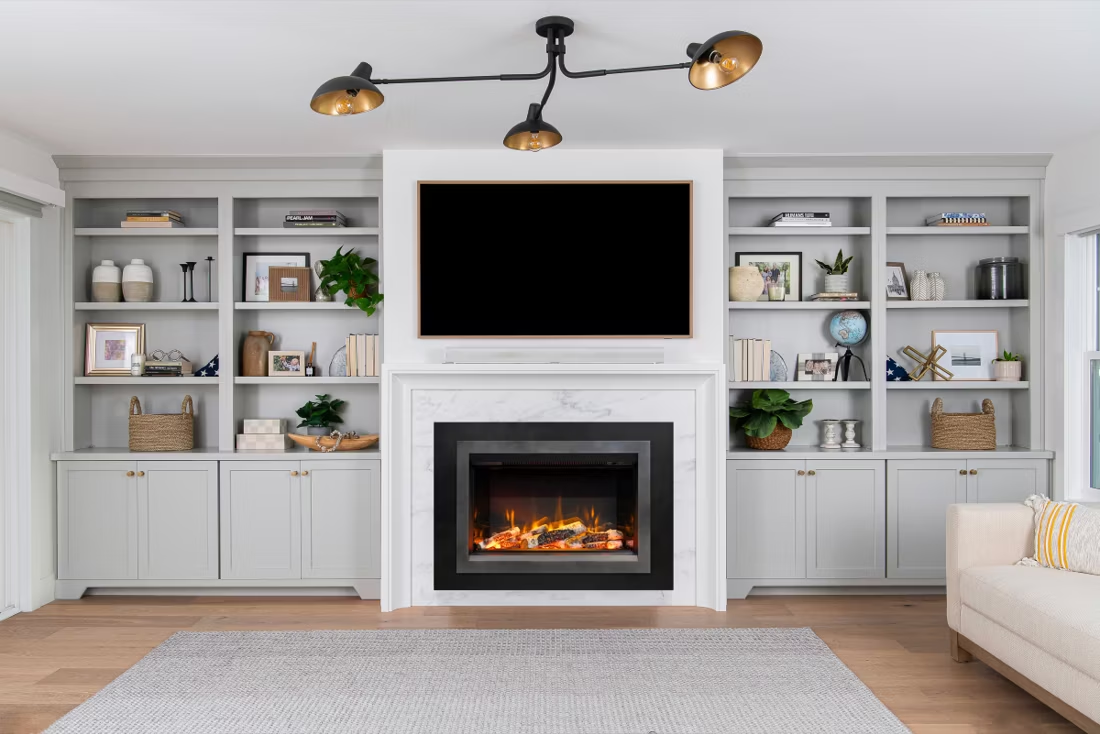
A wall-mounted electric fireplace hangs on the wall like a large flat-screen TV, plugs into a standard or dedicated outlet, and can be installed in an afternoon with no structural work. A built-in electric insert is recessed into a wall cavity or existing fireplace opening, giving a flush, more architectural look—this is the common route for homeowners converting an old, unused masonry fireplace or building a new media wall. For Lauderhill's condo and townhome stock, wall-mounted units are usually the easiest path since they don't require any wall modification; single-family homeowners with more flexibility often prefer the built-in look.
Can I install an electric fireplace in a Lauderhill condo or HOA community?
Yes, and it's often the only fireplace option HOA documents and condo fire codes allow. Lauderhill has a large stock of condos, co-ops, and 55+ communities around areas like Inverrary, where shared walls and building fire-suppression systems make wood or gas venting impractical or outright prohibited. Electric units need no chimney, no gas line, and no penetration through exterior walls, so they clear HOA and building management review far more easily. Always double-check your specific association's rules on wall-mounted TVs or fixtures, since some buildings have anchoring restrictions similar to those for electric fireplaces.
Should I consider a gas fireplace instead of electric in Lauderhill?
For most Lauderhill homes, no. Gas fireplaces are genuinely rare here—there's little residential natural gas infrastructure to tap into, and running a gas line or setting up a propane tank adds real cost and complexity for a fuel you'd use only a handful of nights a year. Electric delivers the same visual flame effect without any of that setup, plugs into power you already have, and skips the annual gas appliance inspection a vented unit would need. Gas can still make sense for a homeowner who specifically wants real flame and heat output for entertaining, but it's the exception here, not the rule.
Will my electric fireplace still work during a hurricane power outage?
No—like any electric appliance, it goes dark the moment FPL power drops, and Broward County does see grid outages during hurricane season (June through November). This is worth being upfront about: electric isn't a backup heat source, and it isn't marketed as one. Most Lauderhill homeowners choose electric for daily ambiance and mild supplemental warmth rather than storm resilience. If backup power matters to you, a home generator or battery system will keep the fireplace running along with everything else, but that's a separate purchase from the fireplace itself.
What should I look for in an electric fireplace given South Florida's humidity?
Indoor units installed in air-conditioned living space hold up fine—Lauderhill's humidity is mostly a factor for anything installed outdoors, like a lanai or covered patio fireplace. For those applications, ask your local dealer about outdoor-rated electric units built with sealed electronics and corrosion-resistant housings designed for coastal, high-humidity climates. For a standard living-room installation, any quality electric fireplace from an authorized dealer will perform well long-term in this climate without special weatherproofing.
Can I put a TV above my fireplace?
Yes—with an asterisk. Fireplaces are hot and TVs don't like heat. Either put a mantel between them to deflect rising warmth, or choose a fireplace with heat-management technology that creates a cool zone on the wall above—the wall stays around 125 degrees, barely warm, while the room still gets full heat. If you like clean lines and don't want a mantel, heat management is the answer.
Do electric fireplaces actually produce heat?
Yes—most put out around 4,800–5,000 BTUs from a standard outlet, which comfortably warms a bedroom, office, or den as a comfort-zone heater. What they won't do is carry a whole house the way wood, gas, or pellet can. Think of electric as ambiance-first with honest supplemental heat: flames on with no heat in July, flames plus warmth in January.
Can I install a fireplace myself?
If you're putting a fire in your house on purpose, it's best to work with an expert. Unless you're genuinely experienced in framing, gas line, vent pipe, and the national code on clearances to combustibles, have a professional do it—and ideally the same company that sells you the fireplace, so warranty, service, and liability all live under one roof.
Can a fireplace actually lower my heating bill?
Yes—by creating a comfort zone. A furnace heats every square foot of the house just to warm the one room you're in; a gas fireplace on low burns roughly a sixth of the gas a typical furnace does. Set the furnace around 55–60 degrees as a baseline, then heat the rooms your family actually uses. Families who heat this way commonly save $20–$60 a month.
Nearby Dealers
Hearth shops serving Lauderhill and the surrounding area. Every listing shows whether it is a WhyFire partner, a dealer we have verified as authorized for the brands we recommend, or a local business carrying hearth products. No manufacturer pays for placement. How we verify dealers →
The Kitchenworks
Brandel Masonry
A&S Reclaimed Wood
Lifestyle Barn LLC
Atlantic Purchasing
Outdoor Kitchen & Grill
Electric Service in Lauderhill
An electric fireplace's heater draws about 1,500 watts—pennies per hour at local rates.
Florida Power & Light Co
Find your electric fireplace in Lauderhill.
Tell us about your space and we'll match you with a trusted local dealer and send over a free Project Guide & Parts List—sized right for your home, your outlets, and Lauderhill's climate.
Find Your Fireplace →