
Pellet heat is rare in Lake Magdalene—here's when it still makes sense.
With one of the mildest winter heating seasons around and winter lows averaging 53°F, Lake Magdalene doesn't need a pellet stove to survive winter. But for the homeowners who still want one—for ambiance, a converted garage, or a second property up north—we'll match you with a dealer who can actually source and install it correctly.
Every Project Starts From One of These Five Situations
Most Lake Magdalene homes never need supplemental heat—pellet or otherwise.
Lake Magdalene sits in Hillsborough County at just 46 feet of elevation, squarely in ASHRAE climate zone 2A—hot and humid, with a winter heating season so mild it barely counts as one. Compare that to a place like Duluth, Minnesota, which racks up a heating season nearly year-round, and the gap becomes obvious: a Duluth household needs a stove running most days from October through April, while a Lake Magdalene household might see a handful of nights below 40°F each winter. Pellet stoves are engineered for exactly the kind of sustained, cold-climate heating load this area almost never produces, which is why we flag pellet as not-applicable for this zip code range (33612, 33613, 33618, 33682, 33694) rather than pretend otherwise.
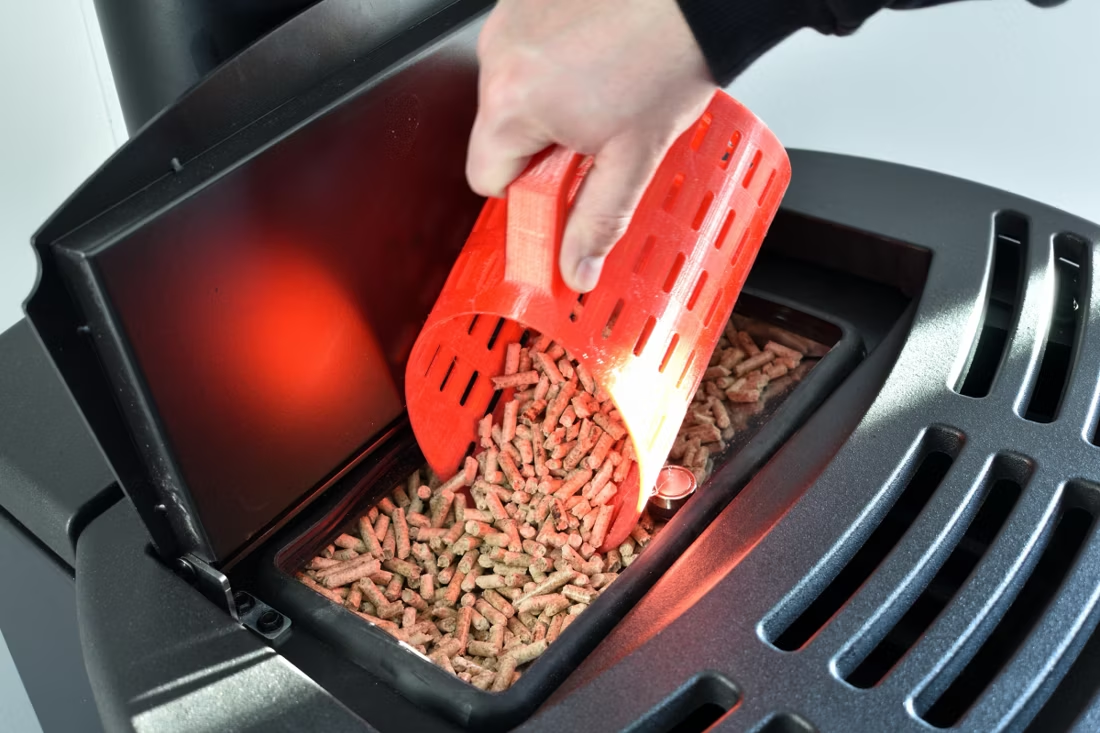
That doesn't mean nobody in Lake Magdalene wants one. A small number of homeowners install pellet stoves for the look and ambiance of a real fire without wood smoke, for a converted garage or workshop that runs cooler than the main house, or because they're outfitting a second property in the North Carolina or Georgia mountains where regional brands like Lignetics, Hamer Pellet Fuel, and Greenway Renewable Energy actually get used through a full heating season. If that's you, the process still matters—hopper capacity, venting, and clearances have to be done correctly regardless of how often the stove runs.
Three steps. No salesperson until you're ready.
Tell us about your project
Your zip code, your situation, and the fuel you're leaning toward—or let the answers point you to one.
See what's actually available
The brands dealers within 100 miles genuinely carry—real options, never a catalog mirage.
Get your dealer & Project Guide
A trusted local dealer, plus the free Project Guide & Parts List that names every component of the job.
Frequently Asked Questions
Does a pellet stove make sense for a home in Lake Magdalene?
For most homes here, no—not as a primary or even meaningful supplemental heat source. Lake Magdalene has one of the shortest, mildest winter heating seasons around, and winter lows only dip to an average of 53°F. A pellet stove sized for a Southeastern winter would run for maybe a dozen nights a year, which is a poor return on the hopper, auger, and venting investment. Where it can make sense is purely aesthetic—homeowners who want the visual and ambient warmth of a live fire without the smoke and creosote of a wood stove, run occasionally on the rare cold front that pushes through Hillsborough County.
What does a pellet stove installation cost in Lake Magdalene?
Because pellet installs are infrequent enough locally that there's no well-established local pricing benchmark, most dealers in the Tampa area will quote a custom price based on the unit, hopper size, and venting path—nationally, pellet stove installations typically run $3,500 to $6,500 including a direct-vent kit. Expect a Tampa-area dealer to lean toward the lower-to-middle end since most local installs are simple direct-vent jobs in homes without an existing wood-burning chimney to retrofit.
Can I use a pellet stove as backup heat during a hurricane power outage?
No—this is worth knowing before you buy one for that reason. Pellet stoves rely on an electric auger to feed fuel and a blower to distribute heat, so they shut down the moment Tampa Electric or Duke Energy Florida power goes out, which is exactly when storm-related outages tend to happen. If backup heat or ambiance during outages is the goal, a battery-backed gas fireplace or a wood-burning option is the more reliable choice in this climate.
If pellet isn't a great fit, what do Lake Magdalene homeowners install instead?
Gas is the standard choice here—homes across both Tampa Electric and Duke Energy Florida territory commonly add a direct-vent gas fireplace or insert for ambiance and the occasional cool evening, since gas fuel relevance is rated standard for this area versus pellet's rare fit. Electric fireplaces are the other common route, especially in remodels, since they need no venting at all and work well in a climate where real heating output is rarely the point.
Are there local dealers in the Tampa area who carry pellet stoves?
A limited number of hearth retailers serving Hillsborough County stock pellet units, usually as a smaller part of a broader gas and electric fireplace lineup rather than a dedicated pellet showroom floor. If you're set on pellet, we'll match you with one of the dealers in the Tampa Bay area who can special-order the unit and handle direct-vent installation rather than sending you to a big-box store that won't size the venting correctly.
What pellet brands are available in the region if I want one anyway?
Lignetics, Hamer Pellet Fuel, and Greenway Renewable Energy all distribute pellet fuel through the Southeast, so sourcing bags of pellets isn't the obstacle—it's finding a dealer who regularly installs the stoves themselves. A local retailer can special-order units from major stove manufacturers even though floor stock is thin in a market where pellet demand is this low.
I have a second home up north—should I buy the pellet stove here or there?
If the second property is in a genuinely cold climate—the North Carolina or Georgia mountains, for instance—it's usually better to buy and install locally to that property, since the installer will need to size venting and hopper capacity to that home's actual heating load and building codes, not Hillsborough County's. Use a Lake Magdalene-area dealer only if they're the one making the trip to install it; otherwise a hearth retailer near the second property will know that region's clearances and inspection requirements better.
How does Lake Magdalene's climate compare to places where pellet stoves are common?
It's a significant gap. Lake Magdalene has a winter heating season so light it's barely noticeable; a pellet-heavy market like Bozeman, Montana has a winter heating load many times heavier. In Bozeman, a pellet stove might run daily from October through April as genuine supplemental or primary heat. In Lake Magdalene, the same stove might fire up a dozen nights a year on the coldest cold fronts. Neither is wrong—they're just different climates with different heating math.
Pellet vs. electric fireplace—which makes more sense for a Lake Magdalene home?
For this climate, electric is usually the better answer. An electric fireplace needs no venting, no fuel storage, and no hopper maintenance, and runs fine on either Tampa Electric or Duke Energy Florida's residential rates (currently around 14.7¢ to 16.6¢ per kWh in this area) for occasional ambiance. A pellet stove asks you to store bags of fuel, clean a burn pot, and maintain venting for heat output this climate rarely calls for. Pellet only pulls ahead if you specifically want the look and sound of a live flame that electric can't fully replicate.
What's the difference between an insert and a zero-clearance fireplace?
An insert is a fireplace that slides into a pre-existing wood-burning fireplace—if you don't have one, there's nothing to insert it into. A zero-clearance fireplace is built into a framed wall, which makes it the answer for remodels and new construction. Simple test: existing masonry fireplace means insert; blank or framed wall means zero-clearance.
What do I measure to size a fireplace insert?
Four numbers tell you what fits: the front width, the front height, the back width, and the overall depth of your existing fireplace opening. Grab a tape measure, jot those down, and snap a photo of the wall—those two things do more to move your project forward than anything else you can do today.
How much should I budget for a fireplace?
For an average home—covering the fireplace, the vent pipe, and basic installation—a budget between $3,900 and $5,500 gives you a lot of options across wood, gas, and pellet. By the time you add finish work, gas line, and electrical, the average complete installation lands between $5,000 and $12,000 all-in. In a remodel or new build, a good rule is to put about 2.5% of the total project cost toward the fireplace.
Can I install a fireplace myself?
If you're putting a fire in your house on purpose, it's best to work with an expert. Unless you're genuinely experienced in framing, gas line, vent pipe, and the national code on clearances to combustibles, have a professional do it—and ideally the same company that sells you the fireplace, so warranty, service, and liability all live under one roof.
Nearby Dealers
Hearth shops serving Lake Magdalene and the surrounding area.
Pellet Brands Stocked Around Lake Magdalene
Manufacturers will point you to the nearest stocking dealer.
Find your pellet stove option in Lake Magdalene.
Tell us about your project—even a niche one—and we'll match you with a Tampa-area dealer who can source, vent, and install a pellet stove correctly, plus send over a free Project Guide & Parts List with the exact parts and vent kit for your home.
Find Your Fireplace →