
Find your electric fireplace in Lafayette County.
Warm ambiance for the mild winters around Mayo and the rest of rural Lafayette County—no chimney, no gas line, no venting to plan around. We'll match you with a trusted local dealer who can actually install it.
Every Project Starts From One of These Five Situations
A practical fit for a place that rarely needs real heat.
Lafayette County sits in Florida's Big Bend along the Suwannee River, with a population of roughly 1,664 spread across Mayo and the surrounding farmland. Climate zone 2A means hot, humid summers and winters so mild that the average low sits around 41°F—the county logs only about 1,195 heating degree days a year, a fraction of what a place like Duluth or Fargo racks up in a single January. Most winters here don't demand serious supplemental heat at all. That's exactly why wood stoves and pellet stoves barely register as options locally—the fuel infrastructure, the demand, and the practical need just aren't there.
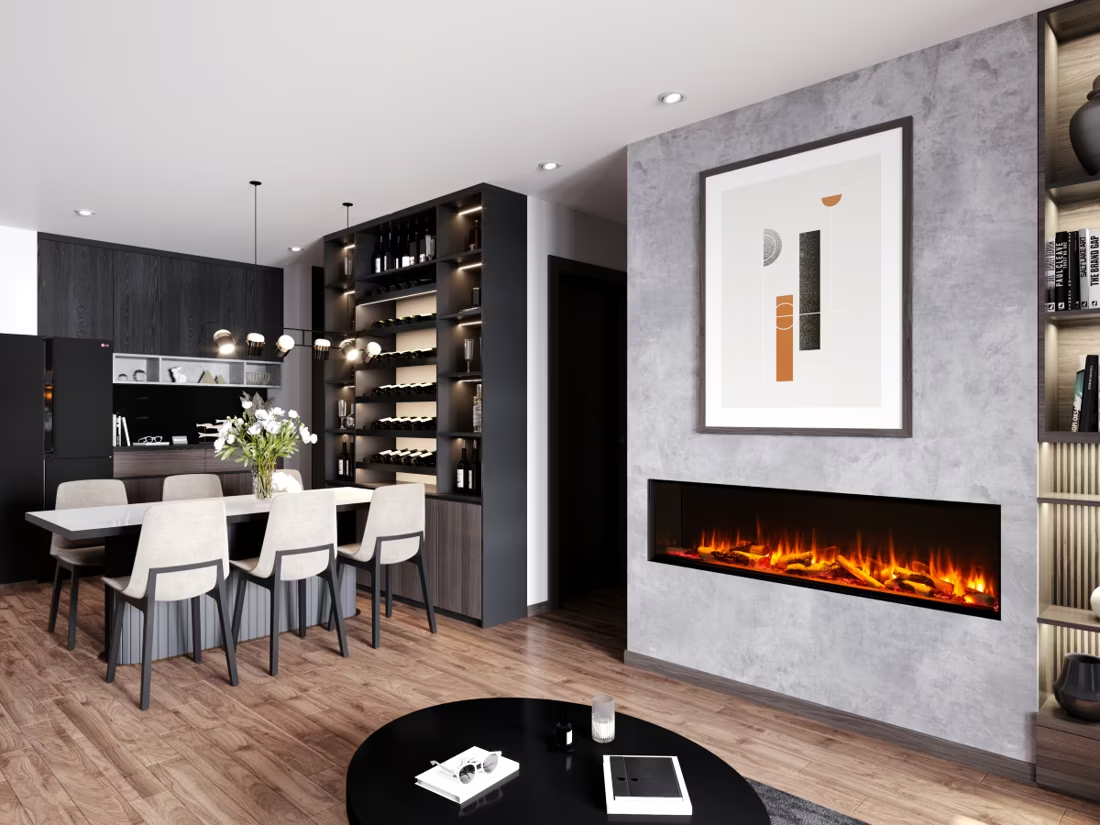
Electric is a different story. It doesn't need a chimney, a gas line, or combustion venting, which matters in a humid zone 2A climate where moisture management is already a year-round concern for homes and manufactured housing alike—common throughout rural Lafayette County. An electric fireplace or insert goes in against an interior wall or into an existing firebox, runs off a standard or dedicated circuit, and delivers instant ambiance plus enough supplemental warmth for the occasional hard freeze that does roll through the Big Bend on a cold front. Gas (propane, since natural gas infrastructure is limited this far into rural Florida) is the other standard option locally for households that want real heat output. Electric wins for homeowners who mainly want the look and feel of a fire without adding a combustion appliance to the house.
Three steps. No salesperson until you're ready.
Tell us about your project
Your zip code, your situation, and the fuel you're leaning toward—or let the answers point you to one.
See what's actually available
The brands dealers within 100 miles genuinely carry—real options, never a catalog mirage.
Get your dealer & Project Guide
A trusted local dealer, plus the free Project Guide & Parts List that names every component of the job.
Frequently Asked Questions
How much does an electric fireplace installation cost in Lafayette County?
Plug-in electric inserts that slide into an existing firebox or a media wall cutout typically run $500 to $2,000 installed, since there's no venting or gas line to run—most of the cost is the unit itself plus an electrician's time if a dedicated circuit is needed. Built-in electric fireplaces set into new framing, with a surround and finished wall work, run higher, often $2,000 to $4,500 depending on the cabinetry and trim involved. Because Lafayette County is small and rural, the closest hearth retailers with electric inventory in stock are typically based out of Live Oak or Lake City, and most will travel into the county for installation—expect that to be reflected as a modest trip charge on the quote.
Will an electric fireplace actually heat my house?
Not the whole house, and that's by design. Electric fireplaces are built for supplemental, zone heating—typically 4,600 to 5,200 BTUs, enough to take the edge off a single room. Given Lafayette County's mild winter profile (roughly 1,195 heating degree days a year and a 41°F average low), that's usually all a home needs; central HVAC handles the rare hard freeze nights. Think of the electric fireplace as ambiance with a heat boost for the living room, not a furnace replacement.
What happens if the power goes out—will my electric fireplace still work?
No. Electric fireplaces run entirely on household current, so a power outage shuts them off completely, with no battery backup option the way some gas units have. In Lafayette County, where the mild climate means winter heat loss during an outage is rarely a survival issue, that tradeoff is manageable for most households. If backup heat during storm-related outages is a real priority for your home, a propane space heater or a gas unit is a better complement—electric is best understood here as an ambiance and everyday-convenience choice, not an emergency heat source.
Are electric fireplaces a good fit for manufactured and mobile homes?
Yes, and it's one of the more common installs in rural parts of Lafayette County, where manufactured housing makes up a meaningful share of the housing stock. Because electric units don't require a chimney, roof penetration, or gas line, they avoid the structural and code complications that wood or gas installs can run into with manufactured home construction. Most electric inserts and wall-mount units just need a properly rated outlet or a dedicated circuit run by a licensed electrician, and they can be secured to interior wall studs or set into existing cabinetry. Ask your dealer specifically about clearance and mounting requirements for manufactured home wall construction before buying.
Do I need a permit to install an electric fireplace in Lafayette County?
A simple plug-in insert or freestanding unit generally doesn't require a permit since there's no gas, venting, or structural work involved. A built-in unit that requires new framing, a dedicated electrical circuit, or wall modifications typically does need an electrical permit, and possibly a building permit depending on scope—that's handled through the Lafayette County Building Department in Mayo. Most local installers will tell you upfront whether your specific project crosses that threshold, and a licensed electrician will need to be involved for any dedicated circuit work regardless of permit status.
Electric vs. propane gas—which is right for my Lafayette County home?
Propane gas fireplaces deliver real heat output—enough to serve as a legitimate secondary heat source—and can be configured to run during a power outage with the right ignition system, which matters if you're further out from Mayo and further from quick utility restoration. Electric fireplaces skip the propane tank, the gas line, and any combustion byproducts entirely, and they're simpler and cheaper to install. For a Big Bend climate where hard heating need is rare (1,195 heating degree days is a light load by national standards), electric is usually the lower-cost, lower-hassle choice for ambiance and light supplemental warmth. Households that already run propane for a range, water heater, or generator sometimes lean gas simply because the fuel infrastructure is already in place.
What electrical requirements does an electric fireplace have?
Smaller plug-in units (under 1,500 watts) can often run on a standard household outlet, though many manufacturers recommend a dedicated 15- or 20-amp circuit to avoid tripping breakers shared with other appliances. Built-in units and larger models almost always require a dedicated circuit, which means an electrician needs to run new wire back to the panel. In older homes throughout rural Lafayette County—including farmhouses and manufactured homes with dated electrical panels—it's worth having an electrician confirm panel capacity before committing to a specific unit, since some larger built-in models draw more current than an older panel can comfortably support.
Does Lafayette County's humidity affect an electric fireplace?
Less than you'd think, and in some ways it's an advantage. Because electric units produce no combustion byproducts and don't require a chimney or vent stack, there's no moisture-laden flue gas to manage—a real consideration in a hot-humid zone 2A climate where masonry chimneys and metal venting can be prone to condensation and corrosion issues over time. The main humidity-related maintenance item is keeping the unit's electrical components and heating coil free of dust and moisture buildup in storage areas, which any dealer will cover during installation.
Where can I find a dealer to install an electric fireplace near me in Lafayette County?
Given Lafayette County's population of under 2,000, there isn't a hearth retailer physically based in the county—most homeowners end up working with dealers based in Live Oak (Suwannee County) or Lake City (Columbia County) who regularly serve rural Big Bend customers and will travel for installation. That's exactly the kind of gap Find My Fireplace is built to close: we match you with a trusted dealer who actually covers Lafayette County, rather than leaving you to guess which regional retailer will bother making the drive to Mayo.
Can I put a TV above my fireplace?
Yes—with an asterisk. Fireplaces are hot and TVs don't like heat. Either put a mantel between them to deflect rising warmth, or choose a fireplace with heat-management technology that creates a cool zone on the wall above—the wall stays around 125 degrees, barely warm, while the room still gets full heat. If you like clean lines and don't want a mantel, heat management is the answer.
Does an electric fireplace need a vent or chimney?
No—that's its superpower. An electric fireplace needs a wall and an outlet, period. No vent pipe, no gas line, no clearances to design around, which is why it works in bedrooms, offices, apartments, and walls where venting a gas or wood unit would be impractical or impossible. Installation is typically the simplest and least expensive of any fireplace type.
What is an in-home preview and do I need one?
It's a visit where a hearth professional measures your space, confirms the model you picked actually works in your home, and walks the specs—framing, gas line, venting, finish work—before anything is ordered. Some details you just can't know until you see the house. Never make a down payment without one; it's the single most-skipped step that burns buyers.
Can I install a fireplace myself?
If you're putting a fire in your house on purpose, it's best to work with an expert. Unless you're genuinely experienced in framing, gas line, vent pipe, and the national code on clearances to combustibles, have a professional do it—and ideally the same company that sells you the fireplace, so warranty, service, and liability all live under one roof.
Find your electric fireplace in Lafayette County.
Tell us a bit about your home and we'll put together a free Project Guide & Parts List—the right electric fireplace or insert, the exact parts you'll need, and a trusted local dealer who actually serves Lafayette County.
Find Your Fireplace →