
Fireplace comfort for Lafayette County homes.
Fireplace resources for Mayo, Day, and every rural community in Lafayette County. Wood and pellet appliances are uncommon here—find the fuels that actually fit this climate and connect with a trusted local dealer.
Every Project Starts From One of These Five Situations
Mild winters, modest heating needs, in Florida's Big Bend.
Lafayette County sits in Climate Zone 2A along the Suwannee River in Florida's Big Bend, with an average winter low around 41°F and just a light, short winter heating season—a fraction of what a place like Duluth, MN racks up in a single month. With roughly 1,664 residents spread across Mayo, the small community of Day, and long stretches of unincorporated timberland, this is one of Florida's least populated counties, and its heating needs reflect that mild, short winter rather than anything approaching sustained cold-climate demand.
Because of that climate, wood stoves and pellet stoves are rare in Lafayette County—a handful of homeowners install a wood-burning fireplace for occasional cool-front ambiance or resale appeal, but it isn't a primary heat source here the way it is farther north. Gas (mostly propane, given the rural setting) and electric fireplaces cover the real demand: supplemental warmth on the occasional 30-degree night, plus year-round ambiance. This hub focuses on the two fuels that actually make sense for this county—pick one below to see local dealers, typical costs, and the resources tied to your project.
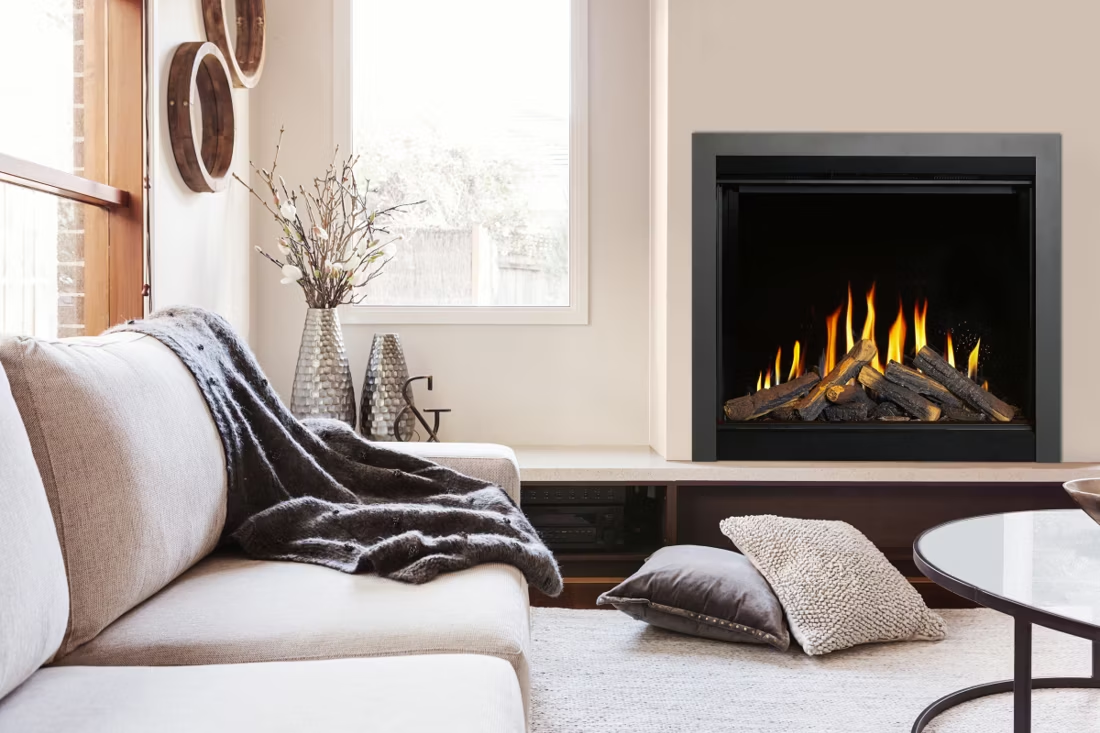
Four fuels. One honest answer for Lafayette County.
Three steps. No salesperson until you're ready.
Tell us about your project
Your zip code, your situation, and the fuel you're leaning toward—or let the answers point you to one.
See what's actually available
The brands dealers within 100 miles genuinely carry—real options, never a catalog mirage.
Get your dealer & Project Guide
A trusted local dealer, plus the free Project Guide & Parts List that names every component of the job.
Frequently Asked Questions
Which fuel works best in Lafayette County?
For most Lafayette County homes, the choice is between gas and electric. With average winter lows around 41°F and just a light, short winter heating season, this county simply doesn't see the sustained cold that makes wood or pellet heat practical—wood stoves are uncommon here, installed occasionally for ambiance or resale value rather than as a primary heat source, and pellet stoves are rare enough that most local dealers don't stock them. Propane-fed gas fireplaces are the practical choice for real supplemental heat on cold fronts, since piped natural gas is limited in a county this rural. Electric fireplaces work well for ambiance in bedrooms, dens, or manufactured homes where venting a gas unit isn't straightforward. Most homeowners here land on one or the other rather than mixing fuels.
Do I need a permit to install a fireplace in Lafayette County?
Yes, in most cases. New gas fireplace, insert, or stove installations typically require a building permit through the Lafayette County Building Department, plus a separate gas-line permit if propane piping is being run or modified—that work should be done by a licensed gas fitter. Electric fireplaces generally don't require a permit unless it's a built-in unit that involves new wiring or a dedicated circuit, in which case an electrical permit applies. Local dealers who regularly install in the county typically handle the permitting paperwork as part of the installation.
Are there air quality or burning restrictions in Lafayette County?
No—Lafayette County doesn't have documented air quality non-attainment issues or winter burning restrictions like the inversion-prone basins of the Mountain West. Because wood burning is already rare here and mostly limited to occasional-use fireplaces rather than daily heat, it hasn't created the kind of smoke buildup that triggers advisories in more wood-dependent, cold-climate counties. If you do install a wood-burning appliance for ambiance, a certified unit and proper venting are still worth doing right, even without a regulatory requirement pushing you there.
Can one local dealer handle both gas and electric fireplaces?
Often, yes. Because Lafayette County's population is small, the dealers who serve it—typically based in Live Oak or Lake City and covering Mayo and Day as part of a wider service area—tend to carry both gas and electric lines rather than specializing in just one, since neither fuel alone supports a dedicated local showroom. That's an advantage if you're undecided: a single visit can let you compare a propane insert against an electric wall-mount unit for the same room.
How does service work in a low-population county like Lafayette?
Most gas and electric service techs covering Lafayette County are based outside it—in Live Oak, Lake City, or occasionally Tallahassee—and schedule Mayo and Day alongside other rural stops. Expect a modest trip fee for service calls given the drive, and it's worth booking annual gas inspections in early fall before the handful of cold fronts that actually call for heat. Because call volume here is low, technicians may not be in the county every week, so planning your service date a few weeks out rather than expecting same-day availability is realistic.
What's the typical cost range for gas and electric fireplace installation in Lafayette County?
For gas fireplaces, inserts, or stoves running on propane, expect roughly $4,000–$9,000 installed, with cost driven mainly by whether new gas line needs to be run to the room versus tapping into existing propane service. Electric fireplaces are considerably less—$200–$2,500 for the unit itself, plus $300–$900 in labor for anything beyond a plug-and-play install, such as a built-in or wall-recessed unit requiring a dedicated circuit. Given the rural setting, ask your dealer whether their quote includes travel from Live Oak or Lake City, since that can affect the total.
How much should I budget for a fireplace?
For an average home—covering the fireplace, the vent pipe, and basic installation—a budget between $3,900 and $5,500 gives you a lot of options across wood, gas, and pellet. By the time you add finish work, gas line, and electrical, the average complete installation lands between $5,000 and $12,000 all-in. In a remodel or new build, a good rule is to put about 2.5% of the total project cost toward the fireplace.
Does a fireplace add value to my home?
On average, a fireplace adds back to the home about the same amount you spent installing it. Add the monthly savings from heating the rooms you actually use instead of the whole house—often hundreds of dollars a year—and the value case is strong before you even count what a fire does for how your family uses the room.
Can I install a fireplace myself?
If you're putting a fire in your house on purpose, it's best to work with an expert. Unless you're genuinely experienced in framing, gas line, vent pipe, and the national code on clearances to combustibles, have a professional do it—and ideally the same company that sells you the fireplace, so warranty, service, and liability all live under one roof.
Wood, gas, pellet, or electric—how do I choose?
Match the fuel to your life, not the other way around. Wood: lowest fuel cost and total power-outage independence, but you're hauling and stacking. Gas: press a button, set a thermostat, no maintenance to speak of. Pellet: wood economics with automatic feeding, in exchange for weekly cleaning and a need for electricity. Electric: plugs in anywhere with honest supplemental heat. Nobody regrets the fuel that fits how they actually live.
Stove and Fireplace Dealers in Lafayette County
Listings include WhyFire partner dealers, dealers we have verified as authorized for the brands we recommend, and established local businesses that carry hearth products. Every listing shows which one it is. The ones marked Preferred run on WhyFire's software, so they can show you real pricing and book your appointment right here. No manufacturer pays for placement. How we verify dealers →
Southern Quality Propane
Akins LLC
All Star Garage Doors
Owens Propane
Find your fireplace in Lafayette County.
Tell us about your home in Mayo, Day, or elsewhere in the county, and we'll match you with a trusted local dealer and send a free Project Guide & Parts List—the exact parts, including venting, and the dealer we recommend for your project.
Find Your Fireplace →