
Pellet heat for a city that almost never needs heat.
Key West logs about 56 heating degree days a year—a rounding error compared to most of the country. We'll tell you honestly whether a pellet stove makes sense here, and connect you with a trusted local dealer if it does.
Every Project Starts From One of These Five Situations
In Key West, the thermometer rarely asks for backup.
Key West sits in climate zone 1A at essentially sea level—the city's average elevation runs around -2 feet in low-lying pockets, and the average winter low hovers near 63°F. Compare that to Duluth, MN, which racks up over 9,000 heating degree days most winters; Key West sees about 56. That's not a typo. There simply isn't a heating season here in any meaningful sense, which is why pellet stoves, built to deliver sustained BTU output over long cold stretches, don't have a natural job to do in this market.
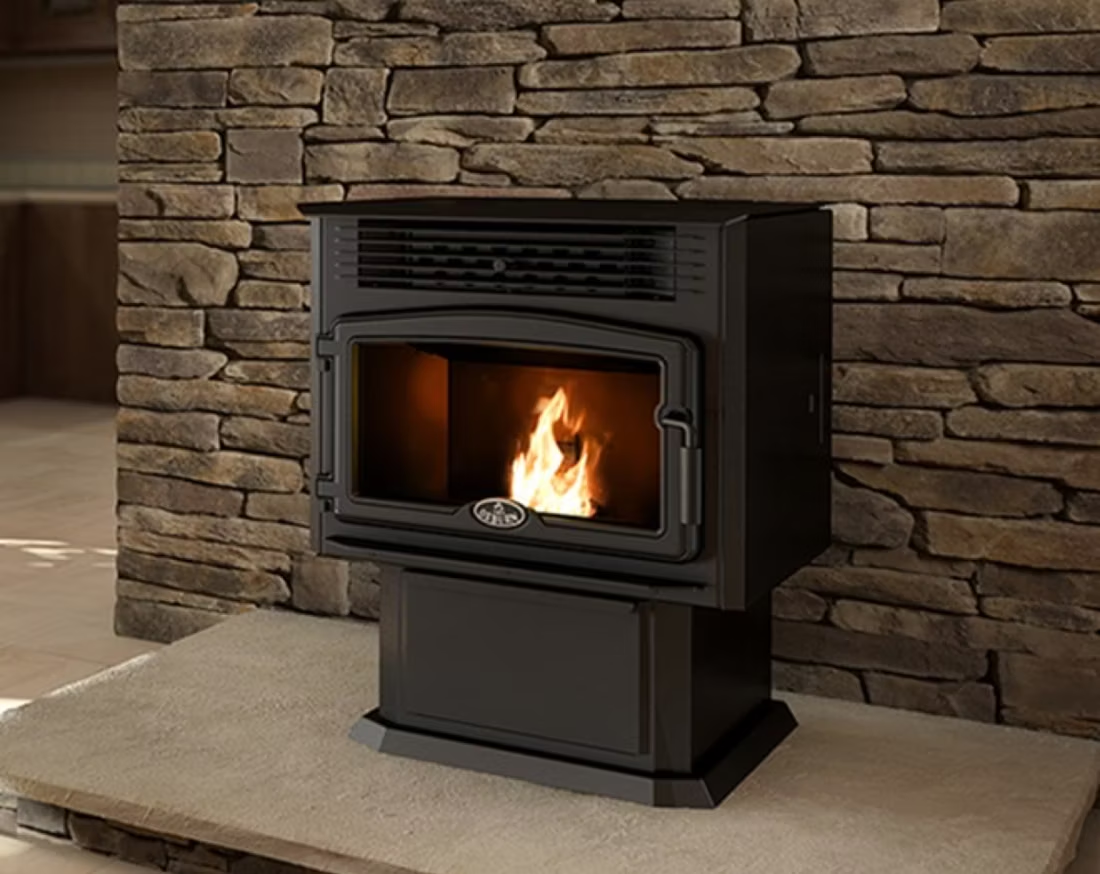
That said, a handful of Key West homeowners do ask about pellet appliances—usually for ambiance in a high-ceilinged living room, as a design feature in a restored Old Town conch house, or because they split time between the Keys and a colder second home up north and want the look here too. Worth knowing before you go that route: pellet stoves rely on an electric auger and blower to run, so they offer no advantage during hurricane-related power outages, and any venting hardware needs corrosion-resistant components to survive the salt air. For most Key West homeowners chasing fireplace ambiance without a real heating need, an electric fireplace or insert—installed with a simple 120V outlet and standard clearances—tends to be the more practical fit, and Florida Power & Light's residential rate of roughly 13.7¢/kWh keeps running costs low for occasional use.
Three steps. No salesperson until you're ready.
Tell us about your project
Your zip code, your situation, and the fuel you're leaning toward—or let the answers point you to one.
See what's actually available
The brands dealers within 100 miles genuinely carry—real options, never a catalog mirage.
Get your dealer & Project Guide
A trusted local dealer, plus the free Project Guide & Parts List that names every component of the job.
Frequently Asked Questions
Do people in Key West actually install pellet stoves?
Rarely, and almost never for heat. With average winter lows around 63°F and roughly 56 heating degree days a year, Key West doesn't generate the kind of sustained cold that pellet stoves are designed for. The occasional installation happens for aesthetic reasons—a homeowner restoring a historic Old Town property wants the visual of a stove, or a part-time resident with a second home in a colder climate likes the consistency of having the same appliance in both places. If you're chasing warmth rather than looks, most local dealers will steer you toward an electric fireplace instead.
What does a pellet stove installation cost in Key West?
Because installations are uncommon here, there isn't an established local pricing benchmark the way there is in Minneapolis or Buffalo. On mainland Florida, a pellet insert or freestanding unit typically installs for somewhere in the $3,000-$6,000 range, but Key West adds line items that colder markets don't: corrosion-resistant vent components rated for salt air exposure, and hurricane wind-load-compliant roof or wall penetrations reviewed by Monroe County. A local dealer can give you a real number, but expect it to run higher than a mainland quote once those factors are priced in.
Will a pellet stove work during a hurricane power outage?
No—this is the detail that surprises people most. Pellet stoves need electricity to run the auger that feeds fuel and the blower that circulates heat, so when Florida Power & Light service goes down during a storm, the stove goes down with it. If backup heat or ambiance during outages is the goal, a battery-operated or standby-generator-paired system is a better fit than pellet fuel. Given how rarely Key West needs supplemental heat in the first place, most homeowners here are better served skipping combustion appliances altogether and looking at battery-backed electric options instead.
Where would I even buy pellets in Key West?
There's no significant local pellet retail presence, since demand is so low. Regional brands like Lignetics, Hamer Pellet Fuel, and Greenway Renewable Energy distribute through mainland Florida hardware and farm-supply stores, and Keys residents who do own a pellet stove typically stock up during trips up the Overseas Highway or arrange delivery through a mainland supplier. Factor in the drive or shipping cost when budgeting for fuel—it's a real consideration here in a way it isn't in a pellet-heavy market like the Upper Midwest.
What permits does Monroe County require for a pellet stove?
Any new solid-fuel or pellet appliance installation goes through the Monroe County Building Department, and in Key West specifically, that review includes Florida's High-Velocity Hurricane Zone wind-load standards for any roof or wall penetration used for venting. Given the low elevation and FEMA flood-zone designations common throughout the city, you'll also want an installer familiar with local code who can confirm hearth and clearance requirements meet NFPA 211 alongside the wind-load rules—this isn't a straightforward permit pull like it would be in a heating-climate city.
Pellet stove vs. electric fireplace—which makes more sense in Key West?
For the vast majority of Key West homes, electric wins. An electric fireplace or insert plugs into a standard outlet, needs no venting, no fuel storage, and no combustion byproducts to manage in a humid coastal climate—and at Florida Power & Light's residential rate of about 13.7¢/kWh, running one occasionally for ambiance costs very little. A pellet stove requires fuel sourced from off-island, hurricane-rated venting, and delivers heat output this climate essentially never calls for. Unless you specifically want the look and ritual of a pellet-fed fire, electric is the more practical choice here.
Does a pellet stove make sense for a Key West vacation rental?
Generally, no. Vacation rental guests in Key West are booking for beach weather, not fireside evenings, and a combustion appliance adds insurance, maintenance, and liability considerations that don't pay off for a fixture nobody expects to use. If a rental owner wants a fireplace focal point for listing photos or a living room feature, an electric unit delivers the same visual with none of the venting, fuel storage, or hurricane-code complications a pellet stove would introduce.
If someone does want a pellet stove here, what should they look for?
Since heat output isn't the driving need, prioritize a smaller-capacity unit with a clean aesthetic over a high-BTU model built for whole-home heating in a place like Duluth or Bozeman—you'd never use that capacity here. Look for stainless steel venting components rated for coastal salt-air exposure, and confirm with your installer that the exterior vent termination meets Monroe County's hurricane wind-load requirements. A trusted local dealer can also tell you honestly whether the project makes sense at all before you spend money on it.
Pellet vs. gas fireplace in Key West—is either a good fit?
Both are unusual choices here. Gas fireplaces are occasionally installed in higher-end Key West properties for a vented, low-maintenance flame effect, but propane (natural gas service is minimal in the Keys) has to be tanked and refilled, and neither fuel is chasing a real heating need in a climate with 56 annual heating degree days. Pellet requires off-island fuel sourcing and an electric auger that won't run during storm outages. If you want the visual of fire without the fuel logistics, most Key West homeowners land on electric instead—but a local dealer can walk you through all three honestly if you have a specific property in mind.
How often does a pellet stove need cleaning?
A clean pellet stove is a happy pellet stove. Plan on cleaning the burn pot about once a week when you're burning regularly—ash and clinkers gum up the air holes just like a pellet barbecue. Most pellet stove problems trace back to skipped cleaning that nobody explained up front. Some designs make it easy with a trapdoor burn pot: pull a lever and the gunk drops into the ash pan.
What's the difference between an insert and a zero-clearance fireplace?
An insert is a fireplace that slides into a pre-existing wood-burning fireplace—if you don't have one, there's nothing to insert it into. A zero-clearance fireplace is built into a framed wall, which makes it the answer for remodels and new construction. Simple test: existing masonry fireplace means insert; blank or framed wall means zero-clearance.
Can a fireplace actually lower my heating bill?
Yes—by creating a comfort zone. A furnace heats every square foot of the house just to warm the one room you're in; a gas fireplace on low burns roughly a sixth of the gas a typical furnace does. Set the furnace around 55–60 degrees as a baseline, then heat the rooms your family actually uses. Families who heat this way commonly save $20–$60 a month.
How much should I budget for a fireplace?
For an average home—covering the fireplace, the vent pipe, and basic installation—a budget between $3,900 and $5,500 gives you a lot of options across wood, gas, and pellet. By the time you add finish work, gas line, and electrical, the average complete installation lands between $5,000 and $12,000 all-in. In a remodel or new build, a good rule is to put about 2.5% of the total project cost toward the fireplace.
Nearby Dealers
Hearth shops serving Key West and the surrounding area.
Pellet Brands Stocked Around Key West
Manufacturers will point you to the nearest stocking dealer.
Get matched with a Key West dealer who'll tell you the truth about pellet.
Tell us about your property and we'll connect you with a trusted local dealer—and send over a free Project Guide & Parts List, whether that ends up recommending a pellet stove, an electric alternative, or something else entirely for Key West's climate.
Find Your Fireplace →