
Clean, instant warmth for Jefferson County's mild winters.
With winter lows averaging 40°F and only about 1,581 heating degree days a year, Jefferson County rarely needs a full heating system running around the clock. An electric fireplace delivers real ambiance and supplemental warmth for the occasional cold snap—no chimney, no gas line, no venting. We'll match you with a local dealer who can size and install the right unit.
Every Project Starts From One of These Five Situations
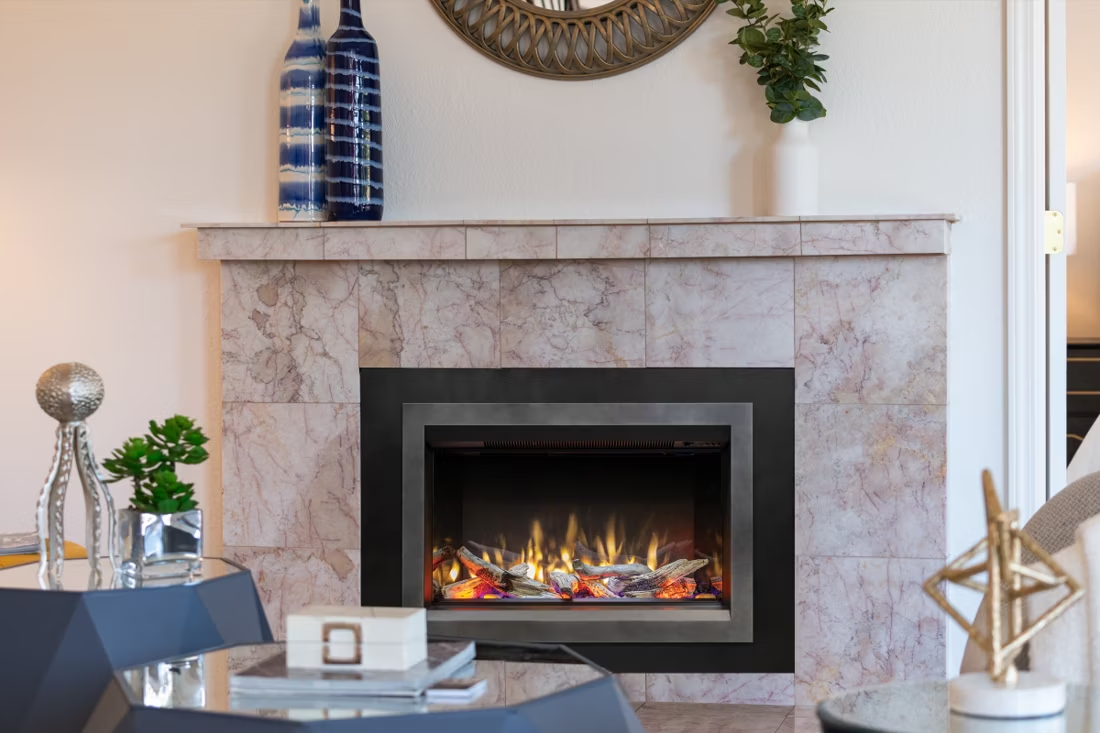
Real warmth without the woodpile or the flue.
Jefferson County sits in Florida's Big Bend, centered on the historic town of Monticello, in climate zone 2A where the heating season is short and mild. A winter low averaging 40°F and a heating degree day count of just 1,581—a fraction of what a home in Bozeman, MT or Duluth, MN sees in a single month—means most homes here are built and equipped for cooling first, heating second. When an Arctic front does push down through the Panhandle and drops overnight temperatures into the 20s, homeowners want supplemental warmth in the rooms they actually use, not a whole-home retrofit.
That's exactly the gap an electric fireplace fills. There's no chimney to build, no gas line to run, and no wood to season or store—a real advantage in a county where a lot of the housing stock is decades-old, well outside the reach of natural gas service. Talquin Electric Cooperative serves much of rural Jefferson County, with Duke Energy Florida covering Monticello and the surrounding area; either way, an electric fireplace runs on a standard outlet or a simple dedicated circuit, and the operating cost stays low given how few hours a year it actually needs to run.
Three steps. No salesperson until you're ready.
Tell us about your project
Your zip code, your situation, and the fuel you're leaning toward—or let the answers point you to one.
See what's actually available
The brands dealers within 100 miles genuinely carry—real options, never a catalog mirage.
Get your dealer & Project Guide
A trusted local dealer, plus the free Project Guide & Parts List that names every component of the job.
Frequently Asked Questions
How much does an electric fireplace installation cost in Jefferson County?
A plug-in freestanding or built-in electric fireplace insert typically costs $300 to $800 for the unit, and since most run on a standard 120V outlet, installation is often as simple as setting it in place and plugging it in—no electrician needed. Wall-mounted or media-console styles that require a dedicated 20-amp circuit or in-wall wiring run closer to $1,200 to $3,500 installed, including work by a licensed electrician. Local dealers serving Jefferson County can typically complete either type of install in a single visit.
Do I need a permit to install an electric fireplace in Jefferson County?
In most cases, no. A plug-in electric fireplace that uses an existing outlet doesn't require a building permit. If you're adding a new dedicated circuit for a larger built-in unit, that electrical work needs to be pulled by a licensed electrician and generally requires an electrical permit through the Jefferson County Building Department. Homes within Monticello's historic district should also confirm with the county that any visible exterior changes are acceptable—though this rarely comes up with electric units since there's no venting or chimney work involved.
Will an electric fireplace actually heat my home, or is it just for looks?
Given Jefferson County's climate—a winter low averaging 40°F and only about 1,581 heating degree days a year—most electric fireplaces here do real, practical work. Standard units are rated to heat 400 to 1,500 square feet, which is plenty for a bedroom or living room on the handful of nights each winter when a cold front pushes overnight temperatures into the 20s or 30s. What an electric fireplace won't do is replace your heat pump for whole-home heating on a sustained basis—but for the light, intermittent heating demand typical of this part of the Big Bend, it can cover nearly all of a household's supplemental heat needs.
Should I get a plug-in electric fireplace or a built-in unit?
Plug-in freestanding units and inserts are the more common choice in Jefferson County's older housing stock and for renters, since they require no wiring changes and can be moved if needed. Built-in wall units or electric log inserts fitted into an existing masonry opening make more sense for homeowners doing a renovation or new construction who want a fixed, finished look. For a home in Monticello's historic district with an existing but non-functional fireplace opening, an insert-style electric unit is usually the simplest way to bring that fireplace back into use without touching the chimney structure at all.
Which utility serves Jefferson County, and does that affect my fireplace choice?
Talquin Electric Cooperative serves much of rural Jefferson County, while Duke Energy Florida covers Monticello and the immediately surrounding area. Neither utility currently offers a specific rebate for electric fireplaces, since they're classified as supplemental rather than primary heating equipment—but because Jefferson County's heating season is so short, the actual cost to run one is modest. A unit drawing 1,500 watts for a few hours on a cold evening adds only a small amount to a monthly bill compared to what the same unit would cost to run through a long Northern winter.
Can I add an electric fireplace to a historic Monticello home?
Yes, and it's one of the more common upgrades for the county's older housing stock. Monticello has one of the largest concentrations of historic homes in Florida, many built in the 1800s with fireplace openings that are no longer structurally sound or code-compliant for wood or gas use. An electric fireplace insert fits into that existing opening without requiring chimney relining, a new flue, or any gas line work—it preserves the original mantel and opening while adding genuine usable heat. This is often the most practical way to bring a historic fireplace back into service without a major structural project.
Will my electric fireplace still work if the power goes out?
No—an electric fireplace requires power to run, unlike a wood stove, which is worth knowing in a county that periodically loses electricity during summer storm season and the occasional winter front. For homeowners who want heat that keeps working during an outage, a wood stove or gas insert is the better backup option. That said, because Jefferson County's cold snaps are typically brief and outages during winter months are less common than during hurricane season, most homeowners here are comfortable relying on electric for day-to-day supplemental warmth and keeping a backup plan only for the rare extended outage.
Electric vs. wood—which makes more sense for Jefferson County?
Wood has real roots here—oak, mahogany, and pine are all common locally, and a wood-burning fireplace or stove offers heat that keeps working through a power outage along with the kind of ambiance a lot of Jefferson County's older homes were originally built around. Electric offers a lower upfront cost, no wood to source or store, no ash or creosote to manage, and a plug-and-go installation that works in rental properties and historic homes alike. Given how mild the county's winters run—1,581 heating degree days is light by almost any national standard—electric is often the more practical everyday choice, with wood reserved for homeowners who value the tradition and the backup-heat security it provides.
Are there rebates available for installing an electric fireplace in Jefferson County?
There typically aren't dedicated rebates for electric fireplaces specifically, since Talquin Electric Cooperative and Duke Energy Florida both structure their efficiency incentive programs around whole-home heating and cooling equipment like heat pumps rather than supplemental appliances. Where an electric fireplace does pay off is in ongoing operating cost—because Jefferson County's heating season is so short, a unit here runs far fewer hours per year than the same fireplace would in a colder climate, keeping the added cost to your utility bill minimal even without a rebate.
Can I put a TV above my fireplace?
Yes—with an asterisk. Fireplaces are hot and TVs don't like heat. Either put a mantel between them to deflect rising warmth, or choose a fireplace with heat-management technology that creates a cool zone on the wall above—the wall stays around 125 degrees, barely warm, while the room still gets full heat. If you like clean lines and don't want a mantel, heat management is the answer.
Does an electric fireplace need a vent or chimney?
No—that's its superpower. An electric fireplace needs a wall and an outlet, period. No vent pipe, no gas line, no clearances to design around, which is why it works in bedrooms, offices, apartments, and walls where venting a gas or wood unit would be impractical or impossible. Installation is typically the simplest and least expensive of any fireplace type.
How much should I budget for a fireplace?
For an average home—covering the fireplace, the vent pipe, and basic installation—a budget between $3,900 and $5,500 gives you a lot of options across wood, gas, and pellet. By the time you add finish work, gas line, and electrical, the average complete installation lands between $5,000 and $12,000 all-in. In a remodel or new build, a good rule is to put about 2.5% of the total project cost toward the fireplace.
What is an in-home preview and do I need one?
It's a visit where a hearth professional measures your space, confirms the model you picked actually works in your home, and walks the specs—framing, gas line, venting, finish work—before anything is ordered. Some details you just can't know until you see the house. Never make a down payment without one; it's the single most-skipped step that burns buyers.
Find your electric fireplace in Jefferson County.
Tell us a bit about your home and we'll put together a free Project Guide & Parts List—sized for your space, with the right unit and a trusted local Jefferson County dealer to handle the install.
Find Your Fireplace →