
Find the right fireplace for Jefferson County's mild winters.
Wood, gas, pellet, and electric fireplace resources for Monticello and every rural community in Jefferson County—built for cool nights, occasional cold fronts, and the storm outages that come with Big Bend weather.
Every Project Starts From One of These Five Situations
Big Bend heating, on a short season.
Jefferson County sits in Florida's Big Bend region, with Monticello as the county seat and roughly 3,400 residents spread across mostly rural land. The climate is Zone 2A—hot and humid most of the year—with an average winter low near 40°F and only a light winter heating load for the season. That's a fraction of what a place like Duluth, Minnesota logs in a single winter, and it means fireplaces here are rarely running around the clock. Instead, they get used for the string of cold fronts that push through December through February, for ambiance on cool evenings, and as backup heat when Big Bend storms knock out power. Local oak, mahogany, and pine are the common firewood species for the households that still burn wood.
What you'll find on this hub: hearth retailers, service technicians, and fuel suppliers covering Jefferson County—from Monticello out to Lloyd, Wacissa, and Waukeenah. Pick your fuel below to see local dealers, typical installation costs, and the units that make sense for a short, mild heating season. Whether you're outfitting a farmhouse fireplace for winter cold fronts or adding a gas insert for reliable heat during storm outages, this is the starting point.
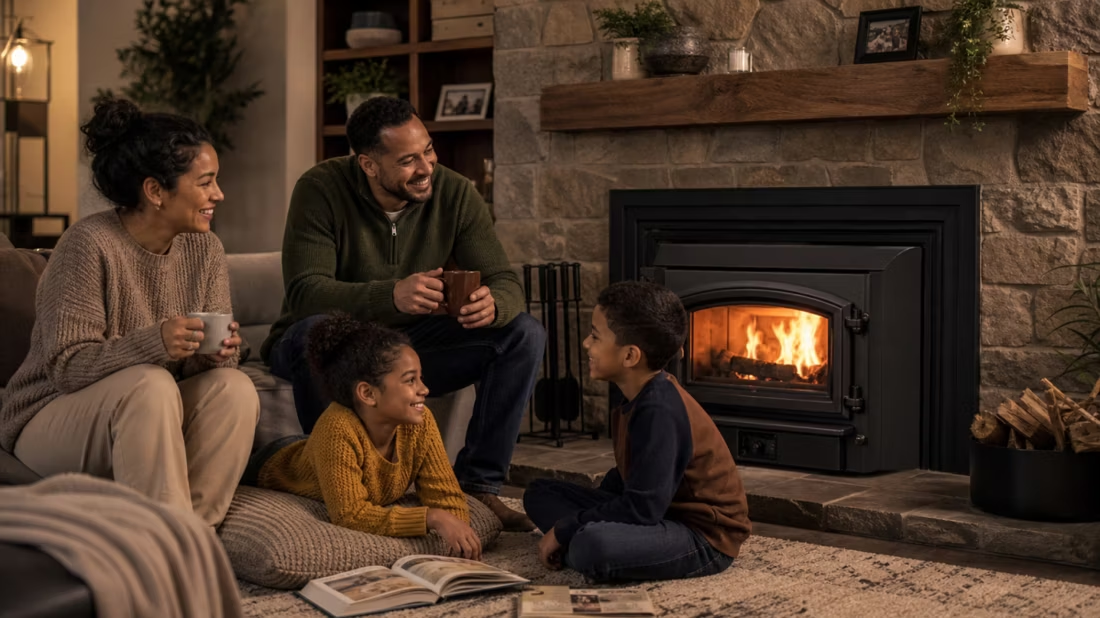
Four fuels. One honest answer for Jefferson County.
Three steps. No salesperson until you're ready.
Tell us about your project
Your zip code, your situation, and the fuel you're leaning toward—or let the answers point you to one.
See what's actually available
The brands dealers within 100 miles genuinely carry—real options, never a catalog mirage.
Get your dealer & Project Guide
A trusted local dealer, plus the free Project Guide & Parts List that names every component of the job.
Frequently Asked Questions
Which fuel works best in Jefferson County?
With only a light winter heating load year to year, no Jefferson County fireplace is doing the heavy lifting a stove does in a place like Duluth or Bozeman—but all four fuel types still show up here for good reasons. Wood is common for the cold-front weeks and for homeowners who like burning local oak, mahogany, or pine and want a heat source that works if a storm knocks the power out. Gas—mostly propane in this rural county—is the low-maintenance choice for a fireplace you flip on for a cool December evening without dealing with ash. Pellet stoves (stocked by regional brands like Lignetics and Hamer Pellet Fuel) split the difference—real heat, less labor than cordwood, though supply is thinner here than in colder markets. Electric fireplaces are popular for ambiance in living rooms and bedrooms where you want the visual without any heat load at all, which fits a climate where cooling costs matter far more than heating.
Do I need a permit to install a fireplace in Jefferson County?
Generally yes for anything that involves new venting, gas lines, or structural chimney work. Wood stoves, wood inserts, gas fireplaces, gas inserts, and pellet stoves typically require a building permit through the Jefferson County Building Department, and any propane line work needs a licensed gas technician. Electric fireplaces are usually exempt unless you're doing a built-in installation with new wiring or a dedicated circuit. Because Jefferson County is unincorporated for most of its area outside Monticello, permitting runs through the county rather than a city office. Most hearth retailers who service the area—including those based out of Tallahassee—handle the permit paperwork as part of the installation, so you typically don't have to file it yourself.
Are there air quality or burning restrictions in Jefferson County?
No—Jefferson County has no designated air quality non-attainment areas and no inversion-driven burn advisories like you'd find in a mountain basin. Wood burning here isn't subject to the seasonal curtailment periods that some western counties enforce. That said, general fire safety rules still apply: outdoor burn permits (for yard debris, not fireplaces) go through the Florida Forest Service, and any new wood stove installation still needs to meet current EPA emissions standards to be permitted. For day-to-day fireplace use, there's no local regulatory hurdle beyond the standard building permit.
Can one local hearth retailer handle all four fuel types?
In a county with roughly 3,400 residents, you're less likely to find a dealer showroom right in Monticello and more likely to work with a retailer based in the Tallahassee metro that services Jefferson County as part of its coverage area. Most of those regional dealers carry three or four fuel types—wood, gas, pellet, and electric—since serving a wider rural territory means stocking options for whatever a given household needs. If you're comparing fuels, ask any retailer you're considering whether they have working floor displays of each type; the multi-fuel dealers usually do, and can walk you through trade-offs for a mild, short-heating-season home.
How does fireplace service work in rural parts of Jefferson County?
Most technicians covering Jefferson County are based out of Tallahassee or Thomasville and drive into Monticello, Lloyd, Wacissa, and the surrounding rural areas for annual service and repairs. Expect a modest trip fee for calls outside Monticello proper, and plan ahead—scheduling chimney sweeps or gas inspections in early fall, before the first cold front, gets you a wider choice of appointment times than waiting until a January cold snap when everyone wants service at once. If you rely on your fireplace as backup heat during hurricane-season or winter storm outages, an annual pre-season check is worth the trip fee.
What's the typical cost range for fireplace installation across all fuel types in Jefferson County?
Costs track close to regional norms even though usage is lighter here than in colder counties. Wood stove or insert installation: roughly $4,000–$8,500, depending on chimney condition and whether new venting is needed. Gas fireplace, insert, or stove (propane, in most of the county): roughly $4,000–$9,500, with propane tank setup or line work adding to the lower end. Pellet stove or insert: roughly $4,000–$7,000 for a typical install. Electric fireplace: $200–$2,500 for the unit itself, plus $300–$1,000 in labor for anything beyond a plug-and-play wall unit. Because dealer travel from Tallahassee is often part of the job here, ask upfront whether a trip or delivery fee applies to your project.
Wood, gas, pellet, or electric—how do I choose?
Match the fuel to your life, not the other way around. Wood: lowest fuel cost and total power-outage independence, but you're hauling and stacking. Gas: press a button, set a thermostat, no maintenance to speak of. Pellet: wood economics with automatic feeding, in exchange for weekly cleaning and a need for electricity. Electric: plugs in anywhere with honest supplemental heat. Nobody regrets the fuel that fits how they actually live.
What is an in-home preview and do I need one?
It's a visit where a hearth professional measures your space, confirms the model you picked actually works in your home, and walks the specs—framing, gas line, venting, finish work—before anything is ordered. Some details you just can't know until you see the house. Never make a down payment without one; it's the single most-skipped step that burns buyers.
How much should I budget for a fireplace?
For an average home—covering the fireplace, the vent pipe, and basic installation—a budget between $3,900 and $5,500 gives you a lot of options across wood, gas, and pellet. By the time you add finish work, gas line, and electrical, the average complete installation lands between $5,000 and $12,000 all-in. In a remodel or new build, a good rule is to put about 2.5% of the total project cost toward the fireplace.
Can I install a fireplace myself?
If you're putting a fire in your house on purpose, it's best to work with an expert. Unless you're genuinely experienced in framing, gas line, vent pipe, and the national code on clearances to combustibles, have a professional do it—and ideally the same company that sells you the fireplace, so warranty, service, and liability all live under one roof.
Stove and Fireplace Dealers in Jefferson County
Listings include WhyFire partner dealers, dealers we have verified as authorized for the brands we recommend, and established local businesses that carry hearth products. Every listing shows which one it is. The ones marked Preferred run on WhyFire's software, so they can show you real pricing and book your appointment right here. No manufacturer pays for placement. How we verify dealers →
Allweather Insulation
Owens Propane
Capital City Fireplace & Grill
Hearth And Patio Sales And Service LLC
Find your fireplace in Jefferson County.
Get matched with a trusted local dealer and receive a free Project Guide & Parts List—a plan for your fireplace project in Jefferson County, with the exact parts, vent kit, and recommended installer.
Find Your Fireplace →