
Real ambiance for Gulf County's mild winters.
With winter lows averaging 44°F and only a short, mild winter heating season, Gulf County rarely needs serious supplemental heat—but an electric fireplace still delivers the glow and the cozy factor on the handful of cool nights each winter. Find the right unit and connect with a trusted local dealer.
Every Project Starts From One of These Five Situations
Ambiance first, heat second—and that's fine.
Gulf County sits on the Florida Panhandle's Gulf Coast, in climate zone 2A, where the coldest nights of the year still average in the mid-40s. Compare that to a place like Duluth, MN, which has a brutally long, harsh winter heating season—Gulf County's short, mild winter heating needs are a fraction of that. Homes here, from Port St. Joe to Wewahitchka and the rural stretches along US-98, simply don't need a wood-burning or gas system working overtime through the winter. That's exactly where electric fireplaces earn their place.
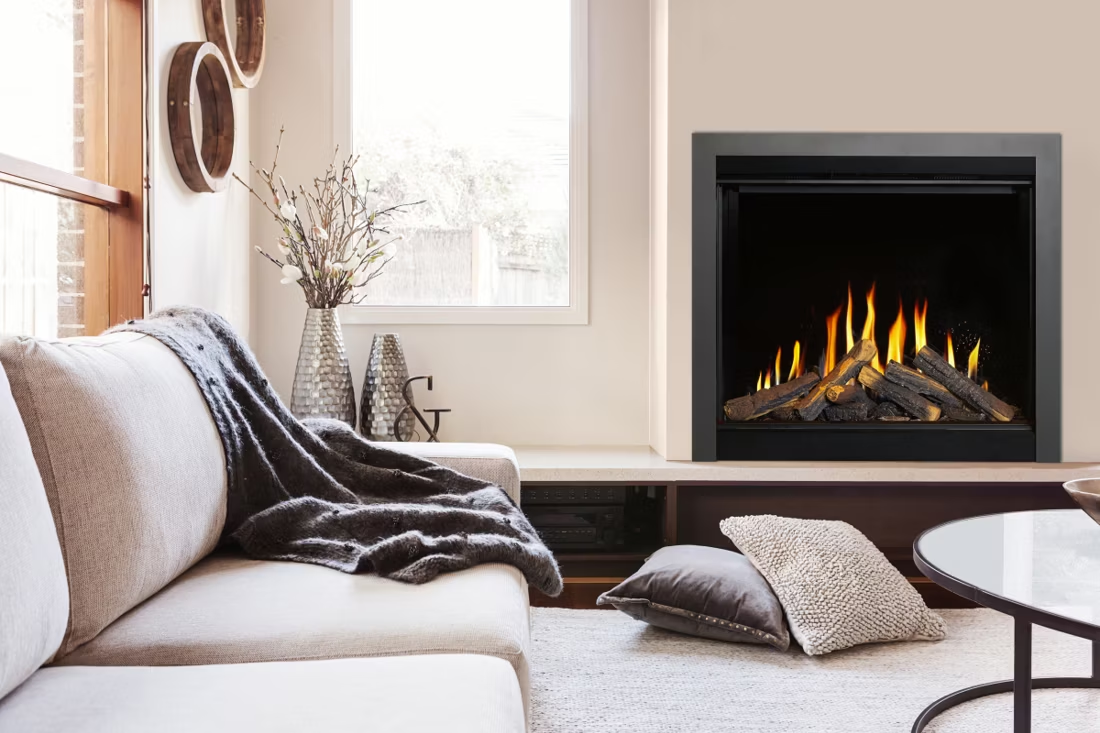
An electric fireplace or insert gives you the visual centerpiece—a mantel, a glowing firebox, the look of a real hearth—without a chimney, venting, gas line, or the humidity and pest concerns that come with storing cordwood in a coastal climate. Most units plug into a standard 120V outlet, run on a simple breaker, and need no building permit for a plug-in model. For the occasional cool front that drops temperatures into the 30s or 40s overnight, the supplemental heat setting is genuinely useful; the rest of the year, it's ambiance with the flip of a switch.
Three steps. No salesperson until you're ready.
Tell us about your project
Your zip code, your situation, and the fuel you're leaning toward—or let the answers point you to one.
See what's actually available
The brands dealers within 100 miles genuinely carry—real options, never a catalog mirage.
Get your dealer & Project Guide
A trusted local dealer, plus the free Project Guide & Parts List that names every component of the job.
Frequently Asked Questions
How much does an electric fireplace installation cost in Gulf County?
Plug-in electric fireplace inserts and freestanding units typically run $400 to $1,200 installed in Gulf County, and many homeowners handle the unit itself with no installer at all—it's simply plugged into an existing outlet. Costs climb toward the higher end for built-in wall units that require a dedicated 120V or 240V circuit, minor framing, or a mantel surround built to match existing trim. Coastal-facing homes in Port St. Joe sometimes need a licensed electrician for circuit work if the home's original wiring wasn't set up for a dedicated fireplace outlet—that adds to the cost but is usually a half-day job.
Do I need a permit to install an electric fireplace in Gulf County?
For a plug-in unit that uses an existing outlet, no permit is required—there's no venting, no gas line, and no chimney to inspect. If you're having a dedicated circuit run for a built-in electric fireplace, that electrical work typically falls under Gulf County's building permit process and should be pulled by your licensed electrician as part of the job. Most local dealers or electricians handle this paperwork directly, so it's rarely something the homeowner has to manage.
Is an electric fireplace enough heat for a Gulf County home?
For the vast majority of the year, yes—and honestly, most Gulf County homes don't need supplemental heat at all given winter lows averaging 44°F. Electric fireplaces are rated for around 4,000 to 5,000 BTUs on the heat setting, enough to comfortably warm a single room during a cold front or an unusually chilly Panhandle night. They're not designed to replace central HVAC as a primary heat source, but in this climate they don't need to be—they're a supplemental, on-demand warmth boost for the living room or bedroom on the rare night it dips into the 30s.
What's the difference between an electric fireplace, insert, and mantel package?
An electric insert is built to slide into an existing masonry or wood-burning fireplace opening, converting a fireplace you already have into a plug-in unit—a popular option for older Gulf County homes with a fireplace that's rarely used for wood. A freestanding electric fireplace is its own self-contained cabinet unit that can go anywhere near an outlet. A mantel package combines an electric firebox insert with a surrounding mantel and shelf, built as a complete piece for homes without an existing fireplace opening. Local dealers can walk you through which fits your floor plan.
Can an electric fireplace replace my old wood-burning fireplace in Gulf County?
Often, yes. Many older homes in Wewahitchka and Port St. Joe have a wood-burning masonry fireplace that sees little to no use given the region's mild winters—oak and pine were once the common local firewood, but with average lows in the mid-40s, most owners just don't bother anymore. An electric insert slides into that same opening, eliminates any concern about chimney maintenance or creosote buildup in a humid coastal climate, and gives you a usable, attractive fireplace again without the upkeep.
How energy-efficient is an electric fireplace to run?
Very. A typical electric fireplace draws about 1,500 watts on the heat setting, which costs roughly 15 to 20 cents per hour to run depending on your local electric rate—a small fraction of what a comparable gas or propane appliance would cost to operate, especially since Gulf County's mild climate means you're only running it occasionally rather than through a long heating season. On flame-only mode with the heater off, draw is minimal—closer to what a couple of light bulbs use.
Do electric fireplaces work during a power outage?
No—electric fireplaces require power to operate, both for the heat function and the flame effect, so they go dark during an outage. For Gulf County, where tropical storms and hurricanes moving through the Gulf can knock out power for days at a time, homeowners who want fireplace heat that works when the grid doesn't should consider a wood or propane option as their primary backup, with electric reserved for everyday ambiance and easy supplemental warmth.
What size electric fireplace do I need for my room?
For most Gulf County living rooms and bedrooms, a 40- to 50-inch insert or wall-mounted unit is proportionate to a standard 12x15 room, while smaller 26- to 36-inch units work well in bedrooms or den spaces. Since heat output isn't the primary driver of sizing in this climate—visual proportion to the wall and room is—many homeowners size up slightly for the look rather than the BTU output. A local dealer can help match unit width to your specific wall and mantel dimensions.
Electric vs. gas—which is right for my Gulf County home?
Gas fireplaces offer real flame, higher heat output, and work during power outages if properly configured—relevant for a coastal county that sees hurricane-related outages. Electric fireplaces cost far less to install, need no gas line or venting, and are simpler for renters or owners who want ambiance without construction. Given Gulf County's mild climate and short winter heating needs, heat output matters less here than in colder regions, so the decision often comes down to installation simplicity and budget: electric wins on both counts for most homeowners, while gas is worth considering for backup-power resilience in a hurricane-prone area.
Does an electric fireplace need a vent or chimney?
No—that's its superpower. An electric fireplace needs a wall and an outlet, period. No vent pipe, no gas line, no clearances to design around, which is why it works in bedrooms, offices, apartments, and walls where venting a gas or wood unit would be impractical or impossible. Installation is typically the simplest and least expensive of any fireplace type.
Do electric fireplaces actually produce heat?
Yes—most put out around 4,800–5,000 BTUs from a standard outlet, which comfortably warms a bedroom, office, or den as a comfort-zone heater. What they won't do is carry a whole house the way wood, gas, or pellet can. Think of electric as ambiance-first with honest supplemental heat: flames on with no heat in July, flames plus warmth in January.
Does a fireplace add value to my home?
On average, a fireplace adds back to the home about the same amount you spent installing it. Add the monthly savings from heating the rooms you actually use instead of the whole house—often hundreds of dollars a year—and the value case is strong before you even count what a fire does for how your family uses the room.
How much should I budget for a fireplace?
For an average home—covering the fireplace, the vent pipe, and basic installation—a budget between $3,900 and $5,500 gives you a lot of options across wood, gas, and pellet. By the time you add finish work, gas line, and electrical, the average complete installation lands between $5,000 and $12,000 all-in. In a remodel or new build, a good rule is to put about 2.5% of the total project cost toward the fireplace.
Find your electric fireplace in Gulf County.
Tell us a bit about your home and we'll match you with the right electric fireplace, insert, or mantel package—plus a free Project Guide & Parts List with your recommended local dealer in Gulf County.
Find Your Fireplace →