
Find the right fireplace for Gulf County, Florida.
Wood, gas, pellet, and electric fireplace resources for Port St. Joe, Wewahitchka, Cape San Blas, and the smaller communities scattered along St. Joseph Bay. Find the right unit for a mild coastal climate and connect with a trusted local hearth retailer.
Every Project Starts From One of These Five Situations
Coastal comfort heat along Florida's Forgotten Coast.
Gulf County sits on Florida's Panhandle coastline around St. Joseph Bay, home to about 5,200 year-round residents spread across Port St. Joe, Wewahitchka, Highland View, and the barrier-sand communities of Cape San Blas and Indian Pass. This is climate zone 2A—winter lows average around 44°F, and the county has a light winter heating season overall, a fraction of the long, deep-freeze winters a place like Duluth, Minnesota endures each year. Cold fronts do roll through, sometimes pushing overnight temperatures into the 30s for a night or two, and that's when a fireplace earns its keep. Local wood supply leans on oak, mahogany, and pine, and most hearths here are sized for ambiance and shoulder-season comfort rather than round-the-clock heating load.
What you'll find on this hub: hearth retailers, service technicians, and fuel suppliers serving every community in the county—from Port St. Joe on the bay to Wewahitchka up along the Dead Lakes, and out to the coastal stretch of Cape San Blas and Indian Pass. Pick your fuel below to drill into specifics—local dealers, installation costs, recommended units, and the resources that fit a warm-climate coastal home. Whether you're outfitting a bayfront cottage or a Highway 71 farmhouse near Wewahitchka, this is the starting point.
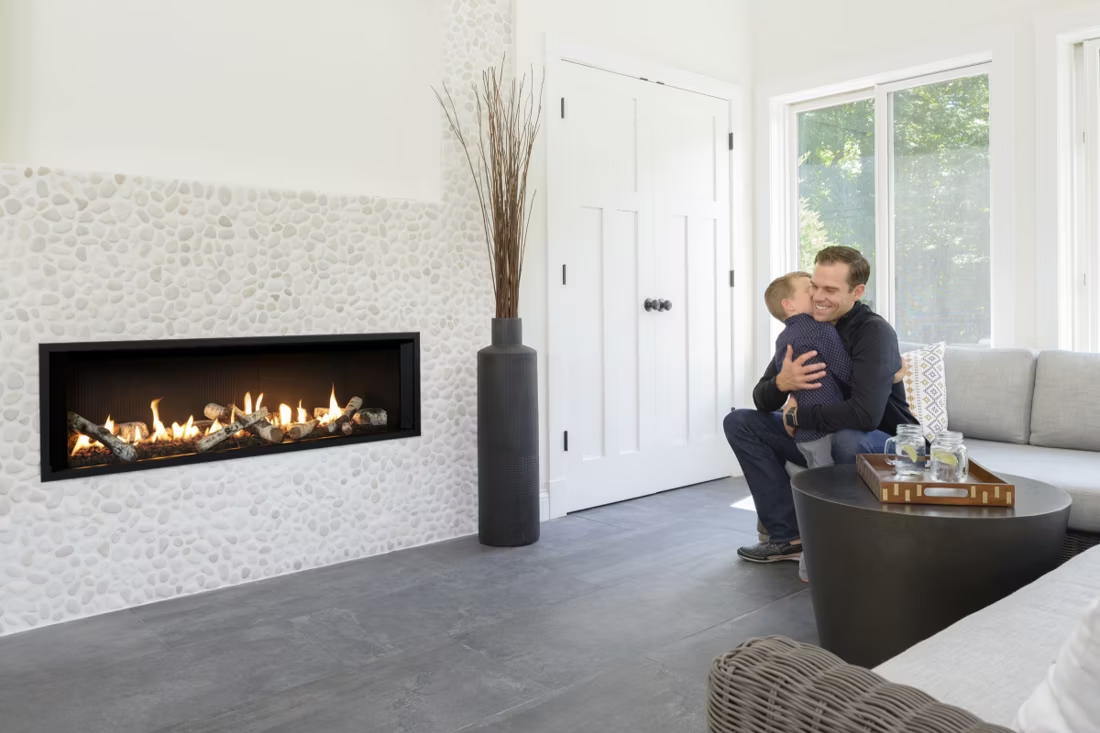
Four fuels. One honest answer for Gulf County.
Three steps. No salesperson until you're ready.
Tell us about your project
Your zip code, your situation, and the fuel you're leaning toward—or let the answers point you to one.
See what's actually available
The brands dealers within 100 miles genuinely carry—real options, never a catalog mirage.
Get your dealer & Project Guide
A trusted local dealer, plus the free Project Guide & Parts List that names every component of the job.
Frequently Asked Questions
Which fuel works best in Gulf County?
Given winter lows averaging around 44°F and only a light winter heating season overall, few Gulf County homes need a fireplace as a primary heat source—but plenty of homeowners still want one for cold-front nights, ambiance, and resale value. Gas is popular for exactly that reason: instant heat with no ash or upkeep, well suited to a unit that only sees real use a few weeks a year. Electric fireplaces work well in bayfront condos and second homes on Cape San Blas where venting a chimney isn't practical. Wood still has a following, especially with oak and pine readily available locally, for homeowners who want the look and smell of a real fire on the rare hard-freeze night. Pellet stoves are less common here given the mild climate, but regional supply from Lignetics and Hamer Pellet Fuel makes it a workable option for anyone who prefers that fuel type.
Do I need a permit to install a fireplace in Gulf County?
Yes, in most cases. New wood stoves, wood inserts, gas fireplaces, gas inserts, and pellet stoves require a building permit through the Gulf County Building Department, and gas installations need a separate gas line permit with licensed gas-fitter work. Because the county sits in a wind-borne debris region under the Florida Building Code, chimney chases, flue penetrations, and any roof-line venting also need to meet coastal wind-load anchoring requirements—this matters more here than in inland counties. Electric fireplaces typically don't require a permit unless the installation involves hardwiring a built-in unit into a new circuit. Most local hearth retailers handle the permitting and coastal code details as part of installation, so you generally don't have to navigate it yourself.
Are there air quality restrictions on wood burning in Gulf County?
No—Gulf County has no wood-burning restrictions or air quality advisories tied to fireplace use, unlike inversion-prone basins out West. The bigger practical concern here is the coastal environment itself: salt air off St. Joseph Bay and the Gulf accelerates corrosion on metal chimney caps, spark arrestors, and gas venting far faster than it would inland. Retailers serving this area typically spec stainless steel venting and marine-grade hardware for that reason, particularly for homes on Cape San Blas or right along the bay.
Can one local hearth retailer handle all four fuel types?
With a county population around 5,200, Gulf County doesn't support a large number of standalone hearth showrooms, so many homeowners end up working with a Port St. Joe-based dealer or driving into Bay County for a retailer that carries wood, gas, pellet, and electric side by side. If you're cross-shopping fuels, a multi-fuel dealer can walk you through working displays and the trade-offs for a mild-climate coastal home. If you already know your fuel—say, a gas unit for a bayfront cottage or an electric insert for a condo—a smaller local dealer focused on that fuel type is often the faster, simpler route.
How does service work in a rural coastal county like this?
Most technicians serving Gulf County are based in Port St. Joe or travel over from Panama City and Bay County to cover chimney sweeps, gas inspections, and pellet stove cleaning. Expect a modest travel fee for calls out to Wewahitchka, Indian Pass, or the far end of Cape San Blas. Scheduling ahead of the fall cold-front season (typically October–November) is easier than trying to book a technician after the first hard freeze catches everyone off guard. If you're on the coast, ask your technician about corrosion-resistant venting components—it's a common upgrade recommendation in this salt-air environment.
What's the typical cost range for fireplace installation across all fuel types in Gulf County?
Costs here track close to regional Panhandle norms, though smaller ductless/vent-free gas and electric jobs are common given the mild heating load. Wood stove or insert installation: roughly $4,000–$8,500 depending on chimney work. Gas fireplace, insert, or stove: roughly $4,000–$10,000, with propane tank and line work often the biggest variable since natural gas service is limited outside town centers. Pellet stove or insert: roughly $4,200–$7,000 for a typical install. Electric fireplace: $200–$3,000 for the unit itself, plus $300–$1,000 in labor for anything beyond a plug-and-play wall unit. See the county + fuel pages above for cost detail tied to specific local retailers.
What is an in-home preview and do I need one?
It's a visit where a hearth professional measures your space, confirms the model you picked actually works in your home, and walks the specs—framing, gas line, venting, finish work—before anything is ordered. Some details you just can't know until you see the house. Never make a down payment without one; it's the single most-skipped step that burns buyers.
Does a fireplace add value to my home?
On average, a fireplace adds back to the home about the same amount you spent installing it. Add the monthly savings from heating the rooms you actually use instead of the whole house—often hundreds of dollars a year—and the value case is strong before you even count what a fire does for how your family uses the room.
Can a fireplace actually lower my heating bill?
Yes—by creating a comfort zone. A furnace heats every square foot of the house just to warm the one room you're in; a gas fireplace on low burns roughly a sixth of the gas a typical furnace does. Set the furnace around 55–60 degrees as a baseline, then heat the rooms your family actually uses. Families who heat this way commonly save $20–$60 a month.
How much should I budget for a fireplace?
For an average home—covering the fireplace, the vent pipe, and basic installation—a budget between $3,900 and $5,500 gives you a lot of options across wood, gas, and pellet. By the time you add finish work, gas line, and electrical, the average complete installation lands between $5,000 and $12,000 all-in. In a remodel or new build, a good rule is to put about 2.5% of the total project cost toward the fireplace.
Stove and Fireplace Dealers in Gulf County
Listings include WhyFire partner dealers, dealers we have verified as authorized for the brands we recommend, and established local businesses that carry hearth products. Every listing shows which one it is. The ones marked Preferred run on WhyFire's software, so they can show you real pricing and book your appointment right here. No manufacturer pays for placement. How we verify dealers →
Ferrellgas- Apalachicola
Ravalle Services Inc
Waldorf Ace Hardware
Find your fireplace in Gulf County.
Pick your fuel below and we'll match you with a trusted local dealer, plus a free Project Guide & Parts List—the exact parts, vent kit, and recommended installer for your Gulf County home.
Find Your Fireplace →