
Keep Your Family Warm and Safe—No Matter What
With winter lows averaging 52°F, wood heat isn't a necessity here—but a well-chosen fireplace can still be the centerpiece of a home. We'll connect you with a local dealer who can tell you what's actually realistic.
Every Project Starts From One of These Five Situations
Glencoe's climate rarely calls for wood heat.
Glencoe sits at 13 feet of elevation on Florida's coastal plain in Volusia County, near New Smyrna Beach, in climate zone 2A. The area has only a short, mild stretch of chilly weather each year—nothing like the long, deep winters of a place like Duluth, Minnesota. Winter lows here average 52°F, and a hard freeze is a rare event, not a seasonal pattern. That's the reason wood stoves and wood-burning fireplaces are genuinely uncommon in this part of Florida—the heating need that drives wood-heat culture in cold-climate states simply doesn't exist in Glencoe most winters.
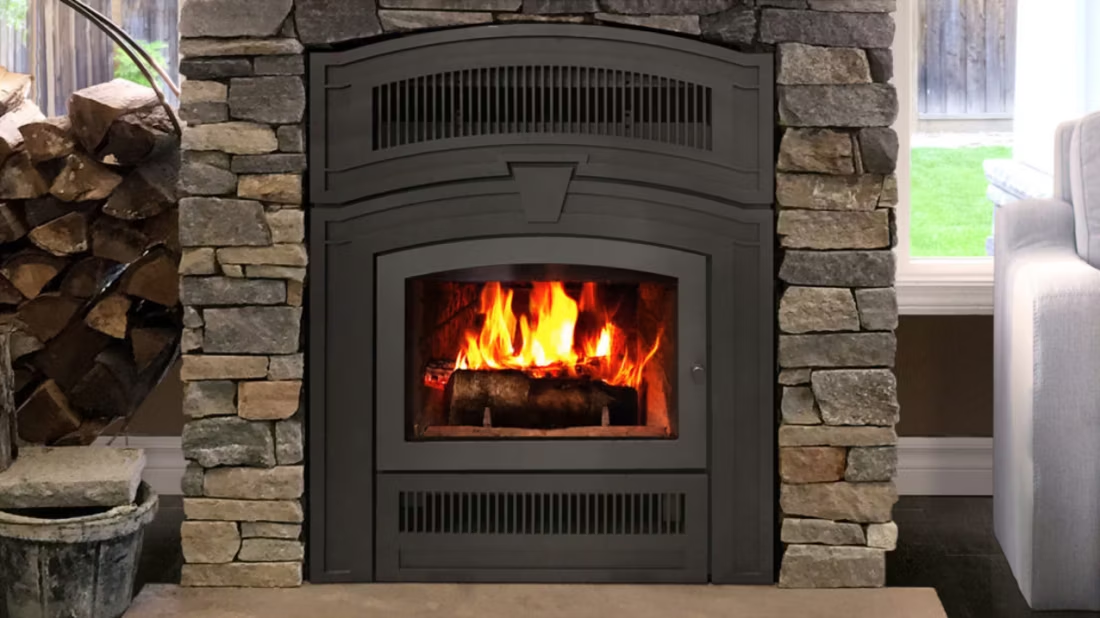
That said, a small number of Glencoe homeowners still install a wood-burning fireplace, usually for the ambiance of a real fire on the handful of nights each winter when a cold front pushes temperatures into the 30s, or as an architectural feature in a coastal or vacation home. Volusia County lists no air quality non-attainment concerns for the area, which simplifies permitting compared to smoke-restricted regions out west. If you're one of the homeowners considering it, a local dealer can walk you through whether a masonry fireplace, factory-built unit, or a wood stove actually makes sense for your home—and, just as often, steer you toward an electric option that fits Glencoe's climate more practically.
Three steps. No salesperson until you're ready.
Tell us about your project
Your zip code, your situation, and the fuel you're leaning toward—or let the answers point you to one.
See what's actually available
The brands dealers within 100 miles genuinely carry—real options, never a catalog mirage.
Get your dealer & Project Guide
A trusted local dealer, plus the free Project Guide & Parts List that names every component of the job.
Frequently Asked Questions
Does wood heat actually make sense in Glencoe?
For most homes, no—not as a primary or even reliable supplemental heat source. Glencoe's brief, mild winters and 52°F average winter low mean the home rarely needs sustained heat output the way a wood stove is designed to provide. Compare that to Fargo, North Dakota, where wood stoves run daily for months. In Glencoe, a wood-burning fireplace functions more like a seasonal amenity—lit on the occasional cold front night—than a heating appliance you'd depend on.
If wood heat isn't necessary here, why do people still install fireplaces?
Ambiance, resale appeal, and the character a real wood fire adds to a living room are the main reasons. Some Glencoe homeowners also maintain a second home in a colder climate and want a matching aesthetic locally, or they simply want a traditional masonry hearth as a design feature. It's a small but real segment of local installs—just don't expect a wood fireplace to carry your heating load the way it would in a colder state.
What wood species are available locally if I do install a fireplace?
Oak, mahogany, and pine are the species most commonly available around Glencoe. Oak is dense and burns slow and hot—good if you want a longer-lasting fire on the rare cold evening. Pine is resinous and lights easily but burns faster and produces more creosote, so it's better for occasional use than daily burning. Mahogany shows up less often but is sometimes available through local tree removal and land-clearing services rather than dedicated firewood suppliers, since Glencoe doesn't have the commercial firewood trade you'd find in a wood-heating region.
Do I need a permit to install a wood fireplace in Glencoe?
Yes, a building permit through Volusia County is required for any new wood-burning fireplace or chimney installation, covering clearances, hearth construction, and venting. The good news is that Glencoe has no listed air quality non-attainment issues or wood-smoke curtailment periods, which is common in wood-heavy Western states—so the permitting process here is generally more about construction code compliance than emissions restrictions.
How much does a wood fireplace installation cost in Glencoe?
Costs vary widely depending on whether you're adding a factory-built, zero-clearance wood fireplace or a full masonry chimney and hearth—and because wood installs are infrequent in this area, there isn't a single typical local price point the way there is in colder markets. A local installer can walk your home and give you a firm number based on your specific layout; that's exactly what the Project Guide & Parts List is built to capture.
Since wood isn't very practical here, what's the local alternative?
Electric fireplaces are the more common and more practical choice for Glencoe's climate. Florida Power & Light, Duke Energy Florida, and the City of New Smyrna Beach all serve the area, with residential rates roughly in the 10.9 to 16.6 cents per kWh range depending on your provider. An electric unit gives you the visual and ambiance benefits of a fireplace without the chimney, venting, or fuel-sourcing considerations that come with wood—and it fits a home that only wants supplemental warmth a handful of nights a year.
Where would I even source firewood in Glencoe?
There's no established commercial firewood industry in this stretch of Volusia County the way you'd find near a national forest in a colder state. Most local wood comes from tree services, storm cleanup, or land-clearing operations working with oak, pine, or occasionally mahogany. If you do install a wood fireplace, plan on sourcing wood opportunistically or through a local supplier who serves the broader New Smyrna Beach and coastal Volusia area rather than a dedicated firewood lot.
Are there any burn restrictions or air quality rules I should know about?
Glencoe has no listed air quality non-attainment status and no winter inversion or wood-smoke advisory pattern, which is a real contrast to wood-heavy regions in the West that see seasonal burn curtailments. Practically, that means if you install a wood fireplace here, you won't be dealing with the kind of Yellow/Red burn-day restrictions that homeowners in places like the Pacific Northwest navigate every winter. Standard fire and building codes still apply.
Wood fireplace vs. electric fireplace—which is right for a Glencoe home?
For most homes here, electric wins on practicality: no chimney, no wood handling, no venting, and it works whether you want a quick ambiance boost or genuine supplemental warmth on a rare cold night, all through FPL, Duke Energy Florida, or New Smyrna Beach city power. Wood wins on authenticity and architectural character if you specifically want a real masonry hearth as a design feature, or if the home is a vacation property meant to evoke a colder-climate feel. Given Glencoe's short, mild winter season, this is one of the few markets where we'd tell most homeowners to seriously consider electric first.
Why is my open fireplace making my house colder?
Open fireplaces suck—literally. As the fire burns, it consumes air your furnace already paid to heat and pulls it out through the chimney, so the house is actually colder after the fire goes out than before you lit it. An insert fixes this: it seals the chimney, puts fixed glass across the front, and turns that hole in your house into a real heat source.
Why is a fireplace insert so efficient?
An insert does two things: it seals the chimney completely, so you stop losing air you already paid to heat, and it radiates warmth into the room through the firebox and glass. Most add a heat-exchange fan that pulls cool room air underneath, wraps it around the hot firebox, and pushes it back out warm. Your home is more efficient before you've even lit the first fire.
Can I install a fireplace myself?
If you're putting a fire in your house on purpose, it's best to work with an expert. Unless you're genuinely experienced in framing, gas line, vent pipe, and the national code on clearances to combustibles, have a professional do it—and ideally the same company that sells you the fireplace, so warranty, service, and liability all live under one roof.
How much should I budget for a fireplace?
For an average home—covering the fireplace, the vent pipe, and basic installation—a budget between $3,900 and $5,500 gives you a lot of options across wood, gas, and pellet. By the time you add finish work, gas line, and electrical, the average complete installation lands between $5,000 and $12,000 all-in. In a remodel or new build, a good rule is to put about 2.5% of the total project cost toward the fireplace.
Nearby Dealers
Hearth shops serving Glencoe and the surrounding area. Every listing shows whether it is a WhyFire partner, a dealer we have verified as authorized for the brands we recommend, or a local business carrying hearth products. No manufacturer pays for placement. How we verify dealers →
John's Appliance City
Daytona Gas & Grill
Thermotane Gas
Find your wood fireplace in Glencoe.
Tell us about your home and whether you're after ambiance, resale appeal, or genuine backup heat—we'll match you with a trusted local dealer and put together a free Project Guide & Parts List for your Glencoe project.
Find Your Fireplace →