
A Real Flame Fireplace, Even in South Florida.
With such a short, mild winter, nobody in Fountainebleau needs a fireplace to survive winter. A lot of homeowners still want one—for ambiance, resale value, and the occasional cold snap. We'll match you with a local dealer who knows what actually works here.
Every Project Starts From One of These Five Situations
A fireplace here is about ambiance, not survival heat.
Fountainebleau sits at 7 feet of elevation in western Miami-Dade County, in Climate Zone 1A—one of the warmest, most humid climate zones in the country, with an average winter low of 61°F and barely any real heating season to speak of. This is not cold-climate territory; it's not even close. But a genuine cold snap does roll through most winters, occasionally dropping temperatures into the 30s or 40s overnight (the same fronts that make local news when they stun iguanas out of the trees). For those nights, and for the ambiance a real flame adds to a Florida room or lanai-facing living area, gas has become the fuel of choice here.
Most homes in Fountainebleau—built from the 1970s through the 1990s in concrete block construction typical of Miami-Dade's High-Velocity Hurricane Zone—were never built with a masonry fireplace to begin with, so a new direct-vent gas fireplace or a linear unit built into a media wall is usually a from-scratch project rather than a conversion. Piped natural gas service is limited in this part of Miami-Dade, so a meaningful share of local installs run on propane instead, with a small tank tucked against an exterior wall. Either way, any gas appliance and its venting components installed here need to carry Miami-Dade Notice of Acceptance (NOA) approval for wind and impact resistance—a code layer that doesn't exist in most of the country.
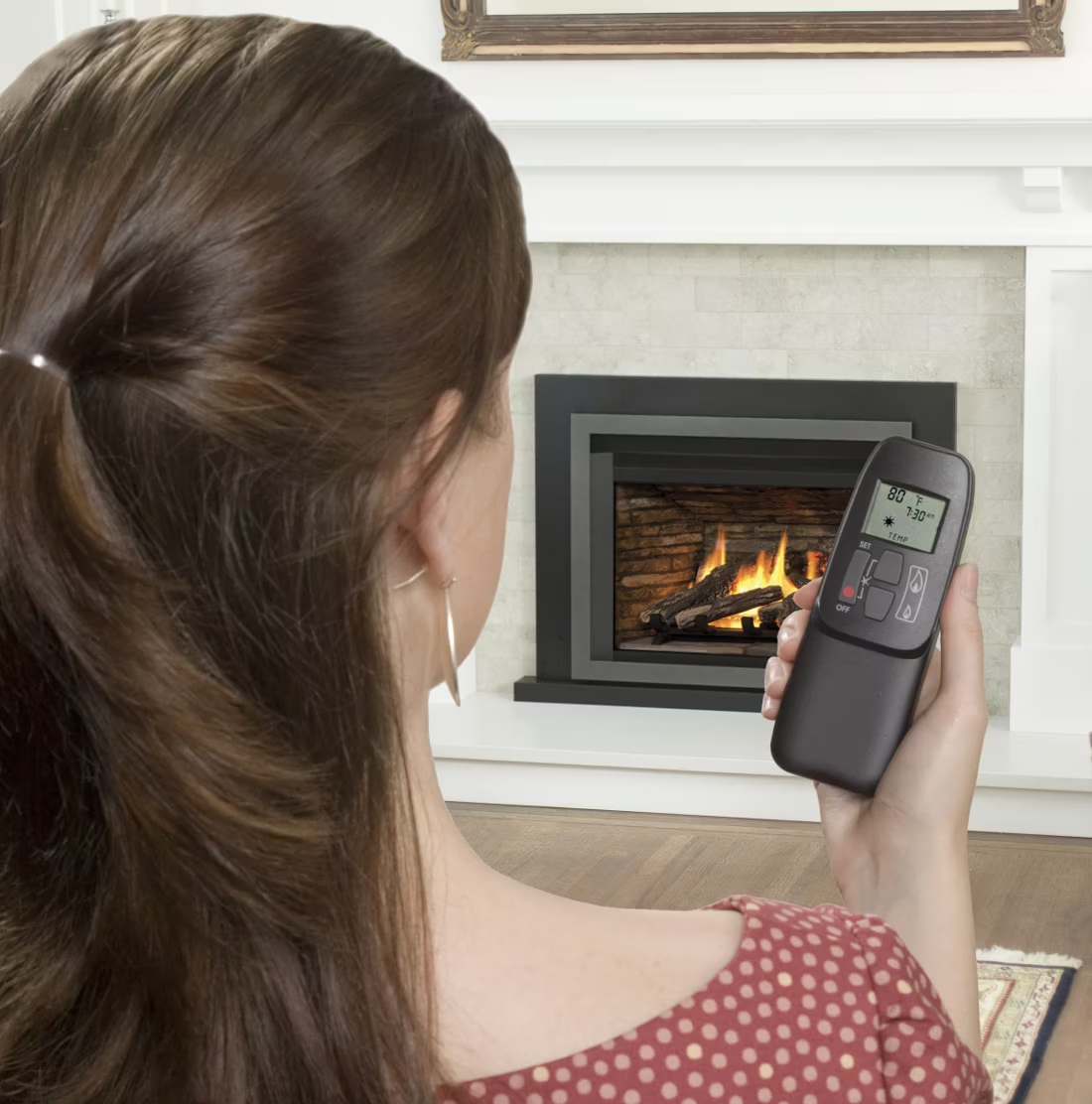
Three steps. No salesperson until you're ready.
Tell us about your project
Your zip code, your situation, and the fuel you're leaning toward—or let the answers point you to one.
See what's actually available
The brands dealers within 100 miles genuinely carry—real options, never a catalog mirage.
Get your dealer & Project Guide
A trusted local dealer, plus the free Project Guide & Parts List that names every component of the job.
Frequently Asked Questions
How much does a gas fireplace installation cost in Fountainebleau?
For a new direct-vent gas fireplace or a vent-free linear unit built into a media wall—the most common project type here, since few Fountainebleau homes have an existing masonry fireplace—installers in the area typically quote $3,000 to $8,000, depending on the unit, the finish work around it, and whether a new gas line or propane tank setup is required. Propane tank installation adds to the lower end of that range if you're not on a piped gas line. Linear glass-front units for a modern great room tend to land in the middle to upper end once custom surround work is included. A local dealer will give you a firm number after seeing the wall and confirming fuel access.
Is natural gas available in Fountainebleau, or will I need propane?
It depends on your street. Piped natural gas service isn't universal across this part of unincorporated Miami-Dade the way it is in some Northeast or Midwest cities, so many homeowners in the Fountainebleau, Sweetwater, and Westchester area run their fireplace off a propane tank rather than a gas main. If your home already has natural gas for a range or water heater, extending a line to a fireplace is usually straightforward. If not, a 100- or 250-gallon propane tank installed by a licensed propane supplier is the standard workaround, and most gas fireplace models can be configured for either fuel with the right orifice kit.
Do I need a permit, and does Miami-Dade's hurricane code apply to a fireplace?
Yes on both counts. A gas fireplace installation requires a building permit and a gas permit through the Miami-Dade County Building Department, and because this area falls inside Miami-Dade's High-Velocity Hurricane Zone, any component that penetrates an exterior wall—including direct-vent fireplace venting—needs a valid Notice of Acceptance (NOA) or Florida Product Approval rated for HVHZ wind and impact standards. This is stricter than most of the country and is exactly why working with a certified local hearth dealer matters here: they already know which vent kits and units carry the right approvals for Miami-Dade, so you're not stuck mid-permit with a product that gets rejected.
Does a gas fireplace actually make sense in a climate this warm?
For heat alone, not really—with such a short, mild winter, a fireplace will never be doing meaningful heavy lifting the way it would in a place like Bismarck, ND or Burlington, VT. But that's not why most Fountainebleau homeowners install one. The draw is the look and feel of real flame in a family room or lanai-adjacent living space, the boost to resale appeal in a market where buyers notice a fireplace feature wall, and having genuine warmth on hand for the handful of nights each winter when a cold front pushes lows into the 30s or 40s. If you're chasing serious heat output, gas isn't the priority here—ambiance is.
Vent-free vs. vented gas fireplace—which works better in Fountainebleau homes?
Vent-free (ventless) gas fireplaces burn fuel directly into the room with no exterior venting, which makes them popular for interior media walls in South Florida homes where running a vent stack through a tile roof or CBS wall adds cost and NOA complications. They're legal in Florida with proper room-sizing and oxygen-depletion-sensor requirements. Direct-vent units are sealed, pull combustion air from outside, and vent exhaust outside—generally the safer, more universally recommended choice, but the vent kit itself needs Miami-Dade NOA approval for the wall penetration. Most local dealers carry both and can tell you quickly which fits your wall and floor plan without a major exterior modification.
Will my gas fireplace work if the power goes out during hurricane season?
Most modern gas fireplaces with intermittent pilot ignition (IPI) run on a small battery backup that keeps the unit operational during a power outage—a real advantage in a Miami-Dade hurricane season where FPL outages can stretch for days. Valor units go a step further, generating their own electricity through the pilot's thermocouple with no batteries required at all. If storm-season reliability matters to you, ask your local dealer about the ignition system on any unit you're considering, and keep spare batteries on hand for standard IPI models.
Gas fireplace, insert, or log set—which fits a Fountainebleau home?
Because most homes in this part of Miami-Dade were built without a masonry fireplace, a gas insert (which retrofits into an existing firebox) usually isn't the right question here—that's more common in older Northeast or Midwest housing stock. Most local projects are either a new direct-vent or vent-free fireplace built into a framed wall or media center, or a gas log set added to a decorative existing firebox in an older home near Westchester or Sweetwater that does have one. A local dealer can tell you within minutes which category your home falls into.
How often should a gas fireplace be serviced in South Florida's humidity?
An annual inspection is standard for any gas appliance, and it matters more in Fountainebleau's climate than in drier regions—high year-round humidity accelerates corrosion on burner components and pilot assemblies faster than it would in a dry climate like Bozeman, MT. A certified technician should check the burner, gas connections, and ignition system, and clean the glass and interior once a year, typically before the brief cool season arrives. Expect to pay roughly $150-$250 for a standard annual service call from a local gas appliance technician.
Gas vs. electric fireplace—which is right for my Fountainebleau home?
Electric fireplaces plug into a standard outlet, need no gas line or propane tank, and run on Florida Power & Light service at the area's residential rate of about 13.7 cents per kWh—a low-cost, low-hassle option for a condo, rental, or a room where running gas isn't practical. They also skip the Miami-Dade NOA and wall-penetration questions entirely since there's no venting involved. Gas fireplaces cost more upfront and require either a gas line or propane tank, but deliver a genuine flame and real (if modest, given our climate) heat output. For a primary living space where the look of real fire matters, gas usually wins; for a bedroom, condo, or budget-conscious ambiance upgrade, electric is often the more practical call.
Why is my open fireplace making my house colder?
Open fireplaces suck—literally. As the fire burns, it consumes air your furnace already paid to heat and pulls it out through the chimney, so the house is actually colder after the fire goes out than before you lit it. An insert fixes this: it seals the chimney, puts fixed glass across the front, and turns that hole in your house into a real heat source.
Can I put a TV above my fireplace?
Yes—with an asterisk. Fireplaces are hot and TVs don't like heat. Either put a mantel between them to deflect rising warmth, or choose a fireplace with heat-management technology that creates a cool zone on the wall above—the wall stays around 125 degrees, barely warm, while the room still gets full heat. If you like clean lines and don't want a mantel, heat management is the answer.
Can a fireplace actually lower my heating bill?
Yes—by creating a comfort zone. A furnace heats every square foot of the house just to warm the one room you're in; a gas fireplace on low burns roughly a sixth of the gas a typical furnace does. Set the furnace around 55–60 degrees as a baseline, then heat the rooms your family actually uses. Families who heat this way commonly save $20–$60 a month.
How much should I budget for a fireplace?
For an average home—covering the fireplace, the vent pipe, and basic installation—a budget between $3,900 and $5,500 gives you a lot of options across wood, gas, and pellet. By the time you add finish work, gas line, and electrical, the average complete installation lands between $5,000 and $12,000 all-in. In a remodel or new build, a good rule is to put about 2.5% of the total project cost toward the fireplace.
Nearby Dealers
Hearth shops serving Fountainebleau and the surrounding area.
Find your gas fireplace in Fountainebleau.
Tell us about your home and we'll match you with a trusted local dealer and send over a free Project Guide & Parts List—the exact parts, vent kit, and Miami-Dade-approved components your gas fireplace project needs.
Find Your Fireplace →