
Keep Your Family Warm and Safe—No Matter What
With such a short, mild heating season and winter lows averaging 47°F, Fleming Island rarely needs wood heat—but if you want the look and ritual of a real fire, we can still connect you with a local pro who does it right.
Every Project Starts From One of These Five Situations
Wood heat and Fleming Island's climate rarely mix.
Fleming Island sits along the St. Johns River in Clay County, in a humid subtropical zone (2A) where winter lows average 47°F and the heating season overall is short and mild. Compare that to a place like Duluth, MN, which has a heating season nearly ten times longer and colder most winters, and it's clear why wood stoves never became a default heating appliance here. Central heat pumps handle the handful of genuinely cold nights, and most homes never see a hard freeze.
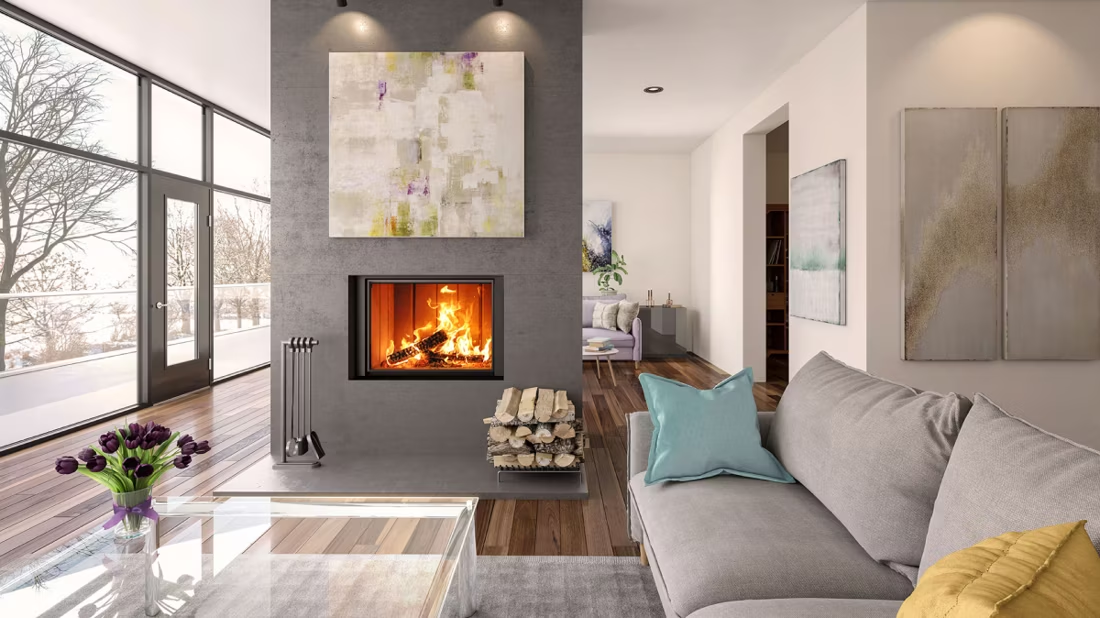
That doesn't mean wood is off the table entirely. Some older homes near the river still have masonry fireplaces original to the house, and a small number of homeowners install a wood-burning unit purely for ambiance, a cold snap in January, or a second home elsewhere with a real winter. Local firewood tends to be oak or pine from tree removal and land-clearing work, with the occasional mahogany from ornamental landscaping trees—none of it cut under a public-lands permit system the way it would be out West. If you're set on a real wood fire, a trusted local dealer can tell you honestly whether it makes sense for your house.
Three steps. No salesperson until you're ready.
Tell us about your project
Your zip code, your situation, and the fuel you're leaning toward—or let the answers point you to one.
See what's actually available
The brands dealers within 100 miles genuinely carry—real options, never a catalog mirage.
Get your dealer & Project Guide
A trusted local dealer, plus the free Project Guide & Parts List that names every component of the job.
Frequently Asked Questions
Does a wood-burning fireplace actually make sense for a Fleming Island home?
For heating purposes, not really—with such a short, mild heating season and winter lows that average 47°F, a wood stove would sit unused most of the year. Where it does make sense is ambiance: a masonry fireplace you use a dozen nights a winter, or a decorative feature in a great room. If you're after daily supplemental heat, an electric or gas insert from Florida Power & Light service is almost always the more practical call for this climate.
What does it cost to install a wood-burning fireplace or stove in Fleming Island?
Because so few local hearth dealers specialize in wood-burning systems in this part of Clay County—demand just isn't there the way it is in colder states—pricing isn't as standardized locally. Expect costs generally in line with the rest of the Southeast, roughly $3,500 to $8,000 depending on whether you're installing into an existing masonry chimney or building a full hearth and chase from scratch. A local dealer can give you a firm number once they've seen your home.
Do I need a permit for a wood-burning fireplace in Clay County?
Yes—any new hearth, chimney, or chase construction goes through the Clay County Building Department for structural and clearance-to-combustible review, the same as any other fixed heating appliance. The good news is Fleming Island has no air quality non-attainment status and no winter inversion concerns, so unlike parts of the West Coast, there are no seasonal burn curtailment periods to work around here.
What firewood is actually available locally?
Oak and pine are the two you'll find most often, usually from tree removal companies and land-clearing operations rather than a public cutting-permit system—there's no national forest land nearby the way there is in mountain states. Oak is the better burner if you can find it seasoned; it's dense and holds heat well for the occasional cool evening. Pine is more common but burns faster and sootier, so it's better suited to kindling than an all-night fire. Mahogany shows up occasionally from ornamental trees but isn't a mainstream firewood species here.
Would gas or electric make more sense than wood for my Fleming Island home?
For most homes here, yes. Gas fuel relevance in Fleming Island is standard, and electric is too—Florida Power & Light serves the area at roughly 13.7 cents per kWh, making an electric fireplace insert a low-cost, no-venting way to get the look of a fire without committing to firewood storage or chimney maintenance you'll rarely need. Gas gives you instant ambiance on the few chilly nights each winter without any of the upkeep a wood system demands. Wood still has a place if you specifically want a real, wood-fed fire—but it's the minority choice here.
Are there air quality restrictions on burning wood in Fleming Island?
No—Clay County has no listed air quality concerns, no non-attainment designation, and no winter inversion pattern that traps smoke the way it does in basins out West. If you do install a wood-burning unit, you won't be dealing with seasonal curtailment periods or burn bans tied to air quality advisories.
Can I still put a wood-burning masonry fireplace in a new Fleming Island home?
You can, and some builders in the area will still frame one in on request, particularly for a two-story great room. It's worth going in clear-eyed that it will function mostly as a decorative and occasional-use feature rather than a heat source—Fleming Island's mild winters mean you'll likely light it a handful of times a year rather than run it as daily heat.
How often would I realistically use a wood stove for heat here?
Honestly, not often. With winter lows averaging 47°F and an overall heating season that's short and mild—compare that to Burlington, VT, which has a much longer, colder winter heating season—most Fleming Island winters bring only a stretch of nights cold enough to want a fire going, and even then it's usually for comfort rather than necessity. A wood stove here functions more like an occasional-use amenity than the workhorse heating appliance it is in colder states.
Wood vs. electric fireplace—which is right for my Fleming Island home?
Wood gives you a real flame, real crackle, and a genuine fire-tending experience, but it means firewood storage, chimney maintenance, and a unit that sits idle most of the year in this climate. An electric fireplace from a local dealer requires no venting, no chimney, and no wood handling—you plug it in and it runs at Florida Power & Light's standard residential rate. For most homes here, electric wins on practicality; wood wins only if the experience itself is the point.
Why is my open fireplace making my house colder?
Open fireplaces suck—literally. As the fire burns, it consumes air your furnace already paid to heat and pulls it out through the chimney, so the house is actually colder after the fire goes out than before you lit it. An insert fixes this: it seals the chimney, puts fixed glass across the front, and turns that hole in your house into a real heat source.
What's the difference between an insert and a zero-clearance fireplace?
An insert is a fireplace that slides into a pre-existing wood-burning fireplace—if you don't have one, there's nothing to insert it into. A zero-clearance fireplace is built into a framed wall, which makes it the answer for remodels and new construction. Simple test: existing masonry fireplace means insert; blank or framed wall means zero-clearance.
What is an in-home preview and do I need one?
It's a visit where a hearth professional measures your space, confirms the model you picked actually works in your home, and walks the specs—framing, gas line, venting, finish work—before anything is ordered. Some details you just can't know until you see the house. Never make a down payment without one; it's the single most-skipped step that burns buyers.
How much should I budget for a fireplace?
For an average home—covering the fireplace, the vent pipe, and basic installation—a budget between $3,900 and $5,500 gives you a lot of options across wood, gas, and pellet. By the time you add finish work, gas line, and electrical, the average complete installation lands between $5,000 and $12,000 all-in. In a remodel or new build, a good rule is to put about 2.5% of the total project cost toward the fireplace.
Nearby Dealers
Hearth shops serving Fleming Island and the surrounding area.
Find your wood fireplace in Fleming Island.
Tell us about your home and whether you're after ambiance or real heat, and we'll match you with a local dealer who can tell you straight—plus a free Project Guide & Parts List with the right parts, vent kit, and installer for your Fleming Island project.
Find Your Fireplace →