
Keep Your Family Warm and Safe—No Matter What
With only 434 heating degree days a year and winter lows averaging 53°F, East Lake-Orient Park almost never needs wood heat to survive winter. But a small number of homeowners still want the look, the ambiance, or the option for the rare cold snap—and a local dealer can tell you honestly what's realistic.
Every Project Starts From One of These Five Situations
A niche choice in a warm-winter climate.
East Lake-Orient Park sits in unincorporated Hillsborough County just east of Tampa, at roughly 16 feet above sea level in climate zone 2A. Winters here are mild—the average winter low is 53°F, and the area logs only about 434 heating degree days a year. For comparison, Fargo, North Dakota racks up over 9,000 HDD in a typical winter. A wood stove built to hold a fire through a sub-zero night simply isn't solving a problem most homes here have.
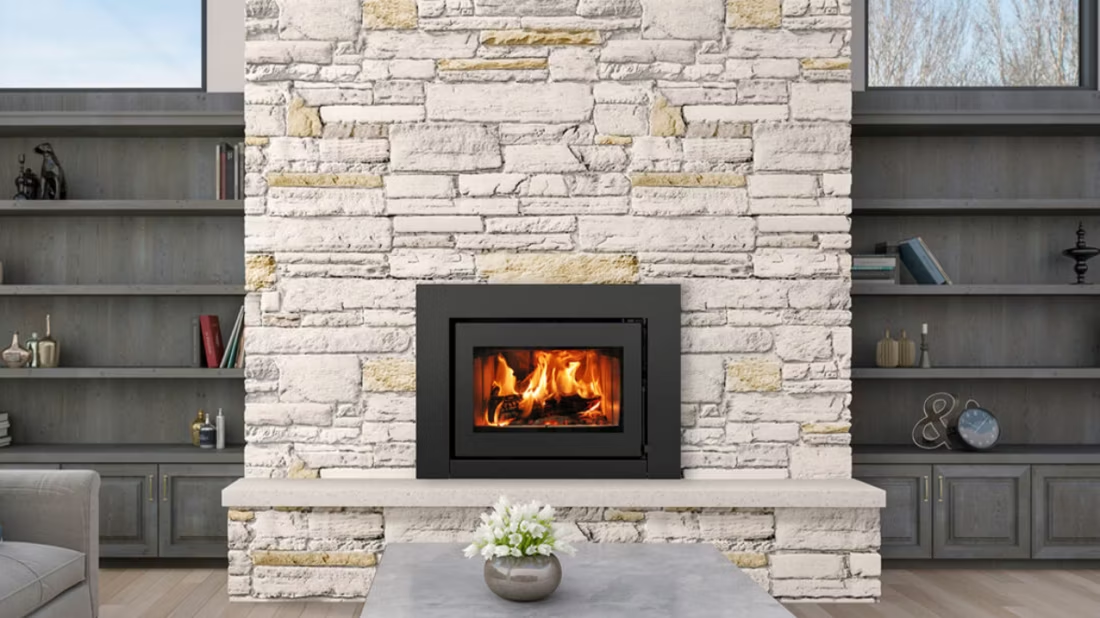
That said, wood-burning fireplaces still show up in this part of Hillsborough County—usually as a decorative feature in a formal living room, a nostalgic addition for a homeowner who grew up with one further north, or a fireplace someone wants ready for the handful of nights each year when a cold front pushes lows into the 30s. Local firewood tends to be oak and pine, often sourced from tree-trimming and land-clearing work rather than dedicated firewood lots. Because true wood-burning installs are rare in the Tampa Bay area, finding a dealer who stocks and correctly vents solid-fuel appliances takes more legwork than finding one who sells gas logs or electric units—which is exactly where a trusted local match helps.
Three steps. No salesperson until you're ready.
Tell us about your project
Your zip code, your situation, and the fuel you're leaning toward—or let the answers point you to one.
See what's actually available
The brands dealers within 100 miles genuinely carry—real options, never a catalog mirage.
Get your dealer & Project Guide
A trusted local dealer, plus the free Project Guide & Parts List that names every component of the job.
Frequently Asked Questions
Does a wood-burning fireplace even make sense in East Lake-Orient Park's climate?
For most homes here, no—not as a heat source. With an average winter low of 53°F and only about 434 heating degree days a year, a wood stove or fireplace won't be doing meaningful heating work the way it would in a place like Fargo, North Dakota or Bozeman, Montana. Where it does make sense is aesthetics: a masonry fireplace as a focal point, a factory-built unit for the two or three nights a year when a cold front pushes temperatures into the 30s, or a feature added for resale appeal in a formal room. If your goal is dependable everyday heat, most homeowners here are better served by electric or occasional gas options—wood is a lifestyle choice, not a necessity.
How much does it cost to install a wood-burning fireplace or stove here?
There isn't a well-established local price benchmark because true wood-burning installs are uncommon in the Tampa Bay area—most hearth retailers here focus on gas and electric product lines. Nationally, a factory-built wood-burning fireplace or freestanding stove with proper Class A chimney venting typically runs $3,500 to $8,000 installed, with masonry fireplace construction running considerably higher. Because so few installers in Hillsborough County regularly handle solid-fuel venting, getting a firsthand quote from a dealer who actually stocks wood appliances matters more here than in a wood-heavy market—generic online estimates won't reflect what's realistically available near you.
Do I need a permit to install a wood-burning fireplace in Hillsborough County?
Yes. Any new wood-burning fireplace or stove installation in unincorporated Hillsborough County—which includes East Lake-Orient Park—requires a building permit through the Hillsborough County Development Services Department, covering structural, chimney, and clearance-to-combustible requirements. Because wood installs are infrequent here, it's worth confirming your installer has actually pulled solid-fuel permits before, not just gas or electric ones—the inspection points (chimney height above roofline, hearth extension, wall clearances) are different from what most local crews handle day to day.
What kind of firewood is available locally?
Oak and pine are the most common woods available around East Lake-Orient Park, much of it coming from tree removal and storm-cleanup work rather than dedicated firewood operations, since there's no large commercial firewood industry serving a market this size. Oak burns hot and dense, similar to what you'd want for occasional use; pine is more common and burns faster with more resin, so it's better suited to kindling or shorter fires than an all-night burn. Given Tampa Bay's humidity, whatever you burn needs real seasoning time—green or damp wood is a bigger problem here than in drier climates, since firewood left on the ground can pick up moisture even in storage.
Are there any air quality restrictions on wood burning here?
No—East Lake-Orient Park has no reported air quality non-attainment issues and no winter inversion problems the way some cold-climate basin cities do, so there are no seasonal burn bans or curtailment periods to plan around. That's less about wood smoke being a non-issue everywhere and more a reflection of how rarely wood heat gets used here at all—with only a handful of cold nights per winter, there simply isn't the sustained burning that creates the wintertime smoke buildup you see in mountain valleys or the Pacific Northwest.
Would I be better off with an electric fireplace instead of wood?
For most homes in East Lake-Orient Park, yes. Electric fireplace relevance here is standard, not niche—both Tampa Electric (TECO) and Duke Energy Florida serve the area reliably, residential rates run around 14.7¢ to 16.6¢ per kWh, and an electric unit installs in a fraction of the time and cost of a wood-burning system (typically well under $1,500 versus several thousand for wood with proper venting). Electric gives you real flame-effect ambiance and supplemental warmth on the rare chilly evening without a chimney, firewood storage, or ash cleanup. Wood only makes sense here if the ritual and authenticity of a real fire matter more to you than practicality.
Where can I buy or store firewood in a humid climate like this?
Firewood in the Tampa Bay area typically comes from local tree services, land-clearing operations, or seasonal roadside sellers rather than dedicated firewood yards, since year-round demand is low. Oak and pine are what you'll most commonly find. Storage matters more here than in drier climates—stack wood off the ground on a rack, keep it covered on top but open on the sides for airflow, and expect it to need longer seasoning time than the same wood would in a dry mountain climate, since Tampa Bay's humidity slows moisture loss considerably.
My older Florida home already has a wood-burning fireplace—can it be restored or upgraded?
Some older homes in the East Lake-Orient Park area, particularly those built before central air was standard, do have existing masonry wood-burning fireplaces that have sat unused for years. These can often be restored with a chimney inspection and sweep, a new damper, and a liner if the flue has deteriorated—a local chimney professional can tell you quickly whether it's usable. Given how little these get used locally, it's also common for homeowners to convert a dormant masonry fireplace to a gas log set or electric insert instead of restoring it for wood, since that better matches how the space actually gets used.
Is a wood fireplace useful as backup heat during a power outage?
In East Lake-Orient Park, power outages are far more likely to come from summer hurricanes than winter cold—so a wood fireplace's classic advantage of off-grid heat during a winter storm doesn't apply the way it does in a place like Duluth, Minnesota. If a rare hard freeze does coincide with an outage, a wood-burning unit would still throw real heat without electricity, which an electric fireplace can't do. But for most households here, that scenario is uncommon enough that it's a minor bonus rather than a primary reason to install one.
What's the difference between an insert and a zero-clearance fireplace?
An insert is a fireplace that slides into a pre-existing wood-burning fireplace—if you don't have one, there's nothing to insert it into. A zero-clearance fireplace is built into a framed wall, which makes it the answer for remodels and new construction. Simple test: existing masonry fireplace means insert; blank or framed wall means zero-clearance.
Why won't my new wood stove get going like my old one?
New wood stoves are 70%+ efficient, so far less heat goes up the flue—which also means less draft to get a fire established. The rule: build a genuinely hot fire for about 45 minutes before you choke it down. Skip that and you get smoke in the room, creosote in the chimney, and a fire that never takes off. Most performance complaints trace straight back to this.
How much should I budget for a fireplace?
For an average home—covering the fireplace, the vent pipe, and basic installation—a budget between $3,900 and $5,500 gives you a lot of options across wood, gas, and pellet. By the time you add finish work, gas line, and electrical, the average complete installation lands between $5,000 and $12,000 all-in. In a remodel or new build, a good rule is to put about 2.5% of the total project cost toward the fireplace.
What is an in-home preview and do I need one?
It's a visit where a hearth professional measures your space, confirms the model you picked actually works in your home, and walks the specs—framing, gas line, venting, finish work—before anything is ordered. Some details you just can't know until you see the house. Never make a down payment without one; it's the single most-skipped step that burns buyers.
Nearby Dealers
Hearth shops serving East Lake-Orient Park and the surrounding area.
See what's possible for wood heat in East Lake-Orient Park.
Wood-burning installs are uncommon here, so finding a dealer who actually stocks and vents them correctly takes local knowledge. Tell us about your home and we'll match you with a trusted local dealer and send over a free Project Guide & Parts List—including the vent kit—for your specific project.
Find Your Fireplace →