
Keep Your Family Warm and Safe—No Matter What
With winter lows averaging 48°F, almost no Daytona Beach home needs wood heat to survive winter. But for historic homes, vacation properties, and homeowners who simply want a real fire, it can still be done correctly.
Every Project Starts From One of These Five Situations
Daytona Beach doesn't need wood heat, but some homeowners still want the fire.
Daytona Beach sits in climate zone 2A with a very light winter heating load and a winter low average of 48°F. Compare that to Duluth, MN, whose winters demand nearly 14 times the heating of a mild climate like this one, and the picture is clear: this is not a place where a household depends on a wood stove to get through January. Most nights never approach freezing, and a handful of cool snaps a year is usually the extent of it.
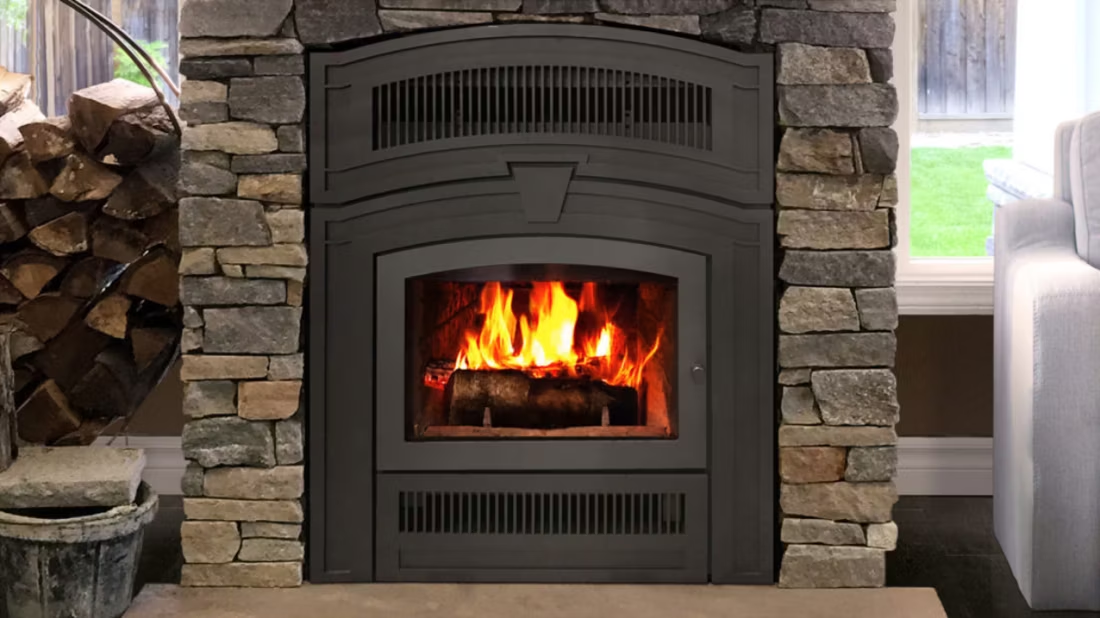
That said, wood-burning fireplaces haven't disappeared entirely. Downtown Daytona Beach and the Beach Street historic district have early-1900s homes with existing masonry fireplaces, some dormant for decades, that owners occasionally want to bring back for character rather than heat. Others want a wood stove or fireplace purely for ambiance in a screened lanai or a vacation property. Locally sourced oak, mahogany, and pine—mostly a byproduct of land clearing and tree removal in a fast-growing county—are available if you go this route, though there's no organized firewood culture here the way there is in colder states. Air quality isn't a local concern (no non-attainment status, no winter inversion issues), so the barriers are practical, not regulatory: cost, humidity, and finding a dealer who still knows how to do this well.
Three steps. No salesperson until you're ready.
Tell us about your project
Your zip code, your situation, and the fuel you're leaning toward—or let the answers point you to one.
See what's actually available
The brands dealers within 100 miles genuinely carry—real options, never a catalog mirage.
Get your dealer & Project Guide
A trusted local dealer, plus the free Project Guide & Parts List that names every component of the job.
Frequently Asked Questions
Are wood stoves practical for heating a home in Daytona Beach?
Not really, and it's worth saying plainly. With such a light winter heating load and winter lows averaging 48°F, Daytona Beach simply doesn't generate the kind of sustained cold that makes wood heat a meaningful investment—nothing like Duluth, MN or Burlington, VT, where a wood stove can be a primary heat source for months. When Daytona Beach homeowners install a wood-burning fireplace or stove, it's almost always for ambiance, the occasional 30-degree night, or the character of an older home—not for keeping the house warm through winter.
Why don't more Daytona Beach homes have wood-burning fireplaces?
Most homes built here since the 1970s and 80s were designed around climate zone 2A's hot, humid reality, where the priority is cooling, not heating—so builders skipped masonry chimneys entirely and went straight to central HVAC, with gas or electric fireplaces added later for looks. Stacked firewood also doesn't store well in Florida's humidity without attracting termites and mold, which is one more reason wood never became the default here the way it did in the Pacific Northwest or the Mountain West.
What does it cost to install a wood stove or fireplace in Daytona Beach?
Because so few Daytona Beach homes have an existing masonry chimney, most wood installations require building a complete Class A metal chimney system from the floor to above the roofline rather than simply lining an existing flue. That pushes cost higher than in cold-climate markets—plan on roughly $6,000 to $12,000 for a freestanding wood stove with a full new chimney run, with historic homes that do have an original masonry fireplace sometimes coming in lower once the flue is inspected and relined.
Can I still get firewood locally if I install a wood stove?
Yes, though it works differently than out West. There's no national forest cutting-permit system near Daytona Beach the way there is in Oregon or Montana—Volusia County doesn't have public timberland set up for firewood harvesting. Instead, most local firewood comes from tree services and land-clearing operations, and oak, mahogany, and pine are the species you'll most commonly find. Supply is casual rather than organized, so expect to buy from a local seller rather than cut your own.
Are there air quality or burning restrictions in Daytona Beach?
No—Daytona Beach and Volusia County have no wood smoke non-attainment designation and no winter inversion problems like you'd find in a basin city such as Klamath Falls, OR. That said, a new wood stove or fireplace still needs a building permit and inspection through the applicable local building department, covering clearances, hearth pad requirements, and current EPA emissions standards for the appliance itself.
Do any older Daytona Beach homes already have wood fireplaces I could use?
Some do, particularly in the historic districts around Beach Street and downtown, where early-20th-century homes were built with masonry fireplaces before central air conditioning made them decorative. If you own one of these homes, don't assume the flue is usable as-is—decades of Florida humidity can degrade mortar joints and liners, so a chimney inspection and likely a stainless liner are worth budgeting for before the first fire.
What's a more practical alternative to wood heat in Daytona Beach?
For most homeowners here, electric or gas makes more sense. Electric fireplaces require no venting or chimney and run on power from Florida Power & Light or Duke Energy Florida at roughly $0.14 to $0.17 per kWh—cheap to operate for a few hours of evening ambiance. Gas fireplaces are also standard in this market and give you real flame without the humidity, insect, and storage headaches that come with keeping cordwood in a coastal climate.
If I still want a wood-burning fireplace, what should I look for in a local installer?
Since wood units are uncommon here, not every hearth dealer in the Daytona Beach area stocks or regularly installs them—some focus almost entirely on gas and electric because that's what the market demands. Look for a dealer with specific experience in masonry restoration or factory-built wood fireplace installs, and confirm they'll handle the full Class A chimney build if your home doesn't already have a usable flue. It's also worth checking with your homeowner's insurance carrier before installing, since a wood-burning appliance is unusual enough in this market that some insurers ask questions.
Wood vs. gas vs. electric—which makes the most sense for a Daytona Beach home?
Gas and electric are both considered standard options here and cover the vast majority of installations—gas for a realistic flame with instant on-off convenience, electric for the lowest cost and simplest install with no venting at all. Wood is the outlier: it makes sense mainly for a historic home with an existing fireplace worth preserving, or for an owner who wants the specific experience of a real wood fire regardless of the climate logic. If Daytona Beach's warm winters are the deciding factor, gas or electric will serve you better day to day.
Why is my open fireplace making my house colder?
Open fireplaces suck—literally. As the fire burns, it consumes air your furnace already paid to heat and pulls it out through the chimney, so the house is actually colder after the fire goes out than before you lit it. An insert fixes this: it seals the chimney, puts fixed glass across the front, and turns that hole in your house into a real heat source.
Why is a fireplace insert so efficient?
An insert does two things: it seals the chimney completely, so you stop losing air you already paid to heat, and it radiates warmth into the room through the firebox and glass. Most add a heat-exchange fan that pulls cool room air underneath, wraps it around the hot firebox, and pushes it back out warm. Your home is more efficient before you've even lit the first fire.
What is an in-home preview and do I need one?
It's a visit where a hearth professional measures your space, confirms the model you picked actually works in your home, and walks the specs—framing, gas line, venting, finish work—before anything is ordered. Some details you just can't know until you see the house. Never make a down payment without one; it's the single most-skipped step that burns buyers.
Does a fireplace add value to my home?
On average, a fireplace adds back to the home about the same amount you spent installing it. Add the monthly savings from heating the rooms you actually use instead of the whole house—often hundreds of dollars a year—and the value case is strong before you even count what a fire does for how your family uses the room.
Nearby Dealers
Hearth shops serving Daytona Beach and the surrounding area. Every listing shows whether it is a WhyFire partner, a dealer we have verified as authorized for the brands we recommend, or a local business carrying hearth products. No manufacturer pays for placement. How we verify dealers →
Daytona Gas & Grill
John's Appliance City
Terrence Miner Remodeling & Construction
Find your wood fireplace option in Daytona Beach.
Tell us about your home and what you're after, and we'll match you with a local Daytona Beach dealer who understands wood installs in this climate. You'll get a free Project Guide & Parts List—the exact components, including venting, and the dealer we recommend for your project.
Find Your Fireplace →