
Comfort and glow—no chimney required.
With winter lows averaging 55°F, Cutler Bay homes don't need survival heat—they want real flame-look ambiance without venting, smoke, or a chimney. Find the right electric unit and connect with a trusted local dealer.
Every Project Starts From One of These Five Situations
Built for ambiance, not survival heat.
Cutler Bay sits at 5 feet of elevation in Miami-Dade County, squarely in climate zone 1A, with just 214 heating degree days a year—one of the lowest heating loads in the country. Compare that to a place like Duluth MN, which racks up over 9,000 HDD annually, and it's clear why chimneys and wood-burning appliances never took hold here. Oak, mahogany, and pine are common local lumber species, but they're used for framing and furniture, not firewood—very few homes in Cutler Bay have a working chimney at all.
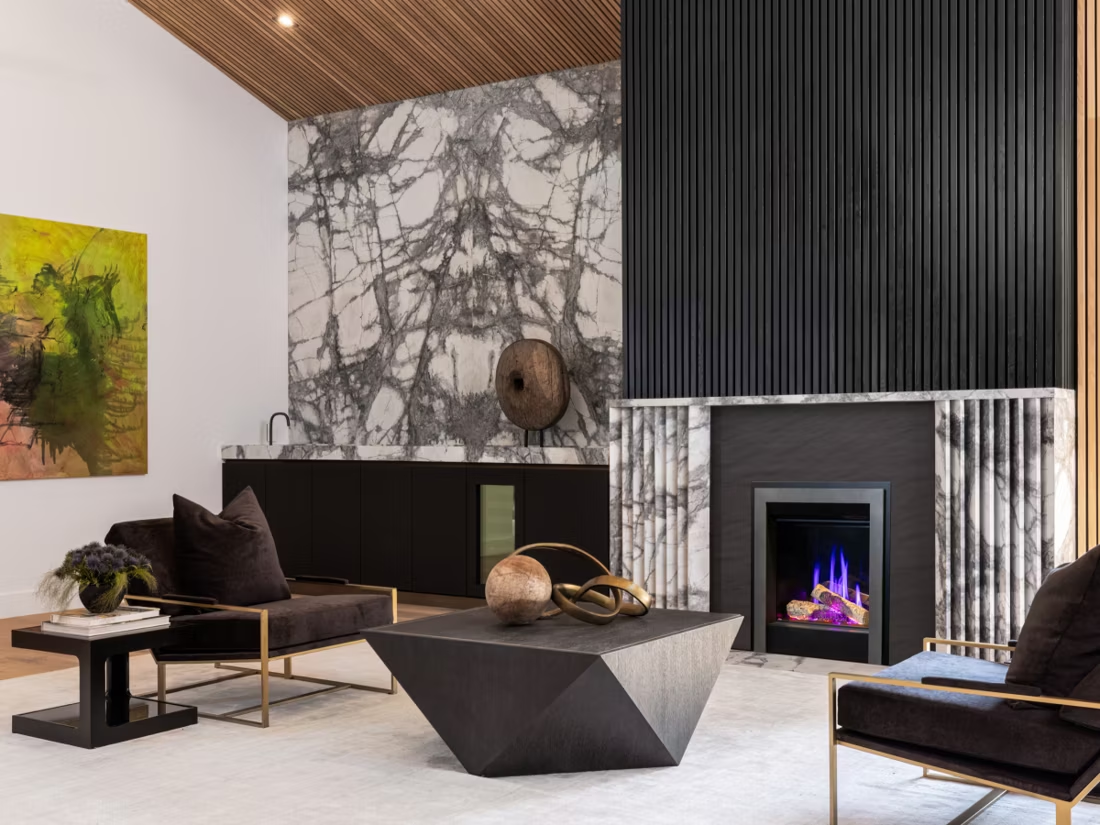
That's exactly why electric fireplaces have found a real niche here. They plug into existing 120V circuits or a dedicated line, require no venting or gas line, and hold up well in a humid coastal climate where masonry chimneys would be a maintenance headache. Florida Power & Light serves the area at roughly 13.71 cents per kWh, so running one for the flame effect costs pennies a day. Most Cutler Bay homeowners choose electric for the look—a linear wall-mounted unit, a mantel package, or a built-in insert—with the optional heater reserved for the occasional cold front that dips into the 40s.
Three steps. No salesperson until you're ready.
Tell us about your project
Your zip code, your situation, and the fuel you're leaning toward—or let the answers point you to one.
See what's actually available
The brands dealers within 100 miles genuinely carry—real options, never a catalog mirage.
Get your dealer & Project Guide
A trusted local dealer, plus the free Project Guide & Parts List that names every component of the job.
Frequently Asked Questions
How much does an electric fireplace installation cost in Cutler Bay?
Costs vary widely because electric units span a wide range of complexity. A plug-in insert that slides into an existing mantel or bookshelf opening can run $200 to $1,500 with no electrical work needed at all. A wall-mounted linear unit that requires a dedicated 120V or 240V circuit typically runs $800 to $2,500 installed, including a licensed electrician and any Miami-Dade County permit work. Custom built-ins with wiring routed inside stud walls—common in newer Cutler Bay construction near the Southwind and Lakes by the Bay communities—run higher, often $2,000 to $4,000 once carpentry and trim work are included.
What's the best type of electric fireplace for a Cutler Bay home?
Since actual heating demand here is minimal—Cutler Bay logs only about 214 heating degree days a year—most homeowners are shopping for the flame-effect look rather than heat output. Wall-mounted linear units pair well with the clean, modern lines common in newer Cutler Bay builds, while mantel-style inserts suit Mediterranean and traditional stucco homes. If you want backup warmth for the rare cold snap, look for a model with a built-in 1,500-watt heater rated for a single room; you can leave it off the rest of the year and run flame-only mode.
Do I need a permit to install an electric fireplace in Cutler Bay?
A simple plug-in unit that uses an existing outlet doesn't require a permit. But any installation involving a new dedicated circuit, in-wall wiring, or a built-in unit requires an electrical permit through the Miami-Dade County Building Department and must be installed by a licensed electrician under the Florida Building Code. Given Cutler Bay's low elevation and hurricane exposure, it's also worth confirming any new wiring meets wind- and flood-zone code—your electrician or hearth dealer can pull the permit as part of the install.
Electric vs. gas—which fireplace is right for my Cutler Bay home?
Gas fireplaces are available and installed here, typically running on propane since heat demand is too low to justify natural gas infrastructure for most residential fireplace use. Gas delivers a more realistic flame and modest real heat output, but requires a tank or gas line, venting considerations, and a higher upfront cost. Electric requires no venting or fuel storage, installs faster, and costs less to operate given FPL's roughly 13.71-cent kWh rate. For a climate where you're buying ambiance more often than warmth, electric is the simpler, lower-maintenance choice—though some homeowners still prefer gas for the authenticity of a real flame.
Will an electric fireplace raise my FPL bill?
Barely, if you're running it for looks. Most electric fireplaces have a flame-only mode that draws just 30 to 100 watts—a few cents a day at FPL's residential rate of about 13.71 cents per kWh. If you switch on the heater function (typically 1,500 watts) during one of Cutler Bay's occasional cold fronts, that adds roughly 21 cents per hour. Even running the heater for a full evening during a rare cold snap won't meaningfully move your monthly bill.
Wall-mounted, insert, or mantel package—what's the difference?
A wall-mounted electric fireplace hangs directly on the wall like a flat-screen TV, with no surround needed—popular in Cutler Bay's newer, modern-style homes. An electric insert is designed to slide into an existing fireplace opening, mantel, or built-in cabinet cutout, which works well if you're updating an older masonry surround that was never actually used for wood burning. A mantel package pairs a freestanding or built-in electric unit with a matching wood or stone mantel surround for a more traditional living room look. All three are available through local hearth dealers, who can tell you which fits your framing and wall type.
Do electric fireplaces actually produce real heat?
Many do, though in Cutler Bay it's a secondary feature rather than the main draw. Most electric fireplaces include an optional 1,500-watt heater rated to warm a single room of 400 to 1,000 square feet—plenty for the occasional January cold front that pushes overnight lows into the 40s. The rest of the year, homeowners typically run the flame effect alone with the heater switched off, since Cutler Bay's average winter low sits around 55°F and central AC handles the rest of the year's comfort needs.
Who should install my electric fireplace—can I do it myself?
A plug-in unit is genuinely DIY-friendly—no different from plugging in an appliance. But any unit requiring a dedicated circuit, in-wall wiring, or mounting into a stud wall should go through a licensed electrician, both for code compliance and because Cutler Bay's coastal, hurricane-exposed construction means wiring needs to be rated appropriately. Local hearth dealers typically coordinate the electrician and any Miami-Dade County permit as part of the installation, so you're not managing separate trades yourself.
Why don't more Cutler Bay homes have wood-burning fireplaces?
Wood heat essentially never took hold here, and for good reason: with only 214 heating degree days a year and winter lows averaging 55°F, there's no functional need for wood heat, and the region's humidity makes stored firewood prone to mold and insect issues. Oak, mahogany, and pine grow locally but are used for lumber and furniture, not firewood. The small number of Cutler Bay homes with a masonry fireplace usually treat it as a decorative feature or convert it to gas or electric rather than actually burning wood indoors. For real indoor ambiance, electric is the practical, low-maintenance choice in this climate.
Do electric fireplaces actually produce heat?
Yes—most put out around 4,800–5,000 BTUs from a standard outlet, which comfortably warms a bedroom, office, or den as a comfort-zone heater. What they won't do is carry a whole house the way wood, gas, or pellet can. Think of electric as ambiance-first with honest supplemental heat: flames on with no heat in July, flames plus warmth in January.
Can I put a TV above my fireplace?
Yes—with an asterisk. Fireplaces are hot and TVs don't like heat. Either put a mantel between them to deflect rising warmth, or choose a fireplace with heat-management technology that creates a cool zone on the wall above—the wall stays around 125 degrees, barely warm, while the room still gets full heat. If you like clean lines and don't want a mantel, heat management is the answer.
Can a fireplace actually lower my heating bill?
Yes—by creating a comfort zone. A furnace heats every square foot of the house just to warm the one room you're in; a gas fireplace on low burns roughly a sixth of the gas a typical furnace does. Set the furnace around 55–60 degrees as a baseline, then heat the rooms your family actually uses. Families who heat this way commonly save $20–$60 a month.
What is an in-home preview and do I need one?
It's a visit where a hearth professional measures your space, confirms the model you picked actually works in your home, and walks the specs—framing, gas line, venting, finish work—before anything is ordered. Some details you just can't know until you see the house. Never make a down payment without one; it's the single most-skipped step that burns buyers.
Nearby Dealers
Hearth shops serving Cutler Bay and the surrounding area.
Electric Service in Cutler Bay
An electric fireplace's heater draws about 1,500 watts—pennies per hour at local rates.
Florida Power & Light Co
Find your electric fireplace in Cutler Bay.
Tell us a bit about your home and we'll match you with the right electric fireplace, insert, or wall-mounted unit—plus a free Project Guide & Parts List and an introduction to a trusted local dealer.
Find Your Fireplace →