
Pellet Stoves in Bayonet Point: A Niche Choice, Done Right.
With just 589 heating degree days a year and winter lows averaging 51°F, Bayonet Point rarely needs supplemental heat. If you're one of the homeowners who still wants a pellet stove for ambiance or a vacation property up north, we'll connect you with a local dealer who can do it right.
Every Project Starts From One of These Five Situations
Gulf Coast winters rarely call for supplemental heat.
Bayonet Point sits at 26 feet of elevation on Florida's central Gulf Coast, in climate zone 2A, where the average winter low is 51°F and the entire heating season adds up to just 589 heating degree days. Compare that to Duluth, Minnesota, which racks up over 9,000 HDD in a typical winter, and it's clear why pellet stoves never became part of the local building culture here the way they have in colder parts of the country. Pasco County homes are built and insulated for cooling, not heating, and central HVAC handles the occasional January cold snap without trouble.
That said, pellet appliances aren't unheard of in Bayonet Point. A handful of homeowners install a small pellet insert or freestanding unit for the ambiance of a real flame, for the rare nights when temperatures dip into the 30s, or because they split time with a colder property elsewhere and want the same look and feel at home. Regional pellet brands including Lignetics, Hamer Pellet Fuel, and Greenway Renewable Energy do circulate through Southeastern distributors, so fuel is findable—it just isn't stocked on every hardware store shelf the way it would be in a northern market. For most Bayonet Point households prioritizing supplemental warmth, an electric fireplace through Duke Energy Florida or Withlacoochee River Electric Cooperative territory is usually the more practical fit, and we'll say so plainly if that's what your home calls for.
Three steps. No salesperson until you're ready.
Tell us about your project
Your zip code, your situation, and the fuel you're leaning toward—or let the answers point you to one.
See what's actually available
The brands dealers within 100 miles genuinely carry—real options, never a catalog mirage.
Get your dealer & Project Guide
A trusted local dealer, plus the free Project Guide & Parts List that names every component of the job.
Frequently Asked Questions
Does a pellet stove actually make sense in Bayonet Point?
For most homes here, not as a primary or even meaningful supplemental heat source. With only 589 heating degree days a year and winter lows averaging 51°F, a pellet stove will sit unused for the vast majority of the year. Where it does make sense is purely aesthetic: homeowners who want the look and sound of a real flame, who occasionally want extra warmth during a rare cold snap, or who are replicating a setup they use at a second home in a colder state. We'll tell you honestly if an electric fireplace would serve you just as well for less money and no fuel logistics.
If it's not for heat, why would anyone install a pellet stove in Bayonet Point?
The homeowners we see in this category usually fall into one of three groups: people who like the ritual and visual of a pellet-fed fire more than an electric insert can replicate, people with a den or Florida room that gets genuinely chilly on the handful of nights each winter that dip into the 30s, and people who own or plan to own a second property farther north where a pellet stove earns its keep and want matching equipment. All three are legitimate reasons—we just make sure you're going in with realistic expectations about how often you'll actually run it.
How much does a pellet stove installation cost in Bayonet Point?
Honestly, there isn't a well-established local cost range the way there would be in a market where pellet stoves are common, since so few get installed here each year. Expect the price to hinge less on the unit itself and more on whether your home has an existing chimney chase to work with, how far a dealer has to travel, and whether venting needs to be run through a wall or roof from scratch. A local dealer can give you a firm number after seeing your space—we'd rather connect you with someone who'll quote accurately than guess at a range that doesn't reflect Pasco County's small installer base.
Where do pellet stove brands available in this area come from?
Lignetics, Hamer Pellet Fuel, and Greenway Renewable Energy all distribute into the Southeast, so fuel supply isn't a dead end even though Bayonet Point isn't a pellet-heavy market. Pellets are typically made from compressed softwood sawdust, often sourced from Southeastern pine mills, so the fuel itself isn't foreign to the region even if the appliances are less common. Because demand is lower here than in northern states, expect to order pellets by the pallet from a farm supply or hardware distributor rather than finding them stacked at every big-box store.
Do I need a permit to install a pellet stove in Bayonet Point?
Yes—hearth appliance installations, including pellet stoves and inserts, typically require a building permit through Pasco County's Building Construction Services department, covering the unit itself and any venting penetration through an exterior wall or roof. Bayonet Point has no wildfire smoke or winter inversion air quality restrictions to navigate, unlike inland Western markets, so the permitting process here is mostly about structural and fire-clearance code compliance rather than emissions rules. A local dealer familiar with Pasco County's process can pull the permit as part of the install.
What heating option actually fits Bayonet Point's climate better than a pellet stove?
For most homes here, an electric fireplace or electric insert is the more sensible match. With Duke Energy Florida and Withlacoochee River Electric Cooperative both serving the area at residential rates around 12 to 17 cents per kWh, an electric unit gives you instant ambiance and zone warmth on the rare cool evening without a fuel supply chain, venting work, or hopper to maintain. If you specifically want the visual and feel of a pellet flame—not just supplemental heat—that's the one case where sticking with pellet still makes sense, and we'll help you find a dealer who installs them properly.
Where can I buy pellets locally in Bayonet Point?
Because pellet stoves are uncommon in Pasco County, don't expect year-round stock at every hardware store the way you would in a colder state. Farm and feed supply stores and some hardware distributors carry Lignetics, Hamer Pellet Fuel, or Greenway Renewable Energy pellets seasonally, often by special order or full pallet. If you install a pellet stove here, it's worth asking your dealer to help you set up a standing order or point you toward the nearest reliable distributor rather than assuming walk-in availability.
Pellet stove or electric fireplace—which is better for ambiance in a Florida home?
Both give you a visible flame, but they solve different problems. A pellet stove burns real fuel, needs venting, and requires you to manage a hopper and periodic ash cleanup—worthwhile if you want authentic combustion heat for occasional cold nights. An electric fireplace has no venting requirements, handles Gulf Coast humidity without fuel storage concerns, and costs far less to install, but the flame is a simulated LED effect rather than real fire. In a climate with 589 heating degree days a year, most Bayonet Point homeowners get more day-to-day satisfaction from an electric unit; pellet is worth it mainly if the authenticity of a real fire matters more to you than convenience.
Pellet vs. gas—since both are uncommon here, which makes more sense?
Neither pellet nor gas fireplaces are common installs in Bayonet Point, and for similar reasons—the climate simply doesn't demand supplemental heat often enough to justify the infrastructure. Between the two, a gas fireplace (natural gas is limited in the area, so most local gas units run on propane) offers instant on-off convenience with no fuel to load or ash to clean, while a pellet stove offers a more traditional, visible-flame experience but needs a hopper filled and vented properly. If your goal is a low-maintenance flame for occasional evenings, propane gas is usually simpler here; if you want the crackle and realism of burning fuel, pellet is the closer match. A local dealer can walk you through both.
Why is my open fireplace making my house colder?
Open fireplaces suck—literally. As the fire burns, it consumes air your furnace already paid to heat and pulls it out through the chimney, so the house is actually colder after the fire goes out than before you lit it. An insert fixes this: it seals the chimney, puts fixed glass across the front, and turns that hole in your house into a real heat source.
How often does a pellet stove need cleaning?
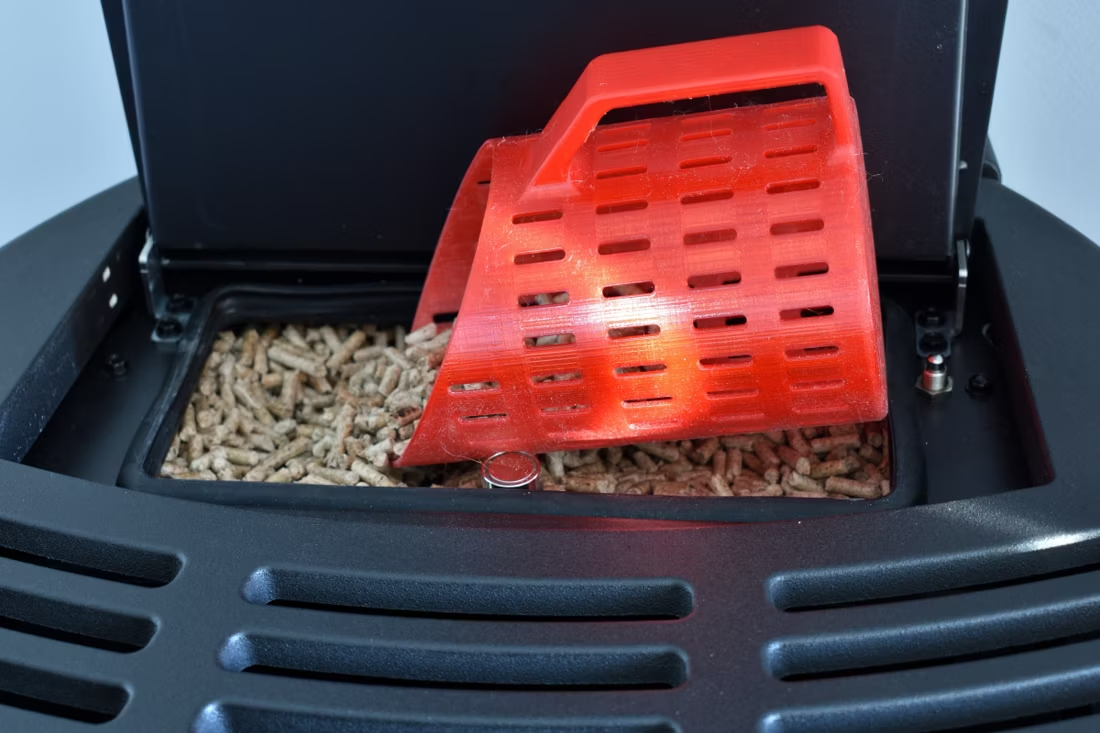
A clean pellet stove is a happy pellet stove. Plan on cleaning the burn pot about once a week when you're burning regularly—ash and clinkers gum up the air holes just like a pellet barbecue. Most pellet stove problems trace back to skipped cleaning that nobody explained up front. Some designs make it easy with a trapdoor burn pot: pull a lever and the gunk drops into the ash pan.
How much should I budget for a fireplace?
For an average home—covering the fireplace, the vent pipe, and basic installation—a budget between $3,900 and $5,500 gives you a lot of options across wood, gas, and pellet. By the time you add finish work, gas line, and electrical, the average complete installation lands between $5,000 and $12,000 all-in. In a remodel or new build, a good rule is to put about 2.5% of the total project cost toward the fireplace.
Can I install a fireplace myself?
If you're putting a fire in your house on purpose, it's best to work with an expert. Unless you're genuinely experienced in framing, gas line, vent pipe, and the national code on clearances to combustibles, have a professional do it—and ideally the same company that sells you the fireplace, so warranty, service, and liability all live under one roof.
Nearby Dealers
Hearth shops serving Bayonet Point and the surrounding area.
Pellet Brands Stocked Around Bayonet Point
Manufacturers will point you to the nearest stocking dealer.
Find out if a pellet stove fits your Bayonet Point home.
Tell us about your space and how you'd actually use it, and we'll give you an honest read—including whether electric might serve you better—then match you with a trusted local dealer and a free Project Guide & Parts List for your project.
Find Your Fireplace →