
Warm up your Brookside home at the flip of a switch.
Clean, instant heat for Brookside's damp mid-Atlantic winters, without a woodpile in the side yard. Find the right unit and connect with a trusted local dealer.
Every Project Starts From One of These Five Situations
Mild winters, steady demand for clean heat.
Brookside sits on Delaware's coastal plain at just 84 feet of elevation, in climate zone 4A with a moderate five-to-six-month heating season and average winter lows near 25°F. That's real heating season, but nothing like the deep-freeze engineering demanded up in Buffalo, NY or Burlington, VT—Brookside homes need steady, dependable warmth for five or six months a year, not a stove built to survive a week of subzero nights.
Delmarva Power supplies both electricity and natural gas to much of Newark and the surrounding Brookside area, so many homes here already have a gas line running to the meter. That makes gas a practical fit for New Castle County's mix of older colonials with a masonry fireplace begging for an insert, and newer subdivisions where a built-in gas unit goes in during construction. A gas fireplace lights on demand, needs no seasoned oak or hickory stacked outside, and gives you zone heat you can run alongside central HVAC on the coldest nights.
Three steps. No salesperson until you're ready.
Tell us about your project
Your zip code, your situation, and the fuel you're leaning toward—or let the answers point you to one.
See what's actually available
The brands dealers within 100 miles genuinely carry—real options, never a catalog mirage.
Get your dealer & Project Guide
A trusted local dealer, plus the free Project Guide & Parts List that names every component of the job.
Frequently Asked Questions
How much does a gas fireplace installation cost in Brookside?
Across New Castle County, a direct-vent gas fireplace or insert installation typically runs $4,000 to $9,500, depending on whether you're converting an existing masonry fireplace or installing new, and whether a fresh gas line needs to be run from the meter. Homes already on Delmarva Power's gas service with a line close by tend to land on the lower end; jobs that need a longer gas run, a stainless chimney liner, or new framing for a built-in unit push toward the higher end. A local dealer will look at your gas meter location and existing chimney before quoting a firm number.
Can I convert my existing wood fireplace to gas?
Yes, and it's one of the most common projects for older Brookside homes. Many houses near Newark still have the original brick masonry fireplace, often sized for burning the oak and hickory that's common throughout New Castle County. Converting one to gas usually means running a stainless liner up the existing chimney and setting a direct-vent gas insert at the firebox, which typically runs $4,000 to $8,000 depending on the insert model and whether new gas piping is needed. You keep the look of the original fireplace and lose the ash, creosote, and firewood chores.
Do I need natural gas, or can I use propane?
Either works. Delmarva Power supplies both natural gas and electricity to much of Newark and the Brookside area, so plenty of homes here already have a gas line at the meter. In pockets of New Castle County outside that gas service territory—some newer developments and areas closer to the Maryland line—propane from a tank is the standard fallback. Most gas fireplace models can be set up for either fuel with the right orifice kit, so the decision usually comes down to what's already run to your house.
Will my gas fireplace work during a power outage?
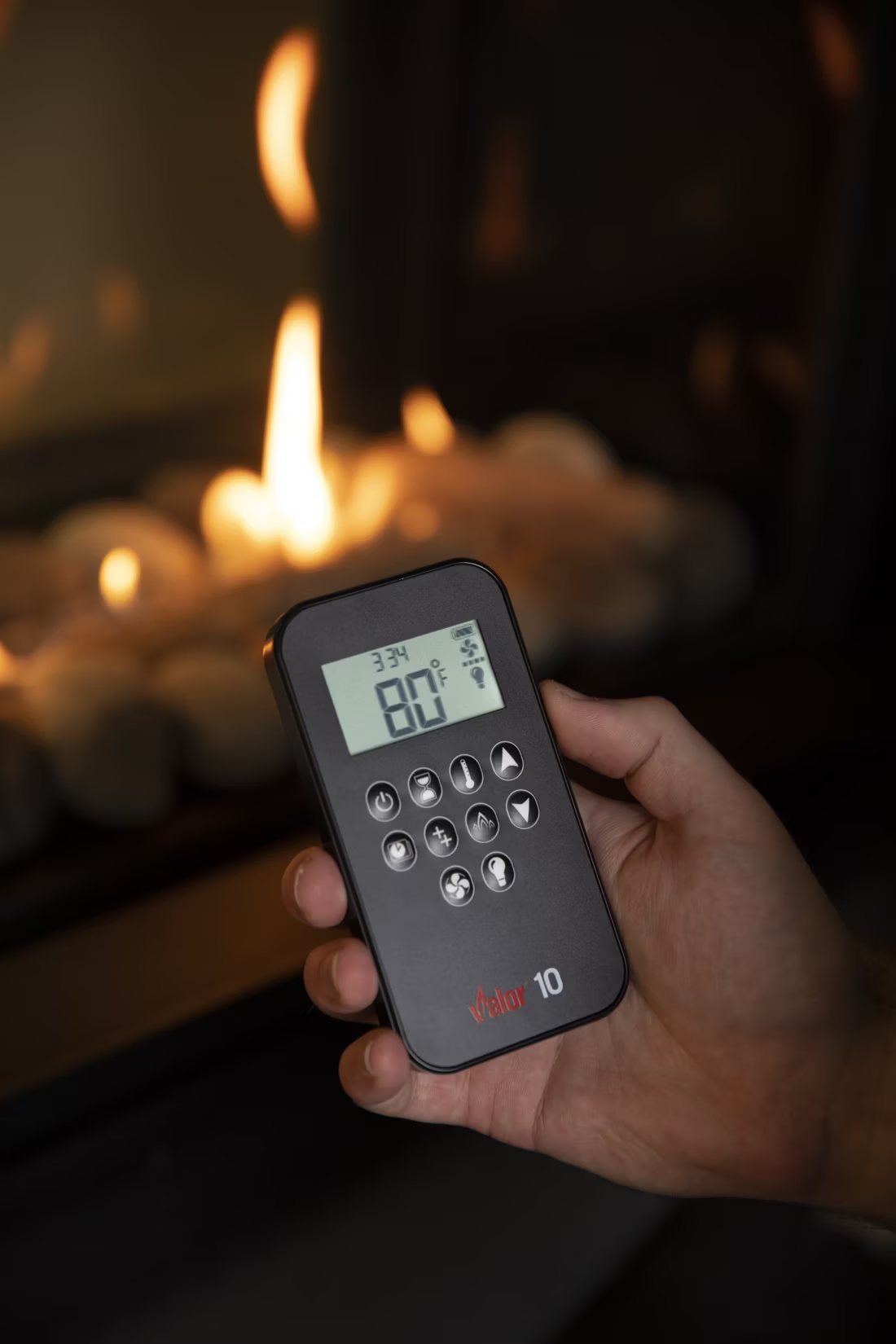
Most modern gas fireplaces will, yes. Units with IPI (intermittent pilot ignition) run on a small battery backup that kicks in automatically when the power drops, so the fireplace still lights on demand. It's worth checking those batteries once a year so they're not dead when you actually need heat during a storm. Valor's gas fireplaces take a different approach: the pilot's thermocouple generates the small amount of electricity the unit needs, so there are no batteries to maintain at all. For Brookside homes that lose power during coastal storms or ice events, either approach keeps you warm when the grid doesn't.
What's the difference between a gas fireplace, gas insert, and gas stove?
A gas fireplace is a fully built-in unit framed into a wall, typically chosen for new construction or a full remodel. A gas insert is built to slide into an existing masonry firebox, converting an old wood-burning fireplace into a sealed, efficient heat source using the chimney you already have. A gas stove is a freestanding cabinet unit that sits on the floor like a wood stove but burns gas. For the many Brookside homes with an existing masonry fireplace, an insert is usually the straightforward upgrade; newer homes without one are better suited to a built-in unit or a freestanding stove.
Do I need a permit to install a gas fireplace in Brookside?
Yes. New Castle County requires a building permit for new gas fireplace installations, plus a separate gas permit for the line work, which has to be pulled by a licensed gas fitter. The New Castle County Department of Land Use handles permitting for unincorporated communities like Brookside, and most hearth dealers who work in the area take care of the paperwork as part of the installation so you're not coordinating multiple trades yourself.
What's the difference between vented and vent-free gas fireplaces?
Vented, direct-vent gas fireplaces pull combustion air from outside and exhaust it back outside through a sealed pipe—they're the standard, code-compliant choice everywhere, including Delaware. Vent-free (unvented) units burn directly into the room and release some water vapor and combustion byproducts indoors; Delaware permits them under specific room-size and ventilation rules, but several other states ban them outright, and most local dealers steer homeowners toward direct-vent instead. For Brookside's well-sealed, humid-summer construction, a direct-vent unit is generally the safer and more commonly installed option.
How often should my gas fireplace be serviced?
Plan on an annual inspection, same as any gas appliance. A technician checks the burner, pilot assembly, venting, and gas connections, and cleans the glass and interior. It's a much smaller job than a wood chimney sweep, but skipping it lets soot and dust build up on the burner and pilot over time. Local gas appliance service providers in the Newark and New Castle County area typically charge $150 to $250 for a standard annual inspection.
Gas vs. wood vs. pellet—which is right for Brookside?
Brookside's winters are real but not extreme—average lows near 25°F and a heating season closer in length to Washington, D.C. than to a place like Burlington, VT. That moderate climate is a big part of why gas has become the default in newer New Castle County construction: it lights instantly and skips the woodpile in a suburban side yard. Wood still makes sense for homeowners who want heat during a power outage or the experience of a real fire fed by local oak, hickory, or maple. Pellet stoves, running on regional brands like Energex, Hamer Pellet Fuel, or Greene Team Pellet Fuel, split the difference with easier loading and cleaner burning, though they need electricity to run the auger. For day-to-day heat in a typical Brookside living room, gas is usually the practical pick, with wood or pellet as a backup or ambiance option.
Is my gas fireplace wasting gas?
If it was installed more than 15 years ago, probably. Older gas fireplaces keep a standing pilot light burning all the time, and that little flame can cost a couple hundred dollars a year. Newer models use pilot-on-demand ignition—the pilot lights only when you use the fireplace and goes out when you turn it off.
Why is a fireplace insert so efficient?
An insert does two things: it seals the chimney completely, so you stop losing air you already paid to heat, and it radiates warmth into the room through the firebox and glass. Most add a heat-exchange fan that pulls cool room air underneath, wraps it around the hot firebox, and pushes it back out warm. Your home is more efficient before you've even lit the first fire.
Can I install a fireplace myself?
If you're putting a fire in your house on purpose, it's best to work with an expert. Unless you're genuinely experienced in framing, gas line, vent pipe, and the national code on clearances to combustibles, have a professional do it—and ideally the same company that sells you the fireplace, so warranty, service, and liability all live under one roof.
How much should I budget for a fireplace?
For an average home—covering the fireplace, the vent pipe, and basic installation—a budget between $3,900 and $5,500 gives you a lot of options across wood, gas, and pellet. By the time you add finish work, gas line, and electrical, the average complete installation lands between $5,000 and $12,000 all-in. In a remodel or new build, a good rule is to put about 2.5% of the total project cost toward the fireplace.
Nearby Dealers
Hearth shops serving Brookside and the surrounding area. Every listing shows whether it is a WhyFire partner, a dealer we have verified as authorized for the brands we recommend, or a local business carrying hearth products. No manufacturer pays for placement. How we verify dealers →
Closer To The Hearth
Johnson Fitness And Wellness
The Stove Store
Delaware Brick
First State Hearth Services
Wertz & Co,Inc
Ah Angersterin Inc
Athenia Mason Supply Wilmington LLC
Schagrin Gas - Middletown
Fortiline
Starks Chimney Services
Duvall's Lawn & Garden Inc.
Comfort Home & Hearth
Halco Grills And Fireplaces
Tri-Gas & Oil
Find your gas fireplace in Brookside.
Tell us a bit about your Brookside home and we'll match you with a trusted local dealer and send over a free Project Guide & Parts List—the exact parts, including the vent kit, for your gas fireplace project.
Find Your Fireplace →