
Reliable gas heat for Westbrook Center's shoreline winters.
Instant, controllable warmth for homes along Long Island Sound. Find the right gas fireplace, insert, or stove and connect with a trusted local dealer.
Every Project Starts From One of These Five Situations
Clean heat built for a shoreline village.
Westbrook Center sits at about 4 feet above sea level on Long Island Sound, in Connecticut's Lower Connecticut River Valley region. The water takes the edge off the worst cold—winter lows average around 25°F here, nowhere near what inland New England towns like Burlington, VT deal with—but this is still a place that needs dependable heat for five or six months running. Gas fireplaces have become a common upgrade along this stretch of shoreline, valued for warmth you can flip on with a switch on a raw, damp evening off the Sound.
One local wrinkle worth knowing up front: piped natural gas service is limited in Westbrook Center and much of the surrounding shoreline, so most gas fireplace installations here actually run on propane rather than a municipal gas line. That's not a drawback—today's gas fireplaces are built to run equally well on either fuel, and a propane-fed unit keeps working through the power outages that come with nor'easters and coastal storm surge along the Sound. A sealed gas insert also holds up far better than an open masonry hearth against the salt air that eventually finds its way into every home this close to the water.
Three steps. No salesperson until you're ready.
Tell us about your project
Your zip code, your situation, and the fuel you're leaning toward—or let the answers point you to one.
See what's actually available
The brands dealers within 100 miles genuinely carry—real options, never a catalog mirage.
Get your dealer & Project Guide
A trusted local dealer, plus the free Project Guide & Parts List that names every component of the job.
Frequently Asked Questions
How much does a gas fireplace installation cost in Westbrook Center?
A gas insert installed into an existing masonry fireplace typically runs $4,500 to $8,500 in this area, depending on the unit and whether a new propane tank or line needs to be run. A built-in direct-vent gas fireplace for a remodel or new construction—with framing, venting, and propane line work included—usually lands between $7,000 and $11,000. Homes that already run propane for a water heater or range tend to come in on the lower end since the fuel infrastructure is already there. A local dealer will give you a firm number after seeing your chimney or wall layout in person.
Can I convert my existing wood-burning fireplace to gas?
Yes, and it's one of the more common projects in Westbrook Center, where a lot of the older shoreline homes have a masonry fireplace that rarely gets used because tending a wood fire isn't practical for a home occupied part of the year or heated mostly by other means. A gas insert typically runs $4,500 to $8,000 installed, using a stainless steel liner run down your existing chimney—stainless holds up better than standard flue material against the salt air that's constant this close to Long Island Sound. The finished fireplace keeps its original look while adding real, on-demand heat.
Is my home on natural gas, or will I need propane?
Westbrook Center has little to no piped natural gas infrastructure, so the large majority of gas fireplace installations here run on propane, either from a buried tank or a smaller tank set near the foundation. If your home already uses propane for cooking or hot water, tying in a fireplace is usually straightforward. If you're starting from scratch, your dealer will help size and place a new tank. Essentially every gas fireplace and insert on the market today can be configured for propane just as easily as natural gas, so fuel availability shouldn't limit which unit you choose.
Will my gas fireplace work during a power outage?
Yes, for most modern units. Coastal storms can knock out power in Westbrook Center for days at a time, and Connecticut Light & Power's shoreline lines take their share of nor'easter hits. Gas fireplaces with IPI (intermittent pilot ignition) run on a battery backup that kicks in automatically when the power drops, so the fireplace lights on demand just like normal. Valor units go a step further—their pilot's thermocouple generates the small amount of electricity the fireplace needs, so there's no battery to remember at all. For a home that loses power every winter or two, that detail is worth asking your dealer about directly.
What's the difference between a gas fireplace, gas insert, and gas stove?
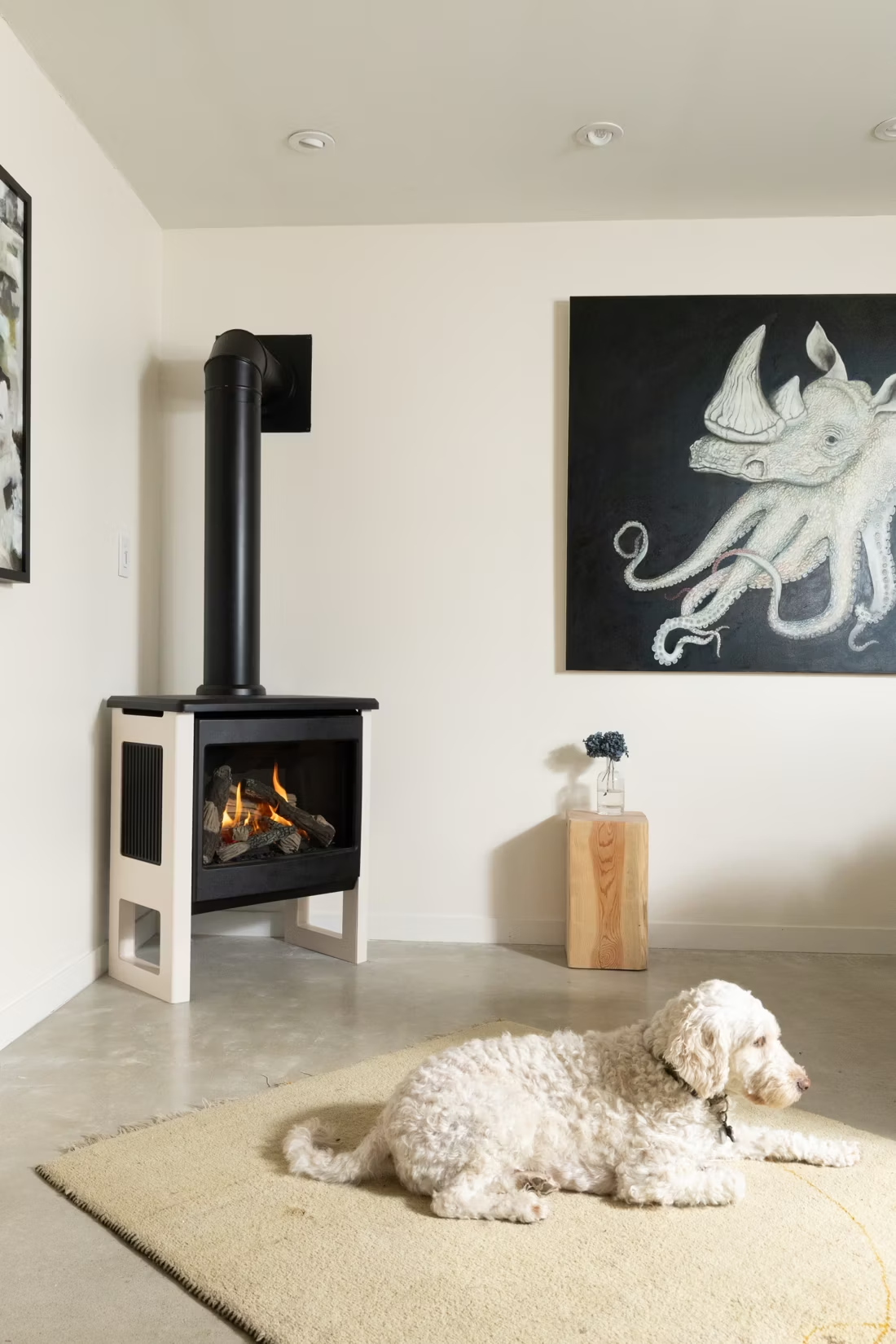
A gas fireplace is a fully built-in unit set into a wall or framed enclosure, typically chosen for new construction or a full remodel. A gas insert is sized to slide into an existing masonry fireplace opening, sealing it up and venting through the existing chimney with a liner. A gas stove is a freestanding cast-iron or steel unit that sits on the floor, similar in footprint to a wood stove but running on gas or propane. For the many Westbrook Center homes with an existing but rarely used masonry fireplace, an insert is usually the simplest and most cost-effective path.
Do I need a permit to install a gas fireplace in Westbrook Center?
Yes—the Town of Westbrook Building Department requires a permit for gas fireplace and insert installations, along with sign-off from a licensed gas or propane fitter for any fuel line work. Because much of Westbrook Center sits in a coastal flood zone, an outdoor propane tank also has to be sited and anchored according to FEMA base flood elevation requirements, which is one more reason to work with an installer who's done this on the shoreline before. Most local hearth dealers coordinate the permit, the flood-zone requirements, and the gas fitter as one package.
What's the difference between vented and vent-free gas fireplaces?
Vented (direct-vent) gas fireplaces draw combustion air from outside and exhaust the byproducts back outside through a sealed pipe—they're the standard choice for full-time heating and work in essentially any room. Vent-free units burn fuel directly into the living space with no outside venting; Connecticut permits them, but only under strict room-size minimums, with an oxygen-depletion sensor and a carbon monoxide detector required. Given the tight, often older floor plans of Westbrook Center's shoreline cottages, most local dealers steer homeowners toward direct-vent units for a primary living space and reserve vent-free for very specific, limited-use situations.
How often should my gas fireplace be serviced?
Plan on an annual inspection, typically $150 to $250, covering the burner, pilot or ignition system, venting, and gas connections. In Westbrook Center specifically, it's worth asking your technician to check the venting hardware and any exposed metal fittings for salt-air corrosion during that visit—coastal Connecticut homes see faster wear on exterior vent caps and connectors than homes further inland. Skipping service doesn't usually cause the dramatic failures a neglected wood chimney can, but it does shorten the life of the unit and can trip safety shutoffs at the worst time.
Gas vs. wood—which is right for my home?
Wood is still workable in Westbrook Center—oak, maple, birch, and ash are all common firewood species in the Lower Connecticut River Valley—and it keeps working without electricity, which matters through a multi-day storm outage. But wood also means storage, hauling, and tending a fire, which is a harder sell for a part-time shoreline property or a busy household. Gas delivers instant, thermostat-controlled heat with none of that upkeep, and with propane as the standard fuel here, it's just as reliable through an outage when paired with the right ignition system. Many Westbrook Center homeowners end up choosing gas for daily use in the main living space and keep an existing wood option, if they have one, purely as a backup.
Why is a fireplace insert so efficient?
An insert does two things: it seals the chimney completely, so you stop losing air you already paid to heat, and it radiates warmth into the room through the firebox and glass. Most add a heat-exchange fan that pulls cool room air underneath, wraps it around the hot firebox, and pushes it back out warm. Your home is more efficient before you've even lit the first fire.
Does a gas fireplace work when the power is out?
Yes—modern gas fireplaces have a battery backup for the ignition system that lasts for weeks, so no power equals no problem. Your furnace can't say that: no electricity, no blower, no heat. It's one of the most common reasons families add a fireplace, and worth confirming on any model you're considering.
Can I install a fireplace myself?
If you're putting a fire in your house on purpose, it's best to work with an expert. Unless you're genuinely experienced in framing, gas line, vent pipe, and the national code on clearances to combustibles, have a professional do it—and ideally the same company that sells you the fireplace, so warranty, service, and liability all live under one roof.
How much should I budget for a fireplace?
For an average home—covering the fireplace, the vent pipe, and basic installation—a budget between $3,900 and $5,500 gives you a lot of options across wood, gas, and pellet. By the time you add finish work, gas line, and electrical, the average complete installation lands between $5,000 and $12,000 all-in. In a remodel or new build, a good rule is to put about 2.5% of the total project cost toward the fireplace.
Nearby Dealers
Hearth shops serving Westbrook Center and the surrounding area. Every listing shows whether it is a WhyFire partner, a dealer we have verified as authorized for the brands we recommend, or a local business carrying hearth products. No manufacturer pays for placement. How we verify dealers →
Jj Sullivan Inc.
Fireworks Hearth And Home LLC
Spicer Advanced Gas<br>The Propane Store
New Haven Masonry
Superior Hearth, Spas & Leisure
Find your gas fireplace in Westbrook Center.
Tell us a bit about your home and we'll put together a free Project Guide & Parts List for your gas fireplace or insert, then connect you with a trusted local dealer who can install it.
Find Your Fireplace →