
Warm up your Lower Connecticut River Valley home, town by town.
Wood, gas, pellet, and electric fireplace resources for Essex, Old Saybrook, Chester, Deep River, Haddam, Old Lyme, and every river-valley town in between. Find the right unit for your home and connect with a trusted local hearth retailer.
Every Project Starts From One of These Five Situations
Colonial villages and a cold-but-coastal Connecticut River Valley winter.
The Lower Connecticut River Valley region—Essex, Old Saybrook, Chester, Deep River, Haddam, Old Lyme, Westbrook, Clinton, Killingworth, and the surrounding river towns—is home to roughly 69,000 people spread across historic shipbuilding villages, tidal marshes, and wooded hills along the lower Connecticut River. Winters here average 19°F on the coldest nights and add up to a winter heating load on par with a mild winter in Madison, Wisconsin—noticeably milder than inland New England but still cold enough that a working heat source matters for five or six months of the year. The hardwood stands common to the valley—oak, maple, birch, and ash—split and season well and have heated homes here since the region's shipbuilding and ironworking days.
This hub pulls together what's available across the whole region: hearth retailers, chimney sweeps and gas technicians, fuel suppliers, and a directory of every town from Essex to Middletown. Pick your fuel below to see local dealers, typical installation costs, and the units that make sense for a historic river-valley cape, a shoreline saltbox in Old Saybrook, or a newer build in Cromwell or Portland. Whatever the house, the goal is the same—connect you with a trusted local pro who can install it correctly, not a nationwide catalog.
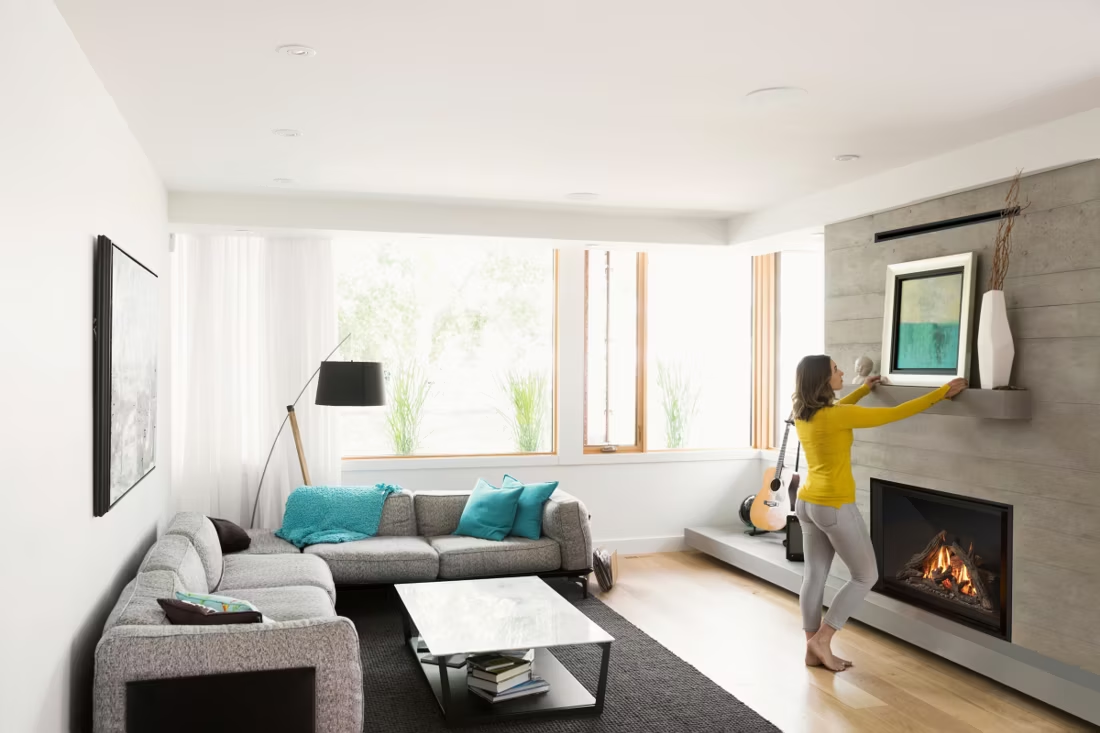
Four fuels. One honest answer for Lower Connecticut River Valley County.
Wood
81 models available near Lower Connecticut River Valley County.
Find your wood stove →Gas
365 models available near Lower Connecticut River Valley County.
Find your gas fireplace →Pellet
See what's available near Lower Connecticut River Valley County.
Find your pellet stove →Electric
11 models available near Lower Connecticut River Valley County.
Find your electric fireplace →Three steps. No salesperson until you're ready.
Tell us about your project
Your zip code, your situation, and the fuel you're leaning toward—or let the answers point you to one.
See what's actually available
The brands dealers within 100 miles genuinely carry—real options, never a catalog mirage.
Get your dealer & Project Guide
A trusted local dealer, plus the free Project Guide & Parts List that names every component of the job.
Frequently Asked Questions
Which fuel works best in the Lower Connecticut River Valley?
It depends on the house and how you use it. Wood is a strong fit here—oak, maple, birch, and ash all grow locally, split well, and burn hot and long, and many valley homeowners with woodlots or land access still heat primarily with a wood stove or insert. Gas is the convenience choice, though availability varies block by block; some river towns like Old Saybrook and Essex have decent natural gas coverage in denser sections, while more rural parts of Haddam, Killingworth, and East Haddam lean on propane instead. Pellet is a good middle ground—no chimney access issues in older homes, direct-vent options, and solid regional supply from brands like New England Wood Pellet and Lignetics. Electric works well as a secondary heat source or for homes with historic masonry that can't easily accommodate new venting—common in the valley's 18th- and 19th-century sea captains' houses. Most homes here end up with a primary fuel plus a supplemental unit for shoulder-season use.
Do I need a permit to install a fireplace in the Lower Connecticut River Valley?
Yes, in nearly every case. Connecticut doesn't have functioning county government—building permits are issued town by town, so a wood stove install in Chester goes through Chester's building department, while one in Old Saybrook goes through Old Saybrook's. All towns in the region enforce the State of Connecticut Fire Safety Code and current building code, which means EPA-certified wood appliances, proper clearances, and inspection sign-off. Gas installations require a licensed gas fitter and a separate gas permit on top of the general building permit. Electric fireplaces usually skip the permit process unless you're hardwiring a built-in unit into a new circuit. Because permitting requirements and inspection scheduling differ slightly from town to town, most valley hearth retailers handle the paperwork directly rather than leaving it to the homeowner.
Are there air quality restrictions on wood burning in the Lower Connecticut River Valley?
No—this region doesn't have the winter inversion or non-attainment issues you see in some Western basin towns, and there are no local wood-burning curtailment days here. That said, EPA 2020 NSPS emissions standards still apply to any new wood stove or insert sold and installed, and it's worth noting that many of the region's older homes have chimneys dating back a century or more; those need a certified sweep's inspection before a new appliance goes in, air quality rules aside. If you're near the shoreline in Old Saybrook, Westbrook, or Clinton, salt air can also accelerate exterior chimney cap and liner wear, so annual inspection matters even without any regulatory pressure.
Can one local hearth retailer handle all four fuel types?
Many of the larger valley retailers—typically based in Old Saybrook, Essex, or Middletown—carry wood, gas, and pellet appliances, with electric fireplaces as a smaller line. Fewer small-town shops carry all four with equal depth; some specialize in wood and pellet for the more rural river towns, while others lean toward gas and electric for waterfront and newer-construction customers. If you're not sure which fuel fits your home, a multi-fuel retailer can walk you through working displays and the trade-offs for your specific situation—that's often more useful than deciding on fuel type before you've talked to anyone local.
How does service work across the smaller river towns?
Most chimney sweeps and gas technicians serving the region are based in one of the larger towns and travel out to the smaller river communities—Chester, Deep River, Killingworth, Haddam, East Haddam—for annual service and installs. Given the historic housing stock, many service calls involve older masonry chimneys that need liner work or cap replacement before a new appliance can go in safely. Expect slightly longer lead times for fall service appointments (September–November) as everyone tries to get swept before the first cold snap; pellet and gas owners generally have an easier time booking mid-winter than wood-stove owners needing an inspection.
What's the typical cost range for fireplace installation across all fuel types in the Lower Connecticut River Valley?
Costs vary by fuel and by how much existing infrastructure (chimney, gas line, electrical) is already in place. Wood stove or insert installation: roughly $4,000–$8,500 for a typical install, more if a masonry chimney needs relining or rebuilding—common in the region's older housing stock. Gas fireplace, insert, or stove: $4,000–$10,000 depending on whether you're tying into an existing gas line or running propane with a new tank. Pellet stove or insert: $4,000–$7,000 for most installs. Electric fireplace: $200–$3,000 for the unit itself, plus $400–$1,200 in labor for anything beyond a simple plug-in—built-ins and mantel conversions are common in the valley's historic homes. See the county + fuel pages above for retailer-specific pricing.
How much should I budget for a fireplace?
For an average home—covering the fireplace, the vent pipe, and basic installation—a budget between $3,900 and $5,500 gives you a lot of options across wood, gas, and pellet. By the time you add finish work, gas line, and electrical, the average complete installation lands between $5,000 and $12,000 all-in. In a remodel or new build, a good rule is to put about 2.5% of the total project cost toward the fireplace.
Does a fireplace add value to my home?
On average, a fireplace adds back to the home about the same amount you spent installing it. Add the monthly savings from heating the rooms you actually use instead of the whole house—often hundreds of dollars a year—and the value case is strong before you even count what a fire does for how your family uses the room.
Wood, gas, pellet, or electric—how do I choose?
Match the fuel to your life, not the other way around. Wood: lowest fuel cost and total power-outage independence, but you're hauling and stacking. Gas: press a button, set a thermostat, no maintenance to speak of. Pellet: wood economics with automatic feeding, in exchange for weekly cleaning and a need for electricity. Electric: plugs in anywhere with honest supplemental heat. Nobody regrets the fuel that fits how they actually live.
Can I install a fireplace myself?
If you're putting a fire in your house on purpose, it's best to work with an expert. Unless you're genuinely experienced in framing, gas line, vent pipe, and the national code on clearances to combustibles, have a professional do it—and ideally the same company that sells you the fireplace, so warranty, service, and liability all live under one roof.
Stove and Fireplace Dealers in Lower Connecticut River Valley County
Listings include WhyFire partner dealers, dealers we have verified as authorized for the brands we recommend, and established local businesses that carry hearth products. Every listing shows which one it is. The ones marked Preferred run on WhyFire's software, so they can show you real pricing and book your appointment right here. No manufacturer pays for placement. How we verify dealers →
Fireworks Hearth And Home LLC
Spicer Advanced Gas<br>The Propane Store
Superior Hearth, Spas & Leisure
Jj Sullivan Inc.
Fireside Supply
Spotless Chimney Sweeping & Solutions
Fireplace Surplus
New Haven Masonry
Find your fireplace in the Lower Connecticut River Valley.
Pick your fuel below to get matched with a trusted local dealer and a free Project Guide & Parts List—the exact parts, vent kit, and recommended installer for your home.
Find Your Fireplace →