
Keep Your Family Warm and Safe—No Matter What
Most Stamford homes run on natural gas or electric heat, and wood stoves are genuinely rare here. For the North Stamford properties and older chimneys where wood heat still makes sense, we'll connect you with a trusted local dealer.
Every Project Starts From One of These Five Situations
A city built around gas and electric, not cordwood.
Stamford sits along Connecticut's Gold Coast in Fairfield County, part of the New York City commuter belt, with roughly 135,000 residents packed into a mix of downtown high-rises, close-set colonials, and condo developments. With average winter lows near 22°F and a heating season that runs a solid stretch of the year, the cold here is real—colder than the Connecticut shoreline towns further south, though nowhere near the severity of interior New England cities like Burlington, VT. What actually separates Stamford from a wood-heat market isn't the weather; it's the housing stock. Extensive natural gas infrastructure and dense multifamily construction mean most homes here were built around gas lines and electric service, not chimneys sized for cordwood.
Wood stoves aren't part of Stamford's mainstream hearth market—you won't find rows of them at local retailers, and the city's building department processes far more gas insert permits in a given year than solid-fuel ones. Wood heat hasn't disappeared entirely, though. A small number of homeowners on larger wooded lots in North Stamford, near the Mianus River corridor or the Bartlett Arboretum, install wood stoves for backup heat during outages or the ambiance of a real fire in an older farmhouse with an existing masonry chimney. Local firewood suppliers stock the hardwoods native to this part of Connecticut—oak, maple, birch, and ash—sold by the cord from commercial yards rather than harvested under a public land cutting permit, since there's no national forest land near Stamford to cut on.
Three steps. No salesperson until you're ready.
Tell us about your project
Your zip code, your situation, and the fuel you're leaning toward—or let the answers point you to one.
See what's actually available
The brands dealers within 100 miles genuinely carry—real options, never a catalog mirage.
Get your dealer & Project Guide
A trusted local dealer, plus the free Project Guide & Parts List that names every component of the job.
Frequently Asked Questions
Is a wood stove a realistic option for a home in Stamford?
For most Stamford homes, not as a primary heating plan. The city's housing stock leans heavily toward homes already piped for natural gas or wired for electric heat, and many condos, co-ops, and townhome associations prohibit solid-fuel appliances outright through their bylaws. Where it does make sense is single-family homes on larger lots, particularly in North Stamford, that already have a masonry chimney or the clearance to run new Class A pipe. If that describes your property, a wood stove is absolutely installable—you'll just be working with a smaller pool of local dealers than you'd find in a market where wood heat is the norm.
How much does a wood stove installation cost in Stamford?
Because wood stoves are a niche request here rather than a routine one, pricing varies more than it would in a wood-heavy market. As a general range, a stove installed into an existing masonry chimney with a liner typically runs $4,000-$7,000 for the unit, hearth pad, and venting. A home without an existing chimney—common among Stamford's colonials and capes—can push past $9,000-$10,000 once new Class A chimney pipe and roof penetration are added. Get a firm number from a local installer who has actually looked at your chimney or framing before assuming either end of that range.
Where can I find a wood stove dealer near Stamford?
Stamford itself doesn't have a large concentration of hearth retailers that specialize in wood-burning appliances—most local shops focus on the gas inserts and electric fireplaces that dominate demand in this part of Fairfield County. Homeowners pursuing a wood stove sometimes end up working with dealers based slightly further out in the county or across the state line in Westchester County, NY, where wood-burning demand runs a bit higher. We match you with a trusted installer who actually services Stamford rather than leaving you to cold-call shops that may not want the job.
Do I need a permit to install a wood stove in Stamford?
Yes. Any new wood-burning appliance installation requires a permit through the City of Stamford's building department, and the stove must meet current EPA New Source Performance Standards, which Connecticut enforces statewide through DEEP. Because solid-fuel installs are less frequent here than gas conversions, it's worth confirming with your installer that they've pulled wood-stove permits with the city before—the inspection points differ from a routine gas insert permit.
What kind of firewood is available near Stamford?
Local firewood suppliers around Fairfield County sell the hardwoods native to this part of Connecticut—oak, maple, birch, and ash—typically by the cord, seasoned or green. There's no national forest or state cutting-permit program near Stamford the way you'd find in more rural, forested regions, so virtually all firewood here comes from a commercial supplier rather than a self-cut permit. Expect to pay a premium compared to rural New England markets, given Fairfield County's land values and delivery costs.
Are there any wood-burning restrictions in Stamford?
Not currently. Stamford has no winter inversion problems or non-attainment air quality designations that trigger the kind of burn curtailment programs you'd see in some western cities. That said, given how few households here rely on wood as a heat source, a new wood stove is more likely to draw a question from a condo or homeowners' association than from the city itself—check your property's governing documents before you check with the building department.
What's the best type of wood stove for a Stamford home?
Given Stamford's relatively moderate winter climate—22°F average lows and a heating season that's milder than most of inland New England—a mid-size, non-catalytic stove is usually plenty for supplemental heat or outage backup, rather than the extreme-cold catalytic models built for 20+ hour burns at sub-zero temperatures. New England-favorite brands like Jøtul and Vermont Castings are widely serviced in this region and pair well with the masonry chimneys common in Stamford's older housing stock.
How often should a wood stove chimney be inspected in Stamford?
Annually, per CSIA guidelines, regardless of how often the stove actually gets used. Occasional-use stoves—common in Stamford, where wood tends to be backup heat or ambiance rather than a daily primary source—can build creosote glaze somewhat unpredictably, since intermittent, cooler-burning fires don't clean the flue the way steady, hot daily fires do in colder climates. Don't skip the inspection just because the stove isn't your main heat source.
Should I choose wood, gas, or electric for my Stamford home?
For most Stamford homeowners, gas or electric is the more practical choice—natural gas service is broadly available across the city, and both United Illuminating and Connecticut Light & Power serve the area with reliable electric supply, even though Connecticut's residential electric rates (running roughly $0.25-$0.31 per kWh here) are among the highest in the country. Gas inserts and electric fireplaces install faster and work in condos and co-ops where wood is often prohibited outright. Wood remains a legitimate option mainly for the specific case of a single-family home with an existing chimney or a homeowner focused on off-grid backup heat during storms—for that homeowner, a trusted local wood-stove installer is still worth talking to.
Why won't my new wood stove get going like my old one?
New wood stoves are 70%+ efficient, so far less heat goes up the flue—which also means less draft to get a fire established. The rule: build a genuinely hot fire for about 45 minutes before you choke it down. Skip that and you get smoke in the room, creosote in the chimney, and a fire that never takes off. Most performance complaints trace straight back to this.
Why is my open fireplace making my house colder?
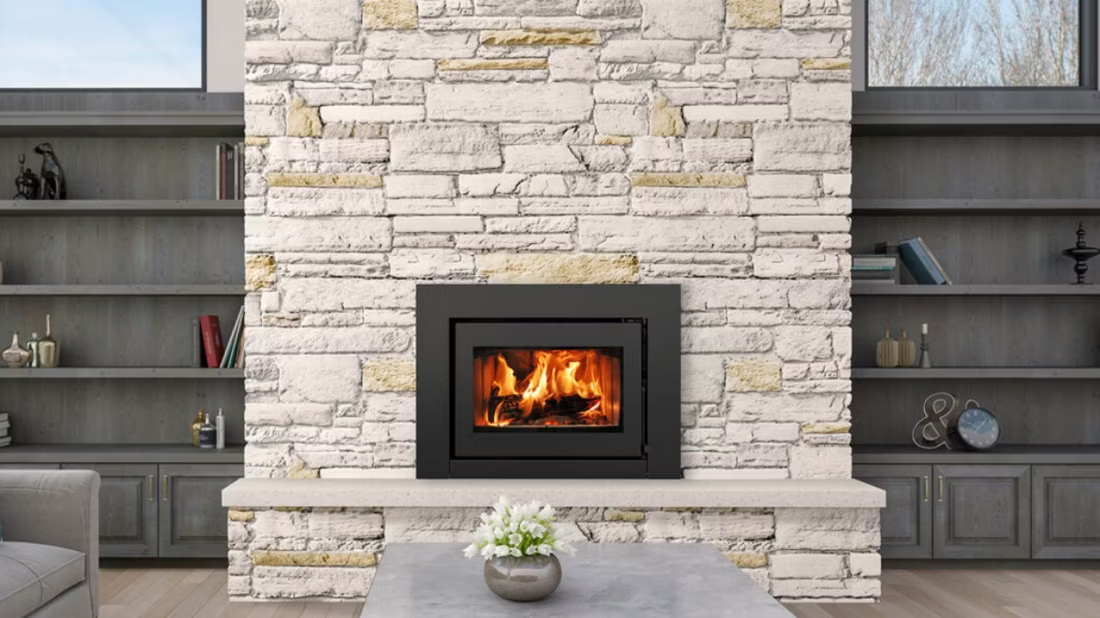
Open fireplaces suck—literally. As the fire burns, it consumes air your furnace already paid to heat and pulls it out through the chimney, so the house is actually colder after the fire goes out than before you lit it. An insert fixes this: it seals the chimney, puts fixed glass across the front, and turns that hole in your house into a real heat source.
How much should I budget for a fireplace?
For an average home—covering the fireplace, the vent pipe, and basic installation—a budget between $3,900 and $5,500 gives you a lot of options across wood, gas, and pellet. By the time you add finish work, gas line, and electrical, the average complete installation lands between $5,000 and $12,000 all-in. In a remodel or new build, a good rule is to put about 2.5% of the total project cost toward the fireplace.
Does a fireplace add value to my home?
On average, a fireplace adds back to the home about the same amount you spent installing it. Add the monthly savings from heating the rooms you actually use instead of the whole house—often hundreds of dollars a year—and the value case is strong before you even count what a fire does for how your family uses the room.
Nearby Dealers
Hearth shops serving Stamford and the surrounding area. Every listing shows whether it is a WhyFire partner, a dealer we have verified as authorized for the brands we recommend, or a local business carrying hearth products. No manufacturer pays for placement. How we verify dealers →
Nordic Stove And Fireplace Center
Hocon Gas Of Norwalk
Fireplace And Outdoor Living
Westfair Pool & Spa Inc
Aida Design Build
Westchester Fireplace
Hearth Products, LLC
The Valley Fireplace
County Woodstoves Inc
Fire Glow Distributors, Inc.
All Shore Appliance
Village Fireplace
Northshore Fireplace
Leahy’s Metered Gas Service
Flue Tech
Best In Backyards
Agi Supply Inc
Mcnamara Fireplace And Stove
Find your wood stove fit in Stamford.
Tell us about your home and chimney setup, and if wood heat makes sense for your property, we'll match you with a trusted local dealer and a free Project Guide & Parts List—the exact parts, vent kit, and recommended installer for your Stamford project.
Find Your Fireplace →