
Clean electric heat for Old Saybrook Center's shoreline homes.
No chimney, no gas line, no historic-district exterior review—just plug-in or hardwired warmth for a Saybrook Point cottage or a Main Street Federal. Find the right unit and connect with a trusted local dealer.
Every Project Starts From One of These Five Situations
No chimney. No gas line. No historic district battle.
Old Saybrook Center sits at just 7 feet of elevation where the Connecticut River meets Long Island Sound—a small, walkable village of roughly 2,000 people built around Federal and Greek Revival homes, many dating to the 1700s and 1800s. Winter lows average around 25°F and the town sees a real but moderate New England heating season, nothing like the brutal cold of Burlington VT or Duluth MN further north. Plenty of Saybrook Center homes sit inside the local historic district or in FEMA flood zones near Saybrook Point, which makes adding a new masonry chimney, running a gas line, or elevating mechanical equipment above base flood elevation a genuine headache—and sometimes simply not permitted.
That's where electric fireplaces and inserts earn their place here. A wall-mounted linear unit or a drop-in insert for an old, capped fireplace opening needs no venting and no exterior alteration, which sidesteps the Historic District Commission review that a new chimney or through-wall gas vent would trigger. Connecticut Light & Power's residential rate runs about 25.3 cents per kWh—one of the higher rates in the country—so most local homeowners run these units as zone heat and ambiance for a den, sunroom, or seasonal shoreline cottage rather than as a whole-house heat source, which keeps the electric bill in check. A local dealer can spec the right insert for your opening, your panel capacity, and how you actually plan to use the room.
Three steps. No salesperson until you're ready.
Tell us about your project
Your zip code, your situation, and the fuel you're leaning toward—or let the answers point you to one.
See what's actually available
The brands dealers within 100 miles genuinely carry—real options, never a catalog mirage.
Get your dealer & Project Guide
A trusted local dealer, plus the free Project Guide & Parts List that names every component of the job.
Frequently Asked Questions
How much does an electric fireplace installation cost in Old Saybrook Center?
A basic plug-in electric insert or wall unit runs $300 to $900 installed, since it needs nothing more than an existing standard outlet. A hardwired built-in—recessed into a wall, a converted masonry opening, or a custom mantel surround—typically runs $800 to $2,000 once an electrician runs a dedicated 20-amp circuit, which is common in Saybrook Center's older homes that were wired decades before central air or modern kitchens added load to the panel. If your service panel is older knob-and-tube or a 60-amp panel typical of some pre-war cottages near the Point, a panel upgrade can add another $1,500 to $3,000—a local electrician or hearth dealer can tell you quickly whether your panel has room.
Do I need a permit to install an electric fireplace here?
A plug-in electric insert generally needs no permit at all—it's treated like any other appliance. A hardwired unit that requires a new dedicated circuit does need an electrical permit through the Town of Old Saybrook, which any licensed electrician or hearth installer will pull as part of the job. The good news for homes inside Old Saybrook Center's local historic district: because electric units don't require a new chimney, flue, or exterior vent penetration, you typically avoid Historic District Commission review altogether—a real advantage over gas or wood options in a protected Main Street or Saybrook Point property.
What size electric fireplace do I need?
Most electric fireplaces and inserts are sized in BTUs the same way a small space heater is, typically 4,000 to 5,200 BTU on the high setting, which comfortably heats a single room of 400 to 1,000 square feet depending on ceiling height and insulation. For a converted three-season porch or sunroom facing the Sound—common in Saybrook Center's shoreline cottages—pay attention to how drafty the space is; these rooms often lose heat faster than the square footage alone suggests, so a local dealer will usually recommend sizing up slightly rather than heating strictly to the room's floor area.
My house is in a flood zone near Saybrook Point—does that affect the installation?
It can. Many properties near Saybrook Point and along the lower Connecticut River sit in FEMA-mapped flood zones, and mechanical and electrical equipment below base flood elevation is often restricted or requires special elevation and anchoring. Electric fireplace units mounted well above grade on an interior wall are generally simpler to site than gas appliances, which need utility connections and combustion air intakes that also have to clear flood elevation requirements. Still, if your home has a below-grade or first-floor installation in a mapped flood zone, mention it to your installer up front—it can affect where the unit and its wiring get placed.
How much does it cost to run an electric fireplace at Connecticut Light & Power rates?
At CL&P's residential rate of roughly 25.3 cents per kWh, a typical electric fireplace drawing 1,500 watts on its heat setting costs about 38 cents per hour to run. Used a few hours a night during shoulder-season evenings—which is how most Saybrook Center homeowners actually use theirs, as a supplement to a heat pump or oil furnace rather than a primary heat source—that adds up to a modest add-on to the monthly bill, not a source of dread. Running one as 24/7 whole-room heat during a stretch of January cold would cost noticeably more, which is why most local buyers treat these as zone heat and ambiance rather than a furnace replacement.
Electric vs. gas—which makes more sense for my home?
Gas fireplaces put out more heat per unit and can genuinely offset furnace use in a main living space, and natural gas service runs along the Route 1 / Boston Post Road corridor through town. But many of Saybrook Center's older shoreline cottages and historic district homes run on oil or propane rather than natural gas, and adding a new gas line or exterior vent penetration on a historic-district property can mean design review and added cost. Electric skips all of that—no fuel line, no venting, no combustion air requirements—at the tradeoff of lower total heat output and a higher per-hour operating cost given CL&P's rates. For a supplemental-heat room or a rarely-occupied seasonal cottage, electric is usually the simpler and less expensive path overall.
What type of electric fireplace fits an older Saybrook Center home best?
For homes with an existing but non-functional or capped masonry fireplace—common in the older Federal and Greek Revival houses around Main Street—a drop-in electric insert that fits the existing opening is usually the cleanest option, preserving the mantel and surround you already have. For rooms without an existing fireplace, like a converted sunroom or a finished basement (where flood-zone rules allow), a wall-mounted linear unit or a freestanding electric stove works well and needs only a nearby outlet or new circuit. Ask a local dealer to measure your existing opening before ordering anything—masonry fireplace dimensions vary widely in homes this old.
How much maintenance does an electric fireplace need?
Very little—this is one of the biggest advantages for Old Saybrook Center's seasonal and vacation properties near the shore, several of which sit empty for weeks at a time in winter. There's no chimney to sweep, no ash to clean, and no annual gas-line inspection. Maintenance amounts to occasionally dusting the vents and blower and replacing LED elements after many years of use, which most dealers handle as a simple parts swap. For a property you're not checking on daily, that low-maintenance profile matters.
Are there any rebates available for electric heating upgrades in Old Saybrook Center?
Standalone plug-in or hardwired electric fireplaces typically don't qualify for Energize CT or Eversource efficiency rebates, since those programs are generally targeted at whole-home heat pump systems and weatherization rather than supplemental zone heaters. If your project also involves a panel upgrade to support a new circuit, it's worth asking your electrician whether any current Eversource program incentives apply to that portion of the work—rules change year to year, and a local installer will know what's currently active.
Can I put a TV above my fireplace?
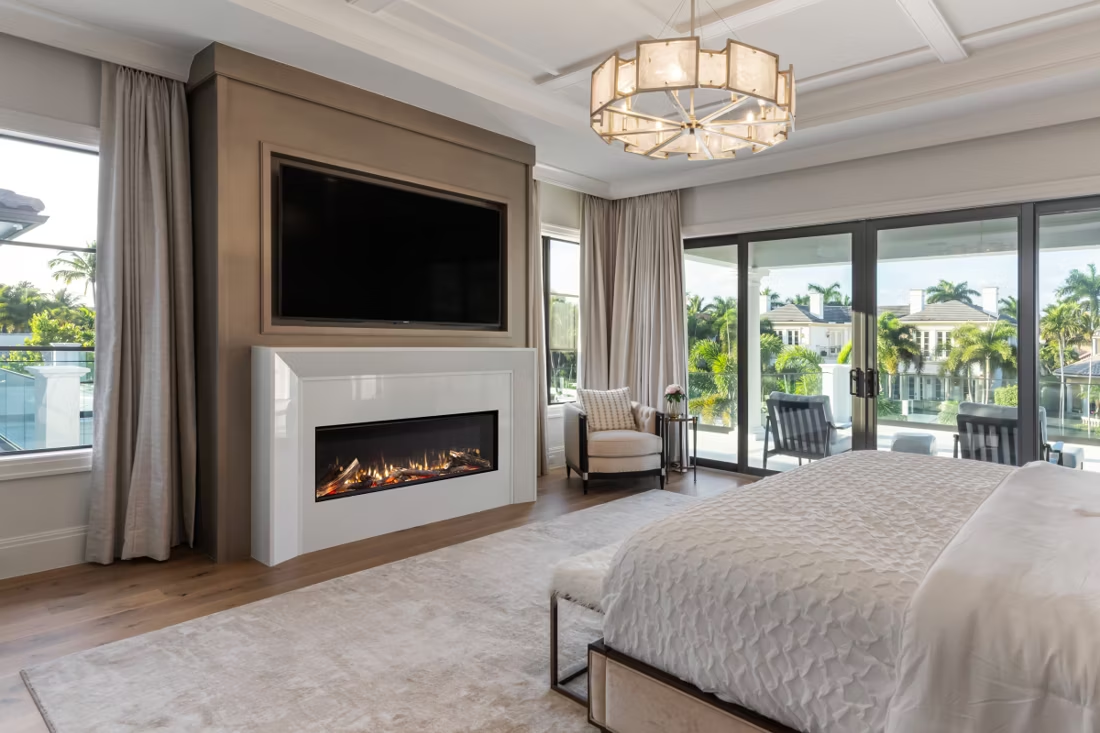
Yes—with an asterisk. Fireplaces are hot and TVs don't like heat. Either put a mantel between them to deflect rising warmth, or choose a fireplace with heat-management technology that creates a cool zone on the wall above—the wall stays around 125 degrees, barely warm, while the room still gets full heat. If you like clean lines and don't want a mantel, heat management is the answer.
Does an electric fireplace need a vent or chimney?
No—that's its superpower. An electric fireplace needs a wall and an outlet, period. No vent pipe, no gas line, no clearances to design around, which is why it works in bedrooms, offices, apartments, and walls where venting a gas or wood unit would be impractical or impossible. Installation is typically the simplest and least expensive of any fireplace type.
What is an in-home preview and do I need one?
It's a visit where a hearth professional measures your space, confirms the model you picked actually works in your home, and walks the specs—framing, gas line, venting, finish work—before anything is ordered. Some details you just can't know until you see the house. Never make a down payment without one; it's the single most-skipped step that burns buyers.
How much should I budget for a fireplace?
For an average home—covering the fireplace, the vent pipe, and basic installation—a budget between $3,900 and $5,500 gives you a lot of options across wood, gas, and pellet. By the time you add finish work, gas line, and electrical, the average complete installation lands between $5,000 and $12,000 all-in. In a remodel or new build, a good rule is to put about 2.5% of the total project cost toward the fireplace.
Nearby Dealers
Hearth shops serving Old Saybrook Center and the surrounding area. Every listing shows whether it is a WhyFire partner, a dealer we have verified as authorized for the brands we recommend, or a local business carrying hearth products. No manufacturer pays for placement. How we verify dealers →
Spicer Advanced Gas<br>The Propane Store
Fireworks Hearth And Home LLC
Jj Sullivan Inc.
Superior Hearth, Spas & Leisure
Electric Service in Old Saybrook Center
An electric fireplace's heater draws about 1,500 watts—pennies per hour at local rates.
Connecticut Light & Power Co
Find your electric fireplace in Old Saybrook Center.
Tell us about your home—historic district, flood zone, panel capacity, whatever applies—and we'll match you with a trusted local dealer and send a free Project Guide & Parts List with the exact insert, surround, and electrical specs for your project.
Find Your Fireplace →