
Warm up the Quiet Corner with the right gas fireplace.
With winter lows averaging 18°F and a long, demanding heating season each year, Northeastern Connecticut homes need heat that doesn't depend on a delivery truck. Find the right gas fireplace or insert and get matched with a trusted local dealer.
Every Project Starts From One of These Five Situations
Steady heat, without waiting on the propane truck.
Northeastern Connecticut—the Quiet Corner, running through Putnam, Danielson, Woodstock, Pomfret, Plainfield, and the surrounding farm towns—sees a real New England winter. Average lows sit around 18°F, and the region has a long, demanding heating season on par with parts of upstate New York. Many of the area's homes are 18th- and 19th-century farmhouses built from local oak, maple, ash, and birch, with an old masonry fireplace at the center that was never built to actually heat the house. Gas has become the practical fix—instant warmth without hauling wood or babysitting a fire on a January night.
Natural gas mains here are limited to a handful of village centers—parts of Danielson and Putnam have service through Eversource Gas—but most of the Quiet Corner runs on propane, delivered by regional suppliers like Suburban Propane and Blue Flame Gas. That split matters when you're choosing a fireplace: it determines your venting, your tank setup, and often your operating cost. Either way, a properly sized direct-vent gas fireplace or insert gives you zone heat that keeps the main living area warm on its own, cuts the load on an oil furnace or heat pump, and—with the right ignition system—keeps working when a nor'easter takes the power out.
Three steps. No salesperson until you're ready.
Tell us about your project
Your zip code, your situation, and the fuel you're leaning toward—or let the answers point you to one.
See what's actually available
The brands dealers within 100 miles genuinely carry—real options, never a catalog mirage.
Get your dealer & Project Guide
A trusted local dealer, plus the free Project Guide & Parts List that names every component of the job.
Frequently Asked Questions
How much does a gas fireplace installation cost in Northeastern Connecticut?
Most gas fireplace and insert installations in the Quiet Corner run between roughly $4,000 and $10,000, depending on the unit, whether you're converting an existing masonry fireplace, and whether a new propane tank or gas line is required. A direct-vent insert going into an existing chimney with propane already on-site tends to land on the lower end. New construction, a fresh gas line run, or a new propane tank installation push costs toward the higher end. Homes on the limited Eversource Gas mains around Danielson or Putnam sometimes save on fuel setup costs versus a new propane tank, but the fireplace and venting costs are similar either way. A local dealer will give you a firm number after seeing the space.
Can I convert my old farmhouse fireplace to gas?
Yes, and it's one of the most common jobs local hearth dealers do out here. Many Quiet Corner homes have an original masonry fireplace built with local oak or fieldstone that draws poorly and does almost nothing for actual heat. A gas insert slides into that opening, runs a stainless liner up the existing flue, and turns a decorative hearth into real zone heat. Expect $4,000 to $8,500 depending on the insert and whether the home is already set up for propane or natural gas. The chimney doesn't need rebuilding in most cases—just relined for the new appliance.
Should I plan for natural gas or propane?
For most of Northeastern Connecticut, propane is the default. Natural gas mains through Eversource Gas reach only limited pockets, mainly around the Danielson and Putnam village centers—if you're not sure whether your street has a main, your dealer or the utility can check. Everywhere else, propane from a regional supplier like Suburban Propane or Blue Flame Gas is the standard setup, either from an existing tank if your home already has propane appliances, or a new tank installed alongside the fireplace. Nearly every gas fireplace model on the market can be configured for either fuel—it's a matter of the correct orifice and regulator, which your installer sets during the install.
Will a gas fireplace still work if the power goes out?
Most will, which matters here—nor'easters and ice storms regularly knock out power across the Quiet Corner for a day or more. Units with intermittent pilot ignition (IPI) run on a battery backup, usually AA batteries built into the unit, so the fireplace lights on demand even with the grid down. Valor units go a step further: the pilot's thermocouple generates its own electricity, so there's no battery to remember or replace. If backup heat during outages is a priority, ask your local dealer specifically about the ignition system on any model you're considering—it's not the same across brands.
What's the difference between a gas fireplace, gas insert, and gas stove?
A gas fireplace is a built-in unit framed into a wall—the right call for new construction or a room without an existing chimney. A gas insert is built to slide into an existing masonry opening, which is common in the older farmhouses around Woodstock, Pomfret, and Canterbury, using the existing chimney as the vent path. A gas stove is a freestanding unit, similar in footprint to a wood stove, that can go almost anywhere with the right clearances. For a home with an existing but underperforming fireplace, an insert is usually the right upgrade; for a room with no chimney at all, a built-in fireplace or freestanding stove makes more sense.
Do I need a permit to install a gas fireplace in Northeastern Connecticut?
Yes. Each town in the region—Killingly, Putnam, Woodstock, Plainfield, Brooklyn, and the rest—issues its own building permits under the Connecticut State Building Code, and gas line or propane connection work requires a licensed gas fitter. Most local hearth dealers coordinate the building permit, the gas or propane hookup, and the final inspection as part of the install, so you're not stuck managing separate trades yourself.
Should I get a vented or vent-free gas fireplace?
Vented, direct-vent units draw combustion air from outside and exhaust it back outside through sealed venting—they're the safer, more universally recommended choice and what most local dealers install by default. Vent-free units burn directly into the room without external venting; they're legal in Connecticut but come with strict room-sizing rules and oxygen depletion sensors, and they release some water vapor and combustion byproducts into the living space. For the tight, well-insulated older homes common in the Quiet Corner, direct-vent is almost always the better fit—it delivers real heat output without any indoor air quality tradeoff.
How often does a gas fireplace need servicing?
Plan on an annual inspection, ideally in early fall before you're relying on it. A technician checks the burner, pilot assembly, venting, and any gas or propane connections, and cleans the glass and interior. It's a quicker job than chimney sweeping for a wood stove, but skipping it is how small issues—a failing thermocouple, a partially blocked vent—turn into no-heat situations on the coldest night of the year. Most local service providers charge in the $150–$250 range for a standard annual visit.
Gas vs. wood—which makes more sense for a Quiet Corner home?
Wood has deep roots here—oak, maple, ash, and birch are all abundant locally, there are no air quality non-attainment restrictions on burning in this part of Connecticut, and a wood stove keeps working with the power out. But it means handling and stacking fuel, and tending a fire through a long, demanding winter is real work. Gas trades that labor for instant, thermostat-controlled heat—no ash, no wood delivery, and (with the right ignition system) it still runs during an outage. A lot of homes in the region end up with both: a gas insert or fireplace for the main living space, and a wood stove in a den or barn workspace for backup and ambiance.
Why is a fireplace insert so efficient?
An insert does two things: it seals the chimney completely, so you stop losing air you already paid to heat, and it radiates warmth into the room through the firebox and glass. Most add a heat-exchange fan that pulls cool room air underneath, wraps it around the hot firebox, and pushes it back out warm. Your home is more efficient before you've even lit the first fire.
Can I put a TV above my fireplace?
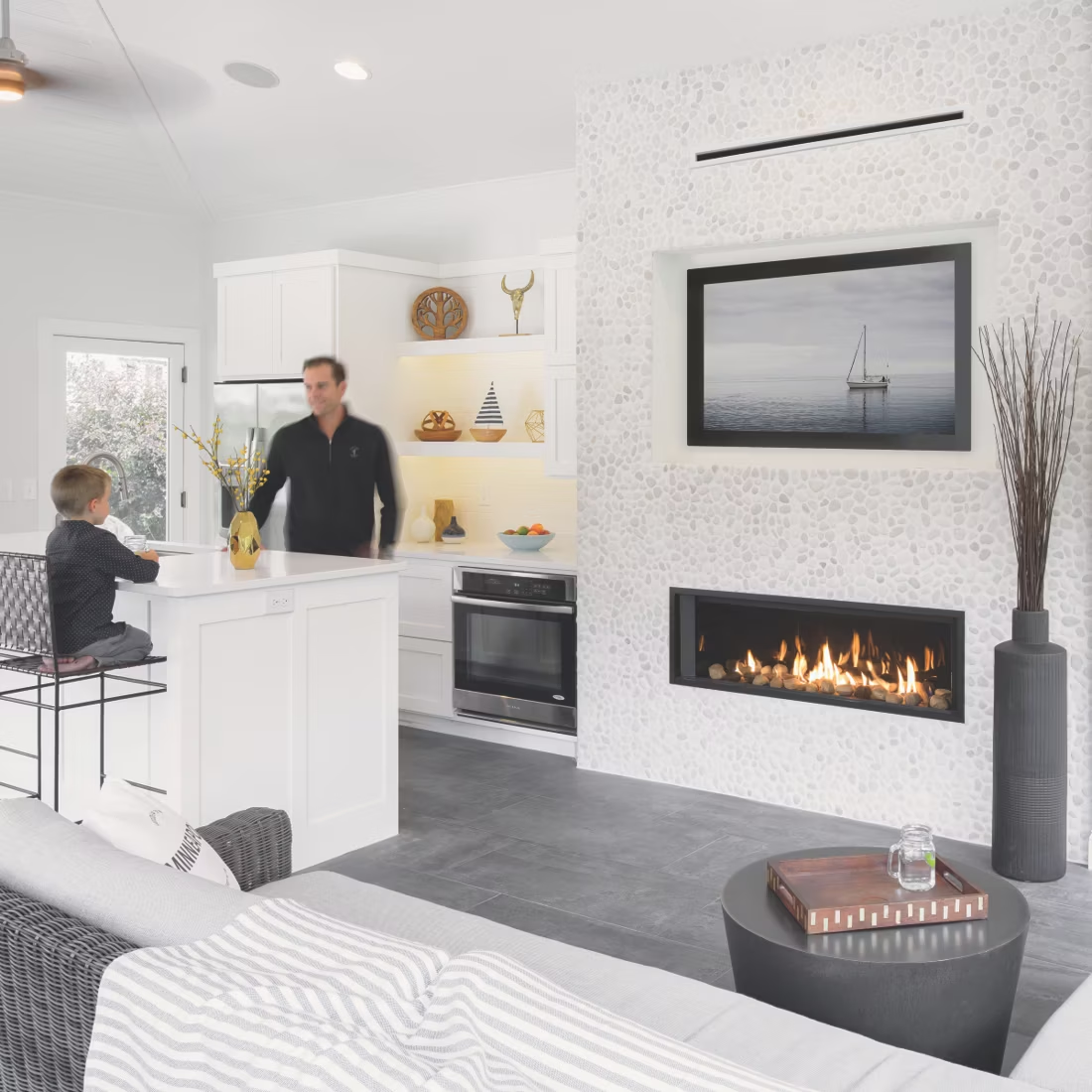
Yes—with an asterisk. Fireplaces are hot and TVs don't like heat. Either put a mantel between them to deflect rising warmth, or choose a fireplace with heat-management technology that creates a cool zone on the wall above—the wall stays around 125 degrees, barely warm, while the room still gets full heat. If you like clean lines and don't want a mantel, heat management is the answer.
How much should I budget for a fireplace?
For an average home—covering the fireplace, the vent pipe, and basic installation—a budget between $3,900 and $5,500 gives you a lot of options across wood, gas, and pellet. By the time you add finish work, gas line, and electrical, the average complete installation lands between $5,000 and $12,000 all-in. In a remodel or new build, a good rule is to put about 2.5% of the total project cost toward the fireplace.
Can I install a fireplace myself?
If you're putting a fire in your house on purpose, it's best to work with an expert. Unless you're genuinely experienced in framing, gas line, vent pipe, and the national code on clearances to combustibles, have a professional do it—and ideally the same company that sells you the fireplace, so warranty, service, and liability all live under one roof.
Stove and Fireplace Dealers in Northeastern Connecticut County
Find your gas fireplace in Northeastern Connecticut.
Tell us about your home and we'll put together a free Project Guide & Parts List—the right gas fireplace or insert for your space, the exact parts including the vent kit, and a trusted local dealer to install it.
Find Your Fireplace →