
Find your fireplace for Connecticut's Quiet Corner winters.
Wood, gas, pellet, and electric fireplace resources for every town in Connecticut's Quiet Corner—from Putnam to Union—built around a winter as long and cold as Burlington, Vermont's, 18°F average winter lows, and the oak, maple, birch, and ash that keep most of the region's stoves running.
Every Project Starts From One of These Five Situations
Cold winters, dense hardwood forests, and towns off the gas main.
Northeastern Connecticut—the Quiet Corner—is the most rural, most wooded part of the state, and one of the coldest. Winters here are long and demanding, roughly on par with Burlington, Vermont, with winter lows averaging 18°F, numbers that put towns like Woodstock and Union closer to Burlington in terms of how hard a house has to work from November through March. The oak, maple, birch, and ash forests that cover much of the region—Natchaug State Forest, Pachaug State Forest, and the private woodlots that ring most towns—have kept wood heat a practical, affordable choice for generations here. There's no air-quality non-attainment designation and no winter burn-curtailment program to track, a real difference from parts of the country where wood smoke triggers mandatory advisory days.
What you'll find on this hub: hearth retailers, chimney sweeps, gas techs, and fuel suppliers serving the towns that make up this region—Putnam, Killingly, Woodstock, Thompson, Pomfret, Brooklyn, Plainfield, Canterbury, Ashford, and the smaller towns out toward the Rhode Island and Massachusetts lines. One quirk worth knowing: Connecticut abolished county government back in 1960, so there's no single county building department here—permits for wood stoves, inserts, gas appliances, and pellet stoves are issued by each town's own office under the Connecticut State Building Code. Pick your fuel below for local dealers, installation costs, and recommended units specific to that fuel.
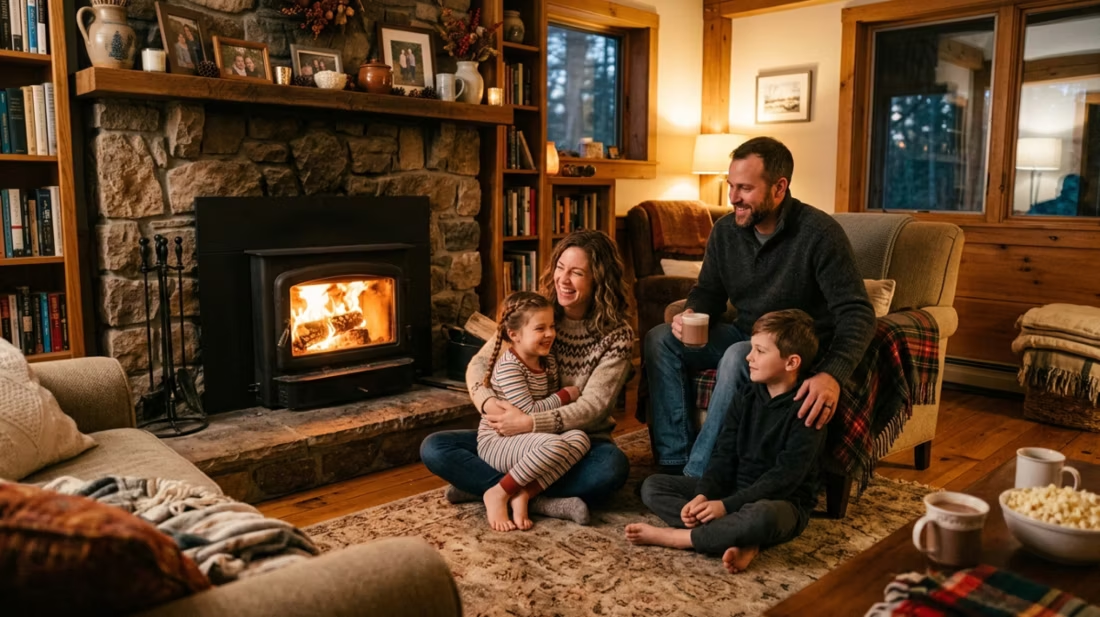
Four fuels. One honest answer for Northeastern Connecticut County.
Wood
81 models available near Northeastern Connecticut County.
Find your wood stove →Gas
365 models available near Northeastern Connecticut County.
Find your gas fireplace →Pellet
See what's available near Northeastern Connecticut County.
Find your pellet stove →Electric
11 models available near Northeastern Connecticut County.
Find your electric fireplace →Three steps. No salesperson until you're ready.
Tell us about your project
Your zip code, your situation, and the fuel you're leaning toward—or let the answers point you to one.
See what's actually available
The brands dealers within 100 miles genuinely carry—real options, never a catalog mirage.
Get your dealer & Project Guide
A trusted local dealer, plus the free Project Guide & Parts List that names every component of the job.
Frequently Asked Questions
Which fuel works best in Northeastern Connecticut?
It depends on the house and the wood lot. Wood remains the practical choice for a lot of homes here—oak, maple, birch, and ash from Natchaug State Forest, Pachaug State Forest, and private acreage burn hot and clean, and with a winter as long and cold as this one, a well-loaded stove can carry a farmhouse through a January cold snap even with the power out. Gas is the convenience option, though with a caveat: natural gas mains don't reach most of the Quiet Corner's smaller towns, so a 'gas fireplace' in Woodstock or Ashford usually means propane, tank and all, rather than a hookup to a utility line. Pellet is a strong middle ground—New England Wood Pellet, Lignetics, and Maine Woods Pellet Co. are all trucked in regionally, so supply doesn't run thin the way it can farther from a pellet mill. Electric fireplaces are supplemental almost everywhere in this region—fine for a spare bedroom or a listing photo, not something anyone relies on to get through a Quiet Corner winter.
Do I need a permit to install a fireplace in Northeastern Connecticut?
Yes, in nearly every case—but who you call is the interesting part. Connecticut did away with county government in 1960, so there's no single county building office to phone. Each town issues its own permits under the Connecticut State Building Code: Putnam's office handles Putnam, Killingly's handles Killingly, and so on through Woodstock, Thompson, Pomfret, and Brooklyn. Wood stoves, wood inserts, gas appliances, and pellet stoves all need a permit and inspection; gas installations also need a licensed gas fitter and a separate permit if propane tank or line work is involved. Electric units are usually permit-free unless they're hardwired built-ins. Most hearth retailers in the region are used to working with several different town offices and will pull the permit as part of installation.
Are there air quality restrictions on wood burning in Northeastern Connecticut?
Not in the way there are in inversion-prone basins out West. This region carries no EPA non-attainment designation, and there's no mandatory or voluntary burn-curtailment program like the advisory days you'd see in a place like the Klamath Basin. Connecticut DEEP asks that new wood stove installations meet current EPA emissions standards, and a handful of towns have local nuisance-smoke ordinances that apply if a chimney is genuinely bothering a close neighbor, but on Quiet Corner lots—often a half-acre or more—that rarely comes up in practice.
Can one local hearth retailer handle all four fuel types?
A few can. Quiet Corner Hearth & Home in Putnam and Windham Stove & Fireplace both carry wood, gas, pellet, and electric, which makes either a good stop if you're still deciding between fuels. Killingly Chimney & Stove leans heavily wood and pellet with a smaller electric selection. Several of the businesses trucking in oak and ash cordwood or stocking New England Wood Pellet and Lignetics bags are fuel suppliers rather than installing retailers, so they're listed separately in the suppliers section below. If you're cross-shopping fuels, the multi-fuel dealers are worth visiting first.
How does service work in rural areas of Northeastern Connecticut?
Most chimney sweeps and gas techs serving this region are based around Putnam or Danielson and drive out from there—the towns here are spread thin, and a service call to Union or Eastford can mean 25 to 30 minutes each way on two-lane roads. Book pre-season chimney sweeps in September or October before the rush; mid-winter emergency calls, especially after an ice storm knocks out power, back up fast. A small trip charge for the more outlying towns is normal. Given how many households here already keep wood as backup heat, most sweeps recommend having that backup stove or insert actually inspected and ready before the first cold snap, not after.
What's the typical cost range for fireplace installation across all fuel types in Northeastern Connecticut?
Wood stove or insert installation: roughly $4,800–$9,500 for a typical retrofit, more if a full masonry chimney liner is involved. Gas fireplace, insert, or stove: $5,000–$12,000, with propane tank or line work pushing toward the higher end since most of the region isn't on natural gas mains. Pellet stove or insert: $4,800–$8,000 installed. Electric fireplace: $250–$3,200 for the unit, plus $400–$1,300 in labor for anything beyond a simple plug-in, such as a built-in with new wiring. These are regional ranges—see the county-plus-fuel pages above for cost detail tied to specific local retailers.
Does a fireplace add value to my home?
On average, a fireplace adds back to the home about the same amount you spent installing it. Add the monthly savings from heating the rooms you actually use instead of the whole house—often hundreds of dollars a year—and the value case is strong before you even count what a fire does for how your family uses the room.
How much should I budget for a fireplace?
For an average home—covering the fireplace, the vent pipe, and basic installation—a budget between $3,900 and $5,500 gives you a lot of options across wood, gas, and pellet. By the time you add finish work, gas line, and electrical, the average complete installation lands between $5,000 and $12,000 all-in. In a remodel or new build, a good rule is to put about 2.5% of the total project cost toward the fireplace.
Wood, gas, pellet, or electric—how do I choose?
Match the fuel to your life, not the other way around. Wood: lowest fuel cost and total power-outage independence, but you're hauling and stacking. Gas: press a button, set a thermostat, no maintenance to speak of. Pellet: wood economics with automatic feeding, in exchange for weekly cleaning and a need for electricity. Electric: plugs in anywhere with honest supplemental heat. Nobody regrets the fuel that fits how they actually live.
What is an in-home preview and do I need one?
It's a visit where a hearth professional measures your space, confirms the model you picked actually works in your home, and walks the specs—framing, gas line, venting, finish work—before anything is ordered. Some details you just can't know until you see the house. Never make a down payment without one; it's the single most-skipped step that burns buyers.
Stove and Fireplace Dealers in Northeastern Connecticut County
Listings include WhyFire partner dealers, dealers we have verified as authorized for the brands we recommend, and established local businesses that carry hearth products. Every listing shows which one it is. The ones marked Preferred run on WhyFire's software, so they can show you real pricing and book your appointment right here. No manufacturer pays for placement. How we verify dealers →
Stove King
Frederickson Farm
Atlas Insulation Co.
Robbins Garden Center, Inc.
High Grade Gas Service
Quality Propane
Find your fireplace in Northeastern Connecticut.
Tell us your town and fuel, and we'll match you with a trusted local dealer and send a free Project Guide & Parts List—the exact parts, including the vent kit, and the dealer we recommend for your project.
Find Your Fireplace →