
Keep Your Family Warm and Safe—No Matter What
Most homes in this Darien village run on gas and electric heat, but a handful of homeowners still add a wood stove or insert for backup warmth or a real fire. We'll connect you with a local dealer who knows what's actually installable here.
Every Project Starts From One of These Five Situations
Noroton Heights runs on gas and electric—not cordwood.
Noroton Heights is a tightly built village within the town of Darien, sitting at just 154 feet in elevation a short walk from Long Island Sound. The Sound's moderating effect keeps winters here milder than inland Connecticut—average winter lows sit around 22°F, and the winter heating load the area logs is meaningfully lower than colder New England markets like Burlington VT or Duluth MN. Combine that with small lot sizes, tight setbacks between homes, and a housing stock built around central oil, gas, and electric systems, and it's easy to see why dedicated wood-burning heat never became the default here the way it did in more rural parts of Western Connecticut.
That said, wood isn't extinct in Noroton Heights—it's just a secondary choice. A number of the village's older homes have existing masonry fireplaces, and some owners install a wood insert for supplemental heat, ambiance, or as backup during storm-related outages. Connecticut's residential electric rates, among the highest in the continental U.S. at roughly 25 to 31 cents per kWh through United Illuminating and Eversource (formerly CL&P), give a few homeowners extra motivation to keep a wood option in reserve even in a gas-and-electric town. If that's you, we'll match you with a local dealer who can tell you honestly whether it makes sense for your specific house.
Three steps. No salesperson until you're ready.
Tell us about your project
Your zip code, your situation, and the fuel you're leaning toward—or let the answers point you to one.
See what's actually available
The brands dealers within 100 miles genuinely carry—real options, never a catalog mirage.
Get your dealer & Project Guide
A trusted local dealer, plus the free Project Guide & Parts List that names every component of the job.
Frequently Asked Questions
Is wood heat actually common in Noroton Heights?
No, and we won't pretend otherwise. Noroton Heights is a dense, built-out village within Darien with small lots and a housing stock centered on gas and electric heat. Most local hearth dealers in the wider Fairfield County market sell far more gas inserts and electric fireplaces here than wood stoves. Wood is still installed occasionally—usually in older homes with an existing masonry fireplace, or by owners who want backup heat independent of the electric grid—but it's a minority choice, not the local default.
I have an old masonry fireplace in my Noroton Heights home—can I still burn wood in it?
Often yes, with caveats. Many of the older homes in this part of Darien have original masonry fireboxes that were never built for high-efficiency burning. Before using one regularly, it needs a chimney inspection to check the flue liner and structural condition—a cracked liner in a house this old is common. A lot of owners choose to install a wood-burning insert into the existing masonry opening rather than burn open-hearth style, since it dramatically improves both safety and heat output. A local certified sweep or hearth dealer can tell you which route your fireplace needs.
Where would I even get firewood or a cutting permit near Noroton Heights?
There's no public forest land within Noroton Heights or the immediate Darien area, so there's no local cutting-permit office the way there would be near national forest land out west. Firewood here comes from commercial suppliers who deliver by the cord throughout lower Fairfield County, typically seasoned oak, maple, birch, or ash—the species most common in this part of Western Connecticut. Expect to pay more than you would in a rural market; cord prices in this part of the state commonly run higher due to land and delivery costs in a dense, high-cost coastal county.
Do I need a permit to install a wood stove in Noroton Heights?
Yes. Because Noroton Heights is part of Darien, any new wood-burning installation goes through the Town of Darien Building Department, and the unit itself needs to meet current EPA emissions standards. There's no local air-quality non-attainment issue here the way there is in some Western states, so permitting is mostly about structural clearances, hearth pad requirements, and chimney code compliance rather than emissions restrictions. A licensed local installer will typically pull the permit as part of the job.
What wood species should I expect to burn locally?
Oak, maple, birch, and ash are the standard species sold and seasoned in this part of Western Connecticut. Oak and maple are dense hardwoods that burn long and hot once properly seasoned—plan on at least six months to a year of drying time before burning. Birch lights easily and is a good shoulder-season wood but burns faster than oak. Ash is prized locally in part because it can be burned somewhat greener than most hardwoods without the same creosote risk, which matters if you're buying wood that hasn't had a full season to dry.
How much does a wood stove installation actually cost here?
Because so few homes in Noroton Heights install dedicated wood-burning systems, there's no large local sample to quote from, but regional Fairfield County hearth dealers typically price a wood stove or insert installation somewhere in the $5,000 to $10,000 range—on the higher end of national averages, reflecting this area's labor and cost-of-living premium. An insert into an existing masonry fireplace with a usable flue tends to land toward the lower end; a full new chimney and hearth build for a home without one pushes toward the top.
Will a wood stove affect my homeowners insurance in a town like Noroton Heights?
It can. Many insurers serving Fairfield County ask about wood-burning appliances during underwriting and may require proof of a code-compliant installation, a recent chimney inspection, or a certificate of occupancy for the unit before binding or renewing a policy. Because wood stoves are uncommon here, some agents may not have handled the question before—it's worth asking your carrier directly and keeping your installer's permit paperwork and inspection records on file.
Should I get a wood stove or just stick with gas or electric heat?
For most homes in Noroton Heights, gas or electric is the practical choice—it matches the existing housing stock, requires no wood storage on a small lot, and is what local dealers are set up to service quickly. Wood makes the most sense as a secondary system: backup heat during a power outage, or a real fire in a home that already has a working masonry fireplace. Given Connecticut's electric rates are among the highest in the country, some owners like having a wood option in reserve, but very few here rely on it as their primary heat source.
Where can I find a dealer who actually understands wood heat in a market like this?
That's the exact gap we're built for. Because wood is a niche request here, not every hearth retailer in lower Fairfield County stocks it or wants the smaller job. We match you with a trusted local dealer who genuinely installs wood stoves and inserts in this market, sizes the system to your specific masonry or home layout, and pulls the Darien building permit correctly—rather than steering you toward the gas unit that's easier for them to sell.
What's the difference between an insert and a zero-clearance fireplace?
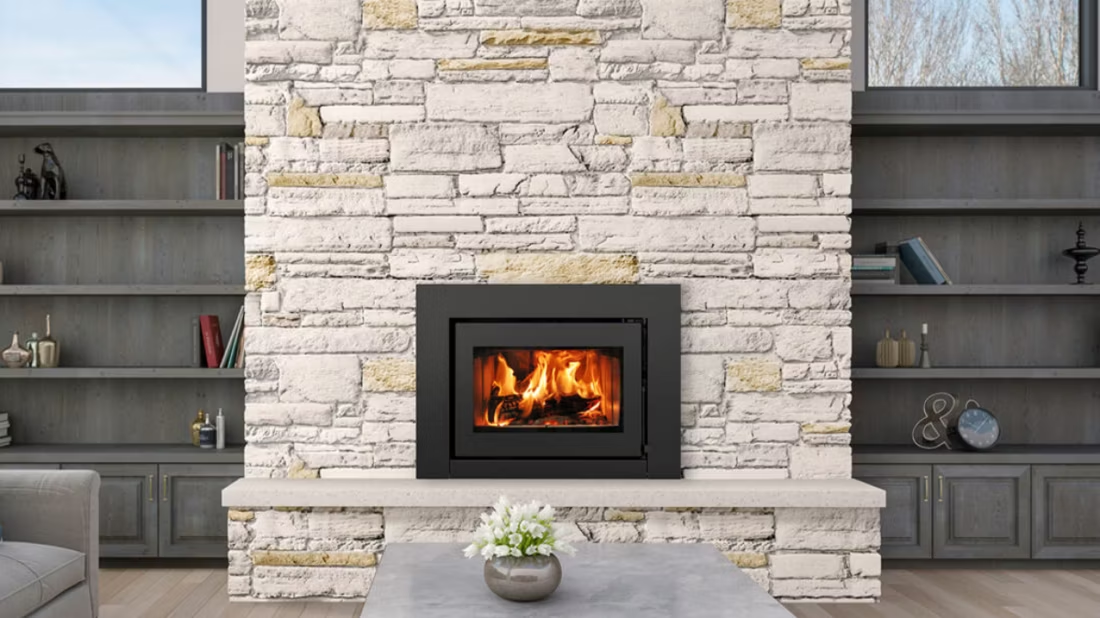
An insert is a fireplace that slides into a pre-existing wood-burning fireplace—if you don't have one, there's nothing to insert it into. A zero-clearance fireplace is built into a framed wall, which makes it the answer for remodels and new construction. Simple test: existing masonry fireplace means insert; blank or framed wall means zero-clearance.
Why is a fireplace insert so efficient?
An insert does two things: it seals the chimney completely, so you stop losing air you already paid to heat, and it radiates warmth into the room through the firebox and glass. Most add a heat-exchange fan that pulls cool room air underneath, wraps it around the hot firebox, and pushes it back out warm. Your home is more efficient before you've even lit the first fire.
Can I install a fireplace myself?
If you're putting a fire in your house on purpose, it's best to work with an expert. Unless you're genuinely experienced in framing, gas line, vent pipe, and the national code on clearances to combustibles, have a professional do it—and ideally the same company that sells you the fireplace, so warranty, service, and liability all live under one roof.
Does a fireplace add value to my home?
On average, a fireplace adds back to the home about the same amount you spent installing it. Add the monthly savings from heating the rooms you actually use instead of the whole house—often hundreds of dollars a year—and the value case is strong before you even count what a fire does for how your family uses the room.
Nearby Dealers
Hearth shops serving Noroton Heights and the surrounding area. Every listing shows whether it is a WhyFire partner, a dealer we have verified as authorized for the brands we recommend, or a local business carrying hearth products. No manufacturer pays for placement. How we verify dealers →
Hocon Gas Of Norwalk
Nordic Stove And Fireplace Center
Fireplace And Outdoor Living
Hearth Products, LLC
The Valley Fireplace
Westfair Pool & Spa Inc
Westchester Fireplace
Aida Design Build
Village Fireplace
Northshore Fireplace
All Shore Appliance
Best In Backyards
Leahy’s Metered Gas Service
County Woodstoves Inc
Long Island Fireplace
Costello's Hearth & Spa - Smithtown
Fire Glow Distributors, Inc.
Sleepy Hollow Stove & Fireplace
Hearth Healers
Find your wood setup in Noroton Heights.
Tell us about your home and we'll put together a free Project Guide & Parts List for your wood stove or insert project—including the vent kit—and match you with a local dealer who actually handles wood heat in this market.
Find Your Fireplace →