
Real heat, zero venting required.
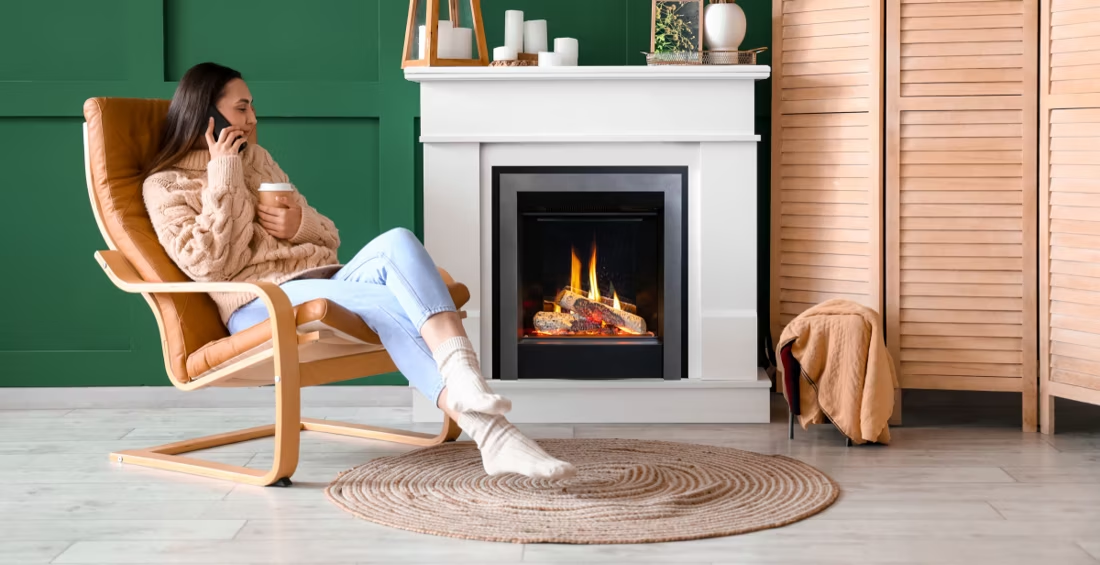
For New Britain's triple-deckers, condos, and older multi-family homes, an electric fireplace adds real warmth and ambiance without a chimney, a gas line, or a permit fight. Find the right unit and connect with a trusted local dealer.
Every Project Starts From One of These Five Situations
No chimney, no gas line, just plug in.
New Britain earned the nickname the Hardware City on the strength of Stanley Works and a century of manufacturing, and that history shows up in the housing stock: dense blocks of triple-deckers, older two- and three-family homes, and condo conversions where masonry chimneys and gas lines simply aren't an option in every unit. With a long heating season and average winter lows around 20°F, the season is long enough that a supplemental heat source in the main living space is worth having—it's just not the brutal, sub-zero cold you'd get further north in a place like Burlington, VT.
That's exactly where electric fireplaces earn their place in New Britain. A plug-in insert or a built-in wall unit can go into a condo, an apartment, or a finished basement with zero structural work—no flue, no combustion air, no annual chimney inspection. The tradeoff worth understanding up front is the electric bill: Connecticut Light & Power (Eversource) and Farmington River Power Company customers here pay around 25.3 cents per kWh, among the higher residential rates in the country, which is why most homeowners use electric fireplaces for zone heating and ambiance rather than as a whole-house heating strategy.
Three steps. No salesperson until you're ready.
Tell us about your project
Your zip code, your situation, and the fuel you're leaning toward—or let the answers point you to one.
See what's actually available
The brands dealers within 100 miles genuinely carry—real options, never a catalog mirage.
Get your dealer & Project Guide
A trusted local dealer, plus the free Project Guide & Parts List that names every component of the job.
Frequently Asked Questions
How much does an electric fireplace installation cost in New Britain?
A freestanding or insert-style plug-in electric fireplace typically runs $150 to $600 for the unit itself, with no installation cost beyond finding an outlet—most homeowners handle this themselves. A built-in wall unit or a full mantel-and-surround package is a different project: expect $800 to $2,500 once you factor in a dedicated 20-amp circuit, an electrician's time, and any framing or trim work. New Britain's older housing stock—plenty of knob-and-tube or undersized panels in pre-war triple-deckers—sometimes adds a step if the electrician needs to confirm the panel can support a new circuit before running it.
Will an electric fireplace actually lower my heating bill in New Britain?
It depends on how you use it. At Connecticut's residential rate of roughly $0.2531 per kWh, a typical 1,500-watt electric fireplace costs about $0.38 an hour to run at full heat. Used for a few hours in the evening in the room you actually occupy—while you turn down the thermostat elsewhere—it can trim your overall heating cost. Run continuously as a whole-house substitute for central heat, it won't compete with gas or oil on a cost-per-BTU basis; Connecticut's electric rates are among the highest in the country, so electric fireplaces here work best as targeted, room-by-room heat rather than a primary heating strategy.
Do I need a permit for an electric fireplace in New Britain?
Most plug-in units need nothing at all—they draw from a standard outlet like any other appliance. If you're installing a built-in wall unit or a unit that requires a new dedicated circuit, that electrical work typically needs a permit pulled by a licensed electrician through New Britain's Building Department. There's no gas line, venting, or combustion-air inspection to worry about, which is a big part of why electric installs move faster than gas or wood projects in this city.
What's the difference between a plug-in electric fireplace and a built-in insert?
A plug-in unit is fully self-contained—it sits on the floor or slides into an existing mantel opening and runs off a standard household outlet. A built-in insert or wall-mounted unit is recessed into the wall or cabinetry for a cleaner, more permanent look, and usually needs a dedicated circuit run by an electrician. For renters and condo owners in New Britain who can't modify walls, a plug-in insert into an existing fireplace opening is often the practical choice. For homeowners doing a remodel, a built-in wall unit gives a more finished result.
Can I put an electric fireplace in my triple-decker or condo unit?
Yes, and it's one of the more common electric fireplace projects in New Britain given how much of the city's housing is multi-family. Since electric units don't need a chimney, flue, or gas line, they work in upper-floor apartments and condo units where wood or gas simply aren't feasible. The one thing worth checking first, especially in older triple-deckers, is your unit's electrical panel and circuit capacity if you're going with a built-in model—a local electrician or hearth dealer can confirm this in a few minutes during a home visit.
How much does it cost to run an electric fireplace per month?
At New Britain's roughly 25.3-cent kWh rate, a 1,500-watt unit run 4 hours a night comes out to about $45 to $50 a month; run 8 hours a night, more like $90 to $100. Most homeowners here use theirs for a few hours in the evening in a living room or bedroom rather than all day, which keeps the monthly cost closer to the lower end. Unlike a gas insert or wood stove, there's no fuel to buy or store—it's purely a function of hours run and wattage.
Electric vs. gas—which is right for my New Britain home?
Gas fireplaces put out more heat per hour and, with natural gas service common through much of New Britain, cost less to run than electric at Connecticut's current rates—but they require venting, a gas line, and a permit through the city. Electric fireplaces install almost anywhere with no combustion byproducts and no venting, making them the practical choice for condos, apartment units, and rooms where running a gas line isn't realistic. Many New Britain homeowners with central gas heat add an electric unit in a secondary bedroom or finished basement specifically because it's the only option that doesn't involve construction.
What kind of electric fireplace works best for New Britain's winters?
For genuine supplemental warmth on the colder nights near New Britain's 20°F average winter low, look for a unit with a real 1,500-watt heater rating (some decorative units are flame-effect only, with no meaningful heat output—check the spec sheet). Wall-mounted linear units and mantel-style inserts from brands like Dimplex and Amantii are common choices for main living areas; smaller freestanding stove-style units work well for a bedroom or den. A local dealer can match wattage and footprint to the actual room you're heating rather than the whole house.
Where can I find a local dealer to install an electric fireplace near New Britain?
Look for a hearth or fireplace dealer that handles built-in electric installations, not just a big-box appliance retailer—proper circuit sizing and clean trim-out around a recessed unit is a different skill set than plugging in a space heater. A dealer who works regularly in New Britain's older multi-family housing will also know what to check on the electrical panel before recommending a built-in versus a plug-in unit. Find My Fireplace can match you with one of these trusted local dealers directly.
Do electric fireplaces actually produce heat?
Yes—most put out around 4,800–5,000 BTUs from a standard outlet, which comfortably warms a bedroom, office, or den as a comfort-zone heater. What they won't do is carry a whole house the way wood, gas, or pellet can. Think of electric as ambiance-first with honest supplemental heat: flames on with no heat in July, flames plus warmth in January.
Can I put a TV above my fireplace?
Yes—with an asterisk. Fireplaces are hot and TVs don't like heat. Either put a mantel between them to deflect rising warmth, or choose a fireplace with heat-management technology that creates a cool zone on the wall above—the wall stays around 125 degrees, barely warm, while the room still gets full heat. If you like clean lines and don't want a mantel, heat management is the answer.
How much should I budget for a fireplace?
For an average home—covering the fireplace, the vent pipe, and basic installation—a budget between $3,900 and $5,500 gives you a lot of options across wood, gas, and pellet. By the time you add finish work, gas line, and electrical, the average complete installation lands between $5,000 and $12,000 all-in. In a remodel or new build, a good rule is to put about 2.5% of the total project cost toward the fireplace.
Can I install a fireplace myself?
If you're putting a fire in your house on purpose, it's best to work with an expert. Unless you're genuinely experienced in framing, gas line, vent pipe, and the national code on clearances to combustibles, have a professional do it—and ideally the same company that sells you the fireplace, so warranty, service, and liability all live under one roof.
Nearby Dealers
Hearth shops serving New Britain and the surrounding area.
Fireplace Service Pros
Superior Hearth, Spas & Leisure
Electric Service in New Britain
An electric fireplace's heater draws about 1,500 watts—pennies per hour at local rates.
Connecticut Light & Power Co
Farmington River Power Company
Find your electric fireplace in New Britain.
Tell us a bit about your home and we'll put together a free Project Guide & Parts List for your electric fireplace project in New Britain—the right unit, the exact parts, and a trusted local dealer to install it.
Find Your Fireplace →