
Find the right fireplace for a Connecticut winter.
Wood, gas, pellet, and electric fireplace resources for every city and town in the Capitol Region—from Hartford's dense neighborhoods to the farmhouses of Suffield and Somers. Find the right unit and connect with a trusted local hearth retailer.
Every Project Starts From One of These Five Situations
Old housing stock, real winters, and a region built on oak and maple.
The Capitol Region sits in the Connecticut River Valley, home to over 1.1 million people across Hartford and its surrounding towns. Winters here aren't extreme by Duluth or Fargo standards, but with average winter lows near 20°F, the heating season runs a solid five to six months. What makes the region distinctive is its housing stock: a huge share of homes were built before 1960, many with existing masonry chimneys from coal or oil-era heating that are strong candidates for a wood or gas insert rather than a full new chase. Oak, maple, birch, and ash are the region's dominant firewood species—hardwoods that burn long and hot, which matters when a New England cold front settles in for a week.
What you'll find on this hub: hearth retailers, service technicians, and fuel suppliers serving every community in the region—from Hartford and West Hartford out through Manchester, Bristol, Enfield, Windsor, and the smaller towns along the river. Pick your fuel below to drill into specifics—local dealers, installation costs, recommended units, and the resources that match your project. Whether you're retrofitting a 1920s colonial in West Hartford or heating a newer build in Glastonbury, this is the starting point.
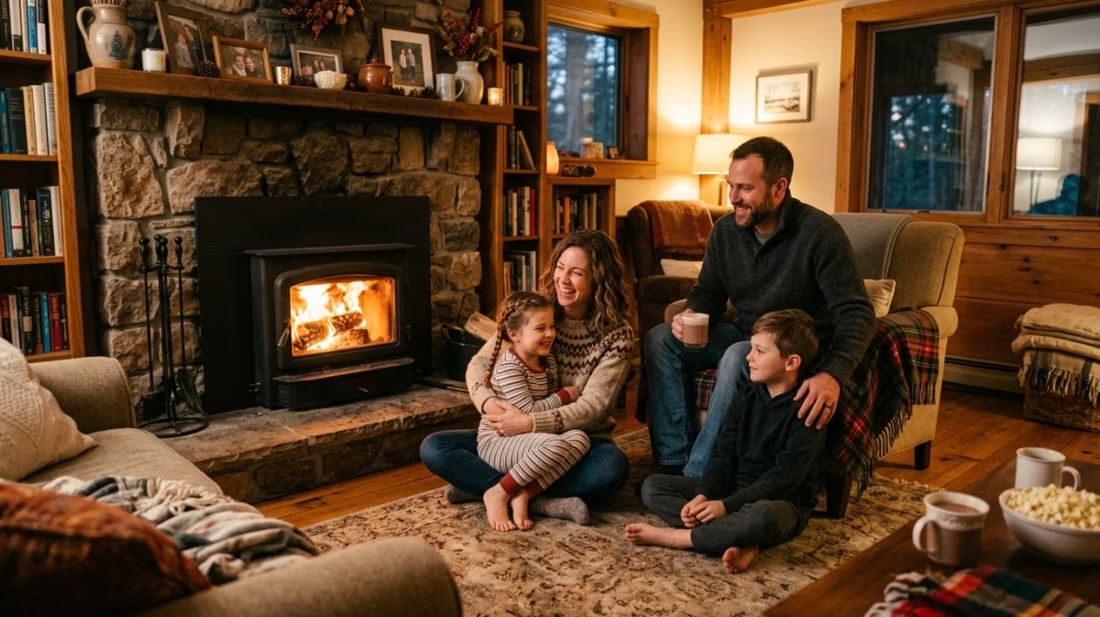
Four fuels. One honest answer for Capitol County.
Three steps. No salesperson until you're ready.
Tell us about your project
Your zip code, your situation, and the fuel you're leaning toward—or let the answers point you to one.
See what's actually available
The brands dealers within 100 miles genuinely carry—real options, never a catalog mirage.
Get your dealer & Project Guide
A trusted local dealer, plus the free Project Guide & Parts List that names every component of the job.
Frequently Asked Questions
Which fuel works best for homes in the Capitol Region?
It depends on the house and the goal. Wood works well here because so many homes have existing masonry chimneys and the local hardwood supply—oak, maple, birch, ash—burns long and clean. A wood insert into an old fireplace is often the most cost-effective upgrade for a 1920s-1950s colonial. Gas is the convenience pick, especially in towns with natural gas service from Eversource or CNG (Connecticut Natural Gas)—no wood handling, instant on, works during a power blip if it's a standing-pilot unit. Pellet is a strong middle option—steady heat without splitting and stacking wood, and regional pellet brands like New England Wood Pellet and Lignetics keep supply local rather than shipped cross-country. Electric is mostly supplemental here—good for a bedroom, a finished basement, or a rental where venting isn't an option, but it isn't sized to be a home's primary heat source through a Connecticut winter.
Do I need a permit to install a fireplace in the Capitol Region?
Yes, in nearly every town. Building permits are required for new wood stoves, wood inserts, gas fireplaces, gas inserts, gas stoves, and pellet stoves—but permitting is handled town by town rather than through one regional office, since Hartford, West Hartford, Manchester, and the rest each run their own building department. Gas installations also require a separate gas permit and licensed gas-fitter for the line and connection work. Electric fireplaces generally don't need a permit unless it's a built-in unit requiring a new electrical circuit. Because so much of the housing stock predates modern building codes, inspectors here pay particular attention to chimney liner condition and clearances on older masonry chimneys. Most local hearth retailers handle the permit application as part of the installation, so it's rarely something homeowners have to navigate solo.
Are there wood-burning restrictions in the Capitol Region?
No formal air quality curtailment program exists here the way it does in parts of the Pacific Northwest—the Connecticut River Valley doesn't experience the same winter inversion trapping that causes basin regions to issue burn advisories. That said, any new wood stove or insert installed in the region still needs to meet current EPA emissions standards, and older uncertified stoves are increasingly being swapped out during resales or renovations. If you're buying an older home with an existing wood stove, it's worth having a technician confirm the unit's certification status before you rely on it as a primary heat source.
Can one local hearth retailer handle all four fuel types?
Many of the larger Capitol Region retailers carry three or four fuel types, since the metro area is big enough to support full-line dealers. Shops based in Hartford, West Hartford, or along the Berlin Turnpike corridor tend to stock working displays of wood, gas, and pellet units, with electric as a smaller add-on category. Smaller shops in outlying towns like Suffield or Somers may specialize more narrowly—often wood and pellet, given the rural firewood supply in those areas. If you're not sure which fuel fits your home, a multi-fuel dealer can walk you through the trade-offs for your specific chimney and floor plan rather than pushing one category.
How does fireplace service work across a metro area this spread out?
Because the Capitol Region is dense and compact compared to a rural county, most technicians based in Hartford or the surrounding towns can reach any town in the region within an hour, and many charge a flat service rate with no long-distance travel fee—unlike more rural New England counties where a sweep might tack on mileage. Pre-season chimney sweeps and gas inspections book up fast in September and October, so scheduling early is worth it if you're relying on a wood or gas unit as a primary heat source through the winter. Given the age of housing stock here, an annual inspection is especially worthwhile for anyone with an older masonry chimney that predates current liner standards.
What's the typical cost range for fireplace installation across all fuel types in the Capitol Region?
Costs vary by fuel and by how much of the existing chimney or gas line can be reused. Wood stove or insert installation: roughly $4,000–$8,500 for a typical retrofit into an existing masonry chimney, higher if a liner replacement is needed. Gas fireplace, insert, or stove: roughly $4,000–$10,000, with the lower end applying to homes that already have gas service nearby. Pellet stove or insert: roughly $4,200–$7,000 for most installs. Electric fireplace: $200–$3,000 for the unit itself, plus $400–$1,200 in labor for anything beyond a plug-in install. For the specifics tied to your fuel and town, see the county + fuel pages above.
Can I install a fireplace myself?
If you're putting a fire in your house on purpose, it's best to work with an expert. Unless you're genuinely experienced in framing, gas line, vent pipe, and the national code on clearances to combustibles, have a professional do it—and ideally the same company that sells you the fireplace, so warranty, service, and liability all live under one roof.
Does a fireplace add value to my home?
On average, a fireplace adds back to the home about the same amount you spent installing it. Add the monthly savings from heating the rooms you actually use instead of the whole house—often hundreds of dollars a year—and the value case is strong before you even count what a fire does for how your family uses the room.
How much should I budget for a fireplace?
For an average home—covering the fireplace, the vent pipe, and basic installation—a budget between $3,900 and $5,500 gives you a lot of options across wood, gas, and pellet. By the time you add finish work, gas line, and electrical, the average complete installation lands between $5,000 and $12,000 all-in. In a remodel or new build, a good rule is to put about 2.5% of the total project cost toward the fireplace.
What are the biggest mistakes people make buying a fireplace?
Five come up constantly: budgeting for the unit but not the full job (vent, gas line, electrical, finish work); drowning in options instead of starting from style and fuel; buying without an in-home preview; handing installation to a handyman instead of a pro; and giving up out of sheer indecision. Every one is avoidable with a clear plan—step one, step two, step three.
Stove and Fireplace Dealers in Capitol County
Listings include WhyFire partner dealers, dealers we have verified as authorized for the brands we recommend, and established local businesses that carry hearth products. Every listing shows which one it is. The ones marked Preferred run on WhyFire's software, so they can show you real pricing and book your appointment right here. No manufacturer pays for placement. How we verify dealers →
Northeast Wood Stove
Hocon Gas
Phelps & Sons Inc.
Spotless Chimney Sweeping & Solutions
Superior Hearth, Spas & Leisure
Fireside Supply
High Grade Gas Service
Dean's Stove Shop
Hocon Gas Of Torrington
Squier Lumber & Hardware
Fire House Stoves & Spas
Find your fireplace in the Capitol Region.
Pick your fuel below, and we'll match you with a trusted local dealer and send over a free Project Guide & Parts List—the exact parts, including the vent kit, and the dealer we recommend for your project.
Find Your Fireplace →