
Reliable heat for Timnath's fastest-growing neighborhoods.
With winter lows averaging 15°F and a long, cold heating season each year, Timnath homes need dependable heat. Find the right gas fireplace or insert and connect with a trusted local dealer.
Every Project Starts From One of These Five Situations
Built for new construction, not open burning.
Timnath sits at nearly 4,900 feet on the high plains east of Fort Collins, in a 5B climate zone where winter lows average 15°F and the town endures a long, cold heating season that stretches from early fall well into spring. Unlike older mountain towns built around woodstoves, Timnath has grown almost entirely in the last two decades—subdivisions like Timnath Lakes and the neighborhoods around Harmony Road are new construction, most already stubbed for gas during the build.
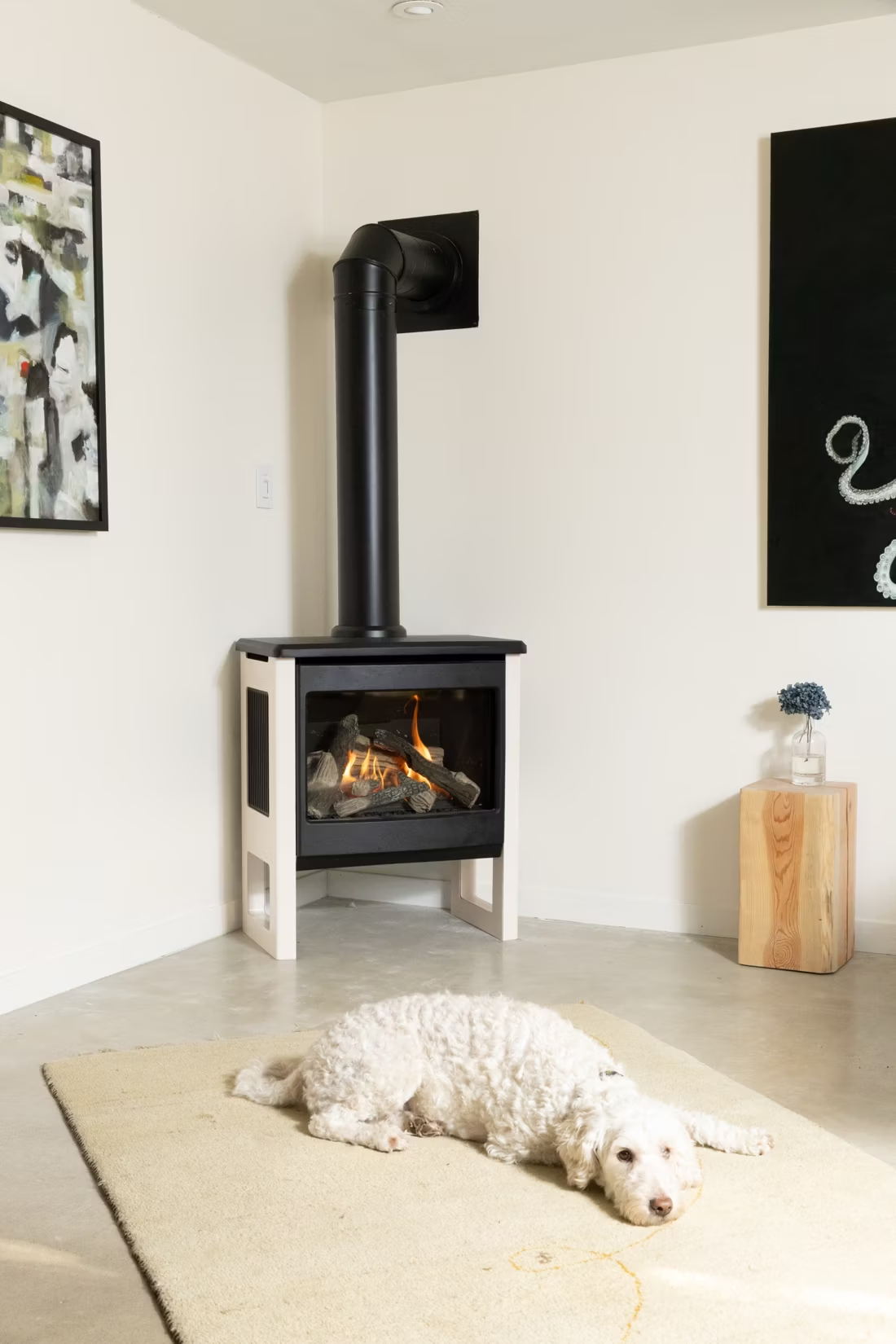
Wildfire smoke is a recognized air quality concern along the Front Range, and many of Timnath's newer HOA communities either restrict open wood burning or simply never built masonry chimneys to begin with—which is why wood and pellet appliances see little demand here. Gas fills that gap well: most in-town parcels fall under Public Service Company of Colorado (Xcel Energy) for natural gas service, while a smaller number of outlying county properties served electrically by Poudre Valley REA rely on propane instead. Either way, a direct-vent gas fireplace delivers instant, consistent heat with none of the smoke concerns tied to open burning on the plains.
Three steps. No salesperson until you're ready.
Tell us about your project
Your zip code, your situation, and the fuel you're leaning toward—or let the answers point you to one.
See what's actually available
The brands dealers within 100 miles genuinely carry—real options, never a catalog mirage.
Get your dealer & Project Guide
A trusted local dealer, plus the free Project Guide & Parts List that names every component of the job.
Frequently Asked Questions
How much does a gas fireplace installation cost in Timnath?
In Timnath, a gas fireplace or insert installation typically runs $4,000 to $10,000. Because so much of the town is recent construction, many homes already have a gas line stubbed to the fireplace location from the builder, which keeps costs toward the lower end—you're mainly paying for the unit, venting, and finish work. Older homes near the Fort Collins side of town (80524) that need a new gas line run from the meter, or a masonry fireplace converted with a liner, tend to land in the middle to upper part of that range. A local installer can give you a firm number after seeing your gas line layout.
My home is new construction—does that make installation easier?
Usually, yes. Most homes built in Timnath over the last several years already have a gas stub-out installed during framing, since builders anticipated a fireplace going into that spot. If that's the case, your installer is mainly hooking up the unit, running venting through the wall or roof, and finishing the surround—often a one-day job. If your builder skipped the stub-out or you're adding a fireplace to a room that wasn't originally plumbed for gas, expect additional cost for a licensed gas-fitter to extend the line from the meter.
Do I need natural gas, or should I plan for propane?
Most of Timnath falls within Public Service Company of Colorado's (Xcel Energy) natural gas service territory, so if your home already has gas appliances—a furnace, range, or water heater—adding a fireplace is straightforward. Properties out toward the edges of Larimer County that are served electrically by Poudre Valley REA are sometimes outside the natural gas footprint, since that co-op provides electric service only. In those cases, propane with a tank installed by a local supplier is the standard alternative, and most gas fireplace models can be configured for either fuel.
Will my gas fireplace still work if the power goes out?
Most direct-vent gas fireplaces will, with the right ignition system. Units with IPI (intermittent pilot ignition) run on a battery backup that kicks in automatically when the power drops, so the fireplace still lights on demand. Valor units take a slightly different approach—their pilot generates its own electricity through the thermocouple, so there's no battery to remember at all. That matters along the Front Range, where high-wind events and winter storms occasionally knock out power for hours at a time. Ask your local dealer about the ignition system on any model you're considering.
Should I get a built-in gas fireplace or a gas insert?
Because Timnath is largely new construction, most homeowners here are choosing a built-in direct-vent gas fireplace rather than converting an existing masonry fireplace—there simply aren't many older wood-burning fireplaces in town to convert. A built-in unit gets framed into a wall during a remodel or new build and vents directly through an exterior wall or the roof. If you happen to have an existing masonry fireplace (more common on the Fort Collins side of town), a gas insert is worth considering, since it uses that chimney and converts an inefficient open hearth into a sealed, high-output unit.
Do I need a permit to install a gas fireplace in Timnath?
Yes. Inside town limits, the Town of Timnath Building Division requires a building permit and a separate gas permit for new fireplace installations; properties outside town limits fall under the Larimer County Building Department instead. The gas line work has to be done by a licensed gas-fitter regardless of jurisdiction. Most hearth retailers handle the permitting as part of the installation, coordinating the gas hookup, venting, and inspection so you're not managing multiple trades yourself.
What's the difference between vented and vent-free gas fireplaces?
Vented (direct-vent) gas fireplaces draw combustion air from outside and exhaust it back outside through sealed venting—they're the standard choice and code-compliant everywhere in Colorado. Vent-free units burn fuel directly into the room without external venting; they're legal here but come with strict room-sizing and ventilation rules. Given the wildfire smoke concerns already common along the Front Range in summer, most Timnath homeowners lean toward direct-vent units, which don't add any combustion byproducts to indoor air. Ask a local retailer to walk you through both if you're weighing the tradeoff.
How often does a gas fireplace need to be serviced?
Plan on an annual inspection, ideally before the heating season ramps up in the fall. A certified technician checks the burner, pilot assembly, venting, and gas connections, and cleans the glass and interior. This is a much lighter lift than chimney sweeping for a wood-burning unit but just as important for safe operation. Local gas appliance service providers typically charge $150 to $250 for this visit.
Gas vs. electric fireplace—which makes more sense for a Timnath home?
Gas fireplaces deliver real, sustained heat output—enough to serve as supplemental heat on the coldest nights when the furnace is working overtime—and most run off the same Xcel Energy natural gas service already feeding your furnace and water heater. Electric fireplaces plug into a standard outlet, install in under an hour with no venting or gas line at all, and work well for ambiance in a bedroom, basement, or a rental property where permanent venting isn't practical. Running one full-time isn't cheap, though—at Xcel Energy's residential rate of roughly $0.15/kWh (or about $0.12/kWh if you're on Poudre Valley REA), electric heat costs more per BTU than gas over a full winter. For daily heating value, gas usually wins in Timnath; for flexibility and low upfront cost, electric holds its own.
Can I put a TV above my fireplace?
Yes—with an asterisk. Fireplaces are hot and TVs don't like heat. Either put a mantel between them to deflect rising warmth, or choose a fireplace with heat-management technology that creates a cool zone on the wall above—the wall stays around 125 degrees, barely warm, while the room still gets full heat. If you like clean lines and don't want a mantel, heat management is the answer.
Why is my open fireplace making my house colder?
Open fireplaces suck—literally. As the fire burns, it consumes air your furnace already paid to heat and pulls it out through the chimney, so the house is actually colder after the fire goes out than before you lit it. An insert fixes this: it seals the chimney, puts fixed glass across the front, and turns that hole in your house into a real heat source.
Does a fireplace add value to my home?
On average, a fireplace adds back to the home about the same amount you spent installing it. Add the monthly savings from heating the rooms you actually use instead of the whole house—often hundreds of dollars a year—and the value case is strong before you even count what a fire does for how your family uses the room.
Can a fireplace actually lower my heating bill?
Yes—by creating a comfort zone. A furnace heats every square foot of the house just to warm the one room you're in; a gas fireplace on low burns roughly a sixth of the gas a typical furnace does. Set the furnace around 55–60 degrees as a baseline, then heat the rooms your family actually uses. Families who heat this way commonly save $20–$60 a month.
Nearby Dealers
Hearth shops serving Timnath and the surrounding area. Every listing shows whether it is a WhyFire partner, a dealer we have verified as authorized for the brands we recommend, or a local business carrying hearth products. No manufacturer pays for placement. How we verify dealers →
Masun Energy Systems
Western Fireplace Supply
Cedar Supply Lumber
Quality Energy Installation
The Stove Shop
Advanced Comfort
Poulsen Ace Hardware
Advantage Mechanical
Find your gas fireplace in Timnath.
Tell us a bit about your home and we'll match you with a trusted local dealer and send over your free Project Guide & Parts List—a plan for your gas fireplace project in Timnath, including the exact parts, vent kit, and recommended installer.
Find Your Fireplace →