
Keep Your Family Warm and Safe—No Matter What
Most homes here were built with gas and electric already roughed in. If you still want a wood stove, here's what's realistic—and how to get it done right.
Every Project Starts From One of These Five Situations
Sterling Ranch was built without wood heat in mind.
Sterling Ranch is one of the youngest communities in Douglas County—a master-planned development built almost entirely after 2015 in the foothills southwest of Denver, at roughly 5,710 feet elevation with winter lows averaging around 17°F and a heating season about as demanding as they come. That's a real cold-climate heating load, comparable to what you'd see in Bozeman, Montana, but the homes here were built new, on slab foundations, with gas and electric infrastructure already run during construction. There's no legacy of masonry fireplaces or chimneys to retrofit around, which is the biggest reason wood heat never took hold the way it has in older mountain towns.
There's also a wildfire dimension. Sterling Ranch sits in a wildland-urban-interface zone where defensible-space rules and fire-mitigation plans shape a lot of the HOA's design guidelines, and the Front Range already contends with wildfire smoke as a recurring seasonal air-quality problem—not the kind of place local planners want to add routine wood-smoke emissions to. A small number of residents with acreage or a cabin elsewhere in Douglas County still cut and burn ponderosa pine, aspen, pinyon, and juniper under permits from the Arapaho-Roosevelt National Forests, but inside the subdivision itself, gas and electric are the default, and that's unlikely to change.
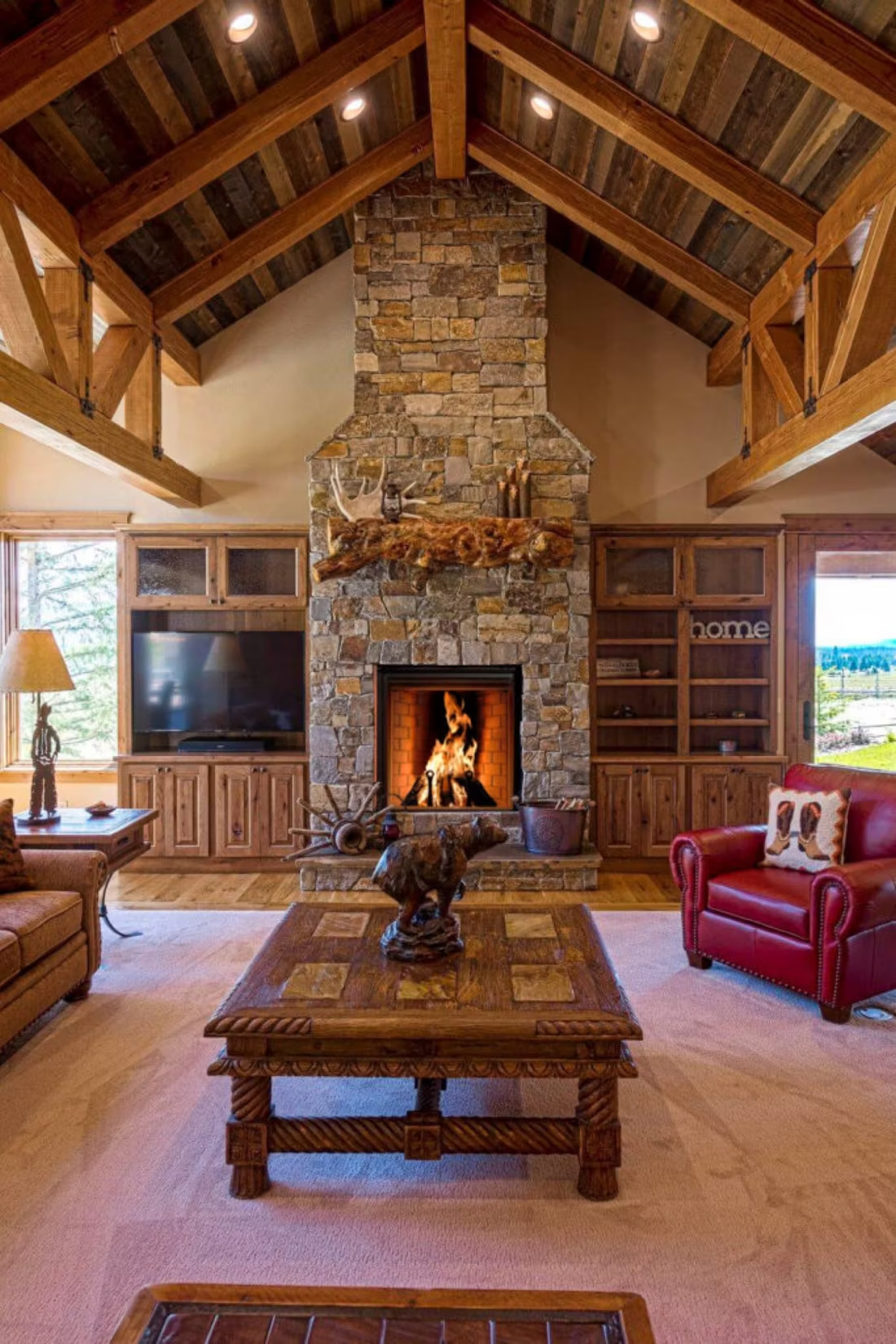
Firewood Cutting Permits Near Sterling Ranch
Three steps. No salesperson until you're ready.
Tell us about your project
Your zip code, your situation, and the fuel you're leaning toward—or let the answers point you to one.
See what's actually available
The brands dealers within 100 miles genuinely carry—real options, never a catalog mirage.
Get your dealer & Project Guide
A trusted local dealer, plus the free Project Guide & Parts List that names every component of the job.
Frequently Asked Questions
Why isn't wood heat common in Sterling Ranch?
Sterling Ranch is new construction almost across the board, built on slab foundations with gas and electric lines already run during the build. There's no inherited stock of masonry fireplaces to retrofit, which is usually how wood stoves end up in a community in the first place. Add the wildland-urban-interface designation and the HOA's design guidelines, which lean toward non-combustion or contained-combustion appliances, and wood simply never became the default the way it has in older Colorado mountain towns.
Can I still install a wood stove in my Sterling Ranch home?
It's possible but not simple. Because these homes were built without a chimney chase, a wood stove means new footings, a full Class A chimney run through the roof trusses, and HOA architectural review for any exterior penetration. I'd tell any homeowner considering it: this is a custom retrofit project, not a standard install, and that's exactly why few local dealers stock wood units for this specific market—the demand just isn't there.
What's the wildfire and air-quality concern with burning wood here?
Douglas County's foothills subdivisions, Sterling Ranch included, sit inside a wildland-urban interface where defensible-space rules and ember-ignition risk are taken seriously in design review. Stacked firewood and a working chimney near a home are exactly the kind of risk factors fire-mitigation plans try to design out. On top of that, wildfire smoke is already a recurring seasonal air-quality issue along the Front Range, so adding routine wood-smoke emissions isn't something the community particularly encourages.
What do most Sterling Ranch homeowners install instead?
Gas is the default—direct-vent gas fireplaces and inserts fit naturally with the gas infrastructure already built into most homes here. Electric fireplaces and inserts are common too, especially in secondary rooms, since Public Service Company of Colorado service (around $0.1505/kWh) makes running one affordable with none of the venting or fuel-storage complexity of wood or gas. If you're weighing options, gas or electric is the practical answer for the overwhelming majority of Sterling Ranch households.
If I have a cabin or acreage elsewhere in Douglas County, is wood more realistic there?
Yes—that's a different situation entirely from a Sterling Ranch subdivision lot. Rural and forested land farther west in Douglas County is a better fit for wood heat, and cutting permits through the Arapaho-Roosevelt National Forests run $5 to $20 per cord, typically available May through October. Ponderosa pine, aspen, pinyon, and juniper are all cut locally. A wood stove makes far more sense on a property with an existing hearth or room for a proper chimney than it does inside the planned community itself.
What would it cost to install a wood stove in a Sterling Ranch home?
Because almost no home here comes with an existing chimney or masonry hearth, installing a wood stove means building venting entirely from scratch—a new hearth pad, Class A chimney pipe, a roof penetration, and often structural work to route the chimney through two stories. That pushes the project well above what a wood install runs in an older home with an existing flue, and most local dealers will want an in-home site visit before quoting anything, given how non-standard the job is.
Would my HOA even approve a wood stove installation?
Check Sterling Ranch's design review guidelines before you spend anything on equipment. Exterior chimney penetrations and roofline changes typically require HOA architectural review in planned communities like this one, on top of the Douglas County building permit for the appliance itself. Some fire-prone foothills HOAs restrict solid-fuel appliances outright; others allow EPA-certified units with review. I'd get that answer in writing from HOA management first.
Is a pellet stove a better compromise than wood?
Not really, at least not here specifically—pellet stoves face the same venting and retrofit hurdles as wood stoves in a Sterling Ranch home, without much upside, since the community's built-in gas and electric infrastructure already covers the convenience pellet stoves usually compete on. If the goal is a real-fire look without a chimney-construction project, a gas fireplace with a log-set insert gets you closer to that experience.
Wood vs. gas vs. electric—what's actually right for a Sterling Ranch home?
For most homes in this community, gas or electric is the realistic call—both integrate cleanly with new construction, avoid HOA friction over chimney penetrations, and sidestep the wildfire and air-quality concerns tied to burning wood in a WUI subdivision. Wood only makes sense if you specifically want off-grid backup heat and are willing to take on a custom retrofit and HOA review. Talk to a local dealer about a gas insert or electric unit first before committing to a wood project.
Why won't my new wood stove get going like my old one?
New wood stoves are 70%+ efficient, so far less heat goes up the flue—which also means less draft to get a fire established. The rule: build a genuinely hot fire for about 45 minutes before you choke it down. Skip that and you get smoke in the room, creosote in the chimney, and a fire that never takes off. Most performance complaints trace straight back to this.
Why is a fireplace insert so efficient?
An insert does two things: it seals the chimney completely, so you stop losing air you already paid to heat, and it radiates warmth into the room through the firebox and glass. Most add a heat-exchange fan that pulls cool room air underneath, wraps it around the hot firebox, and pushes it back out warm. Your home is more efficient before you've even lit the first fire.
How much should I budget for a fireplace?
For an average home—covering the fireplace, the vent pipe, and basic installation—a budget between $3,900 and $5,500 gives you a lot of options across wood, gas, and pellet. By the time you add finish work, gas line, and electrical, the average complete installation lands between $5,000 and $12,000 all-in. In a remodel or new build, a good rule is to put about 2.5% of the total project cost toward the fireplace.
Does a fireplace add value to my home?
On average, a fireplace adds back to the home about the same amount you spent installing it. Add the monthly savings from heating the rooms you actually use instead of the whole house—often hundreds of dollars a year—and the value case is strong before you even count what a fire does for how your family uses the room.
Nearby Dealers
Hearth shops serving Sterling Ranch and the surrounding area. Every listing shows whether it is a WhyFire partner, a dealer we have verified as authorized for the brands we recommend, or a local business carrying hearth products. No manufacturer pays for placement. How we verify dealers →
Midtown Chimney Fireplace Store
Proud Souls Barbecue & Provisions
Spa Brokers
Spa Brokers Iii
Western Fireplace Supply
Outdoor Kitchen Dist. Inc
Thoshini LLC
Spa Brokers
Aria Custom Design
Distinctive Mantel Designs
Spa Brokers
Spa Brokers V
Fireplace And Grill Experts - Service Only
Rio Grande Co.
See if a wood stove fits your Sterling Ranch home.
Tell us about your home and we'll match you with a trusted local dealer who can tell you honestly whether wood works here—plus a free Project Guide & Parts List covering the right unit, venting, and permitting either way.
Find Your Fireplace →