
Find your pellet stove in Saguache County.
With a winter heating load on par with Bismarck, North Dakota and winter lows averaging 4°F across the San Luis Valley floor, Saguache County residents need heat that runs clean and holds steady. Find the right pellet stove or insert and connect with a trusted local dealer.
Every Project Starts From One of These Five Situations
Steady, low-maintenance heat for a high, cold valley.
Saguache County sits at roughly 7,600 feet on the floor of the San Luis Valley, ringed by the Sangre de Cristo range near Crestone and the San Juan Mountains to the west. That elevation and open-valley exposure push the winter heating load to levels on par with Bismarck, North Dakota—and winter lows average just 4°F. For a county of under 3,000 people spread across Saguache, Crestone, Center, and Moffat, a pellet stove offers a practical middle path: automated, thermostat-controlled heat that doesn't require cutting, hauling, or splitting cordwood in a county where good firewood access still means a drive out toward the Rio Grande National Forest.
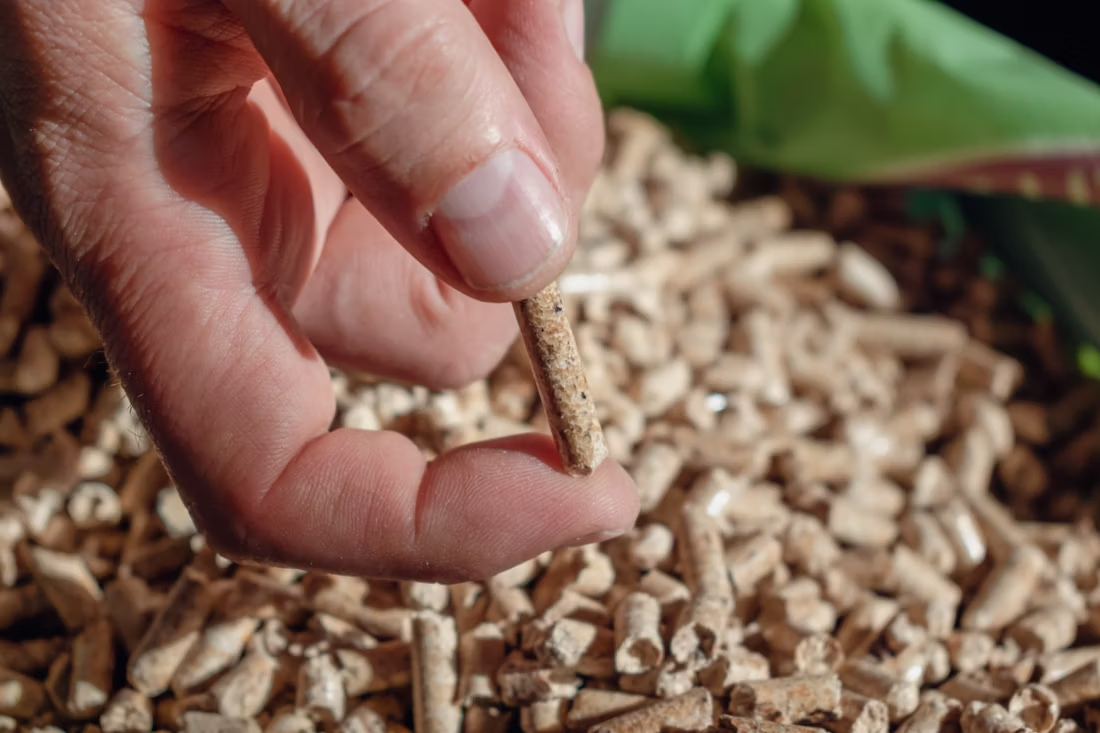
Pellet appliances also sidestep the wildfire-smoke concerns that shape summer and fall air quality across the valley—they burn hotter and cleaner than open wood fires, with far less visible smoke and no chimney creosote buildup to manage. Regional pellet brands including Bear Mountain, Lignetics, and Forest Energy supply the area, and bagged fuel is generally easier to stockpile and store through a long, cold Saguache County winter than a wood supply requiring seasoning time. The tradeoff is real, though: pellet stoves run on electricity, which matters in a rural county where winter storms can knock out power for hours at a time.
Three steps. No salesperson until you're ready.
Tell us about your project
Your zip code, your situation, and the fuel you're leaning toward—or let the answers point you to one.
See what's actually available
The brands dealers within 100 miles genuinely carry—real options, never a catalog mirage.
Get your dealer & Project Guide
A trusted local dealer, plus the free Project Guide & Parts List that names every component of the job.
Frequently Asked Questions
How much does a pellet stove installation cost in Saguache County?
Most pellet stove and insert installations run in the $3,000 to $6,000 range once you factor in the unit, venting, and a hearth pad if one isn't already in place. Because Saguache County is sparsely populated, most installers are based out of Alamosa or Monte Vista and will typically build a modest travel charge into quotes for jobs in Saguache, Crestone, Center, or Moffat. Homes at the higher elevations near Crestone or out toward the mountain foothills sometimes need a larger-capacity unit to keep up with the cold, which can push costs toward the top of that range. A local dealer will give you a firm number after seeing your home.
What size pellet stove do I need for a Saguache County home?
With winter lows averaging 4°F and a winter heating load across the valley on par with the upper Midwest, undersizing is the biggest mistake homeowners here make. A stove rated for 1,000 to 1,500 square feet in a milder climate often needs to be sized up for the San Luis Valley's exposed, high-desert wind and cold. Older ranch homes and ones with less insulation—common in Saguache, Center, and outlying county land—typically need a mid-to-large hopper capacity to avoid constant refilling during multi-day cold snaps. A local dealer can size a unit correctly based on your square footage, insulation, and elevation rather than a generic chart.
Where can I find pellet stove dealers near Saguache County?
Because Saguache County's population is under 3,000, there isn't a large in-county retail presence—most hearth dealers serving the area are based in Alamosa or Monte Vista, roughly 30 to 45 minutes from the town of Saguache depending on where you live in the county. These regional dealers routinely service Crestone, Center, and Moffat as part of their normal territory. Working with an established dealer rather than ordering a stove online matters here specifically because they can confirm venting requirements for your home's elevation and handle any permitting with the county.
Pellet stove vs. wood stove—which makes more sense in Saguache County?
Wood is deeply practical here: ponderosa pine, aspen, pinyon, and juniper are all locally available, and Rio Grande National Forest cutting permits run just $5 to $20 per cord during the May-through-October season. But wood smoke adds to regional air quality concerns during wildfire season, and cutting, hauling, and seasoning wood is real work in a county this rural. Pellet stoves burn cleaner, store more compactly, and don't require a truck trip into the forest—but they need electricity to run the auger and blower, which is a real consideration during winter storm outages. Many Saguache County households end up with wood as backup heat and a pellet stove for day-to-day convenience.
Do I need a permit to install a pellet stove in Saguache County?
Yes—a building permit is generally required for a new pellet stove installation through the county building department, covering the appliance placement, clearances, and venting. Pellet stoves are typically easier to permit than wood stoves since most EPA-certified units already meet current emissions standards without additional review. Most local dealers based in Alamosa or Monte Vista handle the permitting paperwork as part of the installation, so you're not usually navigating it solo.
Where do I buy pellets in or near Saguache County?
Regional brands like Bear Mountain, Lignetics, and Forest Energy are the most common pellets available to San Luis Valley customers, typically sold through feed and ranch supply stores or hardware retailers in Monte Vista, Alamosa, or Center. Given the distances involved in this county, many households buy in bulk each fall—a full winter's supply, often 2 to 3 tons for a primary-heat home—rather than making repeat trips during snow season. Buying early in the fall also avoids the supply crunches that can hit rural dealers once the first hard cold arrives.
Will my pellet stove work during a power outage?
Not without backup power. Pellet stoves rely on electricity to run the hopper auger, combustion blower, and igniter, so a standard unit will shut down when the grid goes out. That's a meaningful consideration in a rural county like Saguache, where winter storms can knock out power to outlying areas near Crestone, Moffat, or the open valley floor for extended stretches. Many local homeowners pair a pellet stove with a small backup generator or battery inverter sized to run the stove's electrical components, or keep a wood stove as a true no-power backup. Ask your dealer about the wattage draw of any unit you're considering.
How does wildfire smoke affect pellet stove use in Saguache County?
Wildfire smoke is a recurring late-summer and fall concern across the San Luis Valley, and it's one more reason pellet stoves have gained ground locally. Pellet appliances burn manufactured fuel at a consistent, hot, efficient rate, producing far less visible smoke and particulate than an open wood fire—which matters both for regional air quality and for your own chimney and flue maintenance. Pellet stoves aren't a factor in wildfire smoke advisories the way outdoor burning is, since they're a fully enclosed, vented appliance.
Are pellets made from local Saguache County wood?
Not directly. While the county's forests are full of ponderosa pine, aspen, pinyon, and juniper—all commonly cut for firewood under Rio Grande National Forest permits—bagged pellets sold regionally, including Bear Mountain, Lignetics, and Forest Energy, are manufactured at mills elsewhere from compressed sawdust and wood waste, not sourced from local cutting. That's actually part of the appeal: pellet fuel supply isn't tied to your ability to get out and cut wood, which matters for households without easy access to a truck, trailer, or the time to season a winter's worth of cordwood.
Why is a fireplace insert so efficient?
An insert does two things: it seals the chimney completely, so you stop losing air you already paid to heat, and it radiates warmth into the room through the firebox and glass. Most add a heat-exchange fan that pulls cool room air underneath, wraps it around the hot firebox, and pushes it back out warm. Your home is more efficient before you've even lit the first fire.
Why is my open fireplace making my house colder?
Open fireplaces suck—literally. As the fire burns, it consumes air your furnace already paid to heat and pulls it out through the chimney, so the house is actually colder after the fire goes out than before you lit it. An insert fixes this: it seals the chimney, puts fixed glass across the front, and turns that hole in your house into a real heat source.
How much should I budget for a fireplace?
For an average home—covering the fireplace, the vent pipe, and basic installation—a budget between $3,900 and $5,500 gives you a lot of options across wood, gas, and pellet. By the time you add finish work, gas line, and electrical, the average complete installation lands between $5,000 and $12,000 all-in. In a remodel or new build, a good rule is to put about 2.5% of the total project cost toward the fireplace.
Does a fireplace add value to my home?
On average, a fireplace adds back to the home about the same amount you spent installing it. Add the monthly savings from heating the rooms you actually use instead of the whole house—often hundreds of dollars a year—and the value case is strong before you even count what a fire does for how your family uses the room.
Stove and Fireplace Dealers in Saguache County
Shangrilah Stove & Spa LLC
Pellet Brands Stocked Around Saguache County
Manufacturers will point you to the nearest stocking dealer.
Get matched with a pellet stove dealer near Saguache County.
Tell us about your home and we'll send a free Project Guide & Parts List—the right pellet stove or insert, the vent kit you'll need, and a trusted local dealer who can install it correctly for the San Luis Valley's cold, high-elevation winters.
Find Your Fireplace →