
Pellet Heat That Meets Aspen's Strict Efficiency Codes.
From Aspen to Redstone, Pitkin County racks up 8,880 heating degree days a year under some of the strictest building efficiency rules in the country. Find a pellet stove or insert sized for altitude and built to clear local code, and connect with a trusted local dealer.
Every Project Starts From One of These Five Situations
Efficient heat for one of the coldest, most regulated counties in the country.
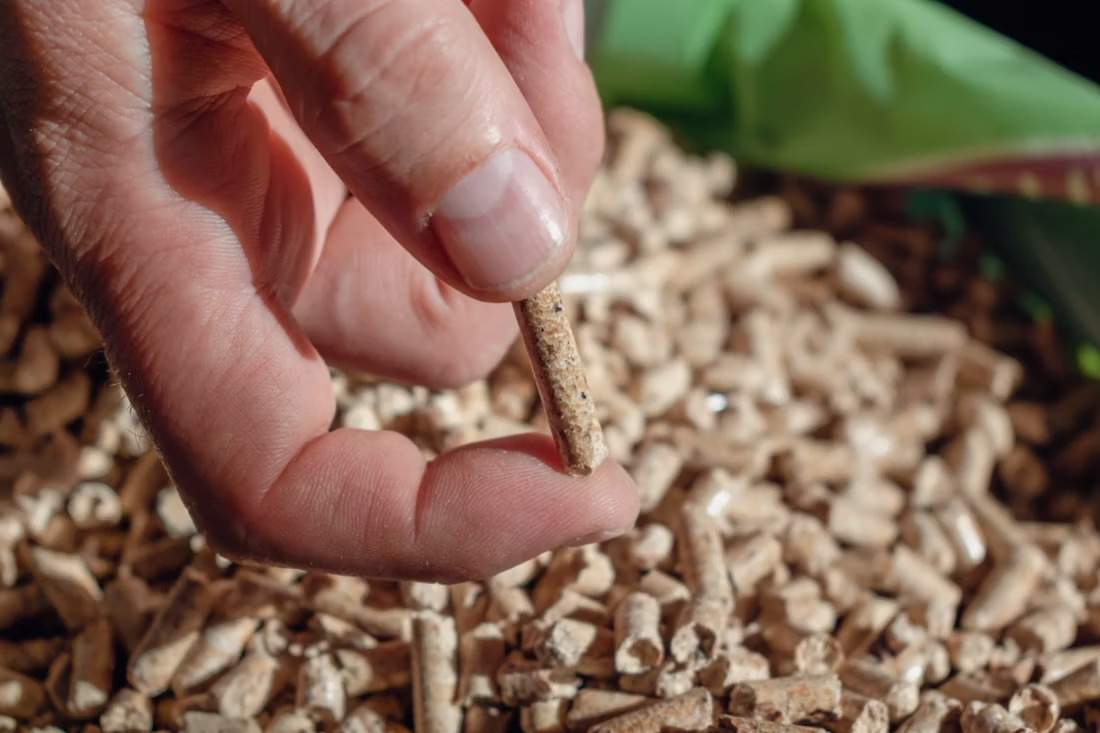
Pitkin County stretches from Aspen at 7,908 feet up through Snowmass Village, Woody Creek, and Old Snowmass, then down the Crystal River valley to Redstone—a county where nearly every home sits above 7,000 feet and climate zone 7 conditions apply almost everywhere. With 8,880 heating degree days, Pitkin County runs colder over a full winter than Duluth, Minnesota, even though the average winter low is a relatively mild-sounding 10°F—the real story is a heating season that starts in September and doesn't fully release its grip until May. Lower stretches of the county still carry ponderosa pine, pinyon, and juniper, while aspen groves take over at mid-to-high elevation, and that regional wood supply is part of why brands like Bear Mountain, Lignetics, and Forest Energy—all milled from Western softwood—are the standard pellet stock at valley hardware stores and hearth dealers.
What makes pellet heat especially relevant here isn't just the cold—it's the code. Aspen and Pitkin County enforce the Renewable Energy Mitigation Program (REMP), one of the more aggressive energy-efficiency ordinances in the country, and it specifically weighs the emissions and efficiency of new solid-fuel appliances. Open wood-burning fireplaces face real friction under REMP; EPA-certified pellet stoves and inserts, with their high combustion efficiency and low particulate output, generally have an easier path to approval. Add the wildfire smoke that settles into the Roaring Fork Valley most summers and falls, and a growing number of Aspen, Snowmass Village, and Basalt-area homeowners—including owners of the county's many second homes—are choosing pellet appliances for clean, automated heat that doesn't require anyone splitting or stacking wood between visits.
Three steps. No salesperson until you're ready.
Tell us about your project
Your zip code, your situation, and the fuel you're leaning toward—or let the answers point you to one.
See what's actually available
The brands dealers within 100 miles genuinely carry—real options, never a catalog mirage.
Get your dealer & Project Guide
A trusted local dealer, plus the free Project Guide & Parts List that names every component of the job.
Frequently Asked Questions
How much does a pellet stove installation cost in Pitkin County?
Installation costs here tend to run above what you'd pay in a front-range Colorado city, for two reasons: elevation and logistics. Materials, labor, and delivery all cost more once a crew is routing a truck up-valley to Aspen, Snowmass Village, or down the Crystal River corridor toward Redstone, and many properties fall under HOA review that adds steps to the job. A straightforward freestanding pellet stove installed into an existing hearth generally lands toward the higher end of typical mountain-town pricing, while a pellet insert into existing masonry usually runs somewhat less than a full hearth-and-venting build-out. Ask any local dealer for a firm in-home quote—labor rates and delivery surcharges vary noticeably across a county this compressed and this remote.
Does Pitkin County's building code affect my pellet stove choice?
Yes. Aspen and Pitkin County enforce the Renewable Energy Mitigation Program, or REMP, one of the most aggressive energy-efficiency ordinances in the country, and it specifically targets solid-fuel-burning devices. New open wood-burning fireplaces can face mitigation fees or outright restriction under REMP review. EPA-certified pellet stoves and inserts, because they burn far more completely and emit a fraction of the particulate matter of an open wood fire, typically clear that review more easily. If you're building new or remodeling anywhere in Aspen, Snowmass Village, or unincorporated Pitkin County, loop in the local building department early—REMP compliance is checked at the permit stage, not after the unit is already sitting on your hearth.
Does elevation affect how I should size a pellet stove?
It does. At 7,900 to 9,000-plus feet, thinner air affects combustion efficiency in any solid-fuel appliance, pellet stoves included. Most manufacturers publish altitude-adjusted burn settings or offer high-altitude venting kits for installations above 4,500 feet, which covers essentially all of Pitkin County. Beyond combustion tuning, sizing still comes down to square footage and insulation—with 8,880 heating degree days and lows that regularly dip well below the 10°F seasonal average, homes here generally need a stove sized toward the upper end of a manufacturer's rated square footage rather than the low end. A local dealer familiar with Roaring Fork Valley elevations will set the altitude kit and size the unit correctly during the same visit.
Where can I buy pellets in Pitkin County?
Regional brands including Bear Mountain, Lignetics, and Forest Energy are the standard stock at hearth dealers and hardware stores serving the Roaring Fork Valley, all milled from Western softwood. Because Pitkin County is geographically compressed but logistically remote—Aspen and Snowmass Village sit at the end of a single highway corridor, and Old Snowmass and Redstone are even further from distribution points—plan to buy by the ton and store a full season's supply rather than restocking bag by bag mid-winter. Confirm with your dealer whether delivery is included, since trucking pellets up-valley can add meaningfully to the total cost compared with picking them up locally.
Will my pellet stove work during a power outage?
Not without a backup power source. Pellet stoves rely on an electric auger to feed fuel and a blower to move heat, so a standard unit shuts down the moment power drops. Winter storms in the Roaring Fork Valley and up the Crystal River corridor toward Redstone can knock out power for hours at elevation, so homeowners who want heat during an outage typically pair a pellet stove with a small battery backup or a portable generator sized to the stove's low wattage draw. If uninterrupted heat during outages is a priority for your Pitkin County home, a wood stove is worth discussing with your dealer alongside the pellet option.
How does wildfire smoke season affect pellet stove use in Pitkin County?
Pitkin County deals with wildfire smoke drifting into the Roaring Fork Valley most summers and into fall, and that regional air quality pressure is part of why pellet appliances have gained ground here. A modern EPA-certified pellet stove burns far cleaner than an open wood fire or an older uncertified wood stove, producing a small fraction of the particulate emissions. That matters both for the valley's overall air quality during smoke events and for meeting Pitkin County's REMP-driven review of new solid-fuel installations, which weighs emissions heavily.
What's the difference between a pellet stove and a pellet insert?
A pellet stove is a freestanding unit that vents through a wall or an existing chimney chase and can go almost anywhere with proper clearances—common in newer Snowmass Village and Basalt-area construction. A pellet insert is built to slide into an existing masonry fireplace opening, more common in older Aspen homes and cabins along the Crystal River. Both use the same auger-fed hopper and both go through the same REMP-driven efficiency review, so the choice usually comes down to whether you're converting an existing masonry fireplace or starting from an open wall.
Do I need a permit to install a pellet stove in Pitkin County?
Yes—new pellet stove and insert installations require a building permit through the Pitkin County Building Department, or through the City of Aspen or Town of Snowmass Village building departments if the property falls within those municipal boundaries. Because REMP review applies to solid-fuel appliances countywide, expect the permit process to include a look at the unit's efficiency and emissions rating alongside the standard venting and clearance inspection. Many Aspen and Snowmass Village properties also sit within HOAs that have their own architectural review for exterior venting, so it's worth checking both before you buy.
Pellet vs. wood—which is right for my Pitkin County home?
Wood stoves burn fuel you can source locally—cutting permits through the White River National Forest and the Grand Mesa-Uncompahgre-Gunnison National Forest run $5 to $20 per cord from May through October—and they keep working without electricity, which matters during mountain power outages. Pellet stoves trade that for convenience: load the hopper, set the thermostat, and get consistent heat with far less ash, no splitting or stacking, and an easier path through Pitkin County's REMP efficiency review. For full-time Aspen and Snowmass Village residents who want low-maintenance daily heat, pellet is usually the better fit. For remote cabins near Redstone or Old Snowmass, or as a power-outage backup, wood still makes a strong case.
Why is a fireplace insert so efficient?
An insert does two things: it seals the chimney completely, so you stop losing air you already paid to heat, and it radiates warmth into the room through the firebox and glass. Most add a heat-exchange fan that pulls cool room air underneath, wraps it around the hot firebox, and pushes it back out warm. Your home is more efficient before you've even lit the first fire.
How often does a pellet stove need cleaning?
A clean pellet stove is a happy pellet stove. Plan on cleaning the burn pot about once a week when you're burning regularly—ash and clinkers gum up the air holes just like a pellet barbecue. Most pellet stove problems trace back to skipped cleaning that nobody explained up front. Some designs make it easy with a trapdoor burn pot: pull a lever and the gunk drops into the ash pan.
Does a fireplace add value to my home?
On average, a fireplace adds back to the home about the same amount you spent installing it. Add the monthly savings from heating the rooms you actually use instead of the whole house—often hundreds of dollars a year—and the value case is strong before you even count what a fire does for how your family uses the room.
How much should I budget for a fireplace?
For an average home—covering the fireplace, the vent pipe, and basic installation—a budget between $3,900 and $5,500 gives you a lot of options across wood, gas, and pellet. By the time you add finish work, gas line, and electrical, the average complete installation lands between $5,000 and $12,000 all-in. In a remodel or new build, a good rule is to put about 2.5% of the total project cost toward the fireplace.
Stove and Fireplace Dealers in Pitkin County
Pellet Brands Stocked Around Pitkin County
Manufacturers will point you to the nearest stocking dealer.
Find your pellet stove in Pitkin County.
Tell us a bit about your home and elevation, and we'll match you with a trusted local dealer and a free Project Guide & Parts List—your pellet stove or insert plan for Pitkin County, including the exact parts and venting kit you'll need.
Find Your Fireplace →