
Find the right pellet stove for your Otero County home.
Consistent, low-maintenance heat for Arkansas Valley winters—from La Junta to Rocky Ford. We match you with a trusted local dealer who can size, permit, and install it right.
Every Project Starts From One of These Five Situations
Steady heat with less hassle than a wood pile.
Otero County sits on the plains of southeastern Colorado, where a winter heating season comparable to places like Pueblo or Colorado Springs and winter lows averaging 16°F make a real heat source worth having between October and April. It's not Fargo-cold, but it's cold enough that a supplemental or primary heat appliance earns its keep most winters, especially on the ranches and rural stretches outside La Junta and Rocky Ford where propane and electric backup can get pricey to run around the clock.
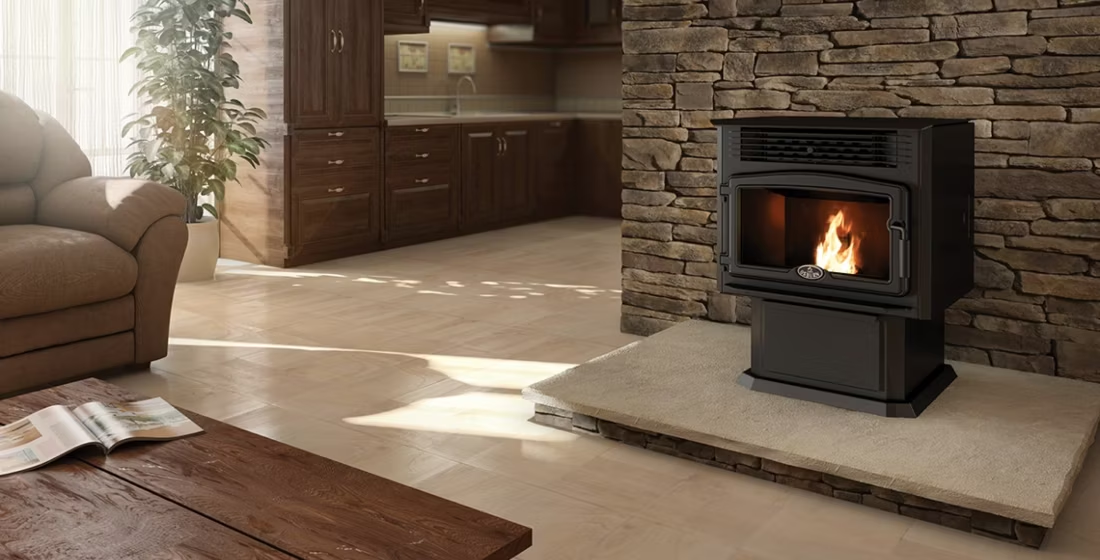
Pellet stoves have found a real niche here because they solve a problem wood doesn't always solve well in this part of the state: consistent, thermostat-controlled heat without cutting, splitting, or stacking cordwood, and without the wildfire-smoke concerns that occasionally hang over the valley in late summer and fall. Regional brands like Bear Mountain, Lignetics, and Forest Energy are stocked at farm and hardware stores throughout the Arkansas Valley, which keeps fuel supply local and predictable rather than dependent on long-haul delivery.
Three steps. No salesperson until you're ready.
Tell us about your project
Your zip code, your situation, and the fuel you're leaning toward—or let the answers point you to one.
See what's actually available
The brands dealers within 100 miles genuinely carry—real options, never a catalog mirage.
Get your dealer & Project Guide
A trusted local dealer, plus the free Project Guide & Parts List that names every component of the job.
Frequently Asked Questions
How much does a pellet stove installation cost in Otero County?
Most pellet stove and insert installations in Otero County run in the $2,500 to $5,500 range depending on the unit, whether it's a freestanding stove or an insert going into an existing masonry fireplace, and whether new venting or an electrical circuit is needed. Pellet stoves require a dedicated 120V outlet for the auger and blower motor, so homes without one nearby may see a small added cost for electrical work. A local dealer will give you a firm number after seeing your space, but this range covers the vast majority of installs from La Junta to Fowler.
Where can I buy pellet fuel near Otero County?
Bear Mountain, Lignetics, and Forest Energy pellets are the three brands most commonly stocked at farm supply and hardware retailers throughout the Arkansas Valley, and prices typically track with regional averages of roughly $250 to $350 per ton. Buying by the pallet (usually 50 forty-pound bags, or one ton) ahead of the coldest months is the standard approach for homeowners who use pellets as a primary heat source, since local supply can tighten up once cold weather hits and everyone's stocking up at once.
Do pellet stoves work as backup heat during a power outage?
Not without help. Pellet stoves depend on electricity to run the auger that feeds pellets and the blower that pushes heat into the room, so a standard unit goes dark in an outage just like a furnace does. If backup heat during outages matters to you—and on the plains around Otero County, ice storms do occasionally take power out for a day or more—either pair a pellet stove with a small battery backup or generator, or consider a wood stove instead for a fuel that burns without any electrical input. Local dealers can talk through both options based on how often you actually lose power at your address.
What's the difference between a pellet stove and a pellet insert?
A pellet stove is a freestanding unit that sits on its own hearth pad and vents out a wall or through the roof—it can go almost anywhere in a room with the right clearances. A pellet insert is built to slide into an existing masonry fireplace opening, turning an old wood-burning fireplace into a sealed, thermostat-controlled heat source while using the existing chimney chase for venting (with a proper liner). For Otero County homes with an older brick fireplace that's rarely used, an insert is usually the more efficient upgrade; for a room with no existing fireplace, a freestanding stove is the simpler install.
Do I need a permit to install a pellet stove in Otero County?
Most jurisdictions in Otero County require a building permit for a new pellet stove installation, particularly when it involves new venting through an exterior wall or roof, or a new dedicated electrical circuit. Requirements vary slightly between La Junta, Rocky Ford, and unincorporated county areas, so check with your local building department before work starts. In practice, most established dealers handle the permit application as part of the installation quote, so it's rarely something a homeowner has to sort out alone.
What size pellet stove do I need for my home?
Sizing depends on square footage, ceiling height, insulation quality, and whether you want the stove as primary or supplemental heat. As a rough guide for Otero County's climate: smaller units (under 40,000 BTU) suit a single room or a well-insulated space up to about 1,000 square feet, while larger units (50,000+ BTU) can carry a full main living area or an older, less-insulated farmhouse common in the rural parts of the county. Older homes around La Junta and Rocky Ford with less insulation and higher ceilings typically need to size up from what a square-footage chart alone would suggest—a local dealer doing an in-home assessment is worth the extra step before you buy.
How often does a pellet stove need to be cleaned and serviced?
Pellet stoves need more frequent attention than gas units but far less than wood stoves: expect to empty the ash pan every few days during regular use, clean the burn pot weekly, and do a full glass, exhaust, and hopper cleaning monthly during heating season. A professional inspection and deep clean once a year—typically before the cold months start in late summer—keeps the auger, igniter, and combustion blower running properly and catches wear before it causes a breakdown mid-winter. Skipping this tends to show up as poor ignition or excess ash right when you need the heat most.
Can I burn wood pellets in a pellet stove if I run out of my regular brand?
Generally yes, as long as the pellets meet PFI (Pellet Fuels Institute) premium-grade standards, which Bear Mountain, Lignetics, and Forest Energy all do. Switching brands can change ash output and flame character slightly—some hardwood-blend pellets burn a bit hotter with less ash than softwood pellets—but most modern stoves handle the variation fine. What matters more than brand loyalty is avoiding low-grade or non-PFI-certified pellets, which tend to have higher ash and moisture content and can clog the burn pot or trip error codes on sensitive units.
Pellet stove vs. wood stove—which is right for my Otero County home?
Wood stoves burn ponderosa pine, aspen, pinyon, and juniper cut locally—some of it through low-cost Forest Service permits ($5 to $20 per cord) available through the Pike-San Isabel National Forests during the May-to-October cutting season—and they keep working with zero electricity, which matters if you're out on a ranch where outages run long. Pellet stoves trade that self-sufficiency for convenience: load the hopper, set a thermostat, and walk away, with less ash and no splitting or stacking involved. For in-town homes in La Junta or Rocky Ford with reliable power and a preference for low-maintenance heat, pellet is usually the better fit. For rural properties where storm-related outages are a real concern, wood is worth serious consideration alongside it.
Why is a fireplace insert so efficient?
An insert does two things: it seals the chimney completely, so you stop losing air you already paid to heat, and it radiates warmth into the room through the firebox and glass. Most add a heat-exchange fan that pulls cool room air underneath, wraps it around the hot firebox, and pushes it back out warm. Your home is more efficient before you've even lit the first fire.
Why is my open fireplace making my house colder?
Open fireplaces suck—literally. As the fire burns, it consumes air your furnace already paid to heat and pulls it out through the chimney, so the house is actually colder after the fire goes out than before you lit it. An insert fixes this: it seals the chimney, puts fixed glass across the front, and turns that hole in your house into a real heat source.
Can I install a fireplace myself?
If you're putting a fire in your house on purpose, it's best to work with an expert. Unless you're genuinely experienced in framing, gas line, vent pipe, and the national code on clearances to combustibles, have a professional do it—and ideally the same company that sells you the fireplace, so warranty, service, and liability all live under one roof.
Can a fireplace actually lower my heating bill?
Yes—by creating a comfort zone. A furnace heats every square foot of the house just to warm the one room you're in; a gas fireplace on low burns roughly a sixth of the gas a typical furnace does. Set the furnace around 55–60 degrees as a baseline, then heat the rooms your family actually uses. Families who heat this way commonly save $20–$60 a month.
Pellet Brands Stocked Around Otero County
Manufacturers will point you to the nearest stocking dealer.
Find your pellet stove in Otero County.
Tell us a bit about your home and we'll match you with a trusted local dealer and send you a free Project Guide & Parts List—the exact parts, vent kit, and recommended installer for your pellet project in Otero County.
Find Your Fireplace →