
Keep Your Family Warm and Safe—No Matter What
At nearly 6,000 feet along the Front Range foothills, Meridian winters bring dry cold and the occasional multi-day power outage. Find the right wood stove or insert, and get matched with a trusted local dealer.
Every Project Starts From One of These Five Situations
Wood heat suits the high plains and foothills alike.
Meridian sits at 5,930 feet in Douglas County, on the Front Range corridor between Denver and Colorado Springs. Average winter lows hover around 19°F, and the heating load here is close to what a homeowner in Bozeman, Montana deals with each winter—real cold, but dry, with a lot of sun in between storms. Locally cut firewood tends to be ponderosa pine, aspen, pinyon, and juniper, all of which come off Arapaho-Roosevelt National Forests land within a reasonable drive.
Douglas County also sees its share of high-wind winter storms that knock out power along the Front Range, which is one reason wood heat still holds appeal even in newer subdivisions built mostly around forced-air furnaces—a wood stove keeps working when the grid doesn't. The trade-off is air quality: Meridian falls within the Denver metro area's nonattainment zone, and wildfire smoke is a recognized regional concern, so choosing an EPA-certified, efficient unit matters more here than in less regulated areas.
Firewood Cutting Permits Near Meridian
Three steps. No salesperson until you're ready.
Tell us about your project
Your zip code, your situation, and the fuel you're leaning toward—or let the answers point you to one.
See what's actually available
The brands dealers within 100 miles genuinely carry—real options, never a catalog mirage.
Get your dealer & Project Guide
A trusted local dealer, plus the free Project Guide & Parts List that names every component of the job.
Frequently Asked Questions
How much does a wood stove installation cost in Meridian?
Most wood stove installations in the Meridian area run between roughly $4,500 and $9,500, depending on the stove itself, whether new Class A chimney pipe is needed, and whether the hearth pad requires upgrading for clearance-to-combustible rules. Homes without an existing chimney—common in Douglas County's newer construction—usually land toward the higher end once through-roof venting and framing work are added in. A Douglas County building permit is required for the install, and most local dealers handle that paperwork as part of the job.
What size wood stove do I need for a Meridian home?
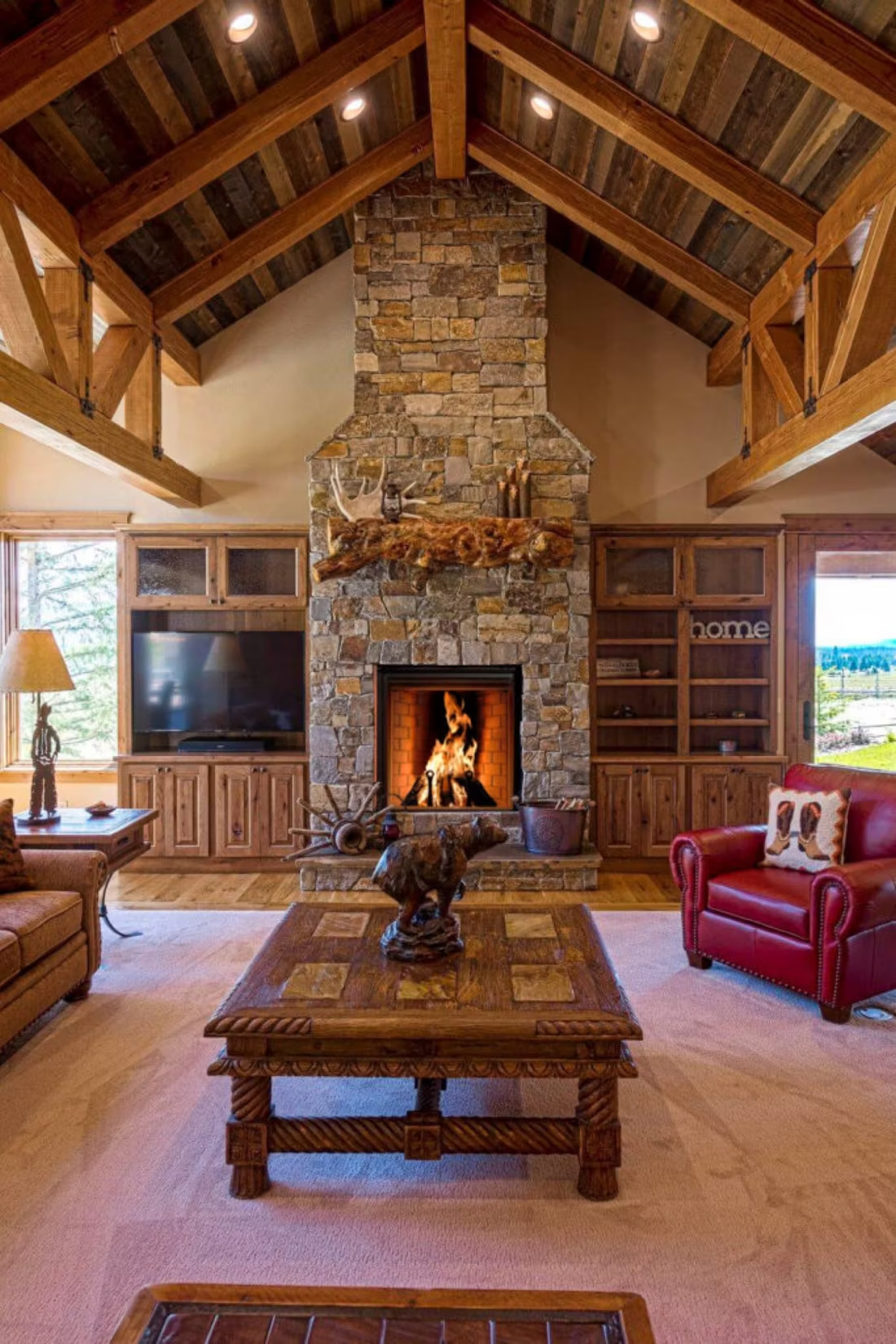
A lot of homes in this part of Douglas County are newer construction with open floor plans and vaulted ceilings, which changes the math compared to an older, chopped-up floor plan. A small stove (rated for roughly 1,000 sq ft) suits a single great room or finished basement; a medium stove (1,000–2,000 sq ft) handles most main living areas; larger stoves can cover an open-concept main floor if it's well insulated. High ceilings move a lot of heat upward before it circulates, so a local dealer sizing your space in person—accounting for ceiling height, not just square footage—will get you closer to the right unit than any online calculator.
Where do I find a certified wood stove installer near Meridian?
Look for NFI (National Fireplace Institute) certification or CSIA (Chimney Safety Institute of America) credentials—these indicate real training in wood-burning appliance clearances and venting, not just general contracting experience. Given how much new construction exists in this part of Douglas County, framing and roofline penetrations for Class A pipe need to be done correctly the first time; a certified hearth installer coordinates that work with your builder's or roofer's specs rather than improvising.
Wood stove or wood insert—which fits my Meridian home?
An insert only makes sense if you already have a masonry fireplace to put it into, which is less common in Meridian's newer subdivisions than in older Front Range neighborhoods. If your home already has a wood-burning fireplace, an insert converts that inefficient open hearth into a real heat source using the existing chimney. If you're starting from scratch—a common scenario here—a freestanding stove or a zero-clearance wood-burning fireplace built into new framing is usually the more practical route.
Do I need a permit to burn wood in Meridian?
New wood stove installations require a building permit, and any stove sold and installed today must meet EPA 2020 NSPS emissions standards—your dealer typically handles the permit paperwork. Beyond the install permit, Meridian sits within the Denver metro nonattainment area, and the region occasionally issues air quality advisories tied to winter inversions or wildfire smoke drifting in from mountain fires. Certified, efficient stoves burn cleaner and are less likely to draw complaints or fall under any future local burning restrictions than older uncertified units.
What's the best wood stove for Meridian's climate?
For sustained cold snaps and overnight lows near 19°F, a catalytic stove—Blaze King is a common choice—can hold a burn 18 to 20+ hours on a load, which matters if you're relying on it through a power outage. Because ponderosa pine and pinyon (both common local species) tend to be resinous and produce more creosote than hardwoods, pairing either fuel type with a stove that burns hot and complete, and staying on top of chimney cleaning, matters more here than it would with a drier hardwood like oak. Non-catalytic models from Pacific Energy or Lopi are a solid, lower-maintenance option for occasional or supplemental use.
How often should my chimney be swept in Meridian?
Plan on an annual CSIA-standard inspection and sweep, ideally in late summer before burning season starts. Because ponderosa pine and juniper—both common local firewood species—carry more pitch and resin than seasoned hardwood, creosote can build up faster than homeowners expect, especially if the wood wasn't fully seasoned. If you're burning as a primary or near-primary heat source through a full Front Range winter, a mid-season check is worth the extra visit.
Where can I get firewood in the Meridian area?
Personal-use cutting permits through Arapaho-Roosevelt National Forests run about $5 to $20 per cord and are valid May through October, which covers the typical stocking-up window before winter. Aspen, ponderosa pine, pinyon, and juniper are all commonly cut in the area—aspen burns fast and clean and is good for shoulder-season fires, while ponderosa and pinyon put out more heat per load but need a well-maintained chimney. Several regional firewood suppliers also deliver seasoned cordwood if cutting your own isn't practical.
Wood or pellet stove—which makes more sense in Meridian?
Wood pairs naturally with Meridian's access to Forest Service cutting permits and keeps working during the wind-driven power outages that hit the Front Range a few times most winters—no electricity required to run it. Pellet stoves, using bagged fuel from regional brands like Bear Mountain, Lignetics, or Forest Energy, are cleaner and more hands-off, but they need continuous power for the auger and blower, so an outage means no heat unless you've got a generator or battery backup. With Public Service Co of Colorado's residential rate near 15 cents per kWh, running a pellet stove is also a modest but real addition to a winter electric bill. For backup heat during storms, wood tends to be the more resilient choice here; for daily convenience with less firewood handling, pellet is worth a look.
Why is my open fireplace making my house colder?
Open fireplaces suck—literally. As the fire burns, it consumes air your furnace already paid to heat and pulls it out through the chimney, so the house is actually colder after the fire goes out than before you lit it. An insert fixes this: it seals the chimney, puts fixed glass across the front, and turns that hole in your house into a real heat source.
Why won't my new wood stove get going like my old one?
New wood stoves are 70%+ efficient, so far less heat goes up the flue—which also means less draft to get a fire established. The rule: build a genuinely hot fire for about 45 minutes before you choke it down. Skip that and you get smoke in the room, creosote in the chimney, and a fire that never takes off. Most performance complaints trace straight back to this.
What is an in-home preview and do I need one?
It's a visit where a hearth professional measures your space, confirms the model you picked actually works in your home, and walks the specs—framing, gas line, venting, finish work—before anything is ordered. Some details you just can't know until you see the house. Never make a down payment without one; it's the single most-skipped step that burns buyers.
Can a fireplace actually lower my heating bill?
Yes—by creating a comfort zone. A furnace heats every square foot of the house just to warm the one room you're in; a gas fireplace on low burns roughly a sixth of the gas a typical furnace does. Set the furnace around 55–60 degrees as a baseline, then heat the rooms your family actually uses. Families who heat this way commonly save $20–$60 a month.
Nearby Dealers
Hearth shops serving Meridian and the surrounding area. Every listing shows whether it is a WhyFire partner, a dealer we have verified as authorized for the brands we recommend, or a local business carrying hearth products. No manufacturer pays for placement. How we verify dealers →
Midtown Chimney Fireplace Store
Spa Brokers Iii
Thoshini LLC
Spa Brokers
Spa Brokers
Western Fireplace Supply
Spa Brokers V
Proud Souls Barbecue & Provisions
Outdoor Kitchen Dist. Inc
Fireplace And Grill Experts - Service Only
Aria Custom Design
Distinctive Mantel Designs
Spa Brokers (Corporate)
Spa Brokers
Rio Grande Co.
Find the right wood stove for your Meridian home.
Tell us about your home and heating goals, and we'll match you with a trusted local dealer and send over a free Project Guide & Parts List—the exact parts, including the vent kit, for your wood heat project in Meridian.
Find Your Fireplace →