
Keep Your Family Warm and Safe—No Matter What
Louisville sits inside the Denver Metro/North Front Range ozone nonattainment area, and state air quality rules mean new open wood-burning fireplaces are essentially off the table for new construction. If you've got a legacy masonry fireplace to replace or retrofit, I'll match you with a trusted local dealer who knows exactly what Boulder County and the City of Louisville will actually permit.
Every Project Starts From One of These Five Situations
A nonattainment area shapes what's allowed here.
At 5,399 feet with a long, demanding heating season and winter lows averaging 22°F, Louisville has real heating demand—comparable to what a town like Bismarck sees over a full season. But the fuel mix here is shaped less by climate than by air quality regulation. Louisville falls within Colorado's Denver Metro/North Front Range 8-hour ozone nonattainment area, and Colorado Air Pollution Control Division rules restrict open-hearth, non-EPA-certified wood-burning appliances in new residential construction across the region. In practice, that means most new builds and remodels in Louisville default to gas or electric, and a brand-new standalone wood fireplace install is uncommon.
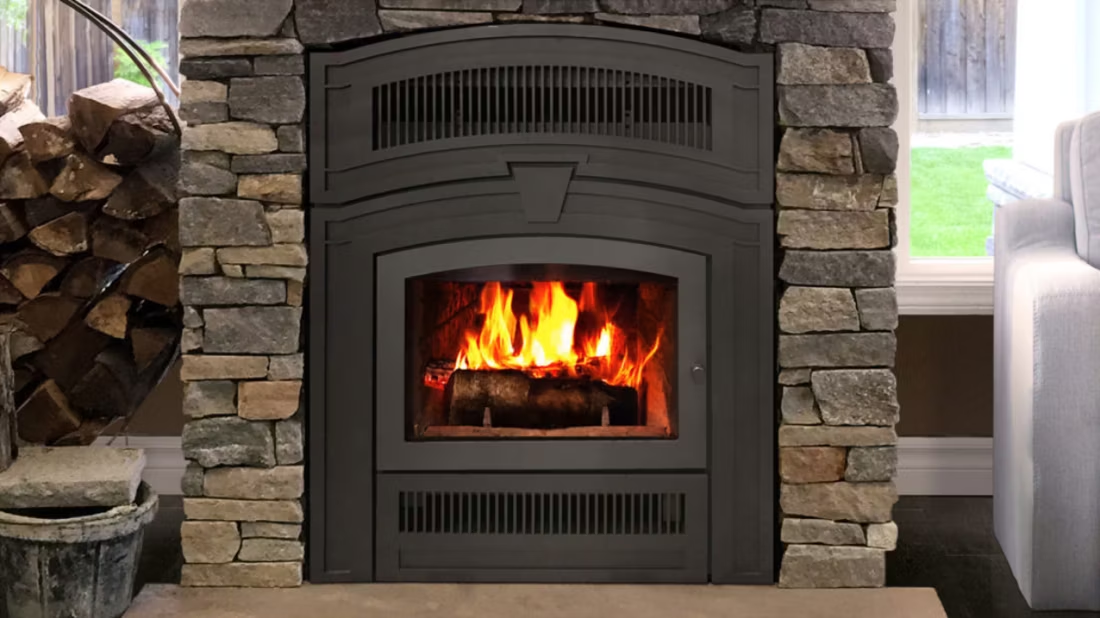
Where wood still shows up is in older homes with a legacy masonry fireplace built before the current rules, or in households replacing an aging unit with an EPA 2020 NSPS-certified insert, which is generally the compliant path forward. If you do have a permitted wood-burning setup, Arapaho-Roosevelt National Forests issues cutting permits for $5 to $20 per cord during a May-through-October season, and ponderosa pine, aspen, pinyon, and juniper are the species most Front Range households bring home. Wildfire smoke is also a recognized regional air quality concern, which is part of why Boulder County and the state keep tightening rules around solid-fuel combustion rather than loosening them.
Firewood Cutting Permits Near Louisville
Where to Buy Firewood
Three steps. No salesperson until you're ready.
Tell us about your project
Your zip code, your situation, and the fuel you're leaning toward—or let the answers point you to one.
See what's actually available
The brands dealers within 100 miles genuinely carry—real options, never a catalog mirage.
Get your dealer & Project Guide
A trusted local dealer, plus the free Project Guide & Parts List that names every component of the job.
Frequently Asked Questions
Can I install a brand-new wood-burning fireplace in Louisville?
Generally, no—not an open-hearth, non-certified one. Louisville falls inside the Denver Metro/North Front Range ozone nonattainment area, and Colorado's air quality rules restrict new solid-fuel fireplaces in residential construction across that zone. The City of Louisville Building Division will point new-construction and major-remodel projects toward gas or electric options instead. The one path that typically remains open is installing an EPA 2020 NSPS-certified wood stove or insert into an existing masonry firebox—a certified appliance is a different regulatory category than an open fireplace, and it's the option a local dealer will usually walk you toward if wood heat matters to you.
I already have an old wood fireplace in my Louisville home—can I keep using it?
Existing legacy fireplaces built before the current air quality rules are typically grandfathered for continued use, but replacement or major rebuild usually triggers the current standard, meaning any new unit needs to be EPA-certified. If your fireplace is original to an older home near downtown Louisville or in one of the town's pre-1990s subdivisions, it's worth having a local hearth professional inspect the chimney and firebox before you burn another season—both for safety and to understand what your upgrade options look like when the time comes.
What does it cost to retrofit an old wood fireplace with an EPA-certified insert?
Because so few new wood installations happen in Louisville, there isn't much local pricing data to point to, but a typical retrofit—dropping a certified insert into an existing masonry firebox with a stainless liner run up the existing chimney—generally runs in the $4,500 to $8,000 range along the Front Range, depending on chimney condition, liner length, and whether masonry repair is needed. A local dealer familiar with Boulder County inspections can give you a firm number after seeing your existing flue.
Where can I get a firewood cutting permit near Louisville?
Arapaho-Roosevelt National Forests, which covers a large stretch of the Front Range foothills west of town, issues personal-use cutting permits for $5 to $20 per cord, with a season running May through October. Ponderosa pine, aspen, pinyon, and juniper are the species most permit holders bring down from the foothills—pinyon and juniper in particular burn hot and dense, which suits a stove that's only running as a legacy or supplemental heat source rather than a full-time primary one.
Are there burn restrictions on wood fireplaces in Louisville during winter?
Yes. Boulder County Public Health runs an Action Alert program that calls voluntary or mandatory no-burn advisories on high-pollution winter days, and wildfire smoke has become a recognized regional air quality concern in its own right, particularly in late summer and fall. If you have a legacy or certified wood appliance, it's worth checking current advisory status before lighting up on a still, cold, stagnant-air day—those are exactly the conditions the advisories target.
Wood vs. gas—why do most Louisville homes end up with gas instead?
Gas is the standard choice here for a reason beyond convenience: Front Range air quality rules make new open wood-burning installs a non-starter for most homeowners, while gas fireplaces face no such nonattainment restriction and are supported by Public Service Co of Colorado's natural gas network across town. Gas also gives you instant, thermostatically controlled heat without a cord of wood to source and season—a real advantage given how much of Louisville's heating season is spent at or below that 22°F average winter low.
What about a pellet stove instead of a wood stove?
Pellet stoves run into the same new-construction restrictions as wood in Louisville, so they're not a common workaround here despite regional pellet brands like Bear Mountain, Lignetics, and Forest Energy being readily available along the Front Range. Where pellet appliances do show up is in older homes with an existing hearth already set up for one. If you're starting from scratch and want lower-maintenance solid-fuel heat, talk to a local dealer about whether your specific address and structure qualify for a certified pellet unit versus defaulting to gas.
Will an old wood fireplace affect selling my Louisville home?
It can. Buyers and their inspectors increasingly ask about EPA certification status, and an uncertified open wood fireplace can be a negotiating point or even a required disclosure item in Boulder County real estate transactions. Upgrading a legacy fireplace to a certified insert before listing—rather than leaving it as-is—tends to remove that friction and can be a selling point in a town where most newer homes only have gas.
What size wood insert makes sense for a Louisville home?
With winter lows averaging 22°F and a long, demanding heating season at 5,399 feet of elevation, a wood insert here is almost always running as supplemental or backup heat rather than a home's primary source, since most Louisville houses are built around gas or electric heat already. A small to mid-size EPA-certified insert, sized for the one room or open living area it's actually replacing, is typically the right call—a local dealer can size it against your existing firebox opening and ceiling height rather than the whole house's square footage.
Why is my open fireplace making my house colder?
Open fireplaces suck—literally. As the fire burns, it consumes air your furnace already paid to heat and pulls it out through the chimney, so the house is actually colder after the fire goes out than before you lit it. An insert fixes this: it seals the chimney, puts fixed glass across the front, and turns that hole in your house into a real heat source.
Why is a fireplace insert so efficient?
An insert does two things: it seals the chimney completely, so you stop losing air you already paid to heat, and it radiates warmth into the room through the firebox and glass. Most add a heat-exchange fan that pulls cool room air underneath, wraps it around the hot firebox, and pushes it back out warm. Your home is more efficient before you've even lit the first fire.
What is an in-home preview and do I need one?
It's a visit where a hearth professional measures your space, confirms the model you picked actually works in your home, and walks the specs—framing, gas line, venting, finish work—before anything is ordered. Some details you just can't know until you see the house. Never make a down payment without one; it's the single most-skipped step that burns buyers.
Can a fireplace actually lower my heating bill?
Yes—by creating a comfort zone. A furnace heats every square foot of the house just to warm the one room you're in; a gas fireplace on low burns roughly a sixth of the gas a typical furnace does. Set the furnace around 55–60 degrees as a baseline, then heat the rooms your family actually uses. Families who heat this way commonly save $20–$60 a month.
Nearby Dealers
Hearth shops serving Louisville and the surrounding area. Every listing shows whether it is a WhyFire partner, a dealer we have verified as authorized for the brands we recommend, or a local business carrying hearth products. No manufacturer pays for placement. How we verify dealers →
Spa Brokers
Paramount Remodeling Co
Spa Brokers
Distinctive Mantel Designs
Aria Custom Design
Rio Grande Co.
Outdoor Kitchen Dist. Inc
Fireplace And Grill Experts - Service Only
Spa Brokers (Corporate)
Get your Louisville wood fireplace project mapped out.
Whether you're replacing a legacy masonry fireplace with a certified insert or confirming what's actually permittable at your address, tell me about your home and I'll match you with a trusted local dealer and send a free Project Guide & Parts List—the exact parts, vent kit, and compliance notes your project needs.
Find Your Fireplace →