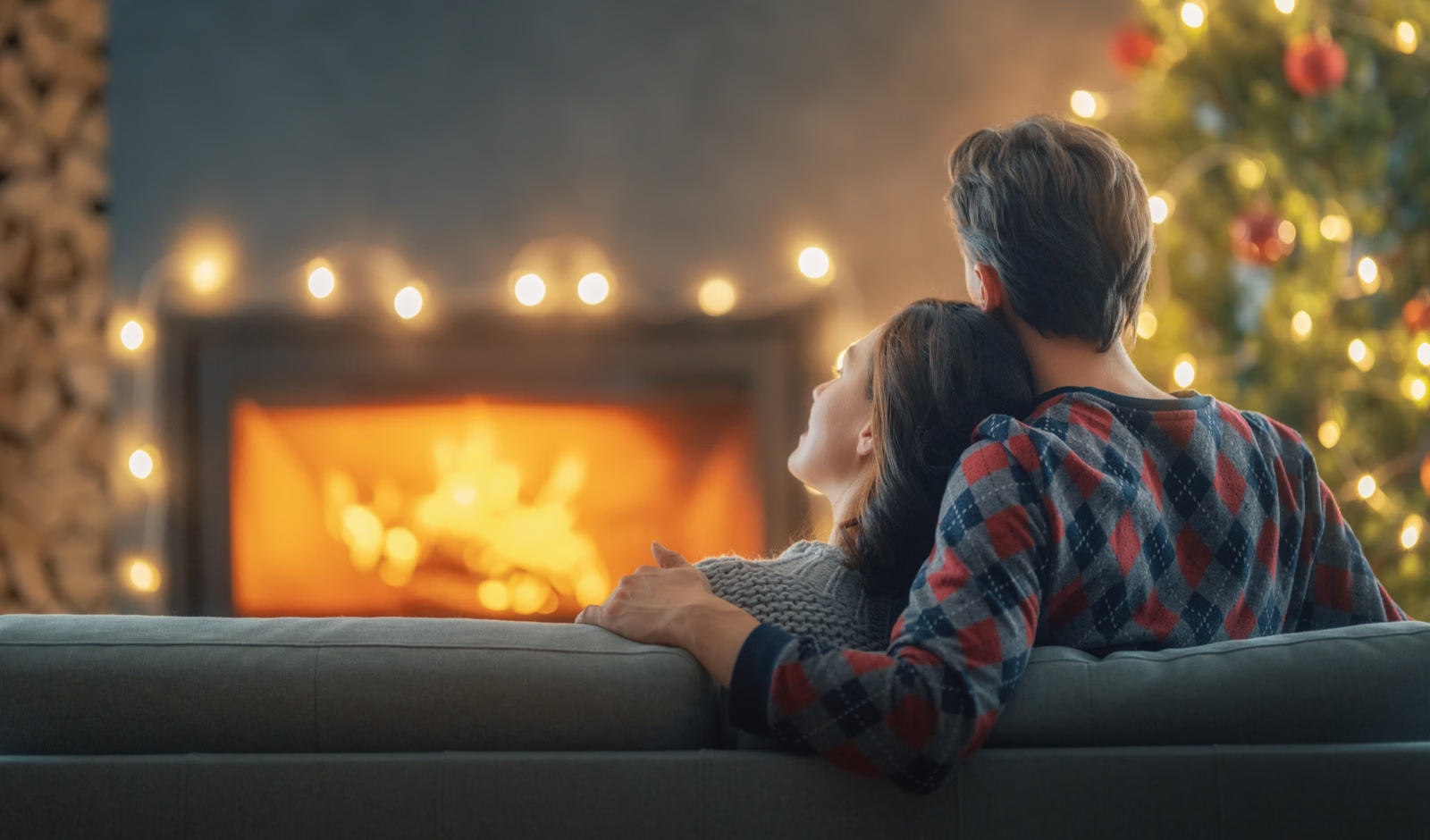
Keep Your Family Warm and Safe—No Matter What
Lone Tree's newer, HOA-governed subdivisions and Denver-metro air quality rules mean most homes here run on gas. If you're one of the exceptions, we'll connect you with a local dealer who knows the code and covenant landscape.
Every Project Starts From One of These Five Situations
Lone Tree was built for gas, not cordwood.
Lone Tree incorporated in 1996 and most of its housing stock—from RidgeGate to Heritage Hills—went up after that, built to codes and HOA covenants that specify direct-vent gas fireplaces as the default hearth appliance. At 6,010 feet with a long, cold heating season and average winter lows around 19°F, this is genuinely cold-climate country, but the housing here was never built around cordwood the way older mountain-town or rural Douglas County properties were.
There's also a regulatory layer: Lone Tree sits inside the Denver-metro/North Front Range ozone nonattainment area, and the Regional Air Quality Council issues High Pollution Advisories most winters that restrict wood burning on inversion days—sometimes voluntarily, sometimes mandatory for uncertified appliances. Combined with HOA rules that frequently exclude wood-burning units outright, that's why so few Lone Tree homes have one. A small number of owners on larger unincorporated-county lots, or those wanting genuine off-grid backup heat, still pursue it, and it's worth doing right if you do.
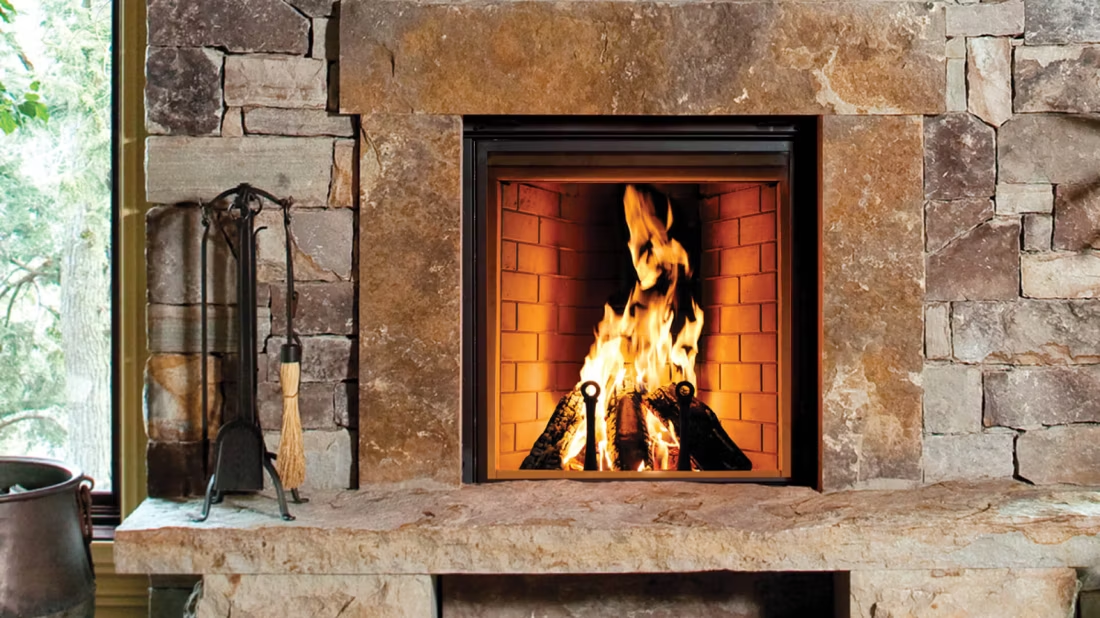
Firewood Cutting Permits Near Lone Tree
Three steps. No salesperson until you're ready.
Tell us about your project
Your zip code, your situation, and the fuel you're leaning toward—or let the answers point you to one.
See what's actually available
The brands dealers within 100 miles genuinely carry—real options, never a catalog mirage.
Get your dealer & Project Guide
A trusted local dealer, plus the free Project Guide & Parts List that names every component of the job.
Frequently Asked Questions
Are wood stoves and fireplaces common in Lone Tree?
No—they're the exception. Lone Tree's housing stock is almost entirely post-1996 construction inside HOA communities, and most of those covenants specify gas fireplaces rather than wood-burning units. Combine that with Denver-metro air quality advisories that periodically restrict wood burning, and you get a city where gas is the default and wood is a special-case request rather than a standard offering from local hearth dealers.
Why don't more Lone Tree homes have wood-burning fireplaces?
Three things stack against it: HOA covenants in most Lone Tree neighborhoods either exclude wood-burning appliances or require design review approval that rarely favors them, Douglas County and city building code treats new wood-burning installs as a more involved permitting process than a gas swap, and the Denver-metro/North Front Range area's ozone nonattainment status means winter inversion days can trigger burning restrictions from the Regional Air Quality Council. None of that makes wood illegal, but it does make it the harder, less-traveled path here.
Can I still install a wood stove or fireplace in my Lone Tree home?
In many cases, yes—but check your HOA documents first, since that's the more common blocker than city code. If your community allows it, a building permit runs through the Douglas County Building Division or the City of Lone Tree depending on your address, and the unit will need to meet current EPA emissions standards. Because so few installers in this market handle wood-burning work regularly, expect quotes to reflect custom venting and code research rather than the fast, templated pricing you'd see in a wood-heavy mountain town—get at least two local bids before committing.
Do Denver's winter burn restrictions apply in Lone Tree?
Yes. Lone Tree falls inside the Regional Air Quality Council's High Pollution Advisory zone, which covers the Denver-metro and North Front Range ozone nonattainment area including Douglas County. On advisory days—typically triggered by winter inversions trapping PM2.5 near the ground—older, uncertified wood stoves and open fireplaces may be asked or required to stay unlit, while EPA-certified stoves are often exempt from the mandatory stage. If you're set on wood, a certified, low-emission unit isn't just cleaner, it's also less likely to get sidelined on advisory days.
What firewood species would I be burning near Lone Tree?
Front Range and foothill sources typically supply ponderosa pine, aspen, pinyon, and juniper. At 6,010 feet, Colorado's dry climate seasons wood relatively fast—often 6 to 9 months for pine, longer for denser pinyon and juniper—but pine's higher sap content means it really does need a full cure before burning, or you'll build creosote fast in a stove that already sees limited use.
Where would I get a firewood cutting permit near Lone Tree?
The nearest public-land source is the Arapaho-Roosevelt National Forest, which issues personal-use cutting permits from May through October at $5 to $20 per cord. That's a foothills drive west of the city rather than anything inside Douglas County proper, so most Lone Tree owners who do burn wood either buy split, seasoned cordwood locally or make the trip up when they're already headed to the mountains.
Is a pellet stove a better fit than wood for a Lone Tree home?
Pellet stoves face a similar uphill climb here—HOA covenants and gas-first new construction limit demand for either fuel type. That said, pellet appliances are often treated more favorably during air quality advisories because they burn cleaner and more consistently than open wood combustion, and regional brands like Bear Mountain, Lignetics, and Forest Energy supply pellets throughout the Front Range. If you specifically want a solid-fuel backup heat source and your HOA is more open to pellet than cordwood, it's worth asking a local dealer to compare both.
What do most Lone Tree homeowners install instead of wood?
Direct-vent gas fireplaces and inserts. Natural gas service from Public Service Company of Colorado (Xcel Energy) reaches essentially all of Lone Tree, and gas units are what most HOA design guidelines and new-construction specs default to. They deliver instant, controllable heat without the permitting complexity, air-quality-advisory exposure, or covenant friction that a wood installation can run into here.
I have a mountain cabin or second property—can Find My Fireplace still help with wood there?
Yes. Even though wood-burning appliances are the exception inside Lone Tree itself, we match homeowners with trusted local dealers across Colorado, including ones experienced with cabin, acreage, and off-grid wood stove installs near the Arapaho-Roosevelt National Forest and elsewhere in the foothills. Tell us about the property when you request your Project Guide, and we'll route you to a dealer who actually works in that market rather than one built around Lone Tree's gas-first subdivisions.
Why is my open fireplace making my house colder?
Open fireplaces suck—literally. As the fire burns, it consumes air your furnace already paid to heat and pulls it out through the chimney, so the house is actually colder after the fire goes out than before you lit it. An insert fixes this: it seals the chimney, puts fixed glass across the front, and turns that hole in your house into a real heat source.
Do I have to leave the stove door cracked open to start a fire?
On many stoves, yes—a new fire needs extra air, and cracking the door a couple inches is how most stoves get it. But some modern stoves offer an automatic startup air system: engage it when you light, and timed air jets feed the fire for the first 20 minutes with the door fully shut, then close automatically. It's mechanical—like an egg timer, no electricity—and it means you can load it, light it, and walk away.
Does a fireplace add value to my home?
On average, a fireplace adds back to the home about the same amount you spent installing it. Add the monthly savings from heating the rooms you actually use instead of the whole house—often hundreds of dollars a year—and the value case is strong before you even count what a fire does for how your family uses the room.
Can a fireplace actually lower my heating bill?
Yes—by creating a comfort zone. A furnace heats every square foot of the house just to warm the one room you're in; a gas fireplace on low burns roughly a sixth of the gas a typical furnace does. Set the furnace around 55–60 degrees as a baseline, then heat the rooms your family actually uses. Families who heat this way commonly save $20–$60 a month.
Nearby Dealers
Hearth shops serving Lone Tree and the surrounding area. Every listing shows whether it is a WhyFire partner, a dealer we have verified as authorized for the brands we recommend, or a local business carrying hearth products. No manufacturer pays for placement. How we verify dealers →
Midtown Chimney Fireplace Store
Spa Brokers Iii
Thoshini LLC
Spa Brokers
Spa Brokers
Western Fireplace Supply
Proud Souls Barbecue & Provisions
Spa Brokers V
Outdoor Kitchen Dist. Inc
Fireplace And Grill Experts - Service Only
Aria Custom Design
Distinctive Mantel Designs
Spa Brokers
Spa Brokers (Corporate)
Rio Grande Co.
See what's actually possible in Lone Tree.
Whether you're one of the rare Lone Tree households pursuing a code-compliant wood install or you're better served by the gas fireplace most of your neighbors have, we'll match you with a trusted local dealer and send a free Project Guide & Parts List built around your home and HOA.
Find Your Fireplace →